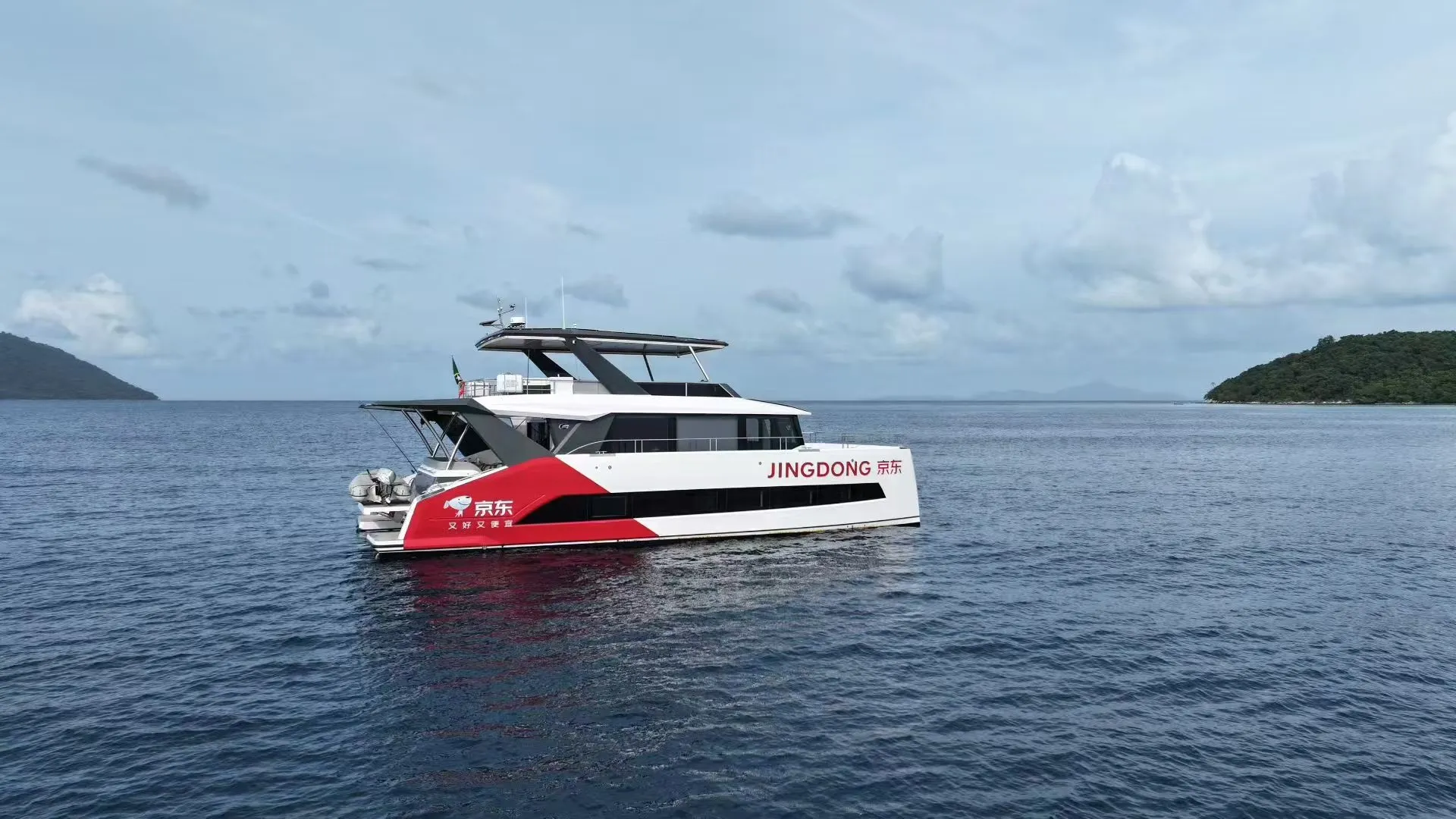
A Genuine Ocean Crossing in the Indian Ocean
Between commercial and recreational sailing, there are few voyages that can truly be described as ‘ocean crossings’.Recently, a voyage documented by the sailing content creators ‘Da Xiong and Tang Tang’s Sailing Life’ completed a standard Indian Ocean crossing: from departure to arrival, the journey covered approximately 4,000 nautical miles and took over a month.
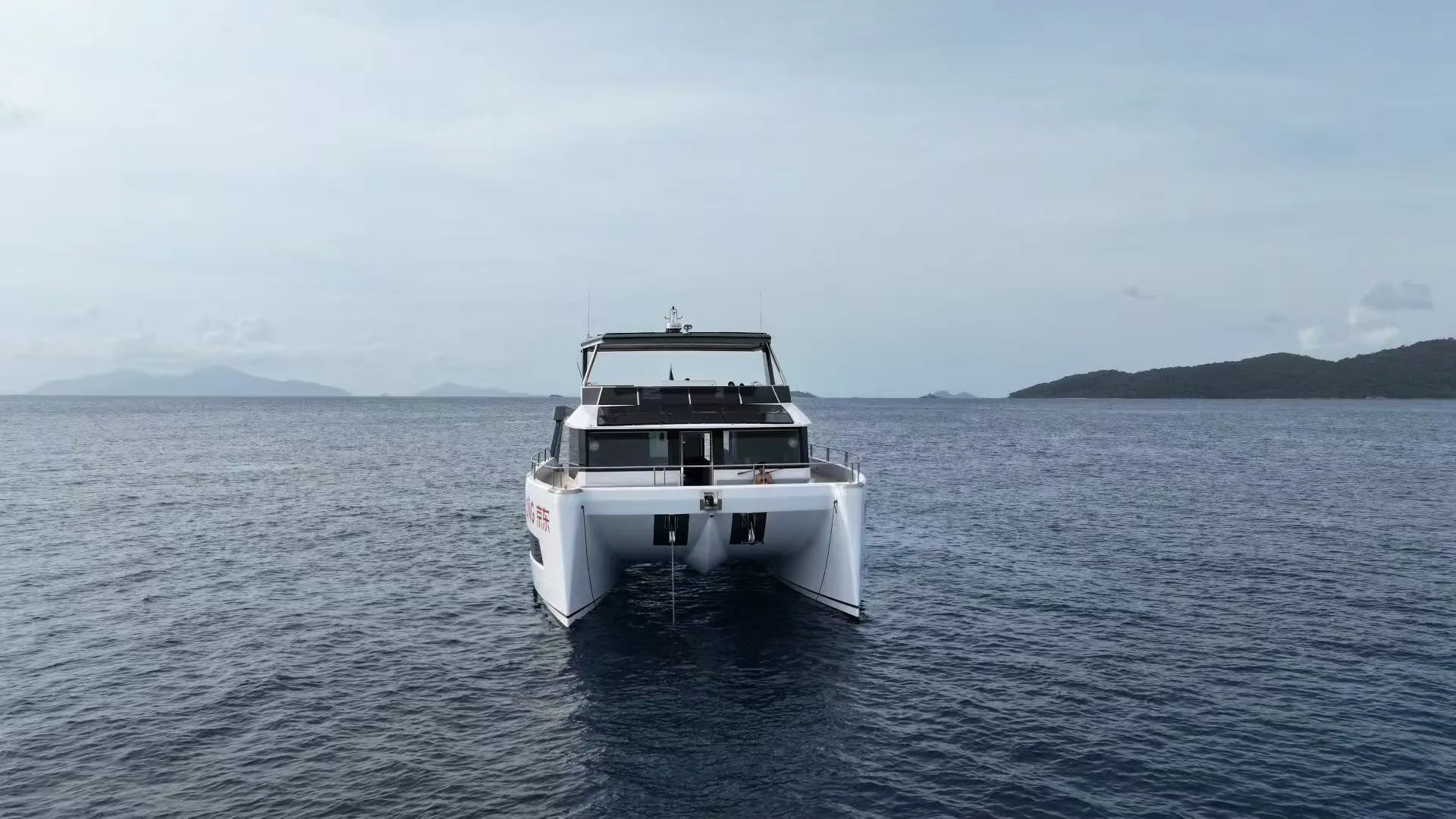
This voyage was conducted aboard the Oceanwalker S60 catamaran ocean-crossing yacht, which completed a continuous open-sea voyage without frequent stops for resupply.

Oceanwalker S60-Holiday
- Length60 ft
- Cabins4
- Top speed18 kn
- TypeCatamaran yacht
The Oceanwalker 60-Holiday, as the first yacht of the Oceanwalker shipyard, has beautiful lines, elegant flanks, innovative design, and large indoor and outdoor spaces. It has 4 cabins and 5 bathrooms, like a palace floating on the sea for cruising. Since its debut, it has been deeply loved by customers at home and abroad.
Request Price
Unlike short-haul cruising, this voyage meant the vessel had to operate for an extended period without shore-based support systems, entering a state of complete self-reliance.
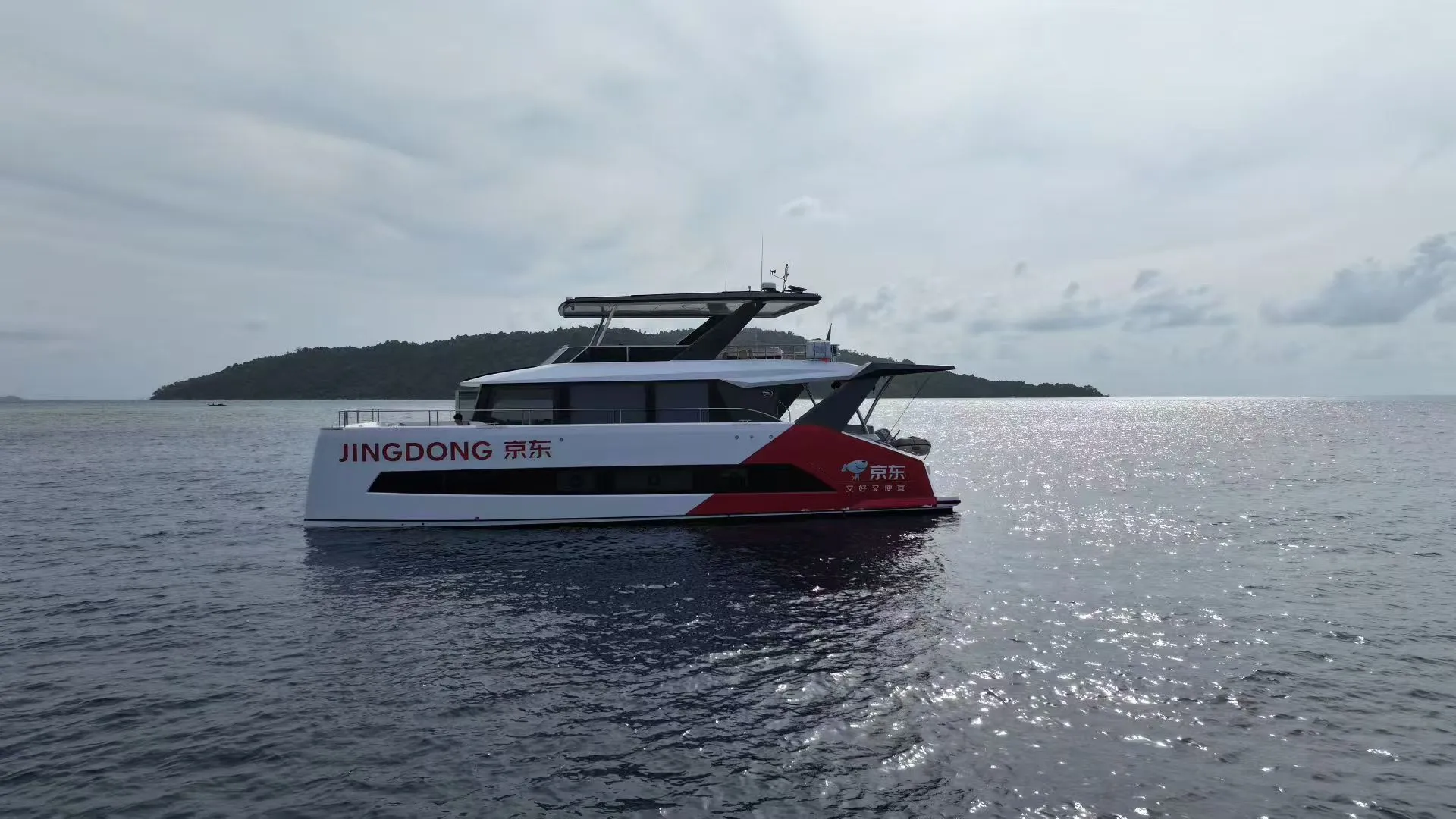
A Month at Sea: From Navigation to System Operations
Once the voyage exceeds several weeks, the nature of life at sea undergoes a transformation. During this transoceanic crossing, the vessel exhibited the hallmarks of a true ocean-going operation:- 24-hour continuous watchkeeping and navigation monitoring
- Dynamic route adjustments based on meteorological systems
- Extended navigation in open waters with no land in sight
- A self-contained cycle of daily living and maintenance onboard
- Continuous progress through varying sea conditions and wind systems
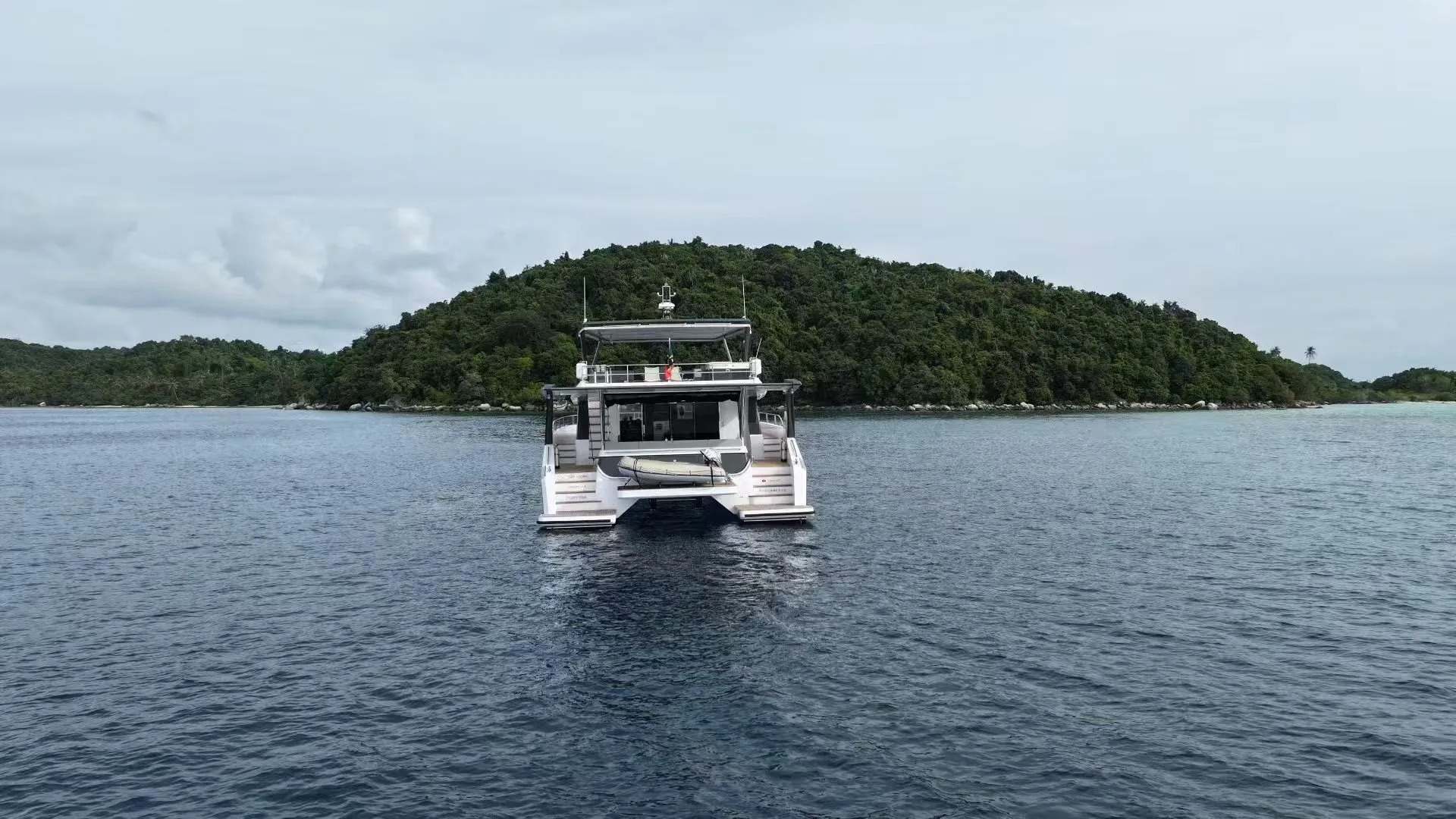
The Oceanwalker S60’s Performance in a Real-World Transoceanic Environment
During this Indian Ocean crossing, this S60 catamaran, built by Oceanwalker Yachts, served as the operational platform for the entire voyage and was continuously exposed to real open-sea conditions.Although sea conditions varied constantly, the very completion of the entire voyage constitutes a practical demonstration of the vessel’s comprehensive capabilities.
Based on feedback from actual use, its performance is primarily reflected in the following three aspects:
Navigational stability: Under generally calm weather conditions, the hull maintained continuous and stable operation. Crew members explicitly stated that “this vessel is truly stable” and felt that sleeping on board was no different from sleeping at home.
Continuous Operational Capability: The vessel operated continuously throughout a voyage cycle exceeding one month without any systemic interruptions affecting its progress. This performance serves as direct validation of its reliability.
Life Support Capability: The vessel is equipped with comprehensive life support facilities, including spaces for cooking and rest. During extended voyages, the crew can carry out all daily activities on board, which is of fundamental importance for ocean-going voyages.
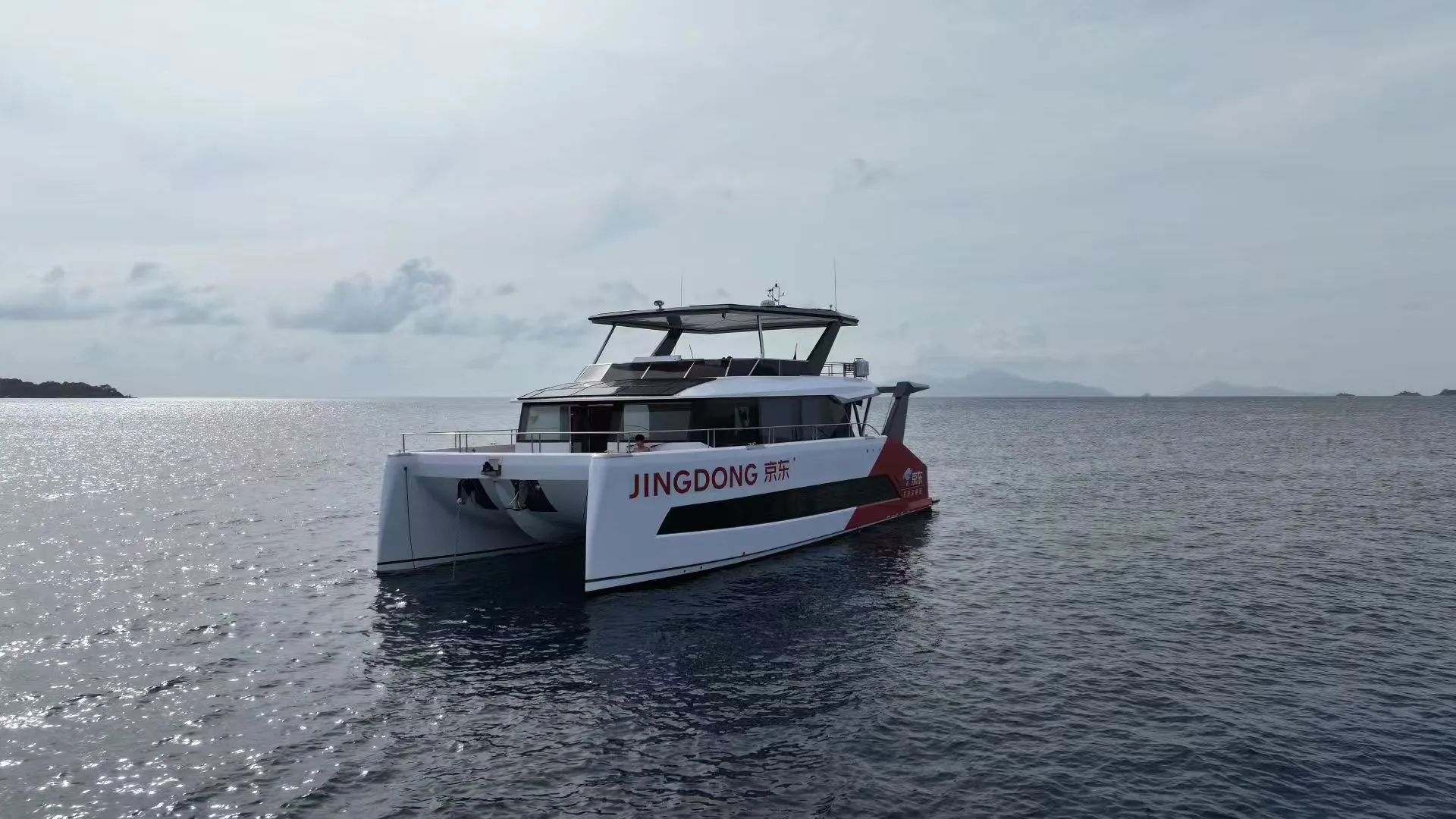
Why is This Type of Voyage Becoming Increasingly Important?
A clear trend is emerging in the contemporary yachting industry: performance evaluation is gradually shifting from ‘design parameters’ to ‘actual sailing performance’.Compared to performance metrics from the design phase, what truly holds reference value is:
- Whether the vessel can complete long-distance transoceanic voyages
- Whether it can maintain stability amidst constantly changing sea conditions
- Whether it can support a genuine maritime lifestyle
- Whether it can withstand long-term operation without shore-based support
Industry Impact
This approximately 4,000-nautical-mile voyage across the Indian Ocean was not merely the completion of a route, but a genuine operational process at sea lasting over a month.This case provides insight into the real-world performance of long-range catamarans and ocean crossing yachts.
For the team involved, it was a sailing experience; from an industry perspective, this process also provided operational references based on real-world conditions.
The Oceanwalker S60 catamaran served as the core platform, providing comprehensive support throughout the journey, and the results have once again confirmed a long-standing consensus within the yachting industry:
A yacht’s capabilities are not defined in port, but proven on the open seas!