CHB Marine is a long-established manufacturer of classic inshore trawlers, originating in Taiwan, China. The company specializes in the offshore slow-cruising recreational boat sector and is committed to building sturdy, spacious, and affordable inshore trawlers ranging in size from 10 meters to 15 meters (34 feet to 48 feet). Its core market was initially concentrated in North America, and today its fleet is widely distributed along the coasts of Europe and the United States. The brand’s core competitive advantages lie in its sturdy fiberglass hulls, low fuel consumption, long cruising range, and traditional American-style home-like interiors; from the 1970s to the 1990s, CHB Marine was a benchmark brand for Taiwanese yacht exports.
The Origins and Development of CHB Yachts
CHB, short for Chung Hwa Boatworks, was founded in Taiwan, China, in 1970. It was one of Taiwan’s earliest professional yacht manufacturers specializing in exports to North America and witnessed the golden age of Taiwan’s yacht export industry.
In the 1970s and 1980s, the North American recreational yacht market was booming, but there was a lack of reasonably priced, high-value towable yachts—especially those suitable for long-distance coastal cruising. CHB capitalized on this market gap by leveraging its proven one-piece fiberglass technology to create affordable alternatives modeled after luxury American towboats. The company exported these vessels in bulk to the U.S. West Coast and the Canadian coast, becoming one of the leading brands for Taiwanese towboats imported into the North American market during its heyday.
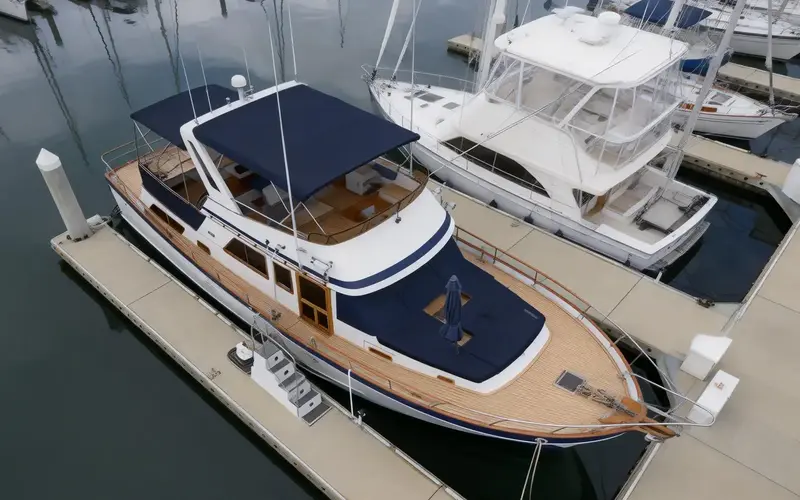
The brand’s early product line included entry-level cruising towboats ranging from 34 to 38 feet; subsequent versions expanded to include mid-to-large-sized flybridge, cockpit, twin-cabin, and triple-cabin series ranging from 40 to 48 feet, with production spanning from 1970 through the late 1990s. Through decades of product evolution, the hull structure and interior layout were continuously optimized, featuring extensive use of thick-walled fiberglass, extended keels, and solid teak interiors. Thanks to their exceptional durability, a large number of seaworthy used CHB yachts remain in circulation around the world to this day.
CHB Marine Brand Positioning
CHB occupies a distinct market position in the classic offshore tugboat segment, filling a gap in the market for economical and durable offshore cruisers. It stands in stark contrast to high-speed sport boats from Europe and the United States and expensive new luxury yachts. The brand is precisely positioned for sailing enthusiasts who do not pursue extreme speed but instead prioritize stability, economy, and leisurely cruising.
Typical Target Audience:
- Offshore cruiser owners: Experienced sailors planning multi-day coastal or interstate voyages who prioritize range and hull reliability.
- First-time buyers in the used boat market: First-time buyers on a limited budget seeking a sturdy hull, simple maintenance, and readily available parts.
- Lovers of life at sea: Owners who enjoy extended stays at sea and require ample storage space and multi-cabin living quarters.
- Retirees along the North American coast: The brand’s core customer base from the 1970s to the 1990s, well-suited for leisurely cruising along the coasts of the United States and Canada.
Demand for existing inventory in this segment remains consistently stable. In the used yacht market, CHB motorboats are highly sought after due to their high resale value and ease of maintenance.
CHB Yacht Design Philosophy
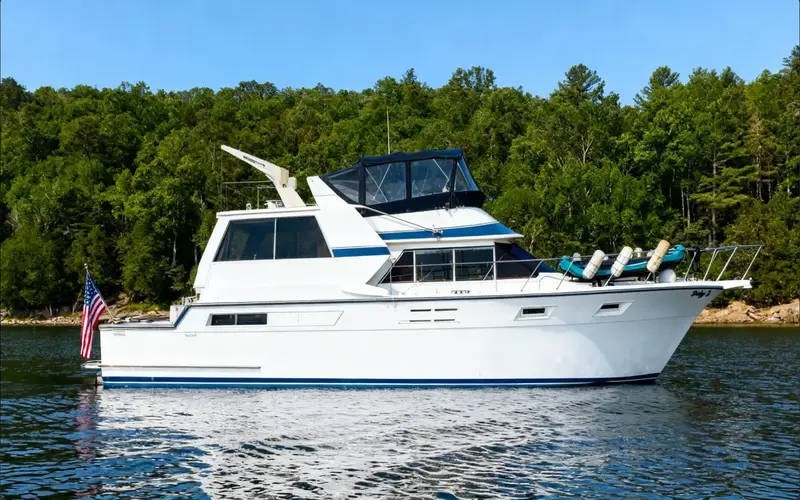
CHB’s overall design philosophy can be summarized as: a sturdy hull × economical long-range performance × spacious and comfortable home-like interiors. These three core design principles run throughout the entire series of yacht models.
Classic American Tugboat Aesthetics
This series of yachts draws on the iconic design elements of American tugboats, including high freeboard, a wide hull, and deep draft, combined with a square flybridge cockpit to create a stable and substantial hull silhouette. Widened hull beams enhance stability at sea, while an extended keel protects the propeller and propulsion system, thereby reducing roll in wind and waves and improving comfort during coastal and offshore cruising. The exterior design eschews aggressive, sporty streamlining in favor of a classic, practical, vintage nautical style that is highly favored by enthusiasts of long-distance cruising.
Ultimate Living Space Layout
With living comfort as the top priority, this design offers interior cabin space that far exceeds that of competitors in its class. Mainstream models come standard with multiple private cabins, en-suite bathrooms, a spacious salon, and a fully equipped kitchen counter; the flybridge features a dedicated outdoor lounge area. The interior makes extensive use of solid teak, and storage spaces are distributed throughout the hull, providing ample room for supplies on long voyages and perfectly meeting the needs of life at sea for days or even weeks.
The flagship model, the CHB 38 Twin Cabin, features a two-deck layout. The lower deck includes two separate bedrooms and a salon that can be converted into a casual dining area, accommodating the lodging needs of large groups.
Durable, Low-Maintenance, and Designed for Long-Distance Voyages
This series of vessels eschews high-speed twin-engine configurations, relying primarily on a single diesel engine. This simplifies the mechanical structure, reduces the failure rate, and significantly lowers fuel consumption, making it suitable for ocean voyages spanning thousands of nautical miles. The hull is constructed from a single, thickened, solid fiberglass monocoque with extremely high structural redundancy, effectively withstanding impacts from reefs, wind, and waves. The extended keel provides comprehensive protection for the underwater propulsion system, reducing the risk of damage when navigating near-shore shoals, and the vessel is equipped with large-capacity fuel tanks to ensure long-range ocean voyages. This series of vessels complies with North American coastal and offshore navigation safety standards.
Comparison of Specifications for Representative Models Across the CHB Series
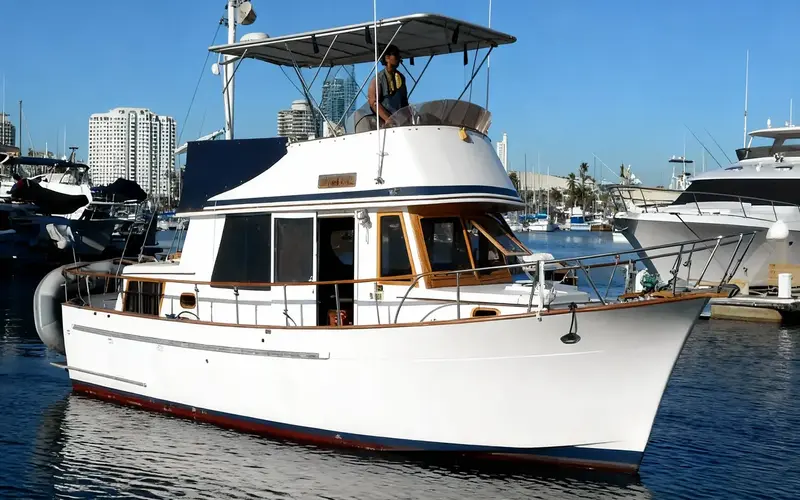
The table below lists the key technical specifications for all classic trawler models in the CHB Marine lineup. It clearly compares the overall length, cabin layout, propulsion systems, fuel capacity, and intended use for models ranging from 34 to 48 feet, helping boat owners quickly identify differences and select the right vessel for solo sailing, family cruising, group trips, or long-term living.
| Model | LOA (Length Overall) | Cabins & Bathrooms | Power Configuration | Fuel Capacity | Core Application & Positioning |
|---|---|---|---|---|---|
| CHB 34 Flat Deck Trawler | Approx. 10.36 m | 1 cabin, 1 bathroom | Single diesel engine | 750 L | Ideal for short-distance coastal cruising for solo sailors or couples, as well as entry-level long-distance sailing training |
| CHB 38 Twin-Cabin Trawler | Approx. 11.58 m | 2 staterooms, 2 bathrooms | Single diesel engine | 950 L | Multi-day offshore family cruising, best-selling classic model |
| CHB 42 Flybridge Cruiser | Approx. 12.80 m | 2 staterooms, 2 bathrooms | Single diesel engine | 1300 L | Upgraded flybridge social lounge for sailing trips with family and friends |
| CHB 45 Sedan | Approx. 13.72 m | 2–3 staterooms, 2 bathrooms | Single diesel engine | 1450 L | Fully enclosed all-weather wheelhouse, capable of long-distance voyages under rough sea conditions |
| CHB 48 Seahorse Flagship | Approx. 14.63 m | 3 staterooms, 3 bathrooms | Single diesel engine | 1800 L | Long-term liveaboard coastal-crossing cruising with ample storage and living space |
All specifications listed above refer to the CHB’s standard factory configuration. Fuel tank capacity, interior layout, and equipment may vary depending on the year of manufacture and any custom modifications. If you are planning to purchase a used CHB trawler, we recommend verifying the actual range, cabin modifications, and hull condition through a sea trial and a professional vessel inspection report.
In-Depth Analysis of Flagship Models
This analysis examines the unique product advantages and target customer groups for each CHB Marine boat model, helping prospective buyers find the perfect trawler for solo ocean voyages, family coastal cruises, group trips with friends and family, or long-term living at sea.
CHB 38 Twin-Cabin Tugboat: The Brand’s Timeless Classic
As CHB’s best-selling flagship model during its export to North America, this 38-foot yacht is the brand’s iconic product, having been in continuous production from 1978 to 1985. The hull is constructed of reinforced fiberglass and features an extended protective keel; a single diesel engine ensures both fuel efficiency and reliability; the lower deck houses two separate bedrooms, a fully equipped salon, galley, and bathroom, while the flybridge offers a 360° panoramic helm station. The yacht
has a maximum cruising speed of 8–10 knots and a range of over 1,000 nautical miles on a single tank of fuel, with ample maintenance parts available at major marinas along the North American coast. It remains a popular choice in the used offshore cruising yacht market and is ideal for couples, small families, and weekend or multi-day coastal cruises.
CHB 42 Flybridge: An Upgraded Outdoor Leisure Boat
Compared to the 38-foot version, the 42-foot model features a wider hull and a higher flybridge deck. The upper deck also includes a full outdoor bar and lounge seating, significantly enhancing its appeal for social gatherings. The interior retains the two-cabin, two-bathroom layout while expanding the kitchen counter space, making it an ideal choice for group cruising. The propulsion system utilizes optimized fuel injection technology to ensure exceptional fuel economy on long-distance voyages, while the large-capacity fuel tanks meet the demands of continuous island-hopping cruises, perfectly balancing the needs of onboard living and outdoor recreation.
CHB 48 Sea King Flagship Cruising Yacht
Designed to compete with American 48-foot luxury yachts, this top-of-the-line flagship model features a three-cabin, three-bathroom layout capable of accommodating 6 to 8 people for extended voyages at sea. The enclosed cockpit connects to a spacious lower-deck salon equipped with large sliding panoramic windows, and storage space is provided throughout the vessel. With a fuel tank capacity of nearly 1,800 liters, it has ample range for extended coastal and interstate voyages, while its deep-draft hull design ensures exceptional stability in open-ocean waves, making it the ideal choice for experienced sailors seeking extended cruising and life at sea.
Conclusion
As a leading company in Taiwan’s yacht export industry during the 1970s, CHB Marine established a strong brand image in the global classic towable yacht market through its unique positioning as “sturdy, durable, affordable, suitable for ocean voyages, and featuring spacious living quarters.” From entry-level 34-foot short-range cruisers to 48-foot flagship ocean-going liveaboards, CHB Marine’s entire product line is designed to meet the core needs of ocean voyages and life at sea. For owners with moderate budgets who enjoy leisurely coastal cruising and seek a low-cost, reliable sailing lifestyle, CHB Marine’s classic towable yachts offer exceptional value for the money.
Disclaimer
This article provides a comprehensive overview of the CHB Marine brand’s history, vessel specifications, and market positioning. All information is sourced from manufacturer records, North American yacht trading platforms, and firsthand sailing experience, and is intended solely for industry professionals. Hull dimensions, fuel tank capacities, and propulsion performance may vary depending on the year of manufacture and customer customizations. For pre-owned vessels, hull wear and modifications may affect actual performance at sea. Before purchasing or taking a boat out to sea, be sure to contact a professional surveyor or authorized dealer to verify the vessel’s complete details.
About the Author
Andrew Rogers is an experienced yacht broker whose extensive industry background gives him unique insights into deep-sea fishing operations and vessel configurations. Through professional service and in-depth market analysis, Andrew assists clients in making informed vessel selection decisions.
FAQ
Q1: Are CHB tugboats suitable for transoceanic voyages?
A: The entire CHB series is designed for coastal and intercontinental offshore cruising. The hull’s stability and range are sufficient for continuous navigation along coastlines and between archipelagos; however, the factory configuration is not reinforced to withstand the harsh storm conditions of the open ocean, so transoceanic voyages without professional modifications are not recommended.
Q2: Are the long-term maintenance and upkeep costs for CHB yachts high?
A: Compared to new luxury yachts of the same size from Europe and the United States, CHB yachts offer a significant advantage in terms of maintenance costs. Parts for the single diesel engine are widely available worldwide, and the fiberglass hull structure is robust and resistant to damage. Only the teak interior requires periodic varnishing and maintenance; basic annual maintenance expenses are low, making these yachts suitable for long-term ownership.
Q3: Are there other engine options available for CHB yachts?
A: The standard factory configuration is a single diesel engine, with twin-engine versions being extremely rare. Used boats can be retrofitted with upgraded engines as needed; the factory-specified cruising speed range is 7–10 knots.
Q4: Why did CHB focus primarily on the North American market back then?
A: In the 1970s and 1980s, there was an explosion in demand for private offshore cruising in North America, but locally built motorboats were prohibitively expensive. Taiwanese shipyards possessed mature fiberglass boatbuilding capabilities, and CHB replicated American motorboat designs at affordable prices, precisely filling the gap in the mid-range market; therefore, North America became its core export market.