Featured Snippet:
A 30–50 ft yacht typically costs $5,800–$7,200 per year to maintain, plus an additional $1,500–$2,500 in cold regions for winter storage.
Table of Contents:
1.What Goes into the Annual Maintenance Cost for a 30-50 ft Yacht?
2.Winter Storage Fees for 30–50 ft Boats
3.Annual Yacht Maintenance Cost by Size (All Lengths Compared)
4.Summary
5.FAQ

Many boat owners ask me the same question after purchasing a 30–50-foot yacht: “How much does maintenance actually cost per year?” As someone who has long helped clients assess costs, I've seen too many people bring boats home without understanding maintenance structures, seasonal expenses, or size differences—only to face bills exceeding expectations in the first year. These costs should really be researched alongside tips for buying a new yacht, but most owners only start catching up after the purchase.
To gain better budget control, owners must first grasp three key points: what factors influence maintenance costs, what fixed annual expenses exist for 30–50 foot yachts, and why costs vary so significantly across different sizes. Below, I'll break down these three areas to help you quickly understand realistic annual expenditure ranges.
1.What Goes into the Annual Maintenance Cost for a 30-50 ft Yacht?
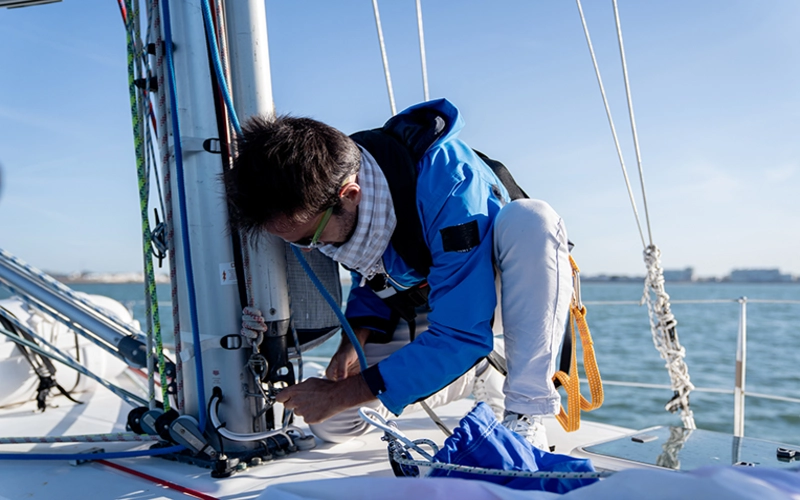
For 30–50-foot yachts, annual maintenance costs primarily fall into five categories:
- engine maintenance
- hull and paintwork
- onboard electrical systems
- routine consumables
- mooring and insurance
While vessels of this size typically feature relatively comprehensive equipment, annual expenses remain reasonably predictable.
While conducting annual cost assessments for multiple mid-sized yachts, I once planned a budget for a client owning a 42-foot vessel.
Client’s initial expectation: He believed that setting aside approximately $3,000 per year would be sufficient.
However, after itemizing expenses based on engine maintenance cycles, bottom paint upkeep, equipment consumables, and berthing fees, the final cost range landed between $5,800 and $7,200. Costs are often inflated not by major overhauls, but by overlooking these recurring minor items.
To help owners clearly understand annual expense composition, I typically break down costs into the following categories:
① Engine and Propulsion System (Core Mandatory Item)
- Annual engine maintenance: Oil, oil filter, fuel filter replacement
- Drive mechanism (Stern Drive / V-Drive) inspection and lubrication
- Cooling system flush and impeller replacement
- Cost range: $800–$2,000 per engine
② Hull, Paint, and Deck Maintenance
- Primer and Antifouling Paint (every 12–18 months)
- Polishing and Waxing (1–2 times annually)
- Deck Sealant and Gasket Inspection
- Cost Range: $1,500–$5,000
③ Electrical and Equipment Systems
- Battery Bank Load Testing and Replacement
- Annual inspection of critical systems (navigation lights, fans, AC)
- Calibration of navigation equipment (radar/GPS/AIS)
- Cost range: $500–$3,000
④ Consumables and routine maintenance
- Exterior cleaning, hull washing
- Replacement of consumables (pumps, hoses, ropes)
- Minor troubleshooting
- Cost Range: $1,000–$2,500
⑤ Mooring & Insurance (Significant regional variation)
- Annual harbor fees typically account for 30–50% of total costs
- Insurance premiums: $600–$2,500
- Winter mooring fees may apply in some cold regions
In short, by breaking down your annual expenses into these five categories, you can gain a clear understanding of your yacht's true annual budget and avoid being caught off guard by recurring minor projects.
2.Winter Storage Fees for 30–50 ft Boats
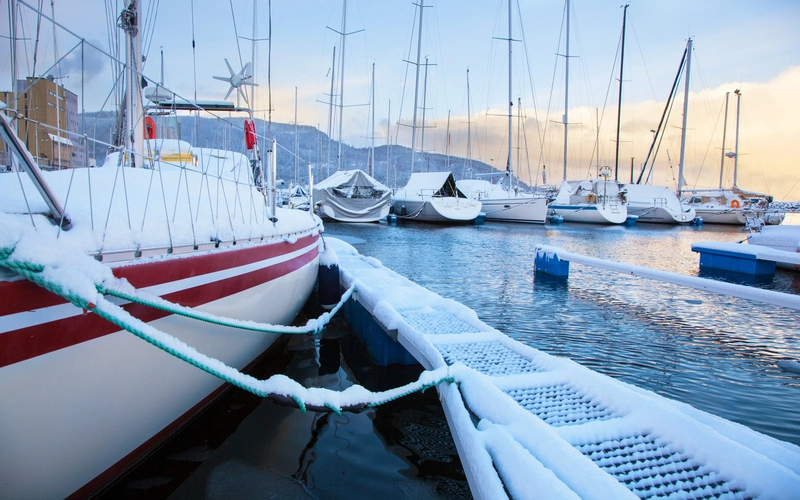
In the previous section, we mentioned that boat owners in cold regions often incur an additional “winter berthing fee.” Neyland Yacht Haven in the UK lists “Winter Berthing” as a separate item. This means that in waters prone to freezing, winter berthing fees become a fixed cost that must be included in boat owners' annual budgets.
Here's a typical comparison case I encountered in my work:
- Owner A (Cold Climate)
This owner keeps a 38-foot yacht docked on Lake Michigan, requiring annual winter hauling, shrink-wrapping, and antifreeze treatment. When first confronted with the winter bill, he was unprepared and incurred an extra cost of approximately $1,800. After this experience, he realized winter storage fees are unavoidable fixed expenses and now budgets for them annually.
- Owner B (Warm Region)
Another owner moors the same model in Florida's ice-free waters year-round, incurring minimal winter costs beyond standard berthing fees and insurance. This allows him to allocate more budget toward routine maintenance and upgrades without worrying about seasonal surcharges.
These cases highlight regional variations in winter mooring requirements and underscore that winter protection expenses should not be overlooked.
Below are common cost items for winter storage of 30–50-foot yachts:
| Fee Items | Service Description | Reference Price Range |
| Haul-out & Launch | Lifting vessels out of the water and relaunching them in spring | $12–$20 / square foot |
| Dry Storage | Storing boats on land-based supports during winter to prevent freeze damage | $40–$80 / square foot (entire winter) |
| Engine Winterization | Includes cooling system, antifreeze circulation, and fuel line treatment | $200–$500 |
| Fresh Water System | Freeze protection for water heaters, tanks, pumps, and related equipment | $100–$300 |
| Shrink Wrap | Plastic sheeting wrap to protect decks and equipment | $18–$30 per foot |
| Electricity & Watchkeeping Surcharge | Site management, winter power supply, or watchkeeping services | $50–$200 |
Overall, if your yacht is moored in waters prone to freezing, winter storage fees represent a significant fixed expense that shouldn't be overlooked. Planning ahead allows for better control over your annual budget and helps avoid unexpected costs.
For a comprehensive guide on winterizing and maintaining your yacht, refer to the 2025 Guide: How to Properly Winterize Your Yacht. This resource will help ensure your vessel safely “hibernates” through the winter months.
3.Annual Yacht Maintenance Cost by Size (All Lengths Compared)
Boat Trader's article “The Cost of Boat Ownership” reveals: For every 10-foot increase in length, complexity, labor costs, and berthing fees rise almost linearly. Small boats incur concentrated yet low total expenses, while medium-sized vessels require significant periodic maintenance. Large boats see system and berthing costs multiply exponentially. Annual maintenance expenses scale proportionally with yacht size.
When planning annual budgets for boat owners, I've encountered several representative examples:
- 25-foot small boat: Single-engine sailboat. Annual maintenance primarily involves engine oil, polishing, and basic electrical checks, with a budget of approximately $4,500.
- 42-foot medium yacht: Twin-engine hull, annual expenses around $6,500, primarily for bottom paint, equipment maintenance, and harbor fees.
- 65-foot large yacht: Twin engines, complex equipment, annual budget exceeding $28,000, with significant hull, electrical, and harbor costs.
The following table provides annual budget references for yachts of various sizes:
| Vessel Size | Annual Budget Range | Annotation |
| 25–30 feet | $2,500–$5,700 | Single-engine vessels with basic equipment incur low berthing fees. |
| 30–50 feet | $5,800–$7,200 | Twin-engine/mid-sized vessels with comprehensive equipment incur higher proportions of berthing and insurance costs. |
| 50–70 feet | $11,000–$30,000 | Twin-engine or multi-engine vessels with complex systems incur high hull and electrical maintenance costs. |
| 70+ feet | $25,000–$60,000 | Luxury yachts featuring multiple engines, complex systems, large berths, and significant insurance premiums. |
The larger the vessel, the higher the annual maintenance costs become, and the greater the reliance on professional planning for the overall budget. Understanding the expenses associated with each size category in advance helps owners make more robust financial arrangements and minimizes unexpected expenditures.
4. Summary
Ultimately, the annual maintenance costs for a 30–50-foot yacht are simply expenses that “won't scare you if you know them in advance.” You can get a rough idea of which items are fixed, which depend on usage patterns, and which fluctuate based on equipment or storage conditions before you even step aboard. By organizing these costs annually, you can keep routine yacht expenses under control and prepare for seasonal outlays ahead of time—avoiding the shock of unexpected bills. Once you fully grasp this logic, you'll feel more confident about future decisions: whether to keep sailing, streamline equipment, switch boats, or upgrade your cruising range.
5.FAQ
Q1: What is the approximate annual maintenance cost for a 30-50 foot yacht?
A: Under normal usage and moored at a temperate public marina, annual maintenance costs range from $5,800 to $7,200. If the waterway freezes in winter, an additional $1,500 to $2,500 is required for winter storage and antifreeze expenses.
Q2: Why do my maintenance costs consistently exceed my budget?
A: Many owners overlook the cumulative costs of periodic minor items like battery replacements, polishing/waxing, and cleaning supplies. We recommend budgeting by five major categories (engine, hull, electrical, consumables, mooring/insurance) to avoid omissions.
Q3: What exactly is included in winter storage fees?
A: Services typically cover hauling out and launching, land storage, engine and freshwater system antifreeze treatment, and shrink wrapping. For a 38-foot yacht in cold regions, total winter costs can reach up to $1,800.
Q4: I live in the South. Do I still need antifreeze treatment in winter?
A: If your location experiences no freezing temperatures year-round (e.g., Florida), winter storage and freeze protection are unnecessary, saving approximately $1,500–$2,500. This budget can be redirected toward routine maintenance or equipment upgrades.
Q5: Do maintenance costs increase proportionally with vessel size?
A: Yes. For every 10-foot increase in length, system complexity, labor, and berthing fees rise nearly linearly. For example, a 42-foot yacht costs about $6,500 annually in maintenance, while a 65-foot vessel may exceed $28,000.
Q6: Is yacht maintenance more expensive in 2025 compared to previous years?
A: Costs have risen gradually due to inflation, higher labor rates, and more advanced onboard systems. Owners should expect slight annual increases and plan accordingly.
Q7: How can I reduce annual yacht maintenance costs?
A: Strategies include:
- Regular preventative maintenance
- Scheduling work in off-peak seasons
- Buying consumables in bulk
- Comparing marina and storage fees
Q8: Do 30–50 ft yachts require professional management?
A: Not mandatory, but a professional manager or captain can reduce stress, keep maintenance on schedule, and prevent costly oversights, especially for twin-engine or complex mid-sized yachts.
About the Author:
Andrew Rogers brings years of yacht sales and management experience, specializing in helping clients evaluate, purchase, and manage mid-sized to large yachts. He is well-versed in maintenance costs for various yacht types, annual budget planning, and winter storage and protection strategies, having provided practical cost-saving and maintenance solutions to hundreds of owners. Andrew's expert advice, combined with hands-on experience, helps owners better manage costs and risks while enjoying the pleasures of boating.
Disclaimer:
The annual maintenance costs, winter storage fees, and budget recommendations shared herein are intended to assist owners in planning expenditures. However, each yacht's circumstances vary. Adjust budgets based on your vessel's actual condition and local service rates, and consult professionals for precise guidance.