



Key Factors Influencing the Price of Supercar-Inspired Yachts
Although the number of Supercar-Inspired Yachts on the market is limited, there are significant price differences between different brands, sizes and specifications. Two yachts with similar appearances may differ in price by several million dollars. Understanding the key factors influencing price will help you set a more realistic budget for your yacht purchase.
Brand and Collaboration Value
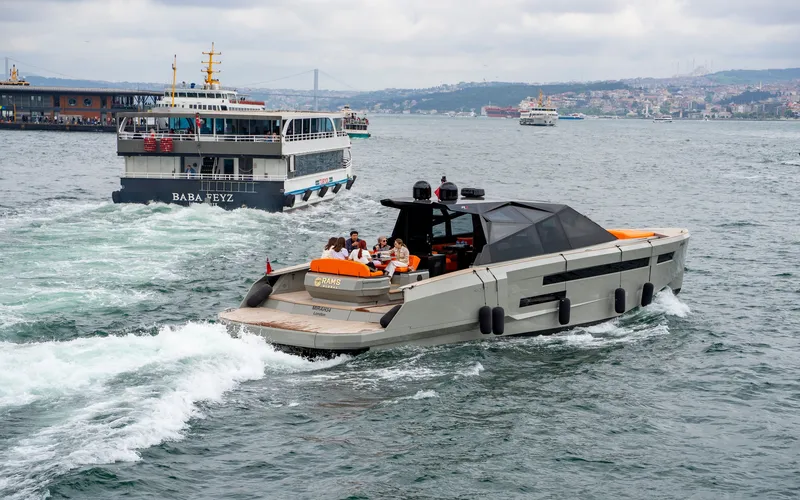
Brand is usually the primary factor determining price. Yachts launched in collaboration with renowned supercar brands often command a higher brand premium. For example, yachts launched or co-designed by brands such as Lamborghini, Bugatti, Aston Martin and Mercedes-Benz represent not only the product itself, but also the brand’s image and collectible value. For many buyers, such yachts serve not only as a means of transport but also as a status symbol.
Yacht Size
Size remains the most direct factor influencing price. As the hull length increases, construction costs do not rise linearly but follow a marked upward trend. This is because larger hulls require more complex structural designs, higher-strength materials and a greater number of luxury features.
For example, a 40-foot Supercar-Inspired Yacht typically features an open-plan cockpit, a small lounge area and one or two guest cabins; whereas a vessel over 70 feet in length may be equipped with a full-size master suite, multiple guest cabins, crew quarters, a beach club, storage for water toys and a large flybridge.
The larger the vessel, the higher not only the construction costs, but also the associated expenses for mooring, insurance, fuel and maintenance.
Propulsion System
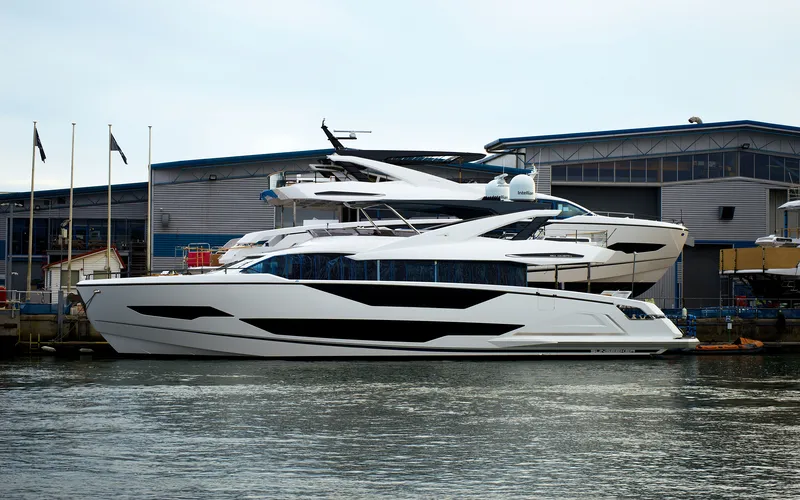
Speed is a key feature that distinguishes supercar-inspired yachts from ordinary cruising yachts; consequently, the propulsion system is also a major factor determining price.
Many models utilise twin MAN or MTU high-performance diesel engines, whilst some are also fitted with waterjet propulsion systems to achieve faster acceleration and higher top speeds.
Compared to the cruising speeds of around 20 to 30 knots typical of standard cruising yachts, many supercar-inspired yachts can reach top speeds of 50 to 60 knots, with some models achieving even higher speeds.
However, higher performance also means:
• Higher engine procurement costs;
• Increased fuel consumption;
• Significantly higher maintenance costs than standard motor yachts.
Consequently, the propulsion system not only affects the purchase price but also directly impacts the cost of ownership over the coming years.
Construction Materials
Lightweight construction is a key design principle in supercar engineering, and this concept has also been applied to yacht building.
In recent years, an increasing number of high-end ‘supercar-inspired’ yachts have adopted carbon fibre hulls, carbon fibre hardtops, lightweight furnishings and high-strength composite materials to reduce the yacht’s overall weight and enhance its sailing performance.
Compared to traditional fibreglass materials, carbon fibre offers greater strength and lower weight, which can improve fuel efficiency, enhance acceleration and improve stability at high speeds.
However, carbon fibre is expensive, involves a more complex manufacturing process and incurs significantly higher maintenance costs; as such, it is typically reserved for high-end or limited-edition models.
Customisation Options
Most supercar-style yachts offer a high degree of customisation. Owners can select exterior colours, interior materials, lighting systems, entertainment equipment, navigation electronics and even bespoke logos according to their personal preferences. The higher the level of customisation, the higher the final price is usually.
For a yacht valued at over US$4 million, full personalisation may add hundreds of thousands or even millions of US dollars to the budget. Therefore, when comparing different quotations, in addition to considering the base price, one should also ascertain whether the quotation already includes customised specifications.
Prices for Supercar-Inspired Yachts of Different Sizes in 2026
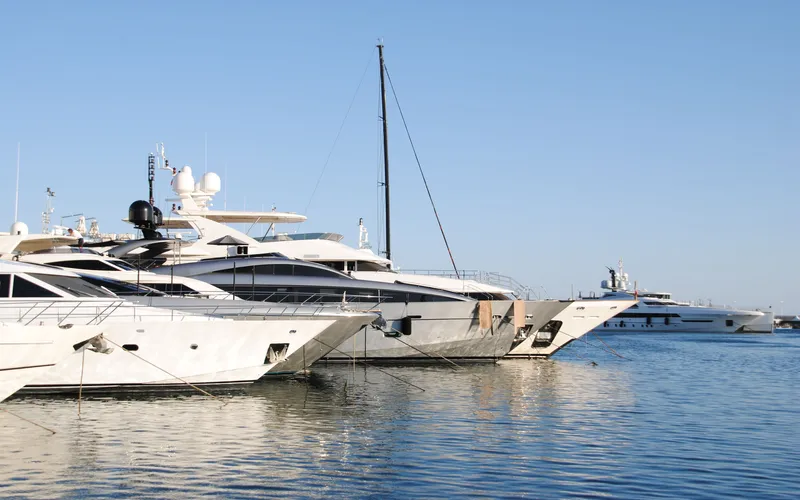
For most buyers, size is the most straightforward factor in determining their budget. The prices below are approximate reference ranges for the international market in 2026; actual prices may vary depending on the brand, specifications and delivery region.
| Yacht Size | New Price (USD) | Used Price (USD) | Suitable for |
| 35–45 feet | 800,000–1.8 million | 500,000–1.2 million | Personal leisure, weekend cruising |
| 45–60 feet | 1.8 million–4.5 million | 1.2 million–3 million | Family holidays, business hospitality |
| 60–80 feet | 4.5 million–12 million | 3 million–9 million | High-net-worth buyers, long-term cruising |
| 80 feet and above | Over 12 million | Over 8 million | Collectibles, high-end customisation, superyacht market |
Vessels in the 35–45-foot range are typically best suited to individual buyers seeking speed and stylish design. This size offers a balance of performance and handling, whilst maintaining relatively low maintenance costs.
The 45–60-foot range is a highly sought-after segment of the market. These yachts not only boast a sports car-inspired exterior but also offer more spacious cabins, leisure decks and entertainment areas, making them ideal for family holidays or business hospitality.
Supercar-inspired yachts of 60 feet and above begin to enter the luxury and semi-custom markets. In addition to higher cruising speeds and larger living spaces, owners can usually customise the interior layout, audio-visual systems and smart control devices to suit their needs.
New Supercar-Inspired Yachts vs Used Supercar-Inspired Yachts
Regardless of the type of luxury yacht you are considering, it is essential to carefully compare both new and pre-owned options.
For Supercar-Inspired Yachts, as many models are produced in limited editions, the pre-owned market not only reduces the purchase cost but may also be the only way to acquire discontinued models. Therefore, in addition to price, one should comprehensively consider depreciation rates, resale value, maintenance history and future usage requirements.
Comparison of new versus used:
| Comparison criteria | New yacht | Used yacht |
| Initial purchase cost | Higher | Lower, offering better value for money |
| Customisation options | Fully | customisable Largely fixed |
| Latest design and technology | ✔ | Some specifications may be outdated |
| Manufacturer’s warranty | Usually provided | Most are past their warranty period |
| Depreciation rate | Fastest in the first 3 years | Relatively stable |
| Delivery timeframe | 12–24 months | Available for immediate delivery |
| Access to limited-edition models | Requires waiting for production | Opportunity to purchase discontinued models |
Why are new yachts more expensive?
The greatest advantage of purchasing a brand-new supercar-inspired yacht lies in the ability to create a vessel that is truly your own, tailored to your specific requirements.
Everything from the hull colour and bridge layout to the cabin design, and even the materials used for the furnishings and the lighting ambience, can be personalised. Furthermore, new yachts typically feature the latest navigation systems, propulsion platforms and smart control technologies, resulting in relatively lower maintenance demands over the coming years.
However, there is one issue with new yachts that cannot be overlooked—depreciation.
Much like luxury cars, most yachts depreciate most rapidly in the first few years after delivery. If you plan to sell relatively soon, a new yacht will generally incur higher depreciation costs.
Why Are More and More People Choosing Used Yachts?
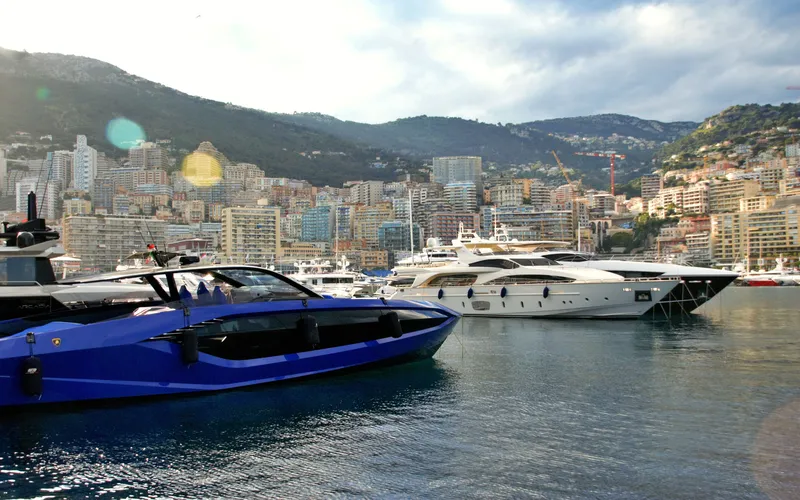
In recent years, the international market for pre-owned luxury yachts has remained buoyant, and one key reason for this is value for money.
A Supercar-Inspired Yacht that has been in use for three to five years, provided it has been well maintained, is often priced 20–40 per cent lower than a new vessel, whilst the difference in overall performance and user experience is negligible.
Furthermore, some classic limited-edition models—such as certain collaborative editions—are no longer in production and can only be acquired through the second-hand market; consequently, second-hand yachts are even more appealing to collectors.
Of course, before buying a used yacht, one should pay particular attention to the following aspects:
• Whether there is a complete maintenance history;
• Whether the engine’s operating hours are reasonable;
• Whether there has been any major collision or structural repair;
• Whether the hull and mechanical systems have undergone a professional survey;
• Whether there are any issues with equipment ageing due to prolonged disuse.
If circumstances permit, it is advisable to engage an independent surveyor to carry out a comprehensive inspection to minimise the risk of subsequent repairs.
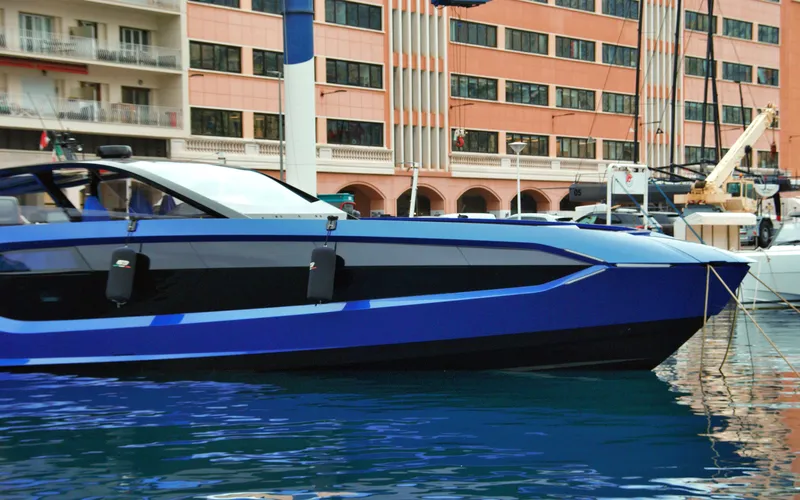
Which option is right for you?
If you have a generous budget and wish to own the latest design, a full warranty and a highly personalised configuration, then a brand-new yacht is undoubtedly the better choice.
If you are more focused on investment efficiency, wish to minimise your initial outlay and are happy to accept the existing configuration, then a pre-owned Supercar-Inspired Yacht with a comprehensive maintenance history typically offers better value for money.
For buyers with a budget of under US$3 million, the second-hand market generally offers a wider range of established options; whereas those with a higher budget who wish to create a bespoke vessel are better suited to a brand-new custom build.
A Detailed Breakdown of Annual Maintenance Costs
In addition to the purchase price, the long-term costs of ownership also require advance planning. For a Supercar-Inspired Yacht, the purchase price is just the beginning; mooring, insurance, maintenance, fuel and day-to-day management will all incur ongoing expenses. Generally speaking, the annual running costs for this type of high-performance yacht amount to approximately 8 per cent to 12 per cent of the purchase price, with the exact figure influenced by factors such as the yacht’s size, mooring location, frequency of use, cruising areas and whether it is crewed by professional personnel.
Among these, yacht berthing costs are typically one of the largest fixed annual expenses. Due to limited berthing availability, fees at popular yacht harbours may be significantly higher than at ordinary marinas. For a supercar-inspired yacht of around 55 feet, berthing costs are typically between US$25,000 and US$60,000 per year; if moored in high-end yachting hubs such as Monaco, Miami or Dubai, the annual cost may be even higher.
Furthermore, yacht insurance costs are another long-term expense that owners need to give careful consideration to. Insurance premiums are generally calculated based on the yacht’s value, sailing area, age, maximum speed and the owner’s experience. For a high-performance yacht valued at around US$3 million, annual insurance costs typically range from US$18,000 to US$40,000; should the owner plan to undertake ocean-going voyages or enter high-risk areas, insurance costs may be even higher.
The following is an indicative annual budget for a 55-foot, supercar-inspired yacht valued at US$3 million:
| Item Annual | Cost (US$) |
| Yacht Berthing Costs | 25,000–60,000 |
| Hull Maintenance and Servicing | 20,000–40,000 |
| Engine Maintenance | 15,000–35,000 |
| Insurance | 18,000–40,000 |
| Fuel | 20,000–80,000 |
| Cleaning and detailing | 8,000–20,000 |
| Miscellaneous expenses | 10,000–30,000 |
| Total | Approx. 116,000–305,000 |
If the yacht exceeds 70 feet in length and is permanently crewed by professional personnel, annual expenditure will increase further. In addition to higher mooring fees and insurance costs, buyers must also bear the costs of crew salaries, training, equipment management and regular maintenance. Therefore, when drawing up a yacht purchase budget, buyers should not focus solely on the initial purchase price, but should comprehensively assess the operating costs over the coming years to ensure the yacht can be used reliably and stably in the long term.
Which brands have launched supercar-inspired yachts?
In recent years, an increasing number of yacht manufacturers have begun to draw inspiration from supercar design concepts, incorporating streamlined hulls, high-performance propulsion, lightweight materials and luxurious interiors into their product designs. These supercar-inspired yachts not only make a striking visual impression but also emphasise high-speed cruising and the joy of sailing, becoming an important segment within the luxury sports yacht market.
The three models below represent supercar-inspired yachts with different market positioning.
| Model | Length | Guide Price (2026) | Key Features | Ideal For |
| Focus 3X | Approx. 33 ft | Approx. US$400,000–700,000 | Lightweight hull, sporty design | Weekend leisure, first-time buyers |
| Cigarette 41 Nighthawk | 41 ft | Approx. US$900,000–1.5 million | High-performance propulsion, top-speed experience | Speed enthusiasts |
| Novatec S69 SuperNova | 69 ft | Approx. US$2.5 million–US$4.5 million | Combination of luxurious space and sporty aesthetics | Family cruising, business hospitality |
Focus 3X
The Focus 3X features a streamlined hull and sports car-inspired exterior design, combining a lightweight structure with agile handling, making it ideal for inshore leisure and weekend getaways. Compared to large luxury yachts, it offers lower purchase and maintenance costs, making it an ideal entry-level choice for the ‘Supercar-Inspired Yacht’ market.
👉 See Focus 3X

Focus 3X
- Length38 ft
- Top speed50 kn
- TypeSupercar - inspired yacht
The Focus 3X is an all-new sports cruiser inspired by sports car design, blending contemporary styling, precision engineering and high-speed propulsion technology. Crafted for owners who seek the thrill of speed, responsive handling and the ultimate driving experience.
Cigarette 41 Nighthawk
The Cigarette 41 Nighthawk is a high-performance sports yacht renowned for its speed, capable of accommodating multiple high-powered outboard engines and emphasising acceleration and the driving experience. A wealth of customisation options also makes it a popular choice for buyers seeking both performance and a unique style.
👉 Browse Cigarette 41 Nighthawk yacht
Cigarette 41 Nighthawk
- Length41 ft
- Top speed45 kn
- TypeSupercar - inspired yacht
The Cigarette 41 Nighthawk is a high-performance new yacht inspired by supercars, blending extreme power with precision handling technology. Its lightweight hull and four Mercury Racing engines ensure exceptional acceleration and high-speed cruising capability, while the low centre of gravity and streamlined design deliver agile yet stable handling.
Novatec S69 SuperNova
Building on its sporty design, the Novatec S69 SuperNova offers more spacious living quarters, making it suitable for high-speed cruising, family holidays and business entertainment. For buyers looking to balance performance, comfort and long-term usability, it is a more well-rounded choice.
👉 View Novatec S69 SuperNova for sale
Novatec S69 SuperNova
- Length69 ft
- Cabins4
- TypeSupercar - inspired yacht
The brand - new Novatec S69 Superyacht SUPERNOVA is designed by the chief Italian designer MR. CARLO MEZZERA himself. With the BUGATTI supercar as the design concept, it incorporates the most fashionable and dynamic appearance and the most avant - garde battle - axe - shaped bow, becoming a perfect combination of pure Italian design and Taiwan's exquisite craftsmanship!
Is it worth buying a supercar-inspired yacht?
Supercar-inspired yachts are attracting an increasing number of high-net-worth consumers thanks to their unique design, high-performance engines and strong brand recognition. However, they are not suitable for all buyers.
Before deciding to purchase, it is advisable to carry out a comprehensive assessment that takes into account your own usage requirements, budget and long-term plans, rather than focusing solely on appearance or brand.
Who Should Consider Buying One?
If you fall into any of the following categories, a supercar-inspired yacht is generally worth considering:
- Those seeking brand value and unique design. If you are a supercar enthusiast yourself and wish to own a vessel with a design style consistent with your favourite car brand, this type of yacht can offer a stronger sense of brand identity.
- Those who prioritise coastal leisure and weekend cruising. Supercar-inspired yachts typically boast excellent acceleration and high-speed cruising capabilities, making them ideal for short voyages, island getaways and private gatherings.
- Those who value collectability. Some limited-edition collaborative models are produced in limited numbers; for long-term collectors, they offer a degree of scarcity and market appeal.
- A substantial budget is required to cover long-term operating costs. In addition to the purchase price, high-performance engines, carbon fibre materials and bespoke components entail higher maintenance costs, making them more suitable for buyers with a stable budget.
Who might be better suited to other types of yachts?
If your primary objectives are long-term live-aboard living, ocean-going voyages or family holidays with multiple passengers, then a traditional cruising yacht may be a more suitable choice.
For example:
• Flybridge yachts prioritise living space and comfort, making them ideal for family entertainment and business hospitality.
• Long-range cruisers feature larger fuel and fresh water reserves, making them suitable for long-distance voyages.
• Explorer yachts emphasise range and all-weather sailing performance, making them better suited to round-the-world travel.
In contrast, Supercar-Inspired Yachts prioritise speed, handling and visual design, and typically fall short of the aforementioned types in terms of interior space and range.
Summary
In 2026, the market price of a Supercar-Inspired Yacht typically ranges from US$800,000 to over US$12 million, depending on the brand, size, propulsion system, construction materials and level of customisation. In addition to the purchase budget, annual maintenance costs should not be overlooked; these typically amount to between 8 per cent and 12 per cent of the yacht’s price.
For high-end buyers seeking speed, design and brand value, supercar-inspired yachts are not merely a means of transport, but a lifestyle and a collector’s item. Before making a formal purchase, it is advisable to comprehensively assess both the new and second-hand markets, taking into account your budget, frequency of use and long-term ownership costs, in order to select the product that best meets your needs.
FAQ
Q1: How much does a supercar-inspired yacht generally cost?
A: In 2026, the price of most new supercar-inspired yachts ranges from approximately US$800,000 to over US$12 million, whilst limited editions and large-scale bespoke models may exceed US$20 million.
Q2: What are the annual maintenance costs for a supercar-inspired yacht?
A: Generally, this amounts to between 8 per cent and 12 per cent of the yacht’s purchase price. For example, for a yacht valued at US$3 million, annual maintenance and operating costs typically range from US$120,000 to US$300,000.
Q3: Are supercar-inspired yachts more expensive than standard luxury yachts?
A: They are generally more expensive. In addition to the yacht’s performance and specifications, these vessels incorporate a brand premium, limited production runs and extensive bespoke design elements, meaning their prices are typically higher than those of standard motor yachts of the same size.
Q4: Is it worth buying a second-hand supercar-inspired yacht?
A: Provided the yacht is in good condition, has a complete maintenance history and has undergone a professional survey, second-hand yachts generally offer better value for money. This is particularly true for models that are no longer in production or were released in limited editions, for which the second-hand market may be the only means of acquisition.
Q5: Are supercar-inspired yachts suitable for ocean-going voyages?
A: Most supercar-inspired yachts prioritise high-speed performance and inshore recreational experiences; they are not specifically designed for ocean-going voyages. If you are planning long-distance cruising or extended periods living aboard, traditional blue-water cruisers or expedition yachts are generally more suitable options.