Quick Answer: What Is a Gunwale on a Boat?
A gunwale on a boat is the reinforced upper edge of the hull where the deck meets the hull side.
It is a core structural component that:
- Strengthens the hull-deck joint
- Supports fittings such as rails and fairleads
- Protects the hull during docking and daily operations
In short, the gunwale is not just the edge of a boat — it is a critical structural zone.
Table of Contents
Gunwale Meaning (In Simple Terms)
What Is a Gunwale on a Boat?
Etymology and Pronunciation
Where Is the Gunwale on a Boat?
Functional Role of the Gunwale
Distinguishing the Gunwale from Similar Components
Typical Application Scenarios
Common Damage Issues and Risks with Gunwales
FAQ
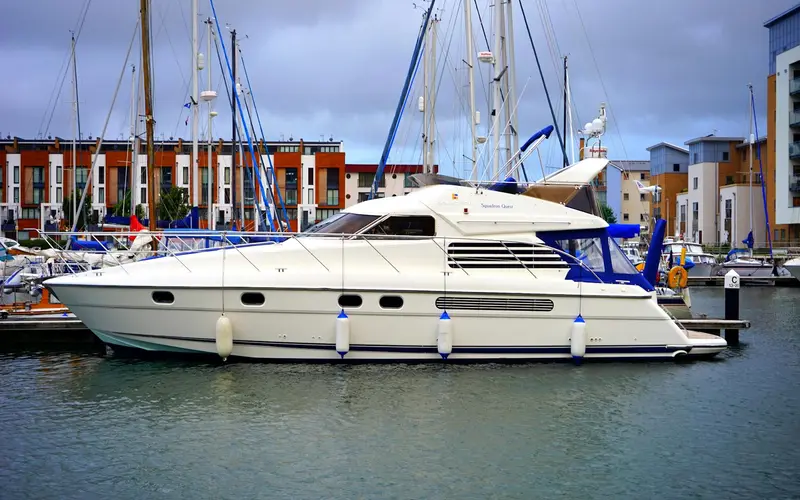
To be honest, when I first began seriously studying ship structures, the term “gunwale” baffled me for quite some time.
My first encounter with it was in English-language materials. My immediate reaction was: ‘Surely this is just the edge of the boat? Why give it a specific name?’
It wasn't until later, after studying blueprints, listening to surveyors' explanations, and personally needing to purchase a yacht—having encountered several different types of vessels—that I realised: the gunwale is far more than simply the ‘edge of the boat.’ It is virtually the convergence point of the entire vessel's structural logic.
In this article, I shall explain in detail what the gunwale on a boat is.
Gunwale Meaning (In Simple Terms)
A gunwale (pronounced "gunnel") is the upper edge or structural rim running along the sides of a boat, where the hull meets the deck. Its primary purpose is to strengthen the hull's top edge, provide rigidity to the boat's structure, and prevent water from easily washing over the side into the vessel. Gunwales also serve as a crucial handhold for stability and often incorporate fittings for attaching oarlocks, cleats, or other hardware.
What Is a Gunwale on a Boat?
A gunwale (also pronounced “gunnel”) on a boat is the upper edge of the hull where the side meets the deck, serving as a critical structural reinforcement and mounting area.
The gunwale refers to the uppermost continuous structural zone along both sides of the hull, connecting the hull shell to the deck. It is not merely a simple ‘edge,’ but an entire critical structural band encircling the hull.
From an engineering perspective, the gunwale essentially serves as both the ‘connection node’ and ‘reinforcement zone’ between the hull plating and deck structure.
This location must typically satisfy three requirements simultaneously:
• Sufficient structural rigidity
• Capacity to withstand repeated external forces and fatigue loads
• Ability to support extensive daily usage and equipment installations
This is not personal interpretation but a standard definition. According to Merriam-Webster Dictionary: ‘A gunwale is the upper edge of a ship’s or boat’s side.’
However, in modern naval architecture, this ‘upper edge’ is almost never a simple thin rim. Instead, it constitutes a critical zone that undergoes thickening, reinforcement, and structural integration.
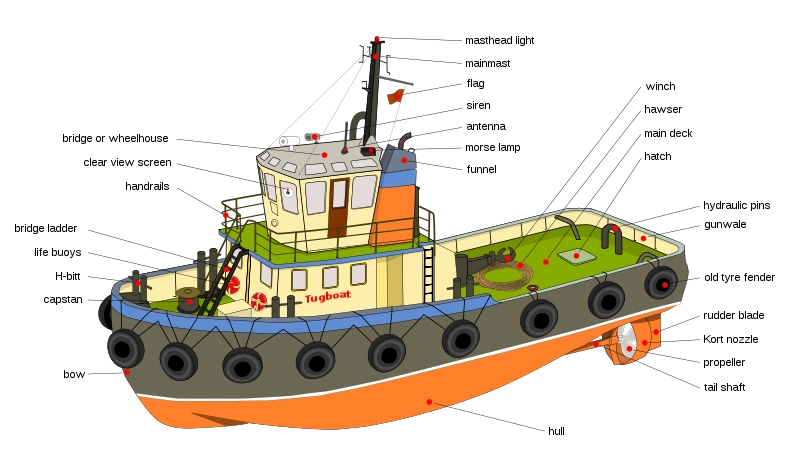
From the user's perspective, the gunwale can be understood as:
The structural lifeline you most frequently touch and rely upon aboard ship, yet one most easily overlooked.
Etymology and Pronunciation
Historical Origins
The etymology of “gunwale” traces back to the era of wooden warships in the 16th–17th centuries.
At that time, the uppermost edge of the hull served as the mounting and securing area for naval guns. To support the weight of artillery, withstand recoil forces, and endure combat damage, this structural ring was specifically thickened and reinforced, becoming known as the gun wall.
As maritime technology advanced, ‘gun wall’ gradually evolved into ‘gunwale,’ though the name persisted. Even on today's unarmed leisure craft, the term symbolises ‘the most critical upper structural element of the hull’.
According to Wikipedia's explanation of gunwale: The term gunwale originates from the phrase ‘gun wale’, a reinforcing band on warships where artillery was mounted — a usage that has persisted into modern nautical terminology.
Pronounced gunnel
Correct pronunciation: Why not spell it as written? Although spelled Gunwale, the standard pronunciation is: gunnel (/ˈɡʌnəl/)
This exemplifies a very typical category of words in nautical English:
• Spelling retains historical form
• Pronunciation has been ‘compressed’ and simplified through long-term spoken usage
For beginners, this is a common pitfall, and even many boat owners mispronounce it after years of use. In short, this word wasn't ‘written down and then pronounced’; it was first used daily by sailors before being recorded in books.
Where Is the Gunwale on a Boat?
Spatially speaking, the sheer line occupies a critically junctural position within the hull structure. It simultaneously connects:
• The hull's side shell
• The deck structure
• The sheer line (the outer contour of the ship's side)
When viewed from outside the vessel, the gunwale essentially defines the boundary line determining the ship's ‘profile height and uprightness’. From within the vessel, it typically serves as:
• The location for handrails
• The point for mooring lines and fender attachments
• The mounting position for railings, fairleads, and deck fittings
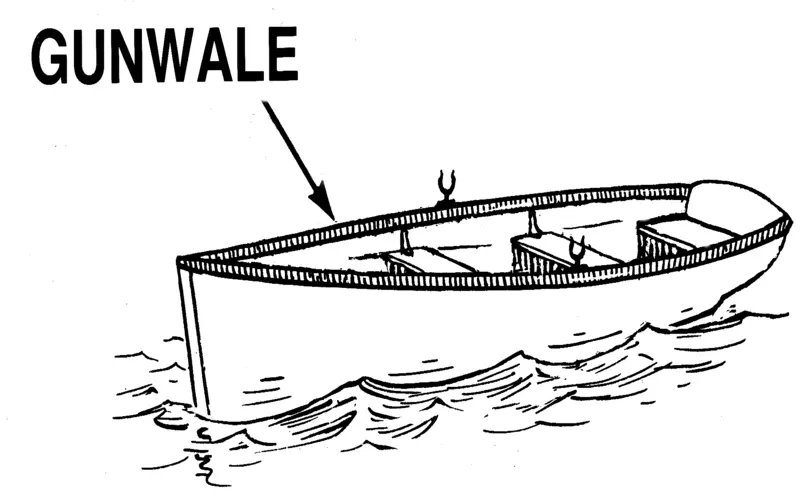
It must be particularly emphasised that the gunwale is not a single independent component, but rather a structural zone. The British nautical journal Practical Boat Owner also clarifies in its glossary: ‘The gunwale is the uppermost edge of the hull and often incorporates stiffening elements for strength.’
Across different vessel types, it may manifest as:
• A fibreglass monocoque structure
• Internal stiffening beams + external cladding
• Metal or timber composite structures
Regardless of form, its position and function remain consistent.
Functional Role of the Gunwale
The gunwale is indispensable in hull design due to its triple role in structure, protection, and utility.
From a structural strength perspective
The freeboard forms part of the hull's rigid closed-loop structure.
It ‘locks’ the port and starboard hulls with the deck into a unified assembly, enabling controlled deformation under the following conditions:
• Heading into waves or being buffeted by waves
• Longitudinal hull twisting
• Lifting, hoisting, or towing operations
If the hull were likened to a box, the freeboard represents the critical ‘reinforcing frame’ encircling its upper rim. Should this perimeter lack sufficient strength, the hull becomes susceptible to micro-cracks, water ingress, or even structural fatigue during prolonged service.
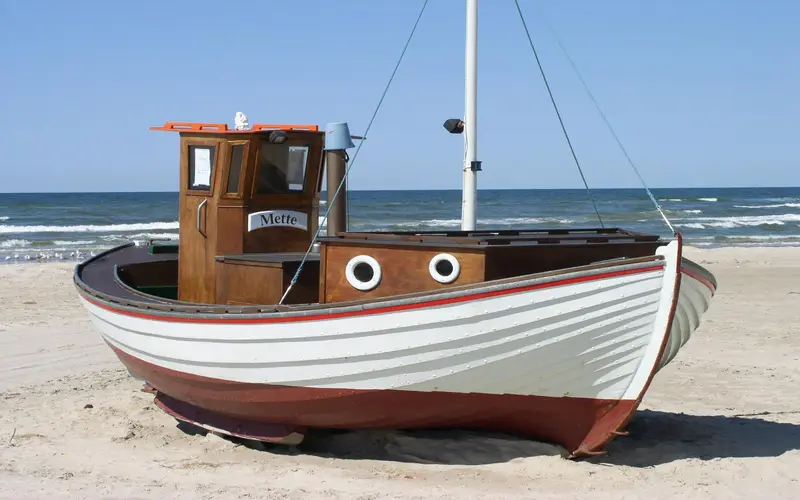
From a protective standpoint
In practical operation, the freeboard is almost invariably the area most prone to contact and abrasion:
• Berthing alongside quays
• Butting against other vessels
• Repeated tension from mooring lines
Consequently, many vessels fit protective rub rails to the outer edge of the freeboard. This is not for decoration, but to: confine damage to ‘replaceable components’ rather than allowing it to propagate directly into the hull structure.
From a daily usage perspective
For owners, the gunwale is a high-frequency usage zone:
• Mooring bollards and fairleads are typically fitted near the gunwale
• Fender balls are almost invariably hung at gunwale height
• When boarding/disembarking or mooring, the gunwale serves as the primary support point
In other words: the gunwale must be both ‘extremely robust’ and ‘highly functional’.
This explains why professional advice in many tips for buying a new yacht specifically emphasises: do not focus solely on the vessel's exterior, interior, or equipment list. Instead, meticulously inspect this ring of ‘overlooked structural detail’ – the gunwale.
This is because it directly impacts berthing safety, long-term durability, and subsequent maintenance costs. A vessel with a well-designed, solidly constructed gunwale typically proves more trouble-free in daily use and retains its value better.
Distinguishing the Gunwale from Similar Components
Many people often confuse the gunwale with the rail or bulwark. Below is a table to clarify the distinctions in a moment:
Gunwale vs Rail vs Bulwark: What's the Difference?
| Name | Location | Function | Is it part of the structure? |
| Gunwale | Uppermost edge of the hull | Strength, mounting base, protection | ✔ |
| Rail | Mounted on the hull edge | Prevents falls, handrail | ✘ |
| Bulwark | A wall higher than the hull edge | Increases safety, wave protection | ✘ (But integrated with the structure) |
Gunwale vs Rail
Rail typically refers to fittings mounted above or to the outer edge of the gunwale:
• Guardrails
• Handrails
• Decorative edging
Its core functions are: preventing falls, providing support, and enhancing appearance.
The key distinctions are:
• The gunwale is part of the hull structure
• The rail is an accessory fitted to the structure
One may replace a rail, but one cannot ‘replace’ a gunwale.
Gunwale vs Bulwark
A bulwark denotes a parapet-like structure extending upwards from the deck edge. Commonly found on ocean-going vessels, merchant ships, or high-sided yachts, it serves to:
• Block waves from reaching the upper deck
• Provide a higher safety boundary
The relationship between the two can be understood thus: the gunwale is the foundation, while the bulwark is an extension built upon that foundation.
Typical Application Scenarios
The ‘manifestation’ of the gunwale varies significantly across different vessel types, though its fundamental function remains consistent.
On dinghies, the gunwale is typically designed to be more impact-resistant, robust, and fitted with thick rubber fenders, as these craft frequently collide with jetties, trailers, or other vessels. With minimal additional structural elements, the gunwale serves as the primary load-bearing force supporting the entire hull.
On sailing vessels, the gunwale adopts a more structural design. The hull requires sufficient rigidity to withstand wind pressure, mast loads, and the lateral forces encountered during navigation. Additionally, the gunwale is typically moulded as an integral part of the deck, enhancing strength and reducing the risk of water ingress.
On yachts, the gunwale frequently incorporates premium fittings such as stainless steel handrails, recessed lighting strips, deck drainage channels, and fender systems. Yachts prioritise comfort and aesthetics, so beyond structural integrity, the gunwale must also offer an attractive appearance and effective mooring protection.
This can be summarised in the following table:
| Boat Types | Forms |
| Small Boats/Speedboats | Simplified hull structure, but emphasis on impact resistance |
| Mostly made of aluminum alloy or fiberglass | |
| Fenders are used very frequently | |
| Sailboats | The hull is a crucial load-bearing point for rigging and railings |
| Commonly edged with wood or composite materials | |
| High requirements for long-term fatigue and water seepage control | |
| Yachts | The hull is often "hidden" in the exterior design |
| Complex internal structure, carrying a large amount of equipment | |
| It is both the structural core and part of the visual lines |
Common Damage Issues and Risks with Gunwales
Problems with gunwales are rarely of the ‘obviously damaged’ variety. In numerous practical cases I have encountered, gunwales represent classic yacht maintenance blind spots – areas seldom noticed during routine checks, yet when issues arise, they frequently compromise the vessel's core structure.
Common scenarios include:
• Water ingress through fixing holes, penetrating into the sandwich structure
• Internal structural fatigue despite outwardly intact appearance
• Long-term neglect of fender strip detachment
• Localised structural weakening from berthing abrasion
The real risk lies in the fact that once the gunwale fails, it often compromises the deck-to-hull connection, causing repair costs to escalate exponentially.
This is precisely why, during used yacht inspections, the gunwale must be examined separately and with particular emphasis.
Consequently, in any comprehensive Yacht Sea Trial Checklist, the gunwale and its associated areas should never be merely ‘glanced at’.
A more prudent approach is:
During sea trials or berthing manoeuvres, observe whether the gunwale exhibits abnormal noises, localised deformation, loose fender strips, or signs of water ingress at deck-to-hull junctions. These details often reveal a vessel's true condition more accurately than engine parameters.

FAQ
Q1: What materials are gunwales made of on boats?
Gunwales are most commonly made from durable hardwoods like oak or teak for traditional strength and aesthetics, or aluminum/marine-grade plastics for modern, low-maintenance boats.
Q2: Why is gunwale pronounced “gunnel”?
The pronunciation "gunnel" comes from the original term "gunwale" (meaning "gun ridge"), where the "w" became silent over time through common usage.
Q3: Is the gunwale the same as the ship's side?
Broadly speaking, yes. The hull side refers to the entire side of the vessel, while the gunwale is the uppermost edge – a more precise structural term.
Q4: Can gunnels deteriorate? Do they require maintenance?
Yes. Particularly wooden gunnels, rubber rubbing strakes, or metal handrail attachment points require regular inspection for cracks, loosening, or ageing.
Riley Miller
Riley Miller is the owner of the “Serendipity” yacht, a contributing columnist for “Yachting Monthly,” and has published 17 in-depth analyses on yacht cost management. He also serves as an advisory committee member for the European Second-Hand Yacht Association (ESYA) and holds the International Yachting Certificate ICC-UK-2019C-17429, with certified cruising areas covering the Mediterranean and the western coast of the Atlantic.
Disclaimer
The content herein is for informational purposes only and is intended to share the author's personal experiences and perspectives. It does not constitute legal, tax, or investment advice. Yacht transactions involve complex legal, financial, and technical matters. Actual purchasing processes may vary due to regional regulations, vessel type differences, or individual circumstances. Before making any yacht purchase decisions, readers are advised to consult licensed professionals (such as attorneys, tax advisors, licensed yacht brokers, or surveyors) for personalized guidance tailored to their specific situation. Neither the author nor the publisher shall be liable for any direct or indirect losses arising from reliance on the information provided herein.