Quick Answer: How Much Does It Cost to Run a Yacht Per Year?
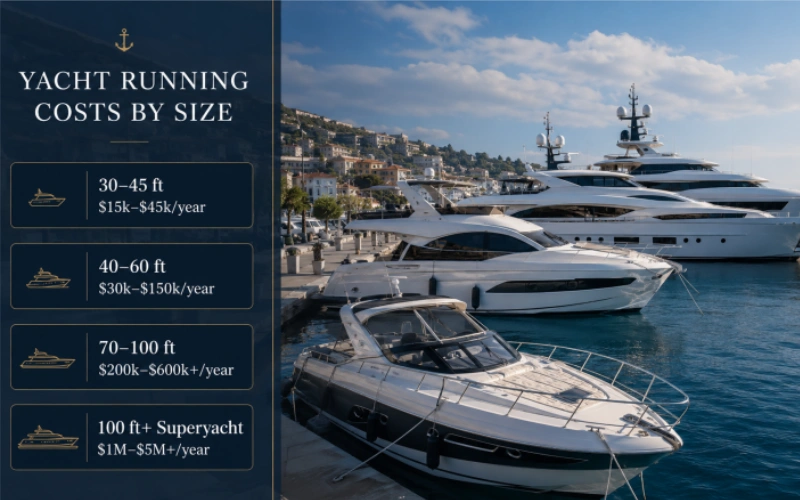
A yacht usually costs about 10%–15% of its purchase price per year to run. A 40–60ft yacht often costs around $30,000–$150,000 per year, while a 70–100ft yacht may cost $200,000–$600,000+ annually. For 100ft+ superyachts, annual running costs can exceed $1 million, mainly from crew, fuel, docking, insurance, maintenance and hidden ownership fees.
Over the past decade, I have managed three privately owned yachts and assisted clients in managing over 40 vessels—ranging from 38-foot family cruisers to 90-foot steel-hulled ocean-going yachts. In 2019, I operated a 55-foot flybridge yacht in the Mediterranean; in 2022, I managed a 62-foot yacht in Greece and a 43-foot yacht in France. That year, I calculated the full annual operating costs for the first time—the results far exceeded most new owners' expectations. Below, I detail the pitfalls I've encountered, real-world figures, and practical methods to help you accurately budget and optimize expenses for 2025.
Before estimating annual running costs, compare the purchase price of similar used yachts for sale.
Yacht Running Costs by Size
40 Foot Yacht Running Costs Per Year
- Annual Cost: $15,000–$45,000
- Fuel: $3,000–$8,000
- Berthing: $5,000–$15,000
- Crew: Optional 0–$15,000
- Maintenance/Repairs: $5,000–$12,000
A 40ft yacht is ideal for owner-operators. Fuel and maintenance are moderate; berthing costs depend heavily on marina location. I have personally sailed a 43ft yacht in France and maintained annual costs near the lower end by combining owner operation with occasional professional crew for long trips.
50 Foot Yacht Running Costs Per Year
- Annual Cost: $40,000–$120,000
- Fuel: $8,000–$20,000
- Berthing: $10,000–$30,000
- Crew: 0–$50,000
- Maintenance/Repairs: $10,000–$25,000
50ft yachts are a balance between comfort and manageable costs. They are suitable for families and frequent weekend trips.
60 Foot Yacht Running Costs Per Year
A 60ft yacht usually costs $80,000–$250,000/year depending on fuel usage, crew requirements, marina location, and maintenance. Owner-operated 60ft yachts tend to stay near the lower end; fully crewed or frequently chartered vessels may reach the upper range.
- Fuel: $15,000–$40,000
- Berthing: $20,000–$50,000
- Crew: $20,000–$100,000
- Maintenance/Repairs: $20,000–$60,000
70 Foot Yacht Running Costs Per Year
A 70ft yacht enters a higher cost bracket due to increased crew, docking, insurance, and technical maintenance. Typical annual costs are $150,000–$400,000+.
- Fuel: $30,000–$80,000
- Berthing: $30,000–$100,000
- Crew: $50,000–$300,000
- Maintenance/Repairs: $50,000–$120,000
Many 70ft yachts require at least a captain, engineer, and two crew members for safe operation.
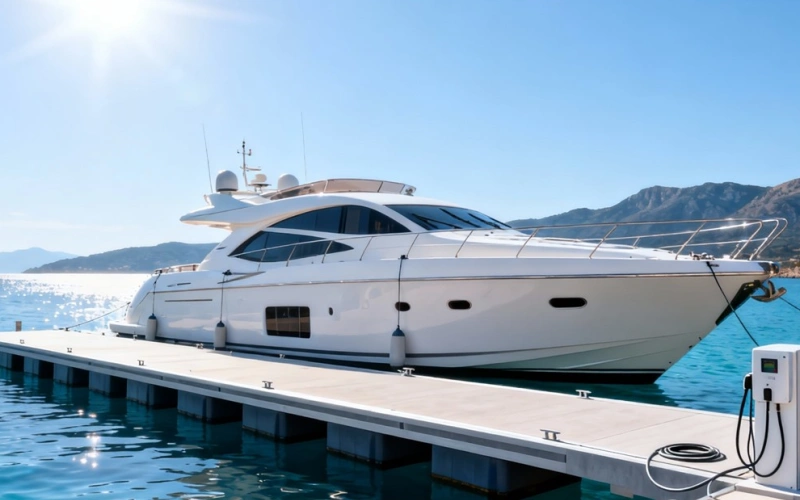
100 Foot Yacht Operating Cost Per Year
- Annual Cost: $500,000–$1,000,000+
- Fuel: $80,000–$200,000
- Berthing: $50,000–$200,000
- Crew: $150,000–$600,000
- Maintenance/Repairs: $100,000–$300,000
100ft yachts demand professional crew and regular maintenance. I’ve calculated these costs for clients owning steel-hulled ocean-going yachts, and crew plus maintenance usually exceed 60% of annual running costs.
100ft+ Superyacht Annual Running Costs
The cost of owning a superyacht over 100 ft has skyrocketed, ranging from $1 million to over $5 million annually, driven primarily by expenses such as a full crew, luxury berths, insurance, and vessel refurbishment.
💡 Tip from Experience:
Larger yachts have disproportionately higher crew and maintenance costs, often exceeding fuel or berthing. Understanding these numbers early helps plan a realistic budget, avoid surprises, and optimize operational efficiency.
If you are comparing ownership budgets, browse new yachts for sale and used yachts for sale to see how purchase price affects annual operating costs.
Yacht Operating Costs as a Percentage of Purchase Price
Is the 10% Rule for Yachts Accurate?
The 10% rule is a practical guideline: annual running costs ≈ 10%–15% of purchase price. According to Boat International, maintenance is typically 5%–10%, insurance 0.5%–2%, with crew and berthing filling the remainder.
For a more detailed breakdown, you can use our yacht running cost calculator to estimate annual expenses based on yacht size, purchase price, crew requirements, fuel consumption, maintenance and ownership factors.
When Can Annual Costs Reach 15%–25%?
Costs rise significantly when:
- The yacht is fully crewed or chartered frequently
- Located in premium marinas
- Undergoing regular refits and upgrades
- Operating high-performance hulls or large engines
Yacht Fuel Cost Per Year
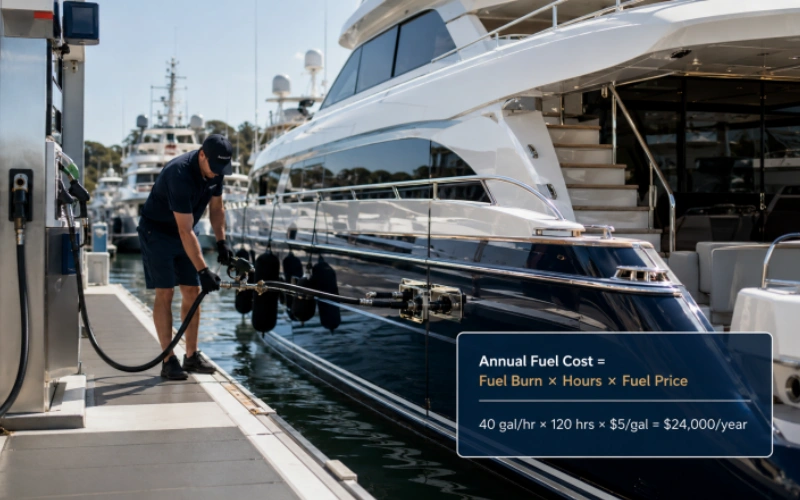
Yacht Fuel Cost Formula
Fuel Cost = Fuel Consumption (L/h) × Operating Hours × Fuel Unit Price
Fuel Cost Example for 40ft, 60ft and 100ft Yachts
| Yacht Size | Fuel Consumption | Annual Fuel Cost |
|---|---|---|
| 40ft | 28–115 L/h | $3,000–$8,000 |
| 60ft | 100–200 L/h | $15,000–$40,000 |
| 100ft | 200–400+ L/h | $80,000–$200,000 |
Fuel consumption increases exponentially with speed. Reducing a 60ft yacht’s cruising speed from 18 to 14 knots saved ~18% in annual fuel costs in my experience.
Yacht Docking and Mooring Costs
Marina Fees by Region
| Region | 40–60ft Yacht Annual Berth | Notes |
|---|---|---|
| Mediterranean | €10,000–€50,000 | Prices spike during Monaco GP & Yacht Week |
| United States | $150–350/ft/year | Based on marina amenities |
| Asia | $20,000–$70,000 | Scarce premium berths |
Annual Berthing vs Daily Docking
Choosing between annual berthing and daily docking can significantly affect your yacht budget. From my experience managing 40–70ft yachts, the differences are clear:
Annual Berthing
- Fixed cost, usually saves 10%–30% compared to daily rates.
- Predictable and convenient, ideal for owners who cruise regularly.
Daily Docking
- Offers flexibility for itinerant owners, moving between marinas as needed.
- Costs fluctuate with season, location, and events; in Monaco, daily rates for 40ft yachts can reach €3,000–€20,000/day during the Grand Prix.
- Requires advance planning to avoid last-minute shortages.
Seasonal Relocation
- Combining annual berthing in high season with winter storage ashore can reduce costs by ~25%.
Takeaway: Annual berthing suits predictable budgets; daily docking is flexible but can be costly during events; hybrid strategies often deliver the best balance between convenience and cost.
Tip: Include all services—electricity, water, waste, security—when comparing costs, as they can add significantly to daily docking fees.

Yacht Crew Costs Per Year
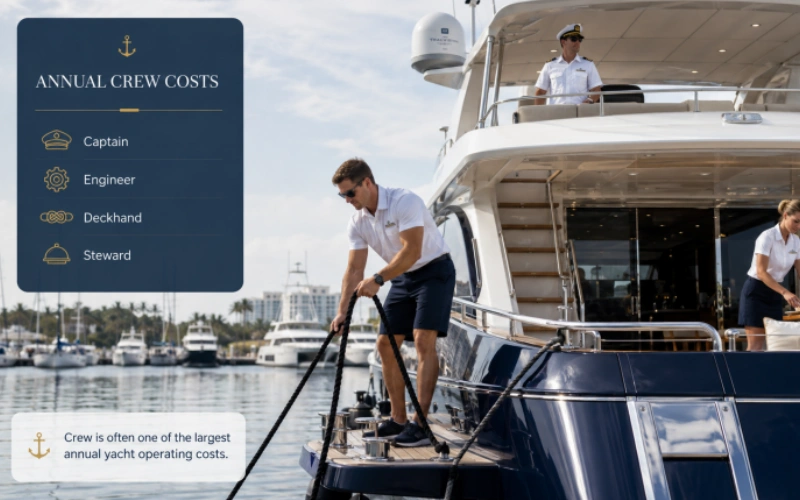
Captain Cost
The captain is responsible for navigation, safety, and overall vessel operation. Salary ranges vary depending on yacht size, operating region, and experience:
- 40–60ft yachts: $45,000–$90,000/year
- 70–100ft yachts: $80,000–$180,000/year
- 100ft+ superyachts: $120,000–$400,000/year
Engineer, Deckhand and Steward Cost
The engineering, deck, and interior team maintain propulsion, electrical systems, hull integrity, and guest comfort:
| Position | 40–60ft | 70–100ft | 100ft+ |
|---|---|---|---|
| Engineer | $40k–$70k | $60k–$130k | $80k–$250k |
| Deckhand | $30k–$50k | $40k–$90k | $50k–$150k |
| Steward/ess / Chef | $30k–$60k | $50k–$120k | $60k–$200k |
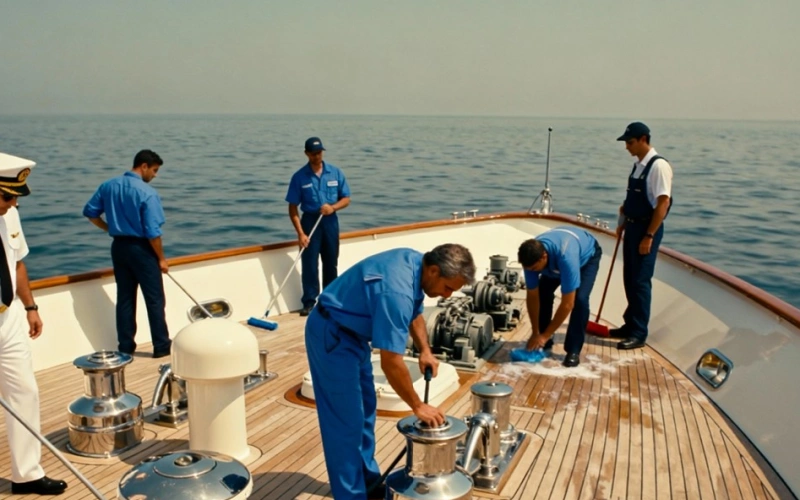
Crew salaries are often the largest component of annual running costs after fuel and berthing. The above crew salary information is sourced from the Luxury Yacht Group Salary Guidelines.
Owner-Operated vs Crewed Yacht
Operating your yacht yourself versus hiring professional crew significantly impacts annual running costs.
Owner-Operated Yachts
- Cost Saving: Avoid crew salaries ($50k–$100k/year for 50–60ft yachts).
- Requirement: Owner handles navigation, docking, and basic maintenance—suitable for short trips or weekend cruising.
- Experience Tip: Keep a detailed maintenance log to avoid surprises and lower insurance costs.
Crewed Yachts
- Cost: $50k–$300k/year depending on yacht size.
- Benefit: Professional crew handle safety, navigation, and maintenance. Essential for long passages or yachts 70ft+.
- Extra Advantage: Crewed yachts can be chartered, offsetting some annual costs.
Practical Guideline
- 40–50ft: Owner-operated is feasible
- 50–60ft: Hybrid model works (part-time crew)
- 70ft+: Full-time crew recommended
Hidden Costs of Yacht Ownership
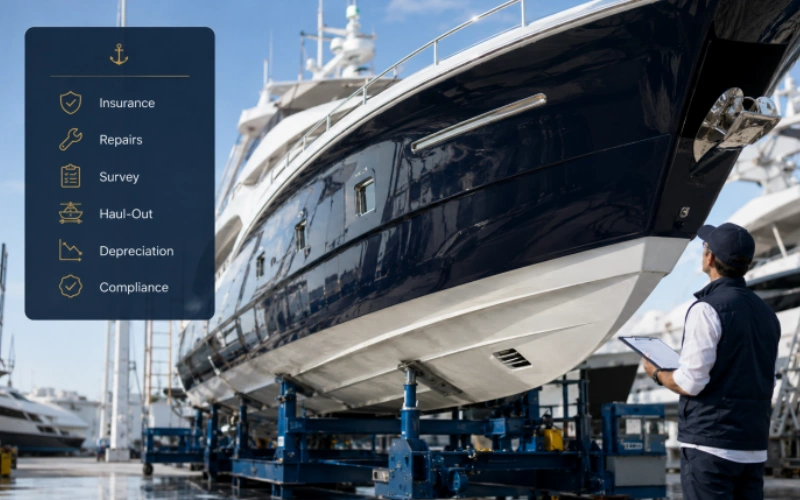
Owning a yacht involves more than fuel, berthing, and crew—hidden costs can surprise new owners. Here’s a practical overview based on my decade-long yacht management experience:
Insurance
- Typically 1%–3% of yacht value/year
- Depends on yacht size, cruising area, and coverage level
Maintenance and Repairs
- Covers engines, generators, electronics, hull cleaning, and anti-fouling
- Estimated 5%–10% of yacht value/year
Major repairs can exceed routine maintenance—always budget a contingency.
Surveys, Haul-Outs & Dry Docking
- Annual inspections and dry docking: $5,000–$50,000+
- Anti-fouling and hull work improve performance and fuel efficiency
Depreciation
- Most rapid in first 3–5 years
- Well-maintained yachts retain more value; poor maintenance accelerates depreciation
Taxes, VAT & Compliance
- Registration fees, VAT, import duties, and safety compliance vary by region
💡 Tip: Hidden costs often rival fuel and berthing expenses. Allocate a separate budget category to avoid surprises.
How to Reduce Yacht Running Costs
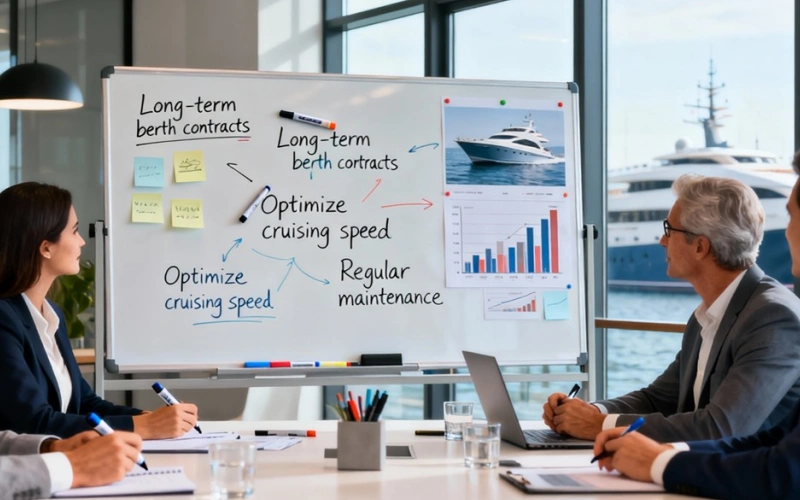
Below are proven measures for lowering annual yacht operating costs, derived from years of management and consulting experience. All are quantifiable and directly actionable:
Reduce Mooring Costs
Sign long-term berth contracts: Typically secures 10%–20% discounts.
Flexible berthing locations: Use popular ports during peak season, then move to lower-cost ports or ashore storage during off-peak periods (winter storage saves more).
Reduce Fuel Costs
Optimize cruising speed: I once saved approximately 18% in annual fuel costs by reducing the most common cruising speed from 18 knots to 14 knots.
Regular hull and propeller maintenance: Fouling increases drag, raising fuel consumption by 10%–20%.
Optimize Crew Configuration
Part-time + Coach-Style Training: Yachts between 50–60ft can ensure safety through “part-time captains + regular training days” while controlling labor costs.
Hire per voyage vs. full-time: Commercial charter yachts require full-time crews; private leisure yachts can adopt hybrid models.
Controlling Hidden Costs
Create an annual yacht maintenance plan (inspection-based maintenance) and replace wear-and-tear parts according to schedule;
Obtain and retain all invoices and maintenance records, which aid in renewal discounts and claims processing.
Conclusion
As a captain, owner, and transaction advisor, I understand that annual operating costs determine whether you can “own and enjoy your yacht long-term.” Grasping these figures is more crucial than debating “whether to buy a yacht.” Budgets aren't meant to scare you—they empower you to make boating a sustainable, planable lifestyle. May this 2025 Yacht Annual Operating Cost Guide help you establish clear budgets, minimize surprises, and sail with confidence.
For buyers comparing ownership and chartering, see our yacht buying guide before committing to annual running costs.
About the Author
Emery
Emery is a yacht industry writer and content editor focused on yacht ownership, operating costs, yacht selection, and marine lifestyle topics. Through researching yacht markets, ownership data, and industry practices, Emery creates practical guides to help yacht owners and prospective buyers better understand the real costs, considerations, and decisions involved in yacht ownership.
Last Updated: December 2025
Scope of Application: Provides an annual operating cost guide for yacht owners, prospective buyers, and yacht management operators to facilitate accurate budgeting, optimize expenditures, and enjoy sailing life with peace of mind.
Disclaimer
The data, information, and recommendations regarding annual yacht operating costs presented herein are compiled based on the author's extensive management and consulting experience, industry resources, and historical empirical data. However, yacht operating costs are subject to uncertainty due to market fluctuations, regional variations, individual vessel conditions, and other factors. This content is for reference only and does not constitute professional advice or commitment. Readers should consult professionals and consider their specific circumstances when budgeting and making decisions. The author and publisher assume no legal liability for any direct or indirect losses arising from the use of this information.
FAQ
Q1: How much does a yacht cost annually?
A: Depending on the vessel's value, purpose and cruising area—the 10% rule for yachts serves as an estimation starting point, though actual costs are significantly influenced by berthing arrangements and frequency of use.
Q2: Why do marina fees vary so widely?
A: Supply/demand, geography, infrastructure, event days, and long-term contracts all create differences; luxury berths in Monaco-style marinas command far higher rates than outlying ports or municipal docks.
Q3: What are the hidden costs of owning a yacht?
A: Insurance, maintenance, surveys, dry docking, depreciation, taxes & compliance. Can rival fuel and berthing costs.
Q4: What is the 10% rule for yacht ownership costs?
A: Annual running costs ≈ 10%–15% of yacht price, covering fuel, berthing, crew, maintenance, insurance.
Q5: How much does it cost to run a 60-foot yacht?
A: $80k–$250k/year, depending on fuel, crew, and maintenance.
Q6: Is crew the biggest annual cost for a superyacht?
A: Yes. For 70ft+, crew often exceeds fuel and berthing.
Q7: How can yacht owners reduce annual running costs?
A: Optimize berthing, cruise efficiently, maintain hull/engines, and use hybrid crew models.