Quick Answer: What Is the Typical Yacht Depreciation Rate?
Most yachts depreciate by around 30%–35% after 5 years, 35%–45% after 7 years, and 45%–55% after 10 years. Premium brands such as Sunseeker, Azimut and Princess may retain 10%–20% more value than mainstream brands when maintenance records, engine hours and refit history are strong.
For example, a yacht originally purchased for $1,000,000 may be worth approximately:
- After 5 years: $650,000–$700,000
- After 7 years: $550,000–$650,000
- After 10 years: $450,000–$550,000
Actual resale value depends on brand, condition, engine hours, service records, location, VAT/tax status and current buyer demand.
Yacht Depreciation Rate by Age
| Yacht Age | Typical Depreciation | Estimated Resale Value on $1M Yacht | Buyer Takeaway |
|---|---|---|---|
| 3 Years | 20%–30% | $700k–$800k | First depreciation occurs, still premium-priced |
| 5 Years | 30%–35% | $650k–$700k | Strong value window for buyers |
| 7 Years | 35%–45% | $550k–$650k | Maintenance and service records critical |
| 10 Years | 45%–55% | $450k–$550k | Best for value buyers, inspection essential |
| 15 Years | 55%–65%+ | $350k–$450k | Refit, engines, electronics dominate resale value |
How to Calculate Yacht Depreciation?
Formula:- Depreciation Rate (%) = (Original Purchase Price − Current Resale Value) ÷ Original Purchase Price × 100
- Original Purchase Price: $1,000,000
- Current Resale Value (after 5 years): $680,000
- $1,000,000 − $680,000 = $320,000
- $320,000 ÷ $1,000,000 = 0.32
- 0.32 × 100 = 32%
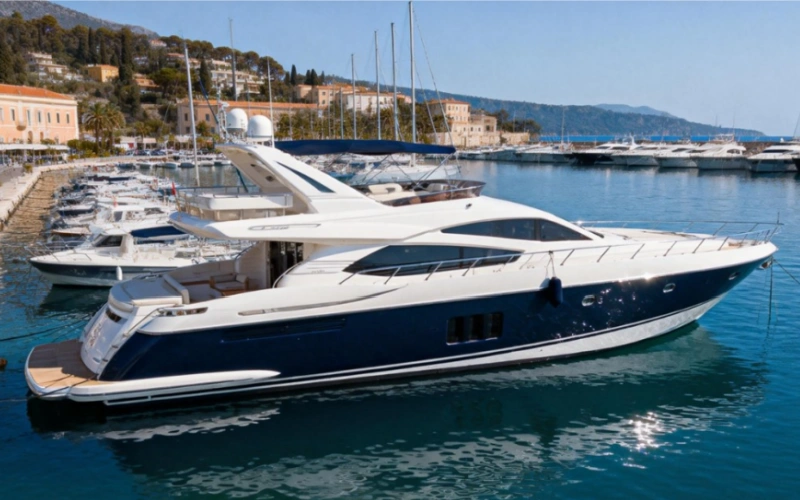
Yacht Depreciation Rate Over 5 Years
5 years is the first major depreciation milestone
- Premium brands: ~30%–35%
- Mainstream brands: ~35%–45%
- Key factors: maintenance, engine hours, service records
- Case example: 5-year-old Azimut 55 sold at 31% below new due to strong maintenance; comparable mainstream brand sold ~40% below new.

Azimut FLY 55
- Length55.50 ft
- Cabins4
- Top speed31 kn
- TypeFlybridge yacht
The Azimut 55 Fly luxury flybridge power yacht is 16.9 meters long and 4.9 meters wide. The lines from the hull contour to the flybridge hardtop are continuous, and there are no sharp corners or edges on the whole boat. The contour is soft and smooth.
Yacht Depreciation Rate Over 10 Years
10-year yachts are subject to rigorous inspections
- Premium brands: ~45%–50%
- Mainstream brands: ~50%–60%
- Critical factors: engine hours, generator, electronics, hull, refit history
- For 50m+ superyachts: crew cost, class survey, refit cycle, and charter history further affect resale.
Boat vs Yacht Depreciation Rate: What’s the Difference?
Boat: Broad category including small powerboats, fishing boats, sailboats, pontoons.
Yacht: High-value, luxury vessels; depreciation affected by brand, maintenance, crew, interior, marina location, and tax status.
Small boats: Faster model turnover, seasonal demand, engine hours strongly affect depreciation.
Luxury yachts: Higher absolute depreciation amounts; premium brands often more resistant to market fluctuations.
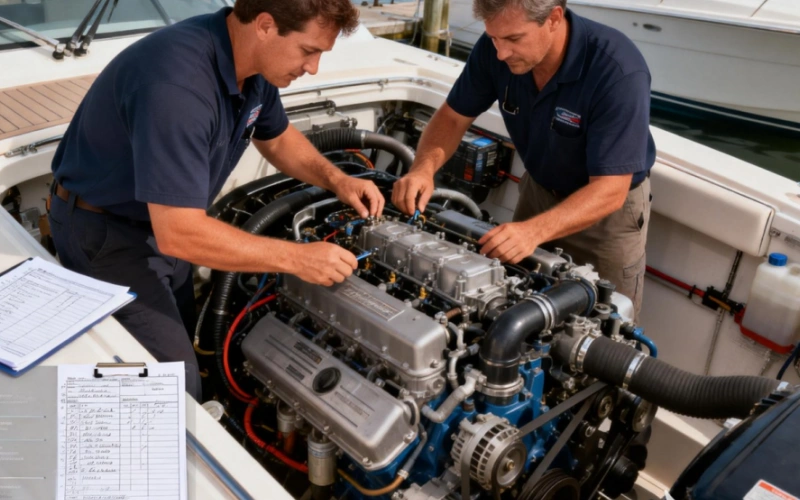
Core Factors Affecting Used Yacht Prices
Over more than a decade in this industry, I've developed a clear analytical framework: what determines the price of a 5–10 year old used yacht isn't its age per se, but an entire set of underlying value signals.
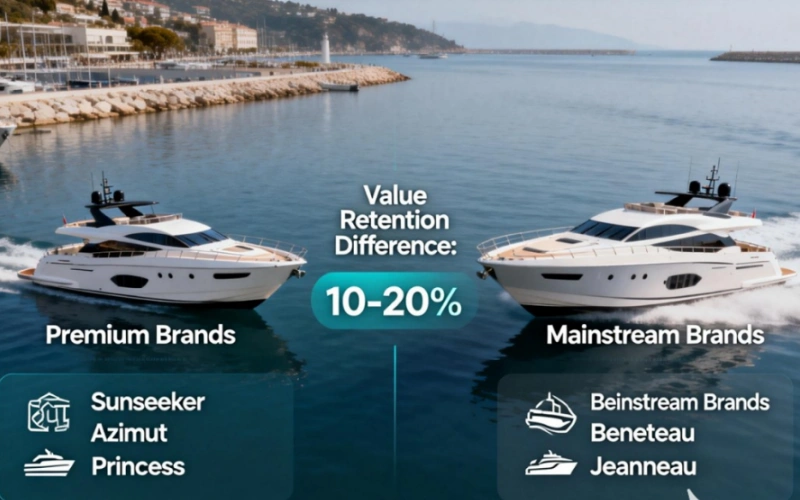
Brand and Model Demand
From a data perspective, brand influence is one of the strongest predictors of residual value. According to Boat International’s Global Brokerage Report, premium yacht brands consistently demonstrate higher value retention compared to mainstream builders.
As I’ve seen in real transactions, identical yachts in terms of size and age can differ by 10%–20% in resale value purely due to brand positioning.
- Premium Brands: Sunseeker, Azimut, Princess
- Mainstream Brands: Beneteau, Jeanneau, Bavaria
“Brand pedigree remains one of the strongest value-retention indicators in the used yacht market.” — Boat International
Maintenance Records and Engine Hours
Maintenance condition is often the single most important variable after brand.
According to Yachting Magazine’s owner cost analysis, consistent servicing and documented maintenance history significantly reduce long-term depreciation.
In real-world brokerage practice, I typically see:
- +10% to +20% value retention for full service history yachts
- 15%+ price gap between similar models with different maintenance quality
Key value-driving elements include:
- Engine hours and generator usage
- Annual service records (verifiable logs)
- Hull condition and structural integrity
- Interior refurbishment history
In my actual transactions, yachts with comprehensive maintenance systems not only sell faster but also command significantly stronger negotiating positions. Often, two yachts of the same model and age can see over 15% price difference solely due to maintenance disparities. Here, I also provide 7 Key Areas You Must Inspect When Buying a Used Yacht.
Refit, Electronics and Interior Condition
Beyond basic maintenance, upgrades and onboard systems play a major role in resale performance.
Modern buyers increasingly evaluate yachts based on usability readiness, not just structural condition.
Important value drivers include:
- Navigation system upgrades
- Entertainment and onboard tech systems
- Interior refit quality and timing
- Cosmetic vs functional refurbishment balance
Functional upgrades generally support resale value, while purely cosmetic changes have limited impact unless positioned for charter or premium lifestyle markets.
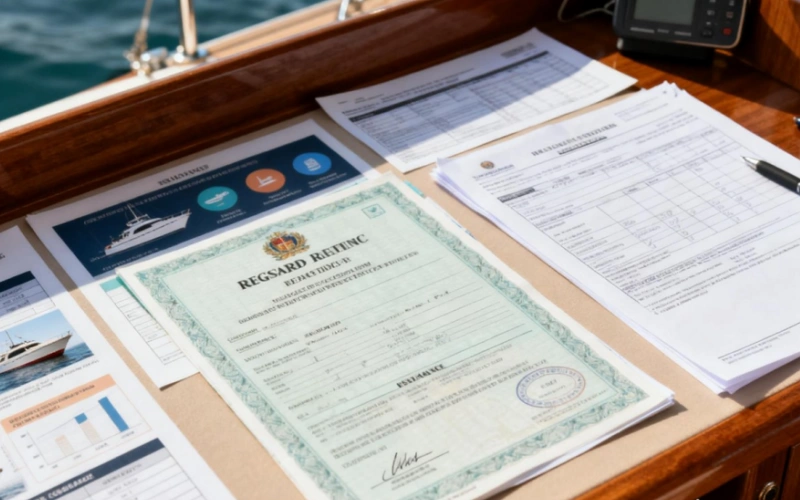
VAT, Registration and Accident History
Legal and documentation clarity directly affects buyer confidence and final transaction price.
Key elements include:
- VAT-paid or tax-compliant status
- Clean registration history
- Insurance and accident disclosure records
- Compliance with flag-state requirements
In brokerage practice, unclear documentation often leads to price discounting even when vessel condition is strong.

Market Supply and Buyer Demand
Market dynamics remain a key external driver of depreciation behavior.
According to current brokerage data:
- Strong demand periods → prices close to asking levels
- Weak markets → typical 5%–10% correction range
Regional variations also matter:
- Mediterranean: strong premium yacht liquidity
- North America: faster model turnover
- Asia: stronger retention for popular models
Which Yacht Brands Hold Their Value Best?
| Brand | Age 5 Years | Age 10 Years | Notes | CTA |
|---|---|---|---|---|
| Sunseeker | 30%–35% | 45%–50% | Popular 40–70ft cruisers retain liquidity | View Sunseeker Listings |
| Azimut | 30%–35% | 45%–50% | Strong Mediterranean demand | Explore Azimut Market |
| Princess | 30%–35% | 45%–50% | Strong resale due to global support network | Check Princess Availability |
| Ferretti | 32%–38% | 46%–52% | Larger yachts, slower turnover | See Ferretti Deals |
| Benetti | 33%–37% | 48%–53% | Superyachts, limited supply, crewed market | Browse Benetti Superyachts |
Buyer Guide: How to Use Depreciation Rates Before Buying a Used Yacht
When evaluating a used yacht, depreciation rate should be used as a decision filter rather than a standalone price indicator. In real brokerage practice, I consistently advise buyers to focus on value efficiency rather than age alone.
- Target 5–7 year-old yachts for the strongest balance between price and condition, as most first-stage depreciation has already occurred.
- Always review full maintenance records and verified engine hours, as these are the most reliable indicators of real usage intensity.
- Examine refit and upgrade history, prioritizing functional improvements such as navigation systems, propulsion servicing, and safety equipment over cosmetic upgrades.
- Consider location, VAT/tax status, and regional demand, as the same yacht can vary significantly in price depending on jurisdiction and buyer pool.
In practice, yachts in the 5–7 year range with complete service history often deliver the most predictable long-term ownership value.
Seller Guide: How to Reduce Depreciation Before Listing
From a seller’s perspective, depreciation is not only market-driven—it can also be actively managed before listing.
- Plan sale timing strategically, ideally before major service milestones or system overhauls become due.
- Organize complete maintenance records and documentation, as transparency directly improves buyer confidence and reduces negotiation pressure.
- Prioritize targeted functional upgrades, especially navigation systems, engine servicing, and essential onboard equipment, rather than cosmetic refits that rarely return full value.
- Use real market transaction data to position pricing within a realistic depreciation band rather than relying on emotional valuation.
In my experience, well-prepared listings can achieve 5%–10% stronger final sale prices compared to poorly documented or unstructured listings of the same vessel.
Is a Yacht a Depreciating Asset or a Good Investment?
A yacht should primarily be understood as a depreciating lifestyle asset, not a traditional financial investment.
- Depreciating asset: In most cases, yachts lose value over time due to usage, technological aging, and evolving buyer preferences.
- Limited exceptions: Certain premium yachts—especially those with strong brand equity, complete maintenance history, desirable layouts, and constrained supply—may demonstrate better-than-average value retention.
- Important caution: Even in strong resale cases, yachts should not be treated as investment instruments. Their value is highly dependent on market cycles, condition transparency, and buyer sentiment.
From a professional brokerage perspective, the most rational approach is to evaluate yachts based on utility value + expected depreciation, rather than expected financial return.
About the Author
Emery
Yacht Broker / Yacht Transaction Consultant / Contributing Writer for Yachting Magazine
SAMS Certified Surveyor #2458
Honored as one of “Asia's Top Ten Yachting Industry Experts” and recipient of the “Outstanding Service Award for Yacht Brokers”
Last Updated: December 2025
Applicable Audience: Owners and prospective buyers planning to purchase or sell pre-owned yachts; investors evaluating yacht investment returns; professional brokers and industry professionals engaged in yacht transactions, valuation, consulting, and maintenance.
Disclaimer
This content is based solely on author Emery's over a decade of yacht transaction and navigation experience, along with publicly available industry reports and market data. It is intended to provide general information and reference guidance. Depreciation rates, market analyses, and case studies referenced herein represent historical data or personal experience examples and do not constitute guarantees or commitments for specific transactions or investments. Yacht prices, depreciation rates, and market conditions vary over time, by region, economic environment, vessel maintenance, and individual transaction specifics. Actual transaction outcomes may exceed or fall below the ranges indicated herein. Readers should conduct independent evaluations and consult professional brokers, financial advisors, or legal counsel before making purchase, sale, or investment decisions. Neither the author nor the platform assumes legal liability for any direct or indirect losses arising from the use of this information.
FAQ
Q1: What is the average yacht depreciation rate?
A: 30%–50% for 5–10 year-old yachts, depending on brand and maintenance.
Q2: How can I determine if a used yacht's depreciation is reasonable?
A: Compare historical transaction cases of yachts with the same age, size, and brand. Additionally, evaluate the yacht's maintenance records, usage intensity, and market supply-demand dynamics to assess depreciation reasonableness. Well-maintained records typically add 10%–20% to value retention.
Q3: How much does a yacht depreciate after 5 years?
A: Typically 30%–35% for premium brands, 35%–45% for mainstream brands.
Q4: How much does a yacht depreciate after 10 years?
A: Typically 45%–50% for premium brands, 50%–60% for mainstream brands.
Q5: Do yachts depreciate faster than boats?
A: Small boats often see faster relative depreciation; luxury yachts have higher absolute depreciation, but brand and condition reduce volatility.
Q6: Which yacht brands hold their value best?
A: Sunseeker, Azimut, Princess, Ferretti, Benetti.
Q7: Does refitting a yacht increase resale value?
A: Functional upgrades help; cosmetic-only improvements often add limited value.
Q8: Is a yacht a depreciating asset?
A: Yes. In most cases, a yacht is a depreciating lifestyle asset, not a traditional investment. However, premium used yachts with strong brands, complete maintenance records, desirable layouts and limited supply may retain value better than average.