Quick Answer: How Much Does a Fishing Boat Cost in 2026?
Fishing boat prices in 2026 range from a few thousand dollars for a basic aluminum or jon boat to more than $1 million for a large offshore sportfishing model. The final price depends on the boat’s size, hull material, engine package, electronics, age, condition and location.
Buyers should compare four separate figures: the hull-and-engine price, the fully equipped purchase price, the first-year cash outlay and the recurring annual ownership cost. Used boats may cost less upfront, but high engine hours, corrosion, outdated electronics or incomplete maintenance records can quickly erase the initial saving.
Pricing scope: This guide covers recreational fishing boats, primarily in the U.S. market, rather than commercial fishing vessels. Price ranges should be treated as asking-price estimates and may exclude tax, financing, transportation, registration and optional equipment.
Average Fishing Boat Prices by Type and Size
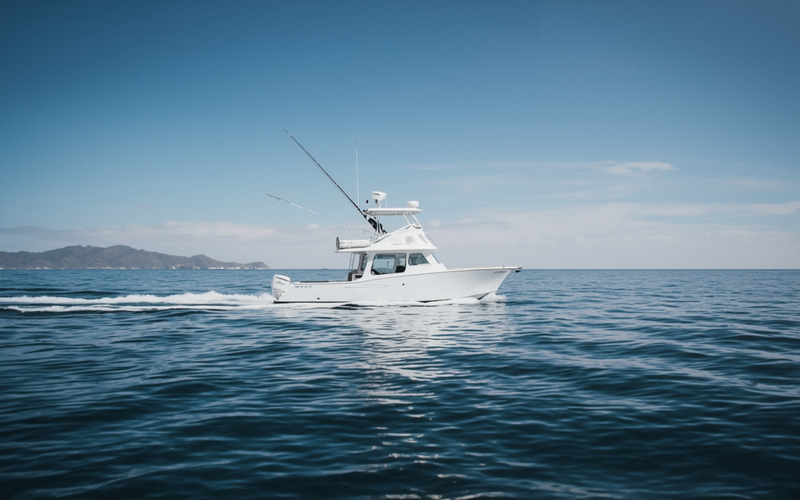
There is no single price for a fishing boat because the market includes everything from small trailerable aluminum boats to offshore sportfishing vessels with multiple engines and advanced navigation systems.
The table below shows typical asking ranges, not confirmed transaction prices. Actual prices vary depending on brand, engine configuration, equipment package, maintenance history and regional demand.
| Boat Type | Typical Size | New Asking Price | Used Asking Price | Annual Ownership Budget |
|---|---|---|---|---|
| Aluminum / Jon Boat | 10–18 ft | About $2,000–$30,000 | About $1,000–$20,000 | $800–$3,500 |
| Bass / Bay Boat | 16–24 ft | About $25,000–$90,000 | About $10,000–$70,000 | $2,000–$8,000 |
| Center Console | 18–30 ft | About $40,000–$250,000+ | About $20,000–$180,000 | $3,000–$25,000+ |
| Offshore Sportfishing Boat | 30–50+ ft | About $250,000–$2M+ | About $120,000–$1.5M+ | $25,000–$150,000+ |
Note: Based on active asking prices reviewed in July 2026. Asking prices are not guaranteed sale prices and may vary significantly by boat condition, location and included equipment.
Before comparing prices, buyers should first understand how different fishing boat categories are designed for specific environments, fishing styles and operating conditions. Read our guide to compare fishing boat types and models to explore the differences between inshore boats, offshore fishing boats and luxury sportfishing models.
Small Fishing Boat Prices: 10–20 ft
Small fishing boats are the most affordable category for recreational anglers, with prices ranging from basic aluminum jon boats to fully equipped fiberglass fishing boats.
Unlike larger fishing boats, many small models are trailerable and designed for lakes, rivers, bays and protected coastal waters. Their lower purchase price comes from simpler hull designs, smaller engines and fewer onboard systems.
Common small fishing boat types include:
- Aluminum jon boats
- Aluminum fishing boats
- Small fiberglass fishing boats
- Compact bass and utility boats
Small Fishing Boat Price Range
| Boat Size | Typical New Asking Range | Typical Used Asking Range |
|---|---|---|
| 10–12 ft Jon Boat | $2,000–$8,000 | $1,000–$5,000 |
| 12–16 ft Aluminum Fishing Boat | $5,000–$20,000 | $3,000–$15,000 |
| 16–18 ft Fishing Boat | $15,000–$35,000 | $8,000–$25,000 |
| 18–20 ft Fishing Boat | $25,000–$50,000 | $15,000–$40,000 |
The biggest price differences within this category usually come from:
- Hull material: Aluminum models are generally more affordable, while fiberglass boats often cost more because of their construction and performance characteristics.
- Engine package: The outboard size and brand can significantly affect the final purchase price.
- Included equipment: Trailers, fish finders, trolling motors, livewells and additional storage systems can increase the total cost.
For many first-time buyers, the 14–18 ft range provides a practical balance between affordability, storage convenience and fishing capability. However, buyers should select a boat based on their actual water conditions rather than choosing only by the lowest purchase price.
Center Console Boat Prices: 18–30 ft
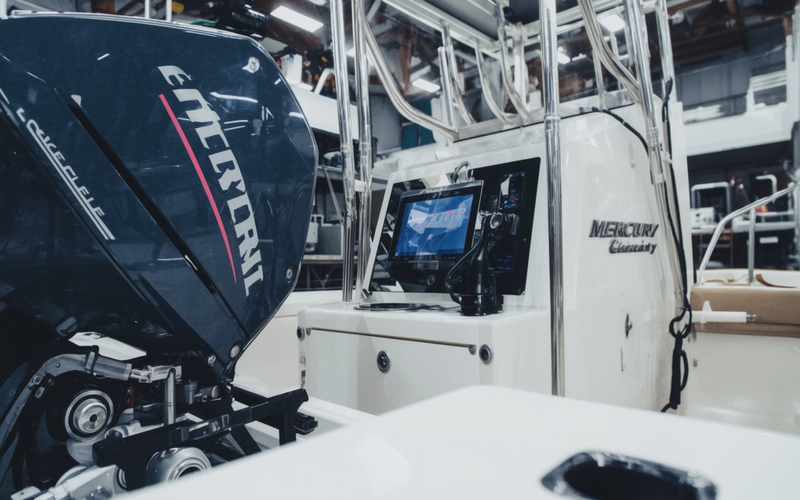
Center console boats are one of the most popular recreational fishing boat categories because they offer more capability than small trailerable boats while remaining easier to operate and maintain than larger offshore vessels.Prices vary widely depending on size, engine configuration, hull design and equipment level. An 18-foot center console for coastal fishing may cost a fraction of a 30-foot offshore-capable model with twin engines and advanced electronics.
Center Console Boat Price Range
| Boat Size | Typical New Asking Range | Typical Used Asking Range |
|---|---|---|
| 18–22 ft | $40,000–$100,000 | $20,000–$70,000 |
| 22–26 ft | $70,000–$160,000 | $40,000–$120,000 |
| 26–30 ft | $120,000–$250,000+ | $70,000–$180,000+ |
The final purchase price depends mainly on:
- Engine package: Single outboards are more affordable, while twin-engine setups increase price and offshore capability.
- Hull design: Offshore-oriented models with greater range and improved seakeeping generally cost more.
- Electronics and fishing equipment: Radar, autopilot, fish finders, livewells and hardtops can significantly increase the final price.
For many recreational anglers, the 22–26 ft center console range provides a practical balance between fishing performance, passenger space and purchase cost.
Offshore Fishing Boat Prices: 30–50+ ft
Offshore fishing boats represent the higher end of the recreational fishing market. Compared with smaller fishing boats, these vessels are designed for longer-range trips, deeper waters and more demanding offshore conditions.This category includes:
- Large center consoles
- Express sportfishing boats
- Convertible sportfishing yachts
- Offshore fishing yachts
Offshore Fishing Boat Price Range
| Boat Size | Typical New Asking Range | Typical Used Asking Range |
|---|---|---|
| 30–35 ft Offshore Boat | $250,000–$500,000 | $120,000–$350,000 |
| 35–40 ft Offshore Boat | $400,000–$800,000 | $250,000–$600,000 |
| 40–50+ ft Sportfishing Boat | $700,000–$2M+ | $500,000–$1.5M+ |
What Drives Offshore Fishing Boat Prices?
Engine configuration: Offshore boats often use larger outboard or inboard propulsion systems. Twin or triple-engine setups can increase performance and reliability but also add significant cost.Navigation and fishing equipment: Advanced systems such as radar, autopilot, AIS, satellite communication and professional-grade fish finders can substantially increase the final purchase price.
Range and construction: Long-range offshore boats require larger fuel capacity, stronger construction and more advanced onboard systems, which contribute to higher prices.
Boat size alone does not determine value. A well-equipped 35-foot offshore boat may cost more than a larger model with fewer upgrades, depending on its engine package, electronics and condition.
For buyers considering larger offshore fishing yachts, explore our current listings of browse new fishing yachts for sale.
Used Fishing Boat Prices in 2026
Used fishing boats can provide significant value compared with buying new, especially when the boat has a documented maintenance history and has been properly stored.However, the lowest purchase price is not always the best deal. A cheaper used boat may require substantial investment if it has:
- High engine hours
- Poor maintenance records
- Corrosion issues
- Outdated electronics
- Structural problems
Typical Used Fishing Boat Price Ranges
| Boat Type | Typical Used Asking Range |
|---|---|
| Small Aluminum Fishing Boat | $1,000–$20,000 |
| Bass / Bay Boat | $10,000–$70,000 |
| Center Console | $20,000–$180,000 |
| Offshore Sportfishing Boat | $120,000–$1.5M+ |
Used boat pricing depends on several factors:
Engine Condition
For used fishing boats, the engine is often one of the most important value factors. Buyers should review:
- Engine hours
- Service history
- Maintenance intervals
- Previous operating environment
Maintenance History
A complete maintenance history can help confirm:
- Regular servicing
- Previous repairs
- Equipment replacements
- Ownership care
Electronics and Equipment
Marine electronics have shorter technology cycles than many mechanical systems. A used boat may have a lower purchase price but require upgrades to:
- GPS systems
- Fish finders
- Radar
- Communication equipment
New vs Used Fishing Boat: Which Is Better Value?
There is no universal answer. The better choice depends on your priorities.| Factor | New Fishing Boat | Used Fishing Boat |
|---|---|---|
| Purchase Price | Higher | Lower |
| Warranty Coverage | Stronger | Limited or none |
| Depreciation | Faster initially | Usually slower |
| Customization | More options | Depends on existing setup |
| Condition Risk | Lower | Requires inspection |
A new fishing boat is often better for buyers who want predictable ownership and the latest equipment.
A used fishing boat is often better for buyers who want more capability for their budget and are willing to carefully evaluate condition.
When purchasing a pre-owned fishing boat, reviewing listings from trusted sources is important. Buyers can explore available options through used fishing yachts for sale.
How Much Does a Fishing Boat Cost Per Year?
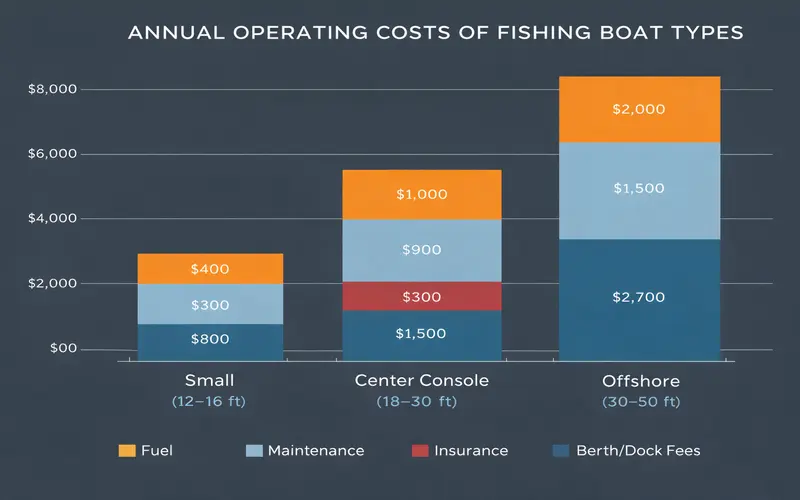
The purchase price is only the first part of fishing boat ownership. Annual costs depend on the boat’s size, storage method, engine configuration, location and how often it is used.
A practical ownership estimate is:
Annual ownership cost = storage + insurance + maintenance + repairs + fuel + registration + equipment replacement
Typical annual ownership budgets:
| Boat Type | Typical Annual Cost |
|---|---|
| Small Aluminum / Jon Boat | $800–$3,500 |
| Bass / Bay Boat | $2,000–$8,000 |
| Center Console | $3,000–$25,000+ |
| Offshore Sportfishing Boat | $25,000–$150,000+ |
The biggest differences come from three areas:
Fuel: Larger boats with higher horsepower or multiple engines usually have significantly higher fuel expenses, especially for offshore use.
Maintenance: Engine servicing, electronics, hull care and repairs generally increase as boats become larger and more complex.
Storage and insurance: Trailerable boats often avoid marina costs, while larger fishing boats may require dockage, dry storage or professional maintenance support.
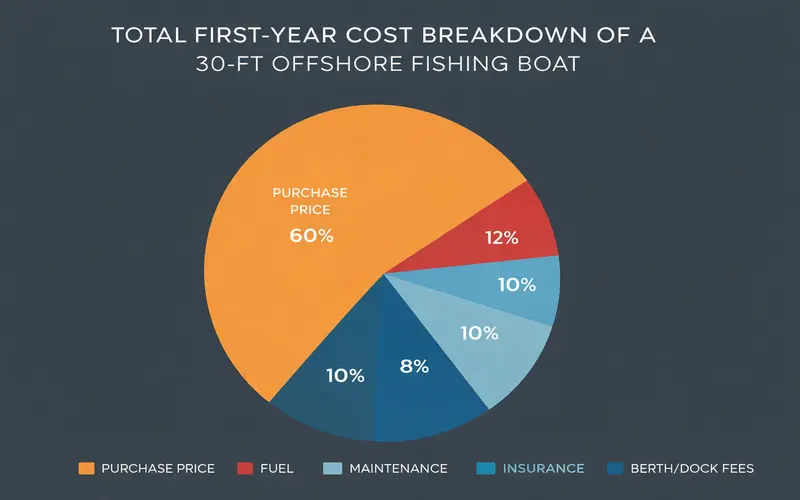
As a general planning guideline, many owners budget approximately 5%–15% of the boat’s value annually, although actual costs can be lower for simple trailerable boats and higher for large offshore vessels with complex systems.
The most cost-effective fishing boat isn't always the one with the lowest purchase price. Before choosing a boat model, buyers should take into account the total cost of ownership over the course of a year.
First-Year Costs Buyers Often Miss
Many buyers focus only on the purchase price and underestimate the additional expenses required to put a fishing boat into service.
The first-year cash outlay may include:
Marine Survey and Inspection
A professional inspection is especially important for used boats. The cost varies depending on boat size, location and inspection scope.
A survey can help identify:
- Structural concerns
- Mechanical problems
- Electrical issues
- Previous repairs
Taxes and Registration
Depending on location, buyers may need to budget for:
- Sales tax
- Registration fees
- Documentation fees
- Local boating requirements
These costs are separate from the advertised asking price.
Initial Equipment and Upgrades
Many boats require additional equipment after purchase, such as:
- Safety equipment
- Additional electronics
- Fishing accessories
- Docking equipment
- Covers and protection systems
A used boat may appear affordable but still require upgrades before it matches the owner's intended use.
Initial Maintenance
Even well-maintained boats may require immediate service after purchase, including:
- Engine servicing
- Battery replacement
- Fluid changes
- Bottom cleaning
- Minor repairs
The best approach is to create a complete ownership budget before signing a purchase agreement rather than calculating only the boat price.
How Location Changes Storage, Insurance and Fuel Costs
Where a fishing boat is stored and operated can significantly affect annual ownership costs. The same boat may have very different expenses depending on climate, marina availability, insurance requirements and operating environment.
The main location-related cost factors include:
| Factor | How Location Affects Cost |
|---|---|
| Storage | Marina availability, dock fees and seasonal storage requirements can greatly change annual expenses |
| Insurance | Coastal areas exposed to hurricanes or severe weather may require higher premiums or additional coverage considerations |
| Maintenance | Saltwater operation usually requires more frequent cleaning, corrosion prevention and bottom maintenance than freshwater use |
| Fuel | Longer travel distances, offshore fishing patterns and local fuel prices affect yearly fuel expenses |
Saltwater vs Freshwater Operation
Saltwater fishing environments generally create higher maintenance demands because marine corrosion can affect engines, electrical systems and hardware. Owners operating in coastal areas should plan for regular rinsing, inspections and corrosion protection.
Freshwater boats often experience lower corrosion-related maintenance, although seasonal storage and winterization may become important in colder regions.
Buying Outside Your Region
A lower listing price does not always mean a lower total cost. Buyers purchasing from another state or region should consider:
- Transportation expenses
- Survey arrangements
- Registration requirements
- Delivery preparation
The best location is not necessarily where the boat has the lowest purchase price, but where storage, maintenance support and operating costs match the owner’s actual usage.
What a Pre-Purchase Inspection Should Check
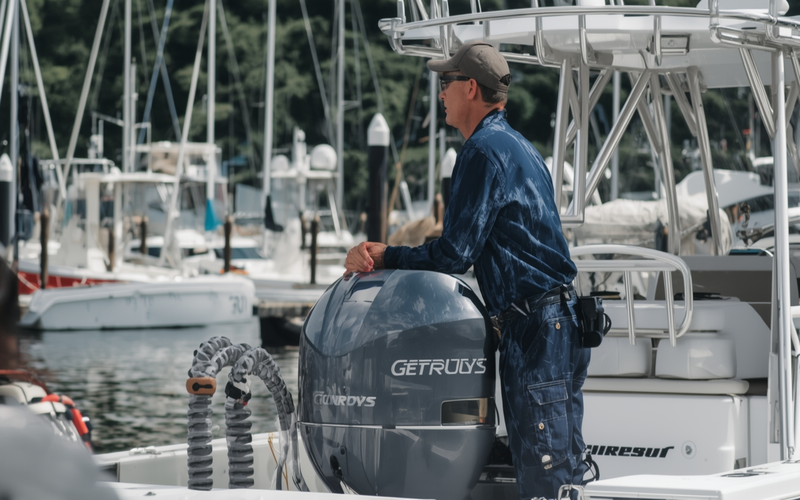
A professional pre-purchase inspection helps buyers understand the actual condition of a fishing boat before completing a transaction.
This is especially important for used boats because appearance alone does not reveal hidden mechanical or structural issues.
A typical inspection should review:
Hull Condition
Inspectors commonly check for:
- Structural damage
- Moisture intrusion
- Previous repairs
- Cracks or deterioration
- Signs of poor maintenance
Engine and Mechanical Systems
Important checks include:
- Engine hours
- Service history
- Operating condition
- Steering systems
- Fuel systems
- Cooling systems
For boats with multiple engines, each engine should be evaluated separately.
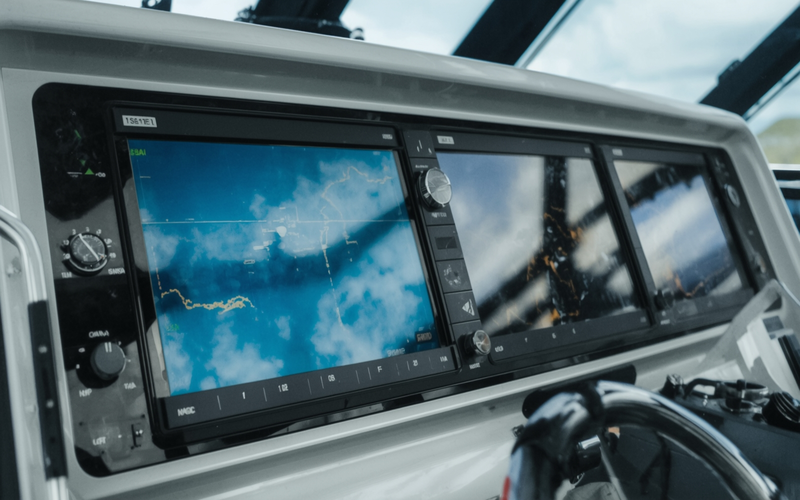
Electrical and Electronics
Modern fishing boats often depend on complex electronics, including:
- GPS systems
- Fish finders
- Radar
- Navigation equipment
- Communication systems
Buyers should confirm that installed equipment is functional and compatible with future upgrades.
Sea Trial
A sea trial can help evaluate:
- Engine performance
- Acceleration
- Handling
- Steering response
- On-water operation
For higher-value fishing boats, a survey and sea trial together provide a clearer picture of the vessel’s condition before purchase.
Conclusion
There is no single answer to how much a fishing boat costs in 2026.
A small aluminum fishing boat may be the right choice for occasional lake fishing and low-cost ownership. A center console provides a balance of offshore capability and manageable expenses. Large offshore sportfishing boats offer greater range and performance but require a much larger operating budget.
The best fishing boat is not always the biggest or most expensive model. It is the boat that matches your actual fishing environment, usage frequency and long-term ownership budget.
Before buying, compare not only the purchase price but also fuel, maintenance, storage, insurance and future repair costs.
Looking for a fishing boat that fits your budget and intended use? Contact YachtTrading’s yacht specialists for current listings and professional purchase guidance.
About the Author
YachtTrading Editorial Team
The YachtTrading editorial team researches recreational boats, yacht ownership costs and marine buying guides using market listings, manufacturer information and industry resources. Content is reviewed regularly to improve accuracy and reflect current market conditions.
Last Updated: July 2026
Disclaimer
This guide provides general information only, not investment or legal advice. Always hire an independent surveyor (not seller-recommended) before purchase. Full legal terms.
FAQ
Q1: How much does a fishing boat cost in 2026?
A: Fishing boats range from about $2,000 for basic models to over $1 million for offshore sportfishing boats, depending on size, equipment and condition.
Q2: What is the average cost of a small fishing boat?
A: Small fishing boats typically cost $2,000–$50,000, depending on hull type, engine, trailer and equipment.
Q3: How much does a used fishing boat cost?
A: Used fishing boats range from a few thousand dollars to over $1 million for larger offshore models, depending on age, size and condition.
Q4: How much does it cost to own a fishing boat per year?
A: Annual costs vary by size and usage. Small boats may cost $800–$3,500 yearly, while offshore boats can exceed $25,000.
Q5: Are fishing boat prices going down in 2026?
A: Prices vary by boat type and market conditions. Buyers should compare current listings, equipment and condition rather than overall trends.
Q6: Is it cheaper to buy a new or used fishing boat?
A: Used boats usually cost less upfront, while new boats offer warranties and customization. The best choice depends on budget and ownership goals.