Quick Conclusions: A Summary of the Most Common Types of Small Fishing Boats
When placing all small fishing boats along a single logical spectrum, their differences prove surprisingly straightforward. The most significant distinctions lie not in brand or appearance, but rather in hull form, structural integrity, and operational limits. These very factors constitute the core criteria for determining small fishing boat sizes and capacity within global classifications.
| Boat Type | Design Focus | Operating Environment | Real-World Experience |
| Flat-Bottom Boat | Extremely shallow draft | Calm water, slow currents | Easy to use, but low margin for error |
| Aluminum V-Hull Boat | Multi-water adaptability | Lakes and rivers | Stable and durable |
| Fiberglass Bass Boat | Fishing efficiency | Lakes | Excellent experience, but highly specialized |
| Inflatable Fishing Boat | Portability | Calm water | Usable, but not very comfortable |
| Small Center Console Boat | Safety redundancy | Nearshore / coastal waters | Significantly higher overall cost |
Table of Contents
What Is Considered a Small Fishing Boat?
Common Small Fishing Boat Types
Best Small Fishing Boats for Lakes and Rivers
Small Fishing Boats for Inshore Saltwater Fishing
Aluminum vs Fiberglass Small Fishing Boats
Pros and Cons of Small Fishing Boats
Frequently Asked Questions for Beginners
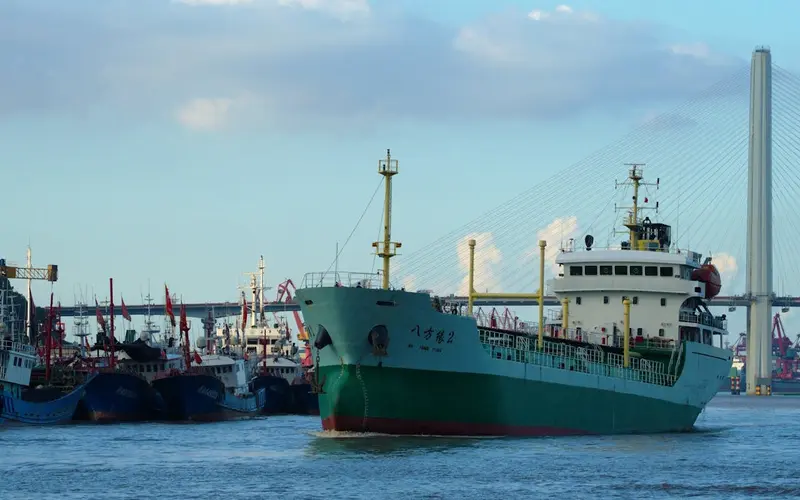
Before I truly understood the matter, I had always assumed that the primary distinctions between vessels lay in brand and horsepower. However, I later discovered that international safety authorities focus on entirely different aspects.
The UK Maritime and Coastguard Agency (MCA) explicitly states in its Safety Code for Small Fishing Vessels under 15 Metres that the core risks in small fishing vessel accidents often stem from mismatches between vessel type and operating environment, rather than purely equipment issues. This explains why many vessels mistakenly deemed ‘seaworthy’ are unsuitable as small fishing boats for inshore fishing.
Guided by this logic, to truly comprehend What Is Considered a Small Fishing Boat?, I shall now elaborate in detail.
What Is Considered a Small Fishing Boat?
A ‘small fishing boat’ is not a scaled-down version of a larger vessel, but an independent class of craft designed from the outset for personal or small-scale fishing activities.
Typically, small fishing boats share these common characteristics:
- Length ranging from 3 to 6 metres, corresponding to the most realistic size and capacity range for novice anglers;
- Powered primarily by low-horsepower outboard engines, operable by one or two individuals;
- Design prioritising fishing itself over cruising range, accommodation space, or luxury features.
Did you know? These vessels fundamentally exist to enable ordinary individuals to pursue fishing consistently and affordably without relying on clubs, renting boats, or being burdened by high maintenance costs.
Globally, the overwhelming majority of angling enthusiasts own only one vessel – a small fishing boat. This fact is repeatedly emphasised in industry reports covering tips for buying a new yacht.
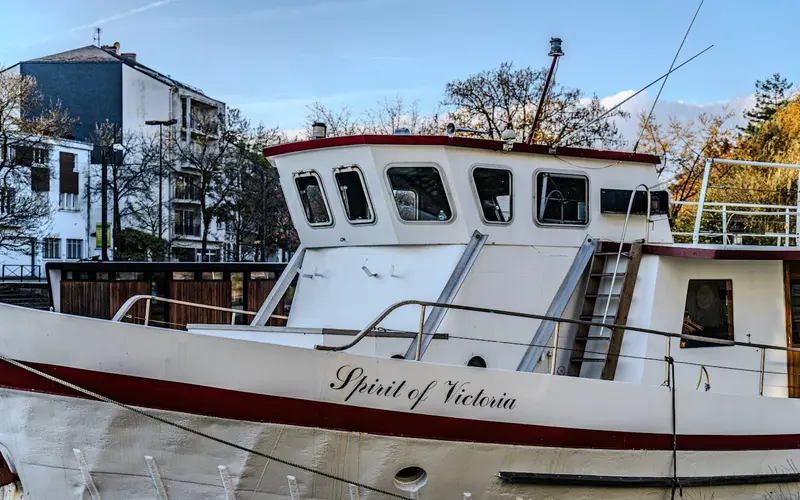
Common Small Fishing Boat Types
Flat-Bottomed Boats
Flat-bottomed boats are often the first small fishing craft many encounter. Its simple structure means low cost and easy maintenance, but the trade-off is evident: in wind and waves, the flat hull induces noticeable slamming, limiting both comfort and safety margins. Consequently, they are not the universal solution for lakes, but rather a choice with specific prerequisites.
However, note that the European Agency for Safety and Health at Work (EU-OSHA) states in its Small Fishing Vessels Risk Prevention Guide that flat-bottomed or low-stability vessels are more prone to instability and man-overboard incidents in windy conditions. Their use must therefore be strictly restricted to suitable waters.
Aluminium V-Hull Fishing Boats
Aluminium V-hull fishing boats represent a balanced compromise between practicality and adaptability. It is often regarded as the ‘safe choice’ for lakes and rivers, frequently becoming the pragmatic compromise for many novices researching aluminium versus fibreglass small fishing boats.
Fibreglass Bass Boat
The fibreglass bass boat represents an entirely distinct developmental path. It is not a “general-purpose fishing vessel” but a specialised tool designed for lake angling. Its low-slung hull, expansive deck, and sophisticated storage and electrical systems render the fishing experience both efficient and comfortable. However, this specialisation also imposes clear limitations on its usage scenarios; it is unsuitable for riverways, shallow waters, or coastal environments.
Inflatable Fishing Boats
As for inflatable fishing boats, they represent more of a ‘compromise solution balancing space and cost’. While they do enable many to access the water without requiring a trailer or storage space, they cannot match rigid-hulled boats in terms of manoeuvrability, durability, or safety redundancy.
The comparison table is as follows:
| Boat Type | Hull Design | Primary Material | Key Advantages | Key Disadvantages | Typical Usage Scenarios | Design Philosophy |
| Flat Bottom Boat | Flat Bottom | Various | Extremely shallow draft; Simple construction, low cost, easy maintenance | Poor wave handling (pronounced slapping); Limited comfort & safety margin | Shallow rivers/creeks, reed beds, lakes with fluctuating water levels | Simple utility, shallow-water entry-level |
| Aluminum V-Hull Fishing Boat | V-Hull | Aluminum Alloy | Superior wave handling (stable & controllable in wind); Durable, lightweight, low maintenance | No obvious weaknesses, but excels in no single extreme | General purpose: Lakes, rivers, near-shore waters | Balanced practicality & adaptability |
| Fiberglass Bass Boat | V-Hull / Modified | Fiberglass | High fishing efficiency; Enhanced comfort (low profile, wide deck); Sophisticated storage & electronic control systems | Limited usage scenarios; Poor in shallow water, rivers, or near-shore | Large, calm lakes | Specialized lake fishing tool |
| Inflatable Fishing Boat | Inflatable (Flat/V) | PVC/Rubber | Extreme portability (easy storage/transport); Lower cost; No trailer/large storage needed | Lower durability; Puncture risk; Moderate wave handling | Temporary use, space-constrained owners, calm waters | Space/Cost compromise solution |
Best Small Fishing Boats for Lakes and Rivers
Lakes and rivers represent the most typical and forgiving environments for small fishing boats. In these waters, wind and waves are generally predictable, travel distances are limited, and the most crucial requirements for a vessel are not speed, but stability, manoeuvrability, and comfort for prolonged periods of standing while fishing.
In essence, lakes and rivers share these characteristics: relatively manageable water surfaces, limited cruising distances, and fishing time typically far exceeding travel time.
Aluminium V-hull boats present virtually no significant drawbacks here. They maintain basic comfort during lake winds while navigating complex environments like river channels and tributaries.
Flat-bottomed boats prove equally efficient in specific waters, provided one possesses sufficient knowledge of the area and prevailing conditions.
Bass boats function more as “specialised lake tools” – virtually irreplaceable within their optimal environment, yet becoming cramped or even hazardous beyond their design parameters.
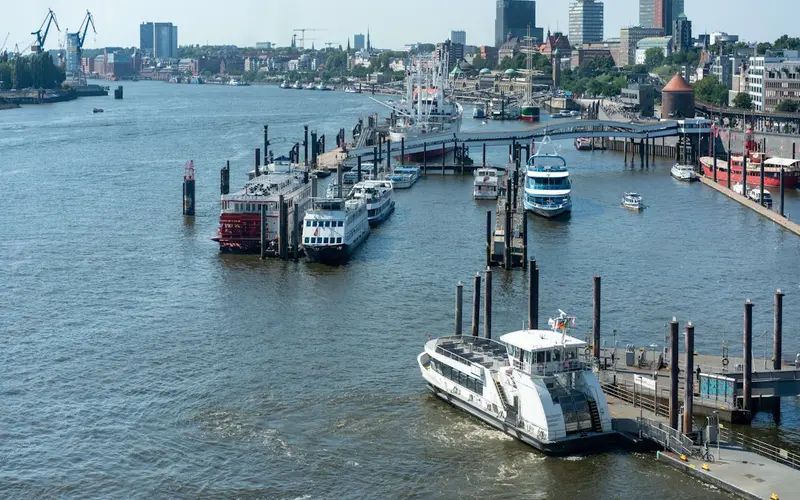
Small Fishing Boats for Inshore Saltwater Fishing
The selection criteria for small fishing vessels fundamentally shift when venturing into coastal waters.
The unpredictability of the marine environment far exceeds that of inland waters, with swells and winds changing more rapidly. This demands higher standards for hull structure, bilge capacity, and engine reliability.
Here, the question is not ‘can it be used?’ but ‘is it safe?’ Truly suitable small fishing boats for inshore fishing must feature a pronounced V-shaped hull, high freeboard, and structurally reinforced small centre console designs.
It must be emphasised: flat-bottomed boats and most inflatables are unsuitable for inshore fishing, even when operating ‘close to shore’. The UK's Maritime and Coastguard Agency (MCA) explicitly states that small fishing vessels must possess adequate displacement capacity, freeboard height, and structural stability in sea conditions; otherwise, they are highly susceptible to rapidly becoming unsafe.
This is precisely why small centre console boats are widely regarded as the ‘entry-level sea fishing craft,’ rather than flat-bottomed or inflatable vessels.
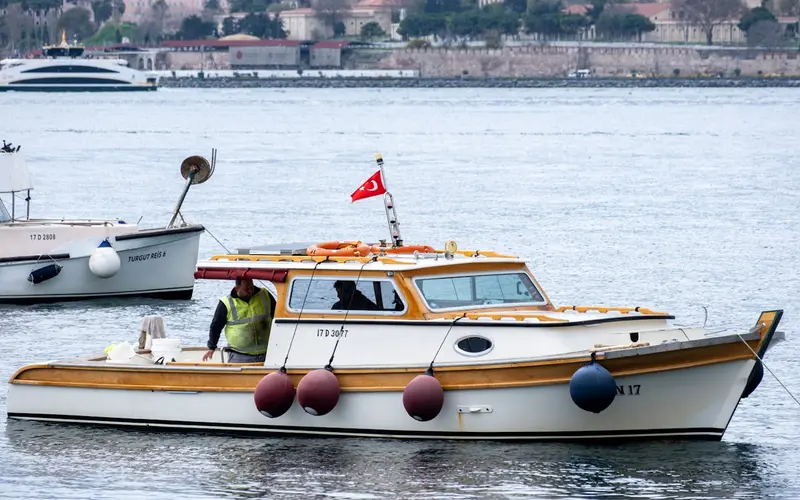
Aluminum vs Fiberglass Small Fishing Boats
The debate between aluminium and fibreglass fundamentally boils down to a trade-off between ‘practicality’ and ‘user experience’. Aluminium boats are lighter, more impact-resistant, easier to maintain, and more forgiving for novices; fibreglass boats excel in seaworthiness, shock absorption, noise reduction, and overall build quality.
Real-world Usage Differences Table: Aluminium vs Fibreglass Small Fishing Boats:
| Comparison Criteria | Aluminum Small Fishing Boat | Fiberglass (FRP) Small Fishing Boat |
| First Impression | Practical, tool-like | Pleasing, quality feel |
| Impact Resistance | Very strong, less worry | Weaker, fears scratches & bumps |
| Smoothness of Ride | Average | Significantly better |
| Noise & Vibration | Relatively high | Quieter |
| Maintenance Mindset | Fix as needed | More care about upkeep |
| Forgiveness for Beginners | High | Medium |
| Long-term Experience | Hassle-free | Comfortable |
In other words, if your objective is long-term, frequent, and low-cost usage, aluminium boats are often more suitable; if you prioritise comfort and efficiency during the fishing process itself, fibreglass boats will deliver a superior experience.
Pros and Cons of Small Fishing Boats
The greatest advantage of small fishing boats lies in their ability to make fishing an activity that can happen at a moment's notice.What do you think?
Summary Table of Small Fishing Boats' Advantages and Disadvantages:
| Aspect | Pros | Cons |
| Flexibility of Use | Ready to go at any time; no reservations or complex preparation needed | Trips are usually shorter; not suitable for long-distance outings |
| Purchase & Ownership Cost | Lower purchase price; maintenance, insurance, and registration costs are manageable | Lower-priced models often come with basic build quality and limited features |
| Storage & Mooring | Can be trailer-stored; no need for a marina berth, saving annual fees | Requires storage space and a suitable trailer setup |
| Ease of Operation | Simple systems; one person can launch, operate, and retrieve the boat | Less stable in wind and waves; requires careful handling |
| Onboard Space | Compact layout allows quick setup and pack-up | Limited space; can feel crowded with multiple anglers |
| Weather Tolerance | Responsive and enjoyable in calm conditions | Low tolerance for rough weather; sensitive to wind and chop |
| Suitable Waters | Ideal for lakes, rivers, bays, and nearshore fishing | Not designed for offshore or rough-sea conditions |
| Beginner Friendliness | Low learning curve; easy for beginners to gain confidence | Narrower safety margins demand stronger risk awareness |
Frequently Asked Questions for Beginners
A1: Are small fishing boats safe?
Q1: My consistent answer is: they are safe when used in the right location, under suitable weather conditions, and with proper techniques.
A2: What size is suitable for a first-time buyer?
Q2: For a first purchase, a 14 to 16-foot vessel adequately covers most practical requirements.
A3: Are sea fishing and freshwater fishing boats the same type?
Q3: No, they are not. This is precisely why many people only start searching for ‘how do I sell my yacht’ after buying the wrong vessel.
Riley Miller
Riley Miller is the owner of the “Serendipity” yacht, a contributing columnist for “Yachting Monthly,” and has published 17 in-depth analyses on yacht cost management. He also serves as an advisory committee member for the European Second-Hand Yacht Association (ESYA) and holds the International Yachting Certificate ICC-UK-2019C-17429, with certified cruising areas covering the Mediterranean and the western coast of the Atlantic.
Disclaimer
The content herein is for informational purposes only and is intended to share the author's personal experiences and perspectives. It does not constitute legal, tax, or investment advice. Yacht transactions involve complex legal, financial, and technical matters. Actual purchasing processes may vary due to regional regulations, vessel type differences, or individual circumstances. Before making any yacht purchase decisions, readers are advised to consult licensed professionals (such as attorneys, tax advisors, licensed yacht brokers, or surveyors) for personalized guidance tailored to their specific situation. Neither the author nor the publisher shall be liable for any direct or indirect losses arising from reliance on the information provided herein.