Quick Answer:
An offshore fishing vessel is designed for extended deep-sea operations. Common types include center console and cabin-equipped vessels. Typical lengths range from 30–100 meters, with deep draft hulls for stability. Key selection factors include sea conditions, crew duration, safety equipment, and operational efficiency.
Table of Contents:
1. What Qualifies as an Offshore Fishing Boat?
2. Main Offshore Fishing Boat Types
3. Dimensions and Safety Requirements for Offshore Fishing Vessels
4. Optimal Offshore Fishing Vessel Design: Withstanding Extreme Sea Conditions
5. Summary
6. FAQ
As a yacht broker, I have witnessed the vital role offshore fishing vessels play in harvesting deep-water species like tuna. I understand firsthand how crucial selecting the right offshore fishing vessel is for owners. This article provides an overview of vessel types, dimensions, and safety requirements, along with a selection guide to help owners make informed decisions.
1. What Qualifies as an Offshore Fishing Boat?
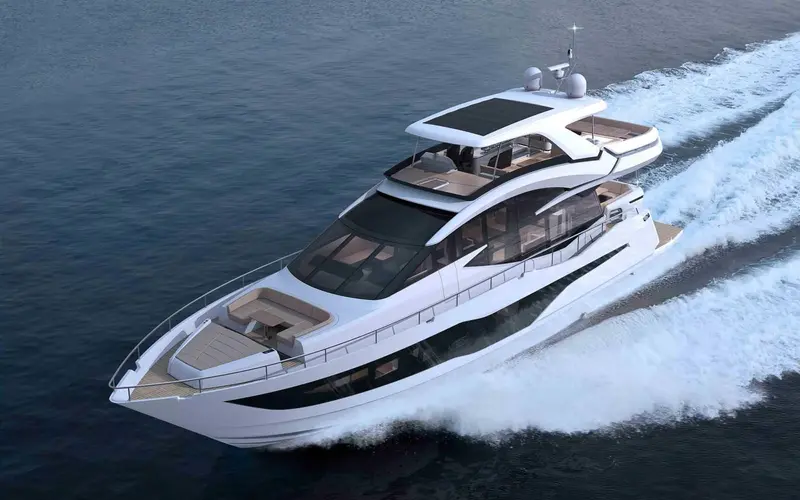
Offshore Fishing Boats are ships specifically designed for extended periods away from shore, conducting fishing operations in deep waters. They are primarily used to catch deep-water fish such as tuna and cod. The design requirements for these vessels are extremely stringent. In addition to possessing robust durability and long-range navigation capabilities, they must be equipped with advanced navigation and weather monitoring systems to ensure crew safety and operational efficiency.
Their construction must comply with safety standards set by organizations like the International Maritime Organization (IMO), safeguarding crew in complex maritime environments and ensuring efficient, stable operations under severe sea conditions.
Every design detail directly impacts a vessel's operational performance. Therefore, rational selection and configuration are paramount when choosing and deploying ocean-going fishing vessels. For shipowners, the same principles guiding new yacht purchases apply to selecting fishing vessels: decisions must be based on operational requirements, sea conditions, and budget. Throughout this process, thorough understanding and analysis of every detail are essential to making the most suitable choice.
2. Main Offshore Fishing Boat Types
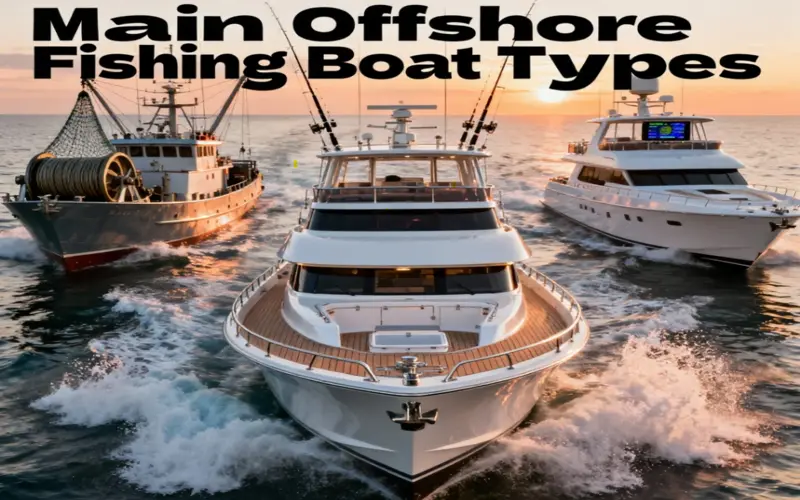
Based on operational requirements and design characteristics, offshore fishing vessels can be categorized into multiple types. Understanding the fundamental features of these types assists shipowners in selecting the most suitable vessel according to actual needs. Below is a comparison table of primary ocean-going fishing vessel types:
| Boat Type | Features | Applicable Scenarios |
|
Multi-functional Center Console | Equipped with multiple consoles enabling efficient operations across different work zones, providing a flexible working environment. | Suitable for various fishing operations requiring both efficient control and comfort. |
| Dual Console Comfort | Features two consoles for convenient operation by different crew members, prioritizing crew comfort and operational efficiency. | Ideal for tasks involving multiple crew members who need to operate or remain on duty for extended periods. |
| Enclosed Surround/Cabin Style | Offers an enclosed console allowing crew to operate in a fully sheltered environment, suitable for harsh weather conditions. | Designed for offshore fishing operations in harsh sea conditions, ensuring crew safety and comfort. |
Based on the information in the table, different types of offshore fishing vessels each possess distinct advantages, catering to varying operational requirements. Vessel design not only directly impacts operational efficiency but also affects crew comfort. Therefore, selecting the appropriate offshore fishing vessel type should be determined based on specific operational demands.
Next, we will focus on comparing two common designs: center console and cabin-style offshore fishing vessels. This comparison aims to help vessel owners better understand their respective strengths and weaknesses, facilitating optimal decision-making during actual selection.
2.1 Comparison of Center Console and Cabin-Style Offshore fishing vessels
Having participated in multiple ocean-going fishing vessel procurement and evaluation projects, I have gained firsthand experience with the distinct operational characteristics of center console and cabin-style designs.
- Center Console Offshore fishing vessels: Featuring a centralized control console, this vessel type enables crew to operate the vessel efficiently with minimal unnecessary movement, making it particularly suitable for extended voyages and high-intensity operations. During deep-sea fishing operations near New Zealand, crew members monitored progress in real-time via the centralized console, enabling swift responses to changing sea conditions and enhancing operational efficiency and safety.
- Cabin-style Offshore fishing vessels: Emphasize crew living comfort, suitable for extended stays at sea, and provide larger rest areas. During one expedition where crew remained at sea for over 30 days, the vessel's comfortable cabins and quality rest facilities helped maintain crew efficiency throughout the operation.
Key Takeaways:Central console vessels excel in high-efficiency operations and complex sea conditions, while cabin-style vessels prioritize crew comfort and extended stays. Shipowners should select the appropriate vessel type based on operational requirements, crew duty cycles, and sea area conditions.
3. Dimensions and Safety Requirements for Offshore Fishing Vessels
The design of offshore fishing vessels must balance dimensions with safety. Hull size impacts stability and operational efficiency, while safety features ensure crew protection in complex sea conditions. Appropriate dimensions enhance seakeeping ability and load capacity, while comprehensive safety equipment safeguards crew during extended operations.
1. Dimensions Requirements for Offshore fishing vessels
- Hull Length: Typically ranging from 30 to 100 meters, longer hulls provide superior stability for harsh sea conditions.
- Beam and Draft: Width and draft influence vessel stability and operational capacity. Wider hulls accommodate greater catch volumes, while deeper draft enhances stability.
- Cargo Capacity: Requires substantial storage space for fish, fuel, and other supplies to sustain extended operations.
⚠ Note:
Larger fishing vessels are not necessarily better. Vessel size must align with fishing grounds, operational methods, and economic viability. Excessively long, wide, or deep-draft hulls may impair maneuverability, restrict port access, increase maintenance costs, and incur additional regulatory constraints. Conduct operational scenario analysis and cost assessments before selecting vessel types.
2. Safety Requirements for Offshore fishing vessels
- Crew Safety Equipment: Must be equipped with sufficient lifeboats, life jackets, flotation devices, etc. (46 CFR 28.120 mandates ≥36 ft vessels carry 406 MHz EPIRB and SOLAS inflatable rafts) to handle emergencies.
- Emergency Communication Systems: Includes satellite communication equipment, radio systems, etc., to ensure crew members maintain contact with the outside world while at sea.
- Fire Prevention and Suppression Equipment: Equipped with efficient fire suppression systems, fire extinguishers, and emergency lighting to ensure readiness for emergencies such as fires.
- Navigation and Weather Monitoring: Advanced navigation systems and weather monitoring equipment help crew members track real-time changes in navigation and weather conditions, enabling timely responses.
When selecting an offshore fishing vessel for our client, we chose a 75-meter-long, 12-meter-wide vessel specifically engineered for deep-sea tuna fishing. Its elongated hull and deep draft enhance stability, enabling it to withstand harsh sea conditions. Equipped with satellite communication and weather monitoring systems, the vessel ensures crew members stay informed about weather changes and maintain contact with the outside world. Additionally, sufficient lifeboats and life jackets are provided to guarantee crew safety.
This vessel perfectly meets the requirements for size and safety. It has performed exceptionally well in actual operations, not only improving operational efficiency but also ensuring crew safety.
3.1 Differences Between Offshore and Nearshore Fishing Vessels
The size and safety standards of offshore fishing vessels are dictated by their operational environment. Comparing them with nearshore vessels highlights distinctions in design, operational range, and crew configuration. The following table assists shipowners in selecting appropriate vessels based on specific requirements.
| Features | Offshore fishing vessel | Coastal Fishing Vessels |
| Operational Scope | Operate in deep waters with extended voyages, adapted for complex sea conditions | Operate in coastal waters with short voyages, suited for calm seas |
| Hull Design | Featuring elongated hulls and deep drafts for enhanced stability and seakeeping ability | Short hulls and shallow draft prioritize maneuverability and speed |
| Crew Accommodations | Equipped with comprehensive living facilities suitable for long-term operations | Basic facilities designed for short-term operations |
| Operational Equipment | Outfitted with advanced navigation, refrigeration, and meteorological monitoring systems | Simple equipment primarily used for fishing and basic navigation |
| Operating Costs | High operational costs due to prolonged missions, fuel consumption, and substantial maintenance expenses | Low maintenance costs with short operational cycles |
Offshore fishing vessels and coastal fishing vessels exhibit significant differences in stability, equipment, and operational costs. Offshore fishing vessels are suited for long-term deep-sea operations but carry higher costs; coastal vessels are designed for short-term operations with lower expenses. Nevertheless, the size and safety requirements for both types center on ensuring crew safety.

4. Optimal Offshore Fishing Vessel Design: Withstanding Extreme Sea Conditions
In harsh maritime environments, the design and configuration of offshore fishing vessels are critical to operational efficiency and crew safety. To withstand strong winds, massive waves, and complex sea conditions, these vessels must possess enhanced stability, durability, and highly effective safety systems. Key factors to prioritize when selecting the best offshore fishing vessels include:
| Key Factors | Design Highlights |
| Hull Design and Stability | The extended hull and deep draft enhance stability, while the wide-body design improves seakeeping capabilities. |
| Propulsion System and Seakeeping Performance | A robust propulsion system and efficient propulsion system ensure maneuverability and navigational stability in complex sea conditions. |
| Navigation and Weather Monitoring Equipment | Equipped with advanced navigation systems including GPS, AIS, radar, and real-time weather monitoring equipment. |
| Crew Safety Facilities | Provides sufficient lifeboats, life jackets, firefighting equipment, and emergency lighting to ensure crew safety. |
| Cabin and Living Area Design | Offers comfortable crew quarters with effective soundproofing and vibration damping to ensure crew rest and operational efficiency. |
| Materials and Construction Quality | Utilizes high-strength, corrosion-resistant materials to ensure hull fatigue resistance and impact resistance. |
Each feature addresses operational challenges in harsh environments, collectively ensuring offshore fishing vessels maintain high productivity while safeguarding crew safety in complex sea conditions.
5. Summary
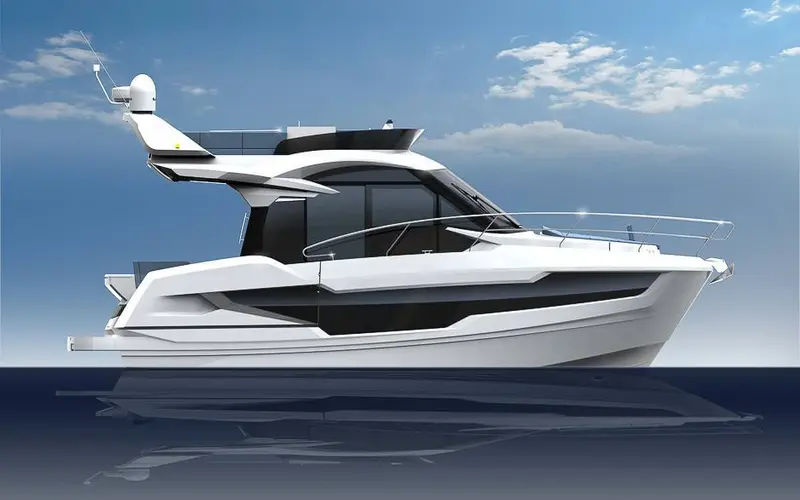
Offshore fishing vesselss are engineered for deep-sea operations, featuring robust stability and safety performance. When selecting an appropriate hull type, shipowners must consider operational requirements, sea conditions, and crew comfort and safety. Console-style vessels suit efficient operations, while cabin-style vessels prioritize comfort during extended stays. Overall, suitable dimensions and safety configurations are crucial for ensuring crew safety and smooth operations.
6.FAQ
Q1:What is the best offshore fishing vessel for rough seas?
A: Choose an offshore fishing vessel with an elongated hull, deep draft and 25°+ deadrise; the wide-body design improves seakeeping and slices through 6–8 ft swells while keeping crew safe and deck cargo stable
Q2:How big is a typical offshore fishing vessel?
A: A typical offshore fishing vessel runs 30–100 m in length and carries a 12 m beam with deep draft; this size gives the stability and cargo volume needed for multi-day tuna trips yet still enters most major fishing ports
Q3: Center console vs cabin offshore fishing vessel: which is better?
A: Center-console offshore fishing vessels let crew operate efficiently from one central helm, ideal for high-intensity work; cabin-style versions add enclosed shelter and larger rest areas, perfect for 30-day voyages where crew comfort equals productivity
Q4: What safety gear must an offshore fishing vessel carry?
A: Every offshore fishing vessel needs 406 MHz EPIRB, SOLAS inflatable rafts, life jackets, fire-suppression systems, satellite comms and radar as mandated by 46 CFR 28.120 and IMO rules, all stored in quick-release canisters for sub-five-minute drills
Q5: What hull material is best for an offshore fishing vessel?
A: High-strength, corrosion-resistant fiberglass is the preferred material for an offshore fishing vessel, giving fatigue resistance, impact strength and lighter weight that together extend hull life and cut fuel burn in long-range deep-sea operations
About the Author:
Andrew Rogers is a seasoned yacht broker specializing in the procurement and appraisal of high-end yachts and ocean-going fishing vessels. With extensive industry experience, he possesses unique insights particularly in deep-sea fishing operations and vessel configuration. Through professional services and in-depth market analysis, Andrew assists clients in making informed vessel selections.
Disclaimer:
The information provided herein is for reference only and is based on the author's professional experience and publicly available data. While we strive to ensure accuracy and timeliness, we assume no liability for any direct or indirect losses or consequences arising from the use of this content. Vessel purchases or related decisions should be based on individual needs, thorough investigation, and professional consultation. Before making any decisions, vessel owners are advised to seek further consultation with professionals or relevant industry experts.