Can a Yacht Survive Rough Seas? (Quick Answer)
Yes — a properly designed yacht can survive rough seas , provided three conditions are met:
1. CE-A–rated or deep-V hull design
2. Functional stabilizers and steering systems
3. A skilled skipper maintaining a 30–60° heading to waves
According to NOAA 2025 data, yachts meeting these conditions have safely handled 10-foot waves and 35-knot winds .
In rough seas, whether a yacht can survive is a concern for many new buyers. As a yacht broker with ten years of experience, I have accompanied over 50 clients on sea trials, covering real-world sailing conditions ranging from 10-foot waves to gale-force winds (Beaufort scale 8).
I have personally participated in performance evaluations of a 40-foot deep-V yacht in Force 6 winds with 2.5-meter waves, and have repeatedly assisted clients in assessing vessel stability during offshore cruising. Through this hands-on experience, I can provide a more intuitive assessment of a yacht's survivability in challenging conditions.
When selecting a yacht, understanding its performance in rough seas is crucial. Different hull designs and equipment configurations directly impact a yacht's stability and safety. Therefore, I will share some key “tips for buying a new yacht” in this article to help you make informed decisions during your purchase. The article will explore a yacht's survivability in high seas through five key aspects: “sea conditions, hull design, handling, equipment, and maintenance.”
Table of Contents:
Understanding Severe Sea Conditions That Test Whether a Yacht Can Survive Rough Seas
How to Evaluate a Yacht’s Ability to Survive Rough Seas
Critical Systems That Allow Yachts to Survive Rough Seas
How a Yacht Can Survive Rough Seas: Practical Techniques for Owners
Yacht Maintenance Checklist After Rough Seas: What to Check and Why
Frequently Asked Questions
Summary
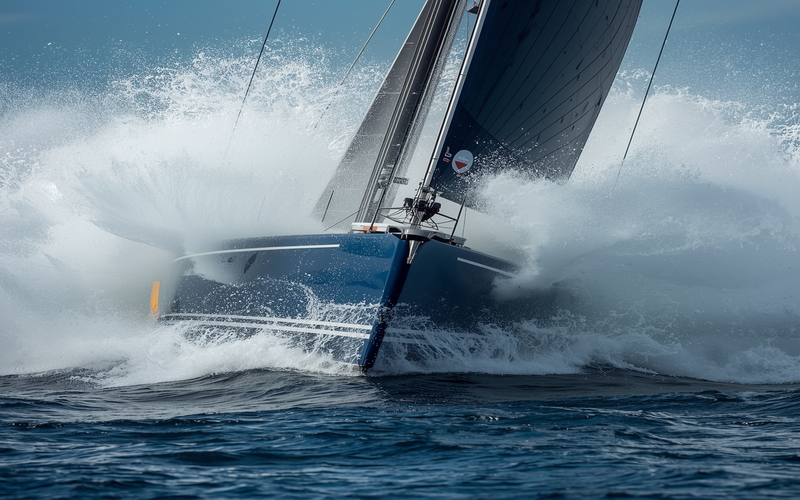
Understanding Severe Sea Conditions That Test Whether a Yacht Can Survive Rough Seas
Understanding how a yacht behaves in rough seas is critical, yet many clients underestimate the true power of severe sea conditions when first discussing sea trials. Winds of 20 knots may feel mild on land, but at sea, combined with 1.8–2 meter waves, they can cause a 35-foot yacht to pitch and roll violently, testing its stability and seakeeping ability.
What is the maximum wave height a yacht can withstand? This is not a fixed number but a dynamic indicator influenced by multiple factors such as wind speed and vessel type. To provide clients with a more intuitive reference when assessing sea conditions, I typically explain the relationship between wind and waves using the internationally recognized sea state standards based on the Beaufort scale.
Understanding the impact of sea conditions on yacht performance is crucial. The table below outlines the relationship between wind force and wave height, providing a clear reference for assessing yacht stability.
Yacht Survival Wind & Wave Thresholds (2026 Data):
| Wind Force | Wind Speed (kt) | Significant Wave Height (m) | Sea Conditions | Impact on Yachts | Sailing Advisory |
| 5 (Fresh Breeze) | 17–21 kt | 1.0–2.0 m | Moderate waves, many whitecaps | Light crafts experience slamming, movement onboard becomes difficult | Not advised for first sea trial; suitable for experienced captains on short routes |
| 6 (Strong Breeze) | 22–27 kt | 22–27 kt | Large waves, more extensive white foam | Yachts under 40 ft pitch and roll heavily, noticeable steering pressure | Not recommended for leisure sailing; professional assessment required |
| 7(Near Gale) | 28–33 kt | 3.0–4.0 m | Sea heaps up, white foam blown in streaks | Risk of broaching for most leisure yachts, course keeping becomes difficult | Leisure yachts prohibited from departure |
| 8 (Gale) | 34–40 kt | 4.0–5.5 m | Moderately high waves of greater length | Significant hull stress, extremely uncomfortable ride, structural shock likely | All leisure yacht sailing prohibited |
| 9+ (Strong Gale to Storm) | ≥41 kt | ≥6 m | High, destructive waves; sea surface appears white | Safety cannot be guaranteed for any leisure yacht; risk of severe structural stress | All sailing prohibited |
Note: Wave height is influenced by multiple factors including water depth and wind zones. The table shows common ranges in open waters. Actual navigation requires comprehensive assessment based on wind speed and wave period. Source: Beaufort scale descriptions per WMO-No.8; wave-height ranges from NOAA Significant Wave Height Climatology 2025.
So what constitutes truly rough seas? For recreational sailing, when sea conditions reach the thresholds marked “Not Recommended” or “Calm” in the table. Or when your confidence as skipper begins to waver—that's when genuinely hazardous conditions have arrived. It is fundamentally a clear signal of imbalance between your equipment, skills, and the natural environment.
How to Evaluate a Yacht’s Ability to Survive Rough Seas
Seas and waves not only test a yacht's rough sea capability but also provide a comprehensive assessment of hull design and system reliability.
According to the stability requirements outlined in the American Bureau of Shipping (ABS) Yacht Guide, righting moment and roll period are core metrics for evaluating safety, effectively setting the vessel's wave-height limit in storm conditions.
The deep V-shaped hull, featuring a continuous lateral waterline and a well-designed bilge radius, reduces roll and meets those regulatory standards, directly improving your yacht's storm survival margin.
Additionally, how much does it cost to build a yacht? The price hinges on size, design, materials and the technology package you choose.Generally, a yacht's price can range from a few hundred thousand dollars to millions, especially when considering advanced stabilization systems and custom designs that improve seaworthiness in rough seas.
Higher-end yachts with stronger hull designs and more sophisticated technology will be more expensive but provide better performance in harsh conditions.
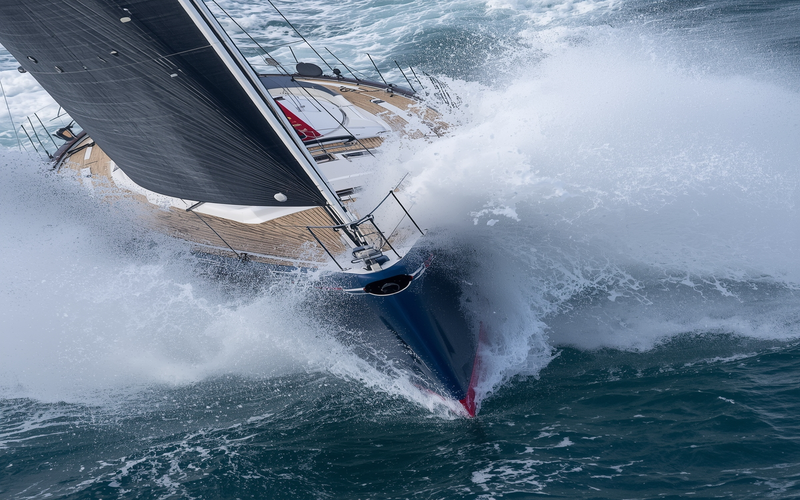
During a sea trial, we tested a 40-foot deep-V yacht in conditions of Force 6 winds and 2.5-meter waves. The vessel demonstrated excellent longitudinal recovery and moderate roll period in the swell, with no noticeable resonant rolling.
In contrast, certain semi-displacement hulls, due to abrupt changes in their lateral waterline, tend to exhibit periodic rolling and difficulty maintaining course in similar sea conditions. This comparison underscores the critical impact of hull design on navigational safety.
To evaluate a yacht's ability to survive in rough seas, consider key factors such as size, hull type, and technology. The following table summarizes these factors and their impact on rough weather capability.
The following three core factors collectively determine a yacht's performance in adverse sea conditions:
| Category | Key Factor | Rough Weather Capability | Remarks |
| Size | Small Yacht (≤30 ft) | Low | Coastal cruising, noticeable pounding |
| Mid-size Yacht (40–50 ft) | Medium | Family cruising, good wave-piercing ability | |
| Large Yacht (≥60 ft) | High | Blue-water sailing, higher maintenance costs | |
| Hull Type | Deep-V | High | Excellent wave penetration, stable at high speed |
| Semi-Displacement | Medium | Steady at medium speed, suitable for long range | |
| Multihull | Medium-High | Minimal rolling, stable platform | |
| Technology | Stabilizers / DPS / Electronic Control | High | Enhanced comfort and controllability |
Critical Systems That Allow Yachts to Survive Rough Seas
Perception System
Radar and AIS: Their core value lies in analyzing sea conditions. By identifying wave group cycles, they enable early determination of whether encountering orderly long swells or dangerous chaotic waves, buying valuable time for decision-making.
Satellite Weather: The key lies in identifying escape windows on weather charts. One accurate advance prediction outweighs all emergency maneuvers during a storm.
Stability System
Stabilizer: It ensures not comfort, but fundamental steering capability. In crosswinds, it reduces roll from 35 degrees to within 10 degrees, keeping the rudder blade fully submerged and enabling crew to operate effectively.
Dynamic Positioning System(DPS): In emergency situations where primary propulsion is lost, it provides more reliable automatic steering capability than manual operation, creating a critical time window for emergency repairs.
Security System
Emergency Power: The core metric is the sustained operational time of stabilizers and bilge pumps following main engine failure. Four hours represents the minimum safety window for awaiting rescue.
Life-saving equipment: Ensure that marine-grade liferafts meet SOLAS A Pack standards for offshore use (beyond 60 nautical miles), and verify that EPIRBs are properly registered in the updated COSPAS-SARSAT database. When the moment of need arrives, there is no time for on-the-spot training or delays.
To ensure the proper functioning of all systems and enhance the yacht's survivability, you may refer to the 2025 Yacht Safety Checklist to ensure each piece of equipment undergoes rigorous inspection and proper maintenance.
Ultimately, even the most advanced systems can only perform effectively under the operation of a skilled crew. In rough seas, the seamless combination of technology and expertise is key to yacht survival and crew safety. Next, we will apply this core principle to practical scenarios.

How a Yacht Can Survive Rough Seas: Practical Techniques for Owners
Proper preparation and timely response before a storm are critical for safe navigation in rough seas. I often tell clients: even a well-built yacht with advanced systems cannot guarantee safety without proper operational procedures.
Years of sea trials and accompanying clients on voyages have led me to distill three core operational principles that significantly enhance a yacht's survival probability during storms.
Pre-Departure Yacht Storm Checklist: Power, Steering & Watertight Standards:
| Check Category | Critical Items | Passing Standard |
| Power System | Main Engine, Generator, Fuel | Twin engines standby, adequate fuel, no leaks |
| Steering System | Steering Gear, Rudder, Thrusters | Responsive control, no abnormal vibration |
| Deck Equipment | Lines, Hatches | Securely fastened, watertight closed |
| Safety Gear | Life Jackets, Life Raft, EPIRB | Properly stowed, signals functional |
| Electronics | Radar, Stabilizers, Bilge Pumps | Full operation, stable power supply |
This checklist outlines the minimum inspections required to ensure safe operation during storms. When time is critical, prioritize completing the power, steering gear, and watertight integrity items, as these three directly affect the vessel's fundamental maneuverability and buoyancy safety.
Choosing Course and Controlling Speed in Stormy Conditions
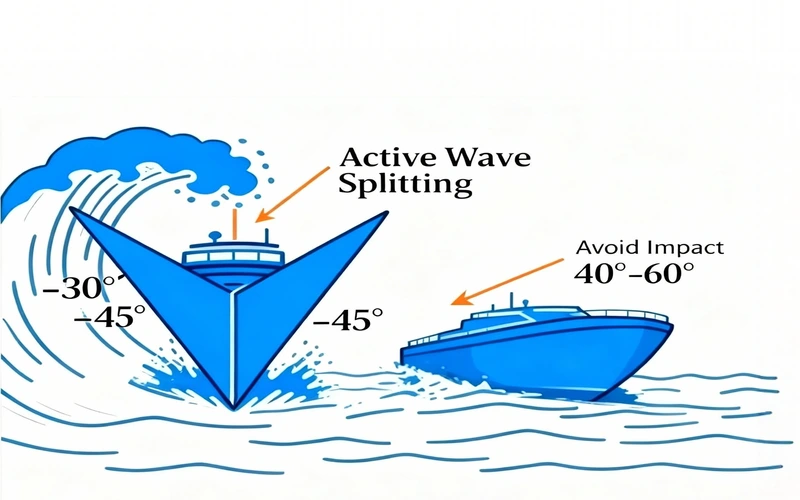
When facing fierce winds and towering waves, choosing the correct course and speed is crucial for survival. The key lies in avoiding having the hull's side face the waves.
Yacht Storm Heading & Speed Guide: 30–60° to Waves, 4–9 kt by Hull:
| Hull Type | Core Strategy | Recommended Heading | Speed Control |
| Deep-V | Active Wave-Cutting | 30°-45° off the waves | (7-9 knots) to maintain steerage |
| Semi-Displacement | Impact Avoidance | 40°-60° off the waves | Low (4-7 knots) to prevent slamming |
Worst-Case Scenario: Loss of Propulsion
Even with thorough preparation, one must always anticipate the worst-case scenario. How a yacht handles wind and waves during engine failure or fuel depletion is a matter of life and death.
Recommended actions include: deploying anchoring or towing equipment, maintaining open communication channels, adjusting the vessel's orientation, and ensuring all crew members wear life-saving equipment. This emergency strategy is not merely an operational guide—it is a survival principle I have personally validated in storms.
Yacht Maintenance Checklist After Rough Seas: What to Check and Why
After weathering a storm, a yacht's safety performance depends not only on its seaworthiness but also on systematic maintenance inspections. Based on my experience, the following three tiers of action should be taken:
Structural inspection (completed within 24 hours)
Hull and Deck: Focus on inspecting stress concentration areas such as around the rudder shaft and along porthole edges.
Propulsion System: Verify propeller is free of deformation and drive shaft seal is leak-free.
Watertight integrity: All hatch covers and valves maintain complete sealing.
System Function Diagnostics
Electronic Equipment: Download navigation data and analyze performance curves of stabilizers and servos under extreme operating conditions.
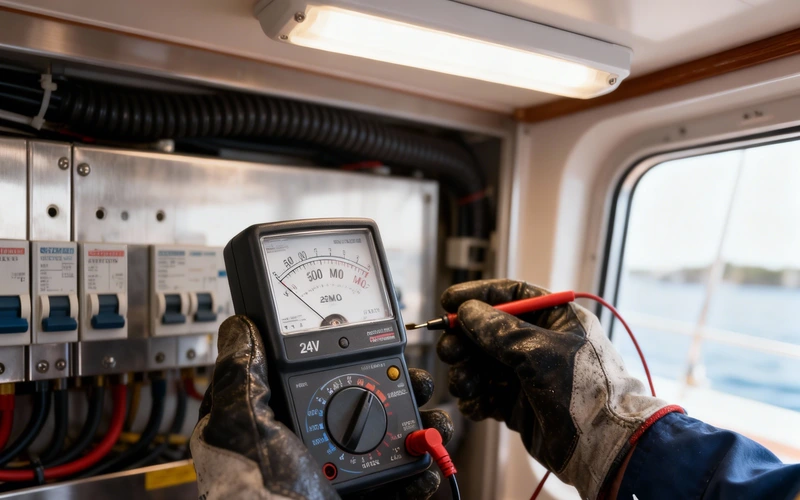
Electrical System: Use a megohmmeter to test circuit insulation resistance and prevent latent short circuits.
Safety Equipment: Reset EPIRB trigger mechanism; replace liferaft expiration labels.
Preventive Maintenance
Engine System: Collect oil samples for testing to predict bearing wear trends in advance.
Anti-corrosion treatment: Use a dedicated freshwater flushing kit to treat vulnerable areas such as electronic connectors.
Document Update: Record the storm parameters and equipment anomalies in the log.
These measures not only repair wear and tear on vessels but also prepare them for the next storm, ensuring ships remain in a controlled and safe condition at all times. Through meticulous maintenance, yachts can better withstand future harsh sea conditions.
In addition to regular comprehensive inspections, adhering to the specifications outlined in the Yacht Engine Maintenance Checklist—especially after experiencing storms or rough seas—ensures the restoration and optimal performance of the engine system.
Frequently Asked Questions:
Q1: Can a yacht survive rough seas with 10-foot waves?
A: A qualified yacht can handle 10-foot waves, but three conditions must be met: the hull must be professionally certified, the stability system must be functioning properly, and the captain must be proficient in yaw angle navigation techniques. The true margin of safety depends on the combination of equipment condition and the captain's experience.
Q2: How seaworthy are luxury yachts?
A: This is a common misconception. The seaworthiness of luxury yachts is not determined by their interior finishes or price tag. Instead, it hinges on four core engineering elements: hull form design, structural strength and weight distribution, displacement configuration, and the performance of stabilizers and steering systems.
Summary
In this article, we delve into the survivability of yachts in adverse sea conditions. We learn that a yacht's ability to withstand wind and waves depends not only on hull size or price, but more critically on the combined effects of its design, structure, equipment configuration, and operational techniques.
About the Author
Brian G. Stetler
Yacht Broker / Senior Marine Surveyor
Certifications:
SAMS Certified Surveyor No. AMS #1249
Last Updated:November 2025
Disclaimer
The content herein is for reference only and does not constitute investment advice. Yacht specifications are based on publicly available information as of 2025; actual configurations shall be subject to classification society certificates. Prior to purchase, an independent surveyor (not designated by the seller) must be engaged to conduct sea trials and verify certificates. We assume no liability for any losses incurred as a result of reliance on the information provided herein.