Quick Answer: Lagoon Catamaran Models Explained
Lagoon catamarans span 40–60+ ft, with the 46–51 ft range being the optimal choice for private ownership and charter. For those prioritizing ease of handling and resale value, Lagoon stands as one of the most reliable catamaran brands available today.
Lagoon Catamaran Brand Positioning and Design Philosophy
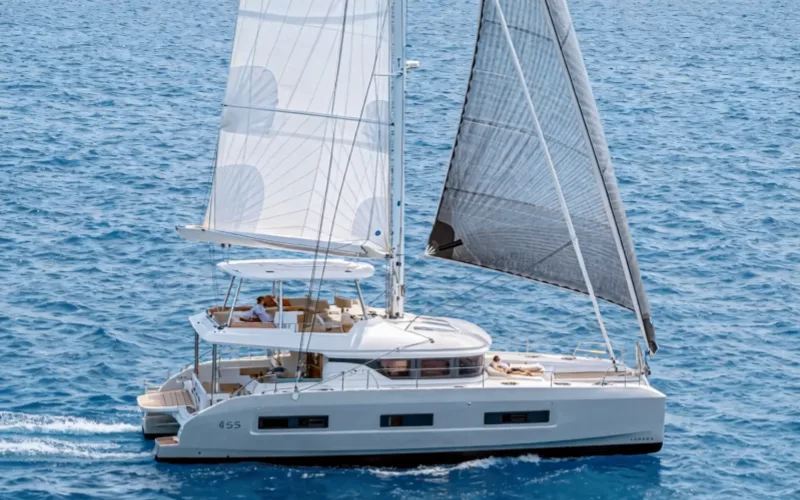
Lagoon, part of France's Groupe Beneteau, has maintained a clear design focus from the outset: prioritizing the practical needs of most owners—ease of use, comfortable living, and resale value—rather than pursuing extreme top speeds.
This philosophy has shaped several enduring design characteristics of Lagoon catamarans: generous beam, high superstructure proportion, prominent flybridge and saloon spaces, and simplified handling systems. This approach has established Lagoon as the global benchmark for family cruisers and the yacht charter market.
For buyers, this means Lagoon does not emphasize the exhilarating driving experience of a “performance catamaran,” but rather caters to extended onboard living, socializing, and hosting guests.
Lagoon Catamaran Model Overview
Lagoon's model logic centers on hull length while segmenting for diverse usage scenarios. The product line offers comprehensive coverage from entry-level to high-end offerings.
| Size Range | Typical Models | Market Positioning |
|---|---|---|
| 40–43 ft | Lagoon 40 / 42 / 43 | Entry-level, Family Use, Commercial |
| 45–51 ft | Lagoon 46 / 450 / 51 | Core Bestsellers, Private & Commercial |
| 52–55 ft | Lagoon 52 / 55 | High-end Private Cruising |
| 60+ ft | Lagoon 60 / Seventy 7 | Flagship, Near Superyacht Class |
It should be noted that Lagoon's primary market focus is not on its largest models, but rather on the 46–51-foot range. This size segment boasts the most established use cases and highest market liquidity globally.
Entry-Level Lagoon Catamarans: 40–43 Foot Models
The Lagoon 40, 42, and 43 serve as the first step into the world of catamarans for many buyers. Lagoon catamarans in this size range strike a good balance between space and maneuverability while significantly lowering the barriers to ownership and maintenance.
From a practical standpoint, this category is ideal for first-time family owners or those planning short vacations and inshore cruising. Cabin configurations typically feature 3 or 4 berths, accommodating both family privacy needs and basic guest-hosting capabilities.
In the charter market, 40–43-foot Lagoons excel as “high-value” options. While individual charter rates may be lower than larger vessels, their high utilization rates and straightforward maintenance ensure solid overall returns.
Best-Selling Lagoon Catamarans: 46–51 Foot Models
If the previous tier represents “entry-level choices,” then the Lagoon 46, 450, and 51 embody the true core competitiveness of Lagoon catamarans. This size range strikes an exceptional balance between comfort, spaciousness, and market demand.
Compared to the 40-foot class, the most noticeable upgrades in this segment are the flybridge and saloon areas. The larger flybridge not only enhances social experiences but also provides a more expansive driving view. Additionally, the 4–5 cabin layout allows these models to seamlessly transition between private use and commercial charter operations.
For investment buyers, the Lagoon 46 and 51 have long been regarded as “safe models”: stable demand, high customer acceptance, and an active second-hand market make them a recurring choice for many charter companies.
Premium Lagoon Catamarans: An Elevated Experience at 52–55 Feet
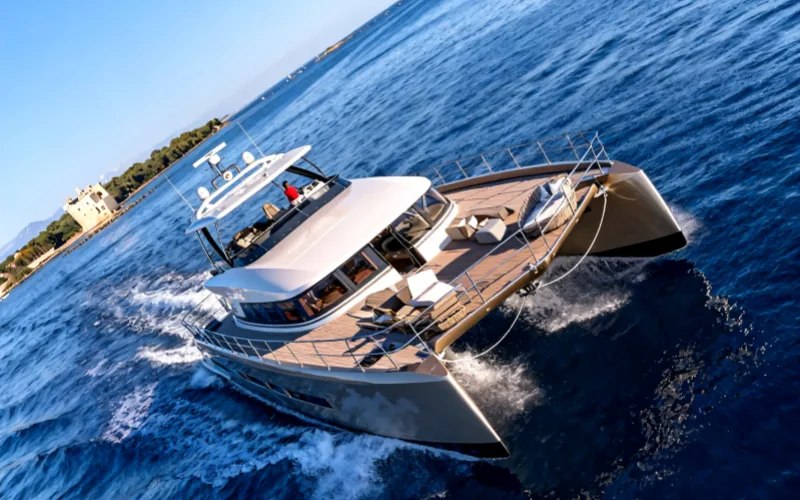
As hull lengths exceed 52 feet, Lagoon's positioning shifts distinctly toward premium private ownership. Represented by the Lagoon 52 and 55, this tier emphasizes a comprehensive lifestyle upgrade.
The flybridge area is significantly expanded, outdoor leisure zones are more complete, and the interior space evokes the feel of a “floating villa.” The introduction of a separate crew quarters also enables professional operation and high-end service.
Of course, buyers should rationally consider the real costs associated with this upgrade: berthing, maintenance, crew, and insurance expenses will all increase significantly. These models are better suited for buyers with high usage frequency, ample budgets, or clearly defined target clientele.
Flagship Lagoon Catamarans: 60 ft and Above
The Lagoon 60 and Seventy 7 go beyond the traditional definition of mass-production catamarans and approach superyacht territory. Customization, crewed operation, and maximum comfort define this category.
Unless your priority is brand presence, bespoke interiors, or high-end branding, these flagship models are not the most practical solution for most buyers. Their value lies in exclusivity rather than versatility.
How to Choose the Right Lagoon Catamaran Model
Choosing a Lagoon catamaran is less about size and more about matching the boat to your real-world usage.
| Buyer Profile | Recommended Size | Key Logic |
|---|---|---|
| First-time Owners / Families | 40–43 ft | Easy Handling, Lower Risk |
| Private Use + Occasional Charter | 46–51 ft | Maximum Flexibility |
| Professional Charter / Premium Private | 52–55 ft | Guest Experience Priority |
| Ultra-High-End Private | 60+ ft | Customization & Brand Value |
Equally important is the choice between new and pre-owned yachts. Lagoon’s second-hand market is mature and transparent. Well-maintained 3–5-year-old boats often offer excellent value—provided a professional survey is conducted.
Lagoon Catamaran Pricing & True Cost of Ownership
Purchase price is only part of the equation. Long-term ownership costs include berthing fees, annual maintenance, insurance, electrical upgrades, and crew requirements.
For charter investors, the key question is not simply whether the yacht can be chartered, but whether charter income reliably covers total operating expenses over time.
Conclusion: Which Lagoon Catamaran Is Right for You?
The strength of Lagoon does not lie in a single standout model, but in a proven, stable, and globally accepted product ecosystem.
If your priorities are comfort, safety, strong resale value, and broad market recognition, Lagoon remains one of the most dependable choices in the catamaran segment.
About the Author
Luna Rossi is an experienced yacht broker holding SAMS certification (ID: SAMS-66562), with over 15 years of experience in yacht sales, valuation, and offshore cruising. Her insights have been featured in publications such as SuperYacht Magazine. She specializes in helping buyers make informed, practical yacht ownership decisions.
Disclaimer
This article is for informational purposes only and does not constitute purchasing, investment, or navigational advice. Specifications, pricing, performance, and market conditions may vary by year, region, and vessel condition. Readers are advised to consult professional yacht brokers, marine surveyors, or other qualified experts before making any decisions.
FAQ
Q1: Are Lagoon catamarans suitable for beginners?
A: Yes. Models from 40–46 ft are stable, easy to handle, and ideal for first-time multihull owners.
Q2: How expensive is Lagoon catamaran maintenance?
A: Lagoon offers predictable maintenance with good parts availability; overall costs are manageable compared to similar-size catamarans.
Q3: Can Lagoon catamarans handle offshore sailing?
A: Yes. Lagoon catamarans prioritize comfort and cruising stability, making them suitable for offshore passages with proper preparation.