Before buying a boat or yacht, verify the official ownership or registration record, check for recorded mortgages and liens, confirm the seller's authority to transfer the vessel, and confirm how any required payoff and release will be completed before or as part of closing. For international or high-value yacht purchases, use the vessel's current and previous registration records and consult a maritime attorney or qualified closing professional if ownership or lien issues remain unresolved.
Why a Boat Title and Lien Check Matters
A boat title and lien check helps buyers identify ownership, financing and legal claim issues before completing a yacht purchase.- Ownership Risk: Confirm that the registered or titled owner matches the seller and that the seller has authority to transfer the yacht
- Mortgage Risk: Identify recorded mortgages or other secured financing interests that must be paid off or released as part of the transaction
- Lien Risk: Check for recorded liens, notices of claim or other claims against the yacht and determine whether any remain unresolved
- Seller Authority: If the yacht is owned by a company, partnership or multiple owners, verify that the person signing the sale is authorized to transfer it
Boat Title vs. Registration: What Buyers Need to Know
A boat title is not used in every country or for every yacht. Before checking ownership records, first identify the yacht's registration jurisdiction and the type of ownership record used by that authority.What a Boat Title Shows
Where a title system applies, a boat title generally identifies the vessel and its titled owner. Depending on the jurisdiction, it may also show recorded liens or other ownership interests.Before buying, compare the title with the yacht's Hull Identification Number (HIN), registration details and seller information. If the seller's name does not match the official ownership record, the seller should provide documentation establishing their legal authority to transfer the yacht.
When a Yacht Does Not Have a Traditional Title
Many yachts, particularly those registered under national ship-registration systems, may not have a document specifically called a "boat title." Ownership may instead be evidenced through vessel registration records, a certificate of documentation, ship-register entries, bills of sale or other official documents.For international yacht buyers, the key question is therefore not simply "Where is the boat title?" but:
Which official authority records this yacht's ownership and registered interests?
For example, a U.S. Coast Guard documented yacht is checked through federal documentation records rather than a state boat-title system. For a UK-registered yacht, first identify the relevant part of the UK Ship Register. A Part 1 transcript lists the registered owner and registered mortgages; a Part 3 (Small Ships Register) transcript contains more limited registration information and is not a mortgage search. Review supporting ownership documents as well, rather than treating registration alone as proof of clear title.
The buyer should use the official records for the yacht's current registration jurisdiction and, where relevant, review previous registration or ownership documents as part of the due-diligence process.
Mortgages, Liens and Other Claims Against a Yacht
A yacht may be subject to different types of financial or legal interests. The terminology and legal effect vary by jurisdiction, so buyers should identify the type of claim and confirm how it must be resolved before closing.
Mortgage
A marine mortgage generally secures financing against a yacht. If the yacht is financed, the mortgage may be recorded with the relevant vessel registry or documentation authority.Before closing, the buyer should confirm whether the mortgage remains outstanding and obtain written payoff information from the lender. The transaction should also provide for the required release or satisfaction of the mortgage.
For U.S. Coast Guard documented vessels, certain preferred ship mortgages are recorded through the National Vessel Documentation Center (NVDC) and are subject to federal maritime law.
If you are evaluating financing options before buying, see our guide to boat financing options in 2026 for an overview of yacht financing and the loan process.
Maritime Lien
A maritime lien is a legal interest that may arise from certain maritime obligations, depending on the applicable law. In the United States, federal maritime law recognizes specific categories of maritime liens. The applicable provisions also address preferred mortgages and the recording and discharge of notices of claim of maritime lien.A maritime lien is different from a mortgage and may have different recording and enforcement rules.
If a potential lien or claim is discovered, determine the claimant, legal basis, amount and current status before completing the purchase. A recorded notice of claim is not, by itself, a determination that the underlying lien is valid or enforceable.
Lien Release or Satisfaction
If a mortgage or lien has been paid or otherwise resolved, the buyer should obtain the appropriate release, satisfaction or discharge documentation and confirm whether it must be recorded with the relevant authority.For a financed yacht, the closing process may coordinate the lender's payoff and release directly with the transfer of ownership. Buyers should not rely solely on a seller's statement that an outstanding obligation will be cleared after closing.
A registry search does not necessarily establish that no unrecorded maritime claim or other maritime lien exists. The legal effect of a claim depends on the applicable law and the facts giving rise to it.
Where to Check a Boat's Title and Liens
The correct place to check a yacht's ownership, registration, mortgages and liens depends on the vessel's current registration system. Start by identifying the yacht's flag and registration jurisdiction before requesting records.| Yacht Registration | Where to Check |
|---|---|
| U.S. State-Titled Boat | Relevant State Title and Registration Authority |
| U.S. Coast Guard Documented Yacht | U.S. Coast Guard NVDC |
| UK Part 1-Registered Yacht | UK Ship Register / MCA — request a Transcript of Registry showing the recorded owner and registered mortgages |
| UK Part 3-Registered Boat | UK Ship Register / MCA — check the limited registration record and supporting ownership documents; this is not a mortgage search |
| Other Foreign-Flag Yacht | Relevant national ship registry |
If the yacht has changed flags, been imported, or was previously registered elsewhere, additional historical records may be required.
What Documents Should You Request Before Buying a Yacht?
Before buying a yacht, request the documents needed to verify ownership, registration, financing and recorded claims. The exact requirements depend on the yacht's flag, registration system, ownership structure and transaction history.Ownership & Registration
- Current Title or Registration: Confirm the current owner and match the vessel's identifying information
- Certificate of Documentation: For a U.S. Coast Guard documented yacht, review the current Certificate of Documentation and compare it with official records
- Abstract of Title: Where available, review the ownership history and recorded mortgages or other interests
- Previous Registration Documents: If the yacht has changed flags or registration jurisdictions, review relevant previous records
Financing & Liens
- Mortgage or Financing Information: If the yacht is financed, confirm the lender, outstanding balance and requirements for releasing the mortgage
- Lien or Mortgage Release: Confirm that previous claims were paid and formally released where required
- Bill of Sale: Review the current bill of sale and, where relevant, previous bills of sale to help establish the ownership chain
- Corporate Ownership Documents: If the yacht is owned by a company or other legal entity, verify the owning entity and sale authorization
- Seller Authorization Documents: Confirm that the person signing the purchase documents has authority to transfer the yacht
- Deletion or Export Certificate: Where applicable, confirm that the yacht was properly removed from its previous registry when changing flags
How to Check a Boat Title and Liens Before Buying
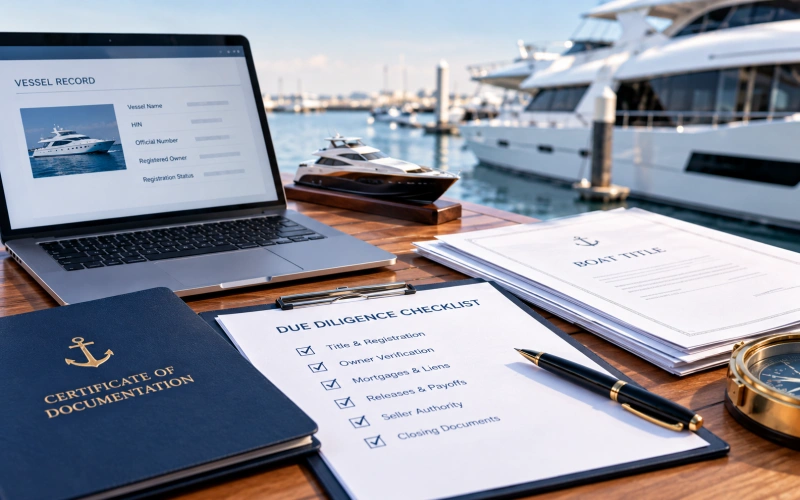
A proper boat title and lien check should follow a clear sequence:
Step 1: Identify the Registration Jurisdiction
First, determine where the yacht is currently registered or documented. Check the flag, registration certificate, Certificate of Documentation or other official vessel records.For an international purchase, also determine whether the yacht was previously registered under another flag.
Step 2: Verify the Registered Owner
Confirm that the owner shown in the official record matches the seller.If the yacht is owned by a company, partnership, trust or multiple owners, obtain the documents showing who is authorized to act on behalf of the owner.
Do not rely solely on the name shown in a broker listing or sales advertisement.
Step 3: Check Title or Registration Records
Review the official ownership or registration record available in that jurisdiction.Compare the vessel's:
- Hull Identification Number (HIN)
- Official number, where applicable
- Vessel name
- Registered or titled owner
- Registration status
Step 4: Search Mortgages and Liens
Review the available official records for:- Recorded mortgages
- Notices of claim of lien
- Recorded liens or other encumbrances
- Other registered security interests, where applicable
For maritime claims, additional legal due diligence may be necessary because not every claim will appear in the same way in registry records.
Step 5: Verify Releases and Payoffs
If the records show a previous mortgage or lien, confirm that it has been properly released or satisfied.For an outstanding obligation, obtain written payoff information identifying:
- The current amount required to satisfy the obligation
- The party receiving the payment
- The release or satisfaction document that will be provided
- Any recording requirements
Step 6: Confirm Seller Authority
The registered owner and the person signing the purchase agreement are not always the same person.For a company or other legal entity, verify the signatory's authority to sell the yacht. For jointly owned yachts, confirm that the required owners or authorized representatives are participating in the transaction.
Step 7: Resolve Issues Before Closing
Resolve material title and seller-authority issues before closing, and ensure that any agreed payoff and required release are coordinated through the closing process before the seller receives the net sale proceeds.Depending on the transaction, this may involve the seller, lender, lienholder, broker, escrow or closing agent, maritime attorney and relevant registry.
As part of these closing arrangements, confirm that the closing documents, required releases and transaction costs are properly accounted for. For an overview of common expenses, see our guide to yacht closing costs in 2026.
The buyer should retain evidence that required releases, satisfactions and ownership documents have been properly completed before the transaction is finalized.
For a high-value or international yacht purchase, unresolved title or lien issues should be reviewed by a maritime attorney or qualified closing professional before funds are released.
How to Check a Boat Title and Lien in the U.S.
The title and lien check for a U.S. yacht depends on whether the vessel is federally documented with the U.S. Coast Guard or titled through a state authority.U.S. Coast Guard Documented Yacht
For a U.S. Coast Guard documented yacht, start with the vessel's official documentation number and obtain the relevant records from the National Vessel Documentation Center (NVDC).The key records to review include:
- Certificate of Documentation — Confirms the vessel's federal documentation details and documented owner
- Abstract of Title — Review the vessel's documented ownership and recorded transactions
- Recorded Mortgages — Identify recorded mortgages and determine whether they remain outstanding
- Notices of Claim of Lien — Check for recorded notices asserting a lien or other claim
- Releases or Satisfactions — Confirm that previously recorded mortgages or liens have been properly discharged where applicable
The buyer should compare these records with the yacht's purchase documents, seller information, vessel name, official number and other identifying details.
The U.S. Coast Guard also notes that the NVDC primarily serves as a recording agency and that questions concerning the legal effect of recorded instruments may require advice from qualified legal counsel.
State-Titled Yacht
For a yacht titled by a U.S. state, use the relevant state title and registration authority.The search should generally confirm:
- The titled owner
- Recorded lienholders
- Lien releases or satisfactions
- Hull Identification Number (HIN)
- Current registration status
What If the Yacht Has an Outstanding Lien?
An outstanding lien does not necessarily prevent a yacht from being sold, but it should be identified and properly addressed before closing.If the lien will be paid through the sale, the buyer should ensure that the payoff, release or satisfaction is documented and coordinated with the seller, lienholder and closing professional. The required process depends on the type of claim and the law governing the vessel.
Do not rely solely on a seller's promise to clear a lien after closing. Agree and document the payoff and release arrangements with the relevant parties before completing the transaction.
Special Considerations for International Yacht Buyers
International yacht purchases can involve more than one registration system, ownership jurisdiction or set of transaction documents. This is particularly important when buying a used yacht, where the vessel may have a longer ownership, registration and financing history. Buyers should establish a clear ownership and registration history before closing.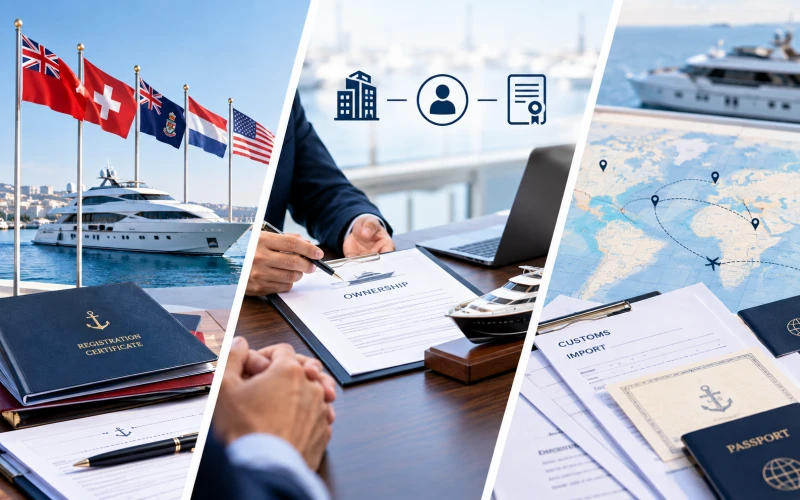
Flag Changes and Previous Registration
If a yacht has changed flags, do not rely only on its current registration record.Where available, review previous registration and ownership documents to establish:
- Previous flag states and registration authorities
- Previous registered owners
- Dates of ownership or registration changes
- Previous mortgages or recorded interests and their releases
- Documents relating to any flag transfer
Corporate Ownership
Many yachts are owned through companies or other legal entities rather than directly by an individual.In these cases, verify:
- The legal name of the registered owner
- The company's status and relevant ownership documents
- The identity and authority of the person signing the sale
- Any required corporate resolutions or authorizations
- Whether the sale documents correctly identify the owning entity
Imported Yachts
An imported yacht may have records from more than one country.Buyers should review the available import, registration and ownership documents and confirm that the current registration is consistent with the yacht's previous records.
Depending on the transaction and jurisdiction, additional documentation may be relevant, such as:
- Previous registration certificates
- Bills of sale
- Import or customs documentation
- Previous mortgage releases
- Export or deletion certificates
- Documents relating to the change of flag
When Should a Yacht Buyer Hire a Maritime Attorney?
A maritime attorney can help when ownership, lien or transfer issues cannot be resolved through a routine title or registry check.Consider professional legal advice when a yacht has:
- An outstanding or disputed mortgage or lien
- Conflicting ownership or registration records
- Multiple or corporate owners
- A complex flag or registration history
- An international or cross-border transaction
- Unclear seller authority
- An unresolved claim against the vessel
Boat Title and Lien Check: Buyer's Final Checklist
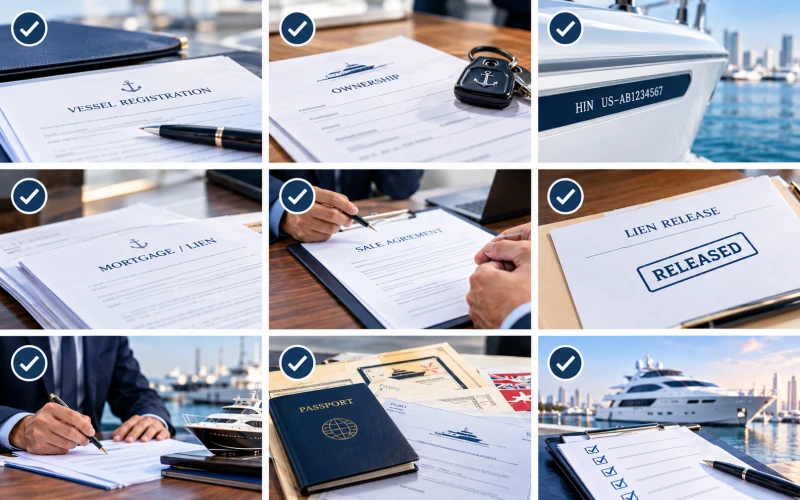
Before closing, confirm that you have:
Before completing the purchase, confirm that material title and seller-authority issues have been resolved and that any outstanding mortgage or lien will be handled under the agreed closing arrangements.
Final Takeaway: Check Ownership Before You Close
A boat title and lien check should follow a simple sequence:Registration → Ownership → Mortgages/Liens → Releases → Seller Authority → Closing
For international yacht purchases, also review previous registration records and obtain professional advice if ownership, lien status or seller authority cannot be clearly established.
Review Yacht Listings Before You Buy
Considering a pre-owned yacht? Browse our used yacht listings and use this checklist to guide your ownership, mortgage and lien checks before completing the purchase.
👉 View Used Yacht Listings
About This Guide
This guide is based primarily on official government and vessel-registration sources. Because title, registration, mortgage and lien rules vary by jurisdiction, buyers should use the authority applicable to the yacht's registration system.
Sources Reviewed
- U.S. Coast Guard / National Vessel Documentation Center
- 46 U.S.C. §31301 — Definitions
- 46 U.S.C. §31325 — Preferred mortgage liens and enforcement
- 46 U.S.C. §31343 — Recording and discharging notices of claim of maritime lien
- UK Ship Register / Maritime and Coastguard Agency
Disclaimer
This article is for general informational purposes only and does not constitute legal or maritime legal advice. Title, registration, mortgage and lien requirements vary by jurisdiction, so buyers should verify official records and seek professional advice when necessary.
FAQ
Q1: How do I check if a boat has a lien?
A: Check the yacht's official title or registration records for recorded liens, mortgages, notices of claim or other encumbrances. For U.S. Coast Guard documented vessels, request the relevant records from the National Vessel Documentation Center (NVDC). For other vessels, use the official registry for the yacht's current registration jurisdiction.
Q2: How do I check a boat title before buying?
A: Verify the titled or registered owner, vessel identification number, registration status and any recorded liens or mortgages. Then compare the official records with the seller's documents and the physical yacht before closing.
Q3: Does a boat title show liens?
A: It depends on the jurisdiction. Some title systems record liens directly on the title, while other vessel registration systems maintain mortgage or lien information separately. Buyers should check the relevant official registry rather than assuming that a title alone provides a complete lien search.
Q4: Can you buy a boat with an outstanding lien?
A: A yacht with an outstanding lien may still be sold, but the lien should be properly addressed as part of the transaction. Buyers should confirm the payoff amount, obtain the required release or satisfaction, and coordinate the process with the seller, lienholder and closing professional before funds are released.
Q5: How do I check a U.S. Coast Guard documented yacht for liens?
A: Check the vessel's records through the National Vessel Documentation Center (NVDC), including the Abstract of Title, recorded mortgages, notices of claim of lien, and releases or satisfactions where applicable.
Q6: Does a lien stay with a boat after it is sold?
A: It can depend on the type of lien and the law governing the vessel. A change of ownership does not necessarily eliminate every maritime claim against a vessel. Buyers should determine the nature and status of any lien or claim before closing and obtain professional legal advice where necessary.