Quick Answer
Most yachts can hold anywhere from a few hundred gallons to tens of thousands of gallons of fuel. A 40-foot yacht may burn around 5–25 gallons per hour, a 50–60 foot motor yacht may use 25–60+ gallons per hour, while large superyachts can burn 100–500+ gallons per hour depending on speed, engine size, hull design, and sea conditions. Always calculate fuel with a 10–20% reserve.
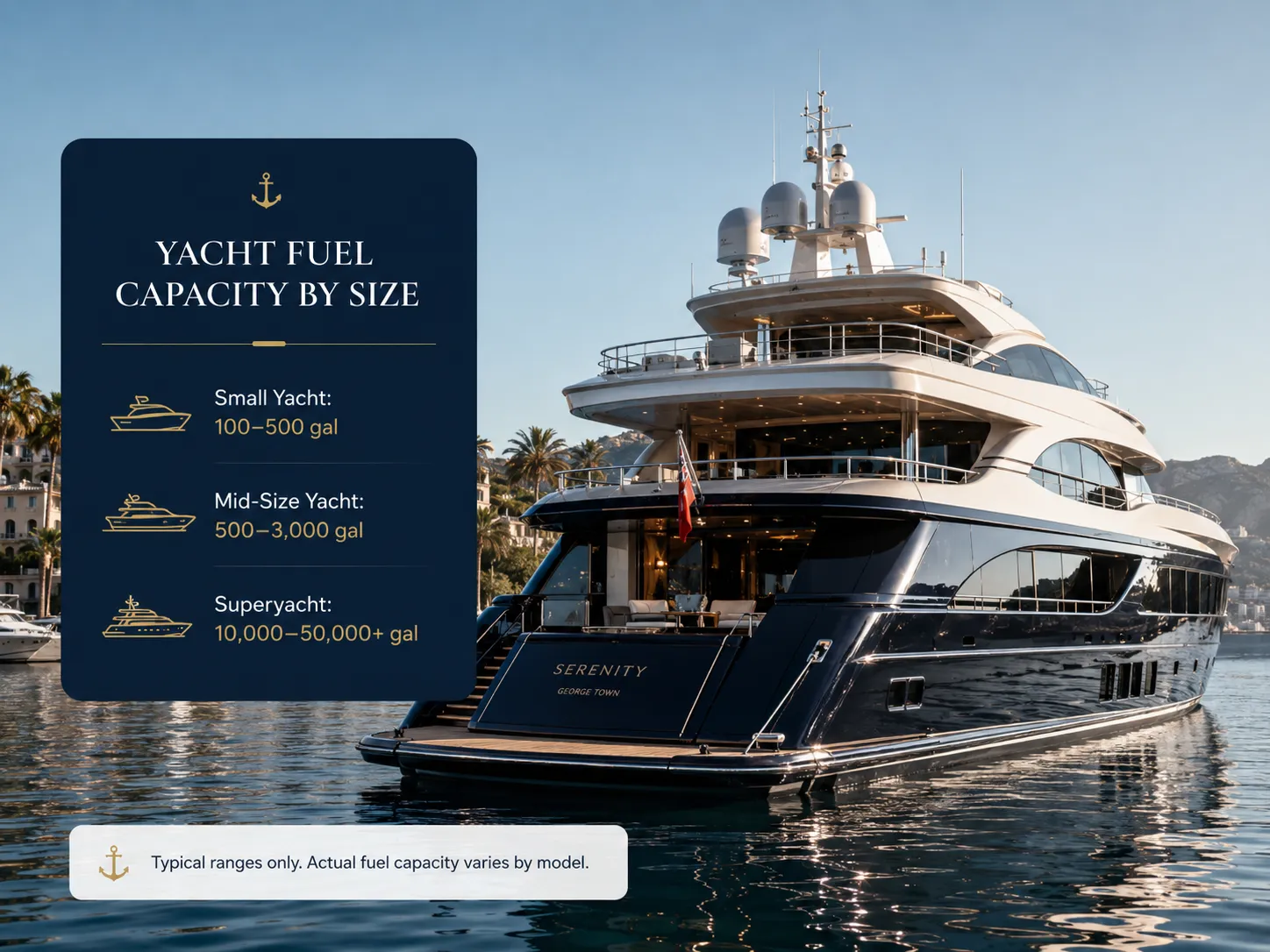
Yacht Fuel Capacity by Size
| Yacht Size | Typical Fuel Capacity | Best For |
| 30–40 ft yacht | 100–500 gallons | Day trips, coastal cruising |
| 40–60 ft yacht | 500–1,500 gallons | Weekend trips, family cruising |
| 60–80 ft yacht | 1,000–3,000 gallons | Longer coastal passages |
| 80–120 ft yacht | 3,000–15,000 gallons | Luxury cruising, longer range |
| 120–200 ft superyacht | 10,000–50,000 gallons | Long-distance cruising |
| 200 ft+ mega yacht | 30,000–100,000+ gallons | Transoceanic range, expedition use |
Fuel capacity varies widely depending on hull design, displacement, and onboard systems.
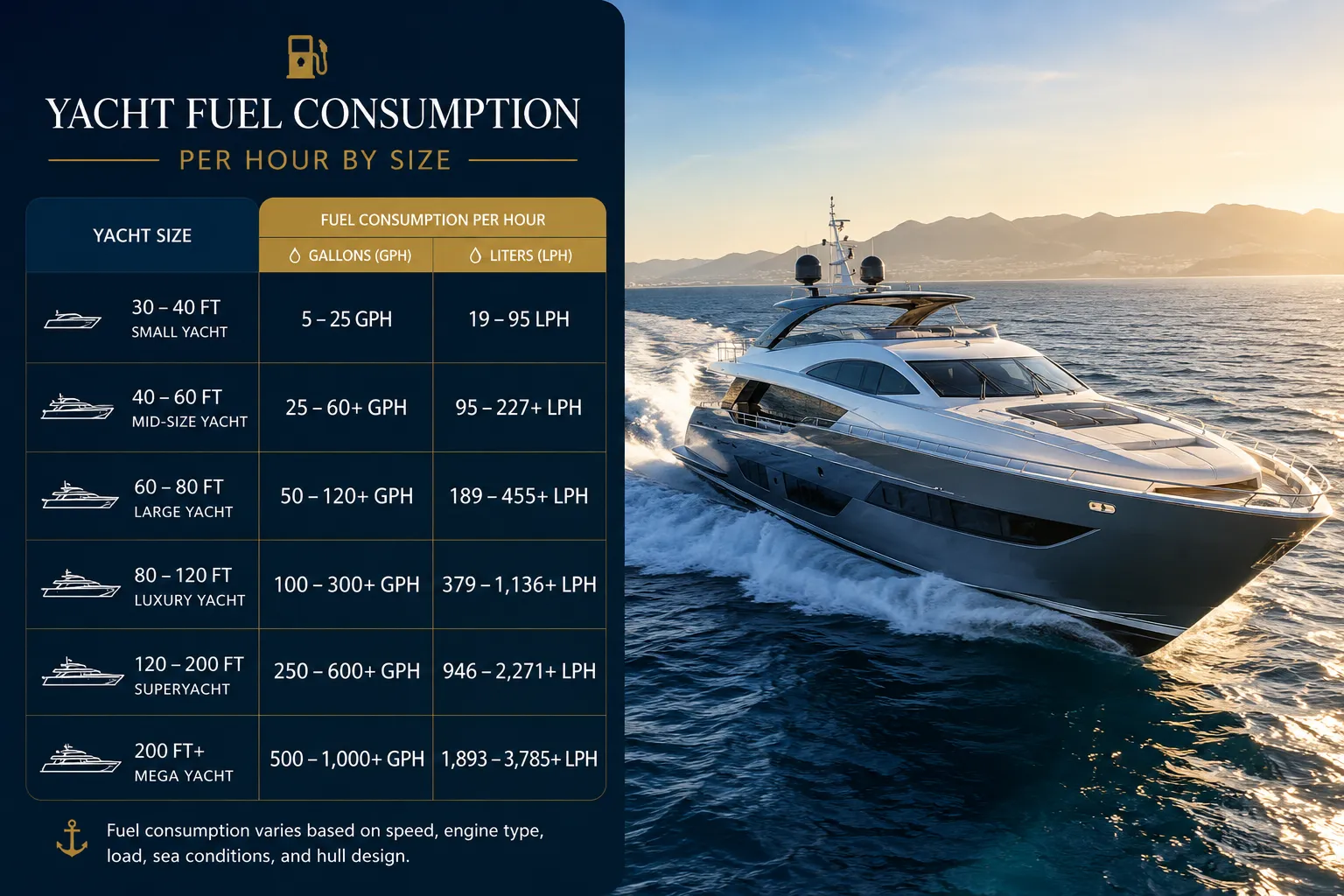
Yacht Fuel Consumption Per Hour
| Yacht Size | Typical Fuel Use Per Hour | Notes |
|---|---|---|
| 30–40 ft motor yacht | 5–25 GPH | Strongly speed-dependent |
| 40–60 ft motor yacht | 25–60+ GPH | Twin engines increase usage |
| 60–80 ft yacht | 50–120+ GPH | Planing hull burns more fuel |
| 80–120 ft yacht | 100–300+ GPH | Generator & hotel load matter |
| 120–200 ft superyacht | 250–600+ GPH | Varies by displacement & speed |
| 200 ft+ mega yacht | 500–1,000+ GPH | Efficient at low cruising speeds |
Actual fuel consumption varies significantly by cruising speed and operating conditions.
Small Yacht Fuel Consumption
A 30-foot yacht cruising at moderate speed may consume roughly 5–15 gallons per hour. However, fuel burn can increase quickly when throttle settings rise. At higher planing speeds, consumption may double or even triple.50 Foot Yacht Fuel Consumption
A 50-foot motor yacht with twin diesel engines commonly burns around 25–60 gallons per hour at cruising speed. Faster cruising speeds, rough seas, or additional onboard load can push fuel usage even higher.70 Foot Yacht Fuel Consumption
Many 70-foot yachts consume roughly 50–120 gallons per hour depending on whether they are displacement or planing hull designs. Sport yachts typically consume more fuel than slower displacement yachts.Superyacht Fuel Consumption Gallons Per Hour
Large superyachts can consume hundreds of gallons of fuel per hour. A 150-foot superyacht cruising at 20 knots may burn 300–500+ gallons per hour once generators, stabilizers, air conditioning systems, and hotel loads are included.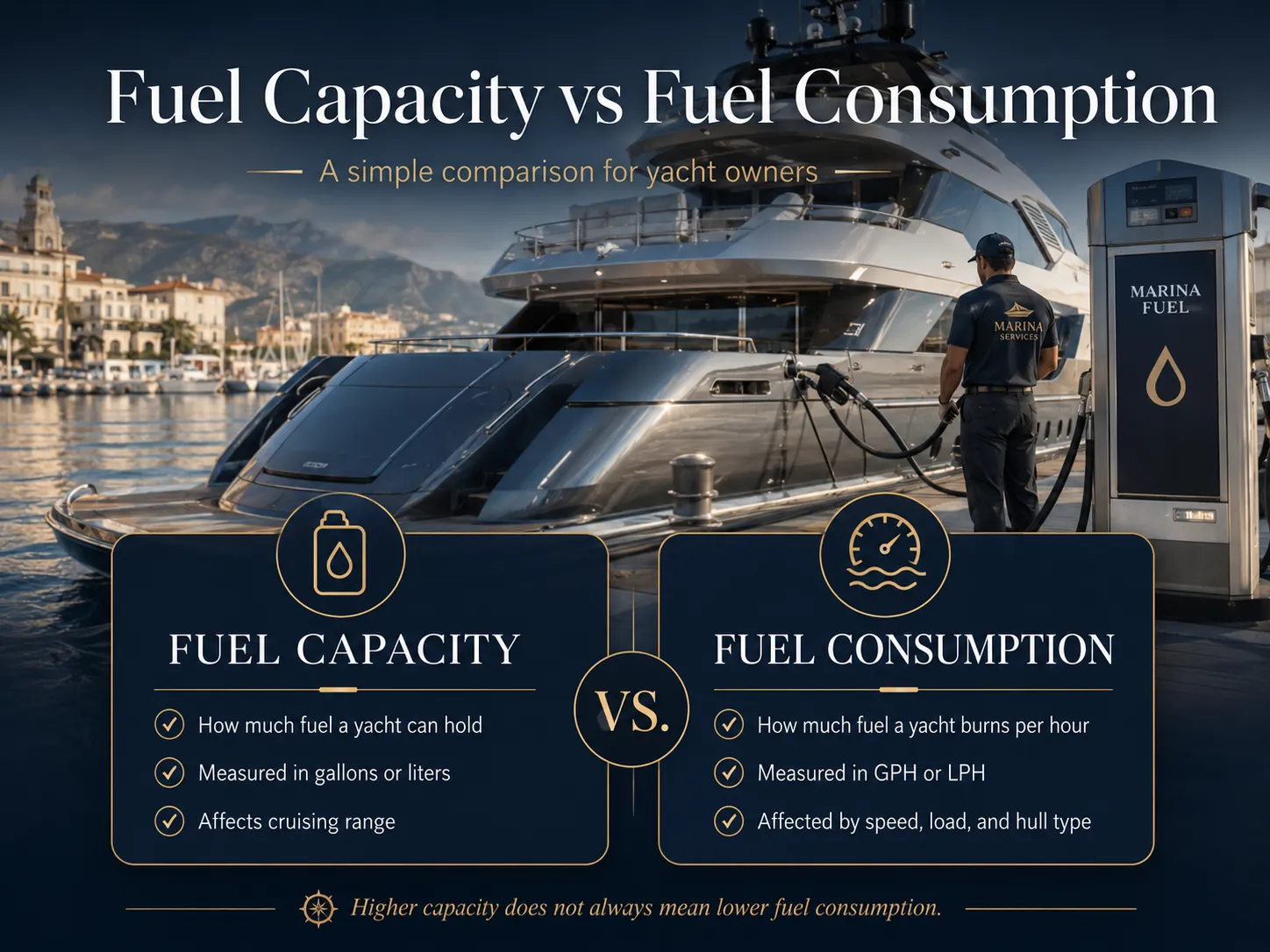
Yacht Fuel Capacity vs Fuel Consumption
Many first-time yacht buyers confuse fuel tank size with fuel efficiency. While they are related, they are not the same thing.What Fuel Capacity Means
Fuel capacity refers to how much fuel the yacht can physically store in its tanks.What Fuel Consumption Means
Fuel consumption refers to how much fuel the yacht burns over time, usually measured in gallons per hour or liters per hour.Why a Larger Fuel Tank Does Not Always Mean Better Range
A yacht with a very large fuel tank may still have a shorter cruising range if it burns fuel aggressively at higher speeds. Hull efficiency, displacement, cruising speed, and engine design all affect overall range.A yacht’s fuel usage is only one part of total ownership expenses. Owners should also consider insurance, maintenance, dockage, crew, and other operating costs when planning an annual yacht budget. Learn how to estimate yacht fuel and running costs to better understand the full cost of yacht ownership.
How to Calculate Yacht Fuel Consumption
Estimating fuel usage before departure is essential for voyage planning and safety.Simple Fuel Consumption Formula
A simple way to estimate fuel usage is:- Fuel Needed = Fuel Burn Per Hour × Cruising Hours
Example: 10-Hour Yacht Trip
If your yacht burns 100 liters per hour and you plan a 10-hour voyage:100 LPH × 10 hours = 1,000 liters required
Gallons vs Liters Conversion
Because yacht fuel usage is discussed globally, some owners use gallons per hour (GPH) while others use liters per hour (LPH).
| Gallons Per Hour | Liters Per Hour |
| 10 GPH | 38 LPH |
| 25 GPH | 95 LPH |
| 50 GPH | 189 LPH |
| 100 GPH | 379 LPH |
| 250 GPH | 946 LPH |
| 500 GPH | 1,893 LPH |
Why You Should Add a 10–20% Fuel Reserve
Experienced captains almost always carry additional reserve fuel for:- Weather changes
- Strong currents
- Route diversions
- Emergency situations
- Delays entering marinas
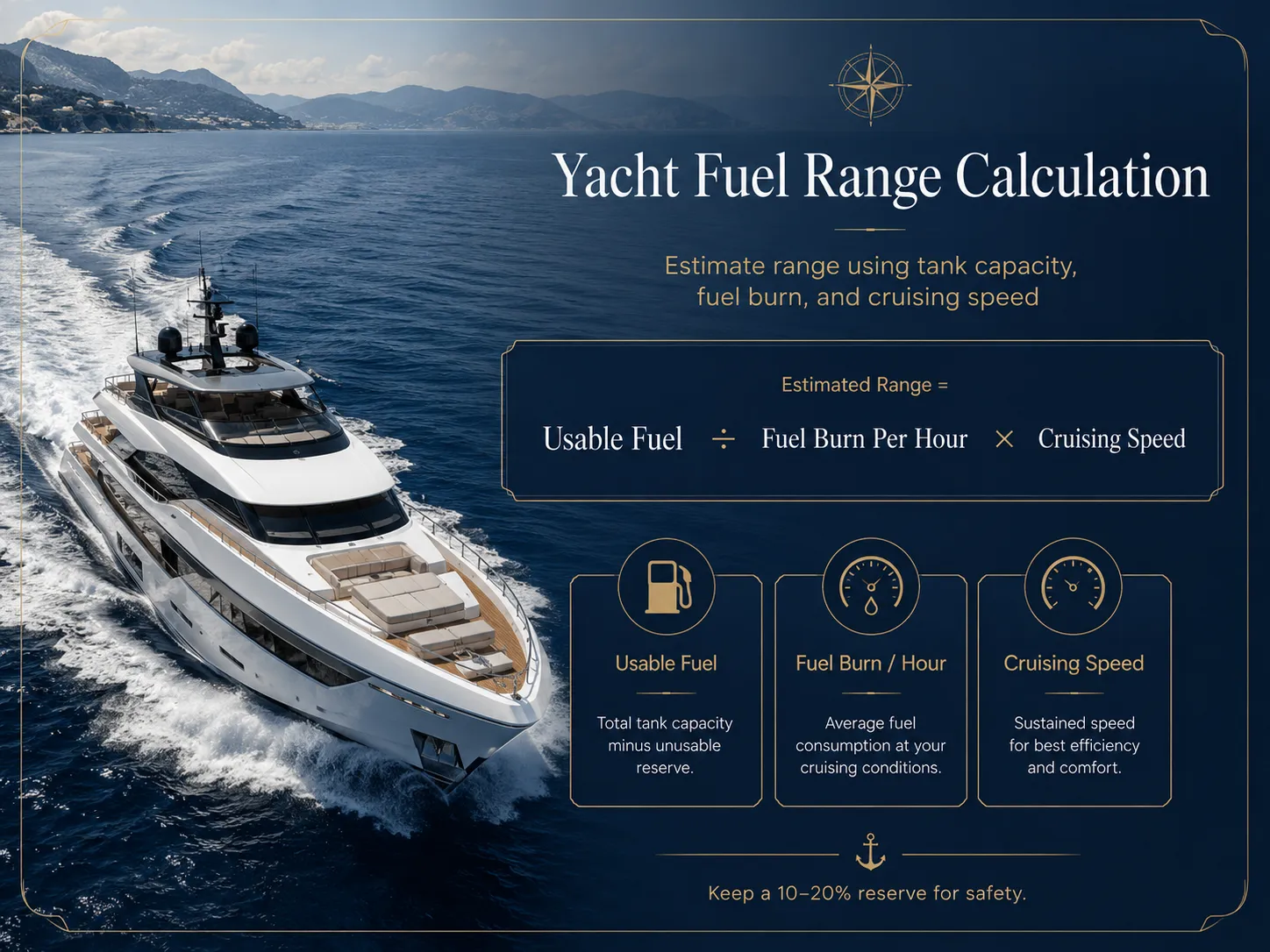
How Far Can a Yacht Travel on One Tank?
A yacht’s range depends on the balance between fuel capacity and fuel consumption. It is primarily influenced by the following four factors:Cruising Speed
Higher speeds dramatically increase fuel burn. Many yachts achieve their best efficiency at roughly 70–80% of maximum engine RPM.Sea Conditions
Rough seas, heavy winds, and strong currents can significantly reduce cruising range.Engine Load
Heavy acceleration and high-speed cruising place additional load on engines and increase fuel usage.Generator and Hotel Load
Large yachts consume fuel not only for propulsion, but also for generators, air conditioning, stabilizers, watermakers, and onboard luxury systems.Superyacht Fuel Capacity and Fuel Use
How Much Fuel Does a Superyacht Hold?
Most superyachts carry between 10,000 and 50,000 gallons of fuel, although some expedition yachts exceed this for long-range cruising.How Much Fuel Does a Superyacht Use Per Hour?
A large superyacht may consume anywhere from 250 to 600+ gallons per hour depending on cruising speed and onboard systems.Why Expedition Yachts May Be More Efficient
Expedition yachts are often built with displacement hulls optimized for fuel efficiency at lower speeds, allowing them to achieve longer range with lower fuel burn compared to high-speed sport yachts.How to Reduce Yacht Fuel Consumption
Reducing fuel usage can significantly lower operating costs over time.Cruise at Efficient Speed
Avoid running continuously at maximum throttle. Most yachts achieve better efficiency at moderate cruising speeds.Keep the Hull Clean
Marine growth on the hull increases drag and can reduce fuel efficiency by 15–20%.Reduce Unnecessary Weight
Carrying fewer unnecessary items can improve fuel efficiency and reduce engine load.Maintain Engines and Filters
Regular maintenance, including oil changes and injector cleaning, helps engines run more efficiently.Plan Routes Carefully
Using navigation software and weather routing can help avoid strong currents, rough seas, and unnecessary detours.FAQ
Q1: How much fuel does a yacht use per hour?
A: A yacht may use anywhere from 5 gallons per hour for smaller cruising boats to several hundred gallons per hour for large motor yachts and superyachts. Size, speed, hull design, engines and sea conditions all affect consumption.
Q2: How many gallons of fuel does a yacht hold?
A: Small yachts may hold a few hundred gallons, while large superyachts may hold 10,000–50,000 gallons or more depending on size and design.
Q3: How much fuel does a 50 foot yacht use?
A: A 50 foot motor yacht may use around 25–60+ gallons per hour depending on cruising speed, engine setup and load.
Q4: How much fuel does a superyacht use per hour?
A: Many superyachts can burn 100–500+ gallons per hour, while very large yachts may consume more at higher cruising speeds.
Q5: How far can a yacht travel on one tank?
A: Range depends on tank capacity, cruising speed and hourly fuel burn. A yacht with better displacement efficiency may travel much farther than a faster planing yacht with the same tank size.
Q6: Is yacht fuel consumption higher at high speed?
A: Yes. Fuel consumption usually rises sharply at higher speeds because the engines work harder and hull resistance increases.