A multihull is a vessel designed for stability, space and speed. It has two or three parallel elongated hulls joined together by a bridge deck. Multihulls have a number of advantages over monohulls, but they also have some disadvantages. In this guide, we'll look together at the characteristics of multihulls and what to look for when cruising.
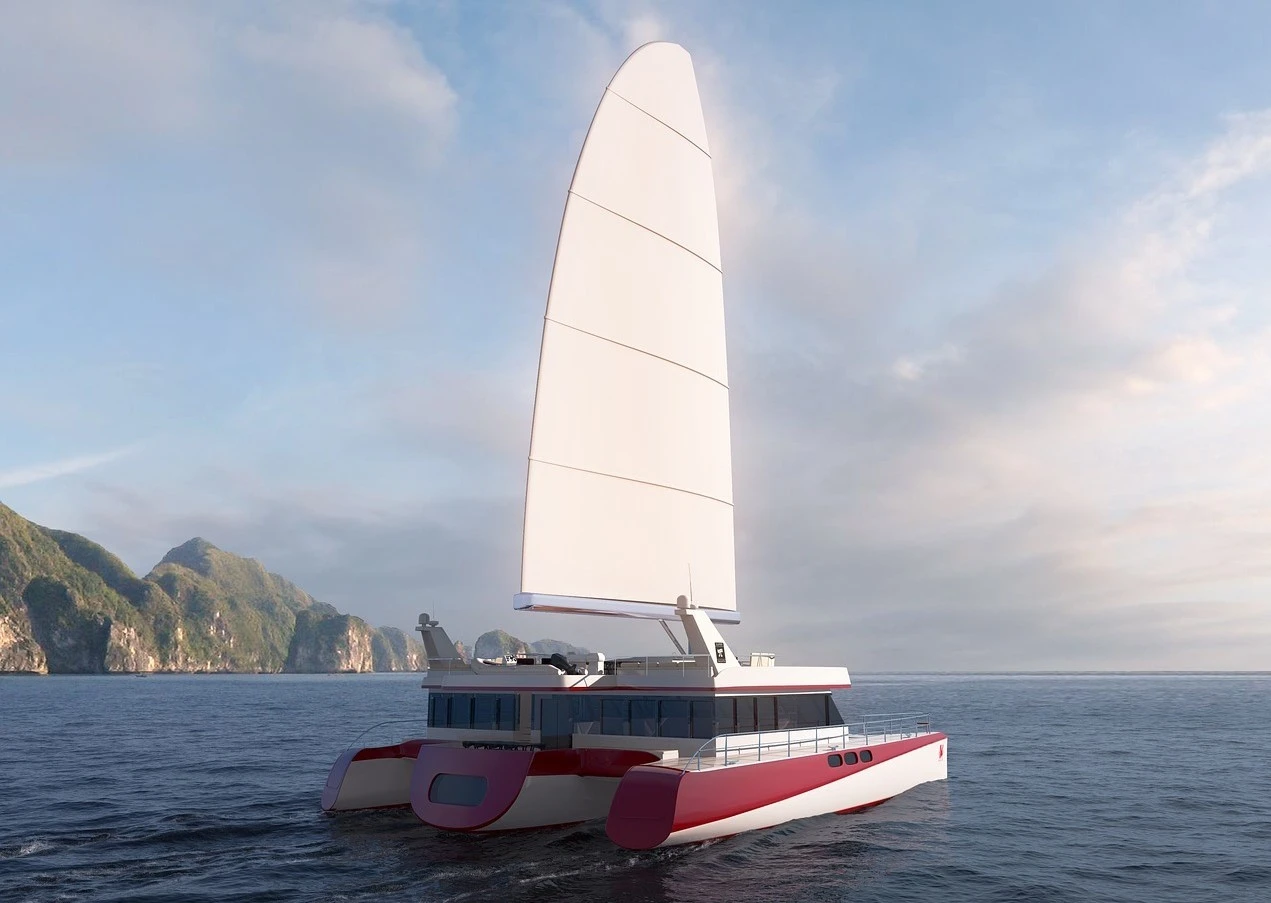
Hull characteristics of multihulls
Multihulls, because they have multiple hulls, are much wider compared to monohulls of the same length, with more deck space and wider foredecks and cockpits. The spacious decks give multihulls huge saloons and lots of living space, often taking up most of the bridge, but most multihulls have smaller sleeping compartments than monohulls of the same size. Multihulls are more fuel efficient than monohulls travelling at the same speed. Many cruising multihulls are full displacement hulls with a top speed of about 20 knots, which is twice the speed of a monohull with a full displacement hull, and some multihulls with a semi-displacement or fast-skidding hull can go even faster.
The deck areas of multihulls are spacious, with an expansive foredeck lounge area, an aft deck that enhances sheltered comfort while underway, and easy access to a spacious saloon area. Some cruising multihulls feature flybridges that add even more living space. In addition, the privacy of the exterior spaces of a multihull provides solitude for a diverse group of people.
Design Features of Multihulls
When purchasing a multihull, carefully consider the design features of the multihull. Multihulls have plenty of living space on the inside, but this can lead to narrower cabins, though you can have with an entire hull and leave the other hull for guests to use. Multihulls have better lateral stability due to their unique hull design, although some people prefer the side-to-side rocking sensation of a monohull, so it's important to experience both before buying.
Also, if you are buying a cruising multihull, pay attention to the weight of the boat. Keeping the multihull light is key to keeping the boat working efficiently, and in order to achieve this, multihulls can carry less payload and can't be fitted with heavy interiors such as marble sinks, which is why older multihulls don't usually have flybridges.
Size of multihulls
Multihulls are notable for their size and space, with small multihull cruisers being up to 50 per cent wider than a monohull of the same size, and large multihulls up to twice the width of a monohull of the same size. For example, a multihull with a length of 12 meters has the same living space as a monohull of 20 meters. Modern multihulls typically range in size from 65 feet (20 meters) to 100 feet (30 meters).
If you wish to have a queen-size island bed with space on both sides, you need to choose a boat with dimensions in the 50-foot range to safeguard the width of the lower deck stateroom. When buying a boat, if a full-width owner's suite is listed as a primary need, you will usually need to buy a monohull unless you can afford a large multihull that is 30 meters or more and has two levels of accommodation on the bridge.
Performance characteristics of multihulls
The slender hulls of multihulls glide efficiently through the water and are smoother at high speeds in rough seas. Multihulls have good fuel economy at displacement speeds, twice that of comparable monohulls, and low engine noise, so most multihulls have full displacement hulls, not semi-displacement or skidding hulls. Semi-displacement or skidding multihulls are usually more fuel-intensive, but are fast and smooth-running.
Multihulls are generally lighter than monohulls with large superstructures and are more susceptible to strong winds when sailing, especially at low speeds, but most can get in and out of tight spaces with ease thanks to twin engines and bow thrusters. Multihulls have a smoother ride than monohulls bow style, and good visibility when steering or navigating internally.
Do's and Don'ts of Multihull Cruising
There are many aspects of multihull cruising that need attention. Most multihulls are more suited to cruising in shallow waters, such as the Bahamas, but marina moorings are expensive and finding a suitable berth can be a bit difficult. Seaworthiness also varies between different models of multihulls, with those with full-displacement hulls being better suited for long-distance cruising. In terms of design, attention should be paid to the hull and platform length ratio, weight distribution, internal bow volume and platform to draught line clearance. The hulls of multihulls are usually constructed of expensive lightweight materials, and range is affected by the weight of fuel and fresh water, resulting in a shorter range compared to a full displacement monohull expedition yacht.