



A new yacht warranty protects buyers against manufacturing defects, not ownership costs. It may cover structural components, factory-installed systems, engines, electronics, and equipment depending on the manufacturer. Maintenance, wear and tear, accidents, and improper use are usually excluded.
What Is a New Yacht Warranty?
A new yacht warranty is an after-sales protection provided by the yacht manufacturer or, in some cases, by individual equipment manufacturers.If an eligible defect occurs during the warranty period, the manufacturer may repair the affected component, replace it, or provide another remedy specified in the warranty terms.
Warranty coverage is not identical across yacht brands. Each manufacturer defines its own warranty terms, coverage periods, exclusions, and owner responsibilities.
Major yacht builders generally provide warranty documentation outlining covered components, exclusions, claim procedures, and owner responsibilities. For example, the Azimut Peace of Mind Warranty Manual.
For this reason, buyers should review the official warranty documentation for the specific yacht model they are considering rather than relying only on general industry expectations.
What Does a Yacht Warranty Cover?
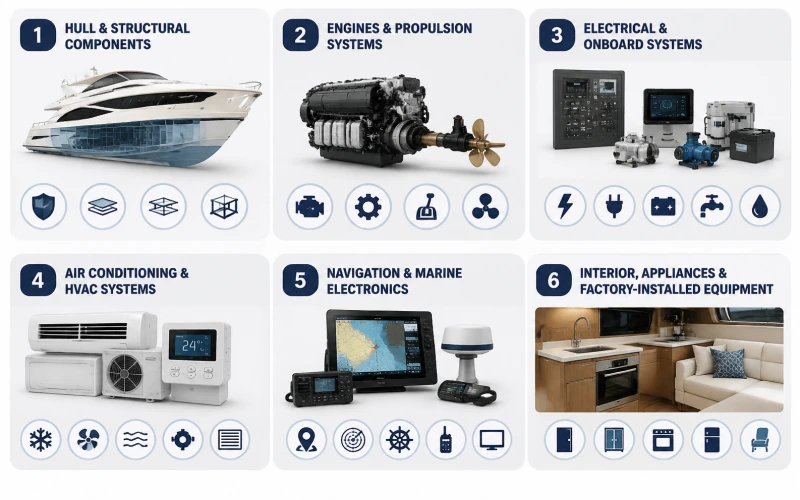
There is no single warranty that applies to every yacht. However, new yacht warranties commonly address several major areas.
Hull and Structural Components
Structural warranty coverage commonly relates to factory-built components such as:- Hull structure
- Deck structure
- Stringers
- Bulkheads
- Other factory-built structural components
Engines and Propulsion Systems
A yacht's engines, gearboxes, controls, and propulsion systems may be covered under the yacht builder's warranty or through separate warranties provided by the engine manufacturer.Because engine warranties can differ from the yacht's general warranty, buyers should review both warranty documents to understand the applicable coverage.
Electrical and Onboard Systems
Coverage may include certain factory-installed systems such as:- Electrical distribution systems
- Wiring and control systems
- Battery chargers
- Pumps
- Freshwater systems
- Factory-installed onboard equipment
The warranty documents should therefore be checked to determine whether the yacht builder, equipment supplier, or authorized service provider is responsible for a particular component.
Air Conditioning and HVAC Systems
Air-conditioning, ventilation, and related equipment may also have warranty coverage.Potentially covered equipment can include:
- Air-conditioning units
- Control systems
- Air-conditioning pumps
- Ventilation equipment
- Other factory-installed HVAC equipment
Navigation and Marine Electronics
Navigation electronics are another area where separate manufacturer warranties are common.Typical equipment includes:
- GPS and chartplotters
- Radar
- Autopilot systems
- VHF radios
- Marine displays
- Navigation and communication equipment
Interior, Appliances and Factory-Installed Equipment
Depending on the manufacturer's terms, certain factory-installed interior components and equipment may also be covered.Examples can include:
- Doors and hardware
- Cabinetry and fixtures
- Galley appliances
- Factory-installed equipment
- Other original components
What Does a Yacht Warranty Usually Not Cover?
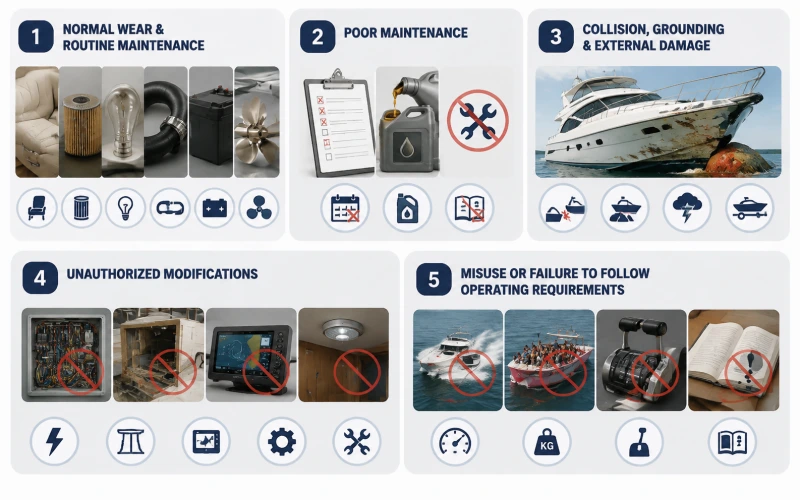
A yacht warranty is generally not a substitute for insurance or a maintenance plan. The specific exclusions vary between manufacturers, but several categories commonly require the owner to pay for the associated costs.
Normal Wear and Routine Maintenance
Warranty coverage generally does not replace normal maintenance or cover ordinary wear.Depending on the manufacturer's terms, examples may include:
- Normal wear to upholstery and interior finishes
- Filters and light bulbs
- Certain seals and hoses
- Batteries and other consumable components
- Propeller wear
- Cosmetic aging or fading
Poor Maintenance
Warranty coverage may be affected if a failure results from inadequate maintenance or failure to follow manufacturer requirements.Examples may include:
- Missing scheduled maintenance
- Using incorrect fluids, materials, or replacement parts
- Failure to follow the manufacturer's maintenance instructions
Collision, Grounding and External Damage
A manufacturer's defect warranty and yacht insurance serve different purposes.Damage caused by an accident or external event will generally not be treated as a manufacturing defect.
Examples can include:
- Collision
- Grounding
- Impact with underwater objects
- Certain weather-related damage
- Damage caused by improper operation
- Transport-related damage
Unauthorized Modifications
Installing or modifying equipment without manufacturer approval may affect warranty coverage for the affected component or system.Examples may include:
- Unapproved electrical modifications
- Structural changes
- Installation of non-approved equipment
- Changes to factory-installed systems
- Incorrect installation of additional equipment
Misuse or Failure to Follow Operating Requirements
A yacht warranty may exclude damage caused by operating the yacht or its equipment outside the manufacturer's specified requirements.Examples may include:
- Operating engines or equipment incorrectly
- Exceeding specified load limits
- Using systems outside their intended purpose
- Ignoring operating instructions or safety requirements
Who Handles Yacht Warranty Repairs and How to Make a Claim?
For yacht buyers, understanding the warranty process before purchase can help ensure faster support and avoid unexpected delays.Who Is Responsible for Yacht Warranty Repairs?
The yacht builder is typically responsible for defects covered under the manufacturer's warranty. However, some components may follow separate warranty arrangements provided by their own manufacturers.Examples include:
- Yacht Builder: Hull structure, factory construction, and builder-installed systems covered under the yacht warranty
- Engine Manufacturer: Main engines, gearboxes, and propulsion-related equipment
- Electronics Manufacturer: Navigation and communication equipment
- Authorized Service Providers: Inspection, diagnosis, and approved warranty repairs
How to Make a Yacht Warranty Claim
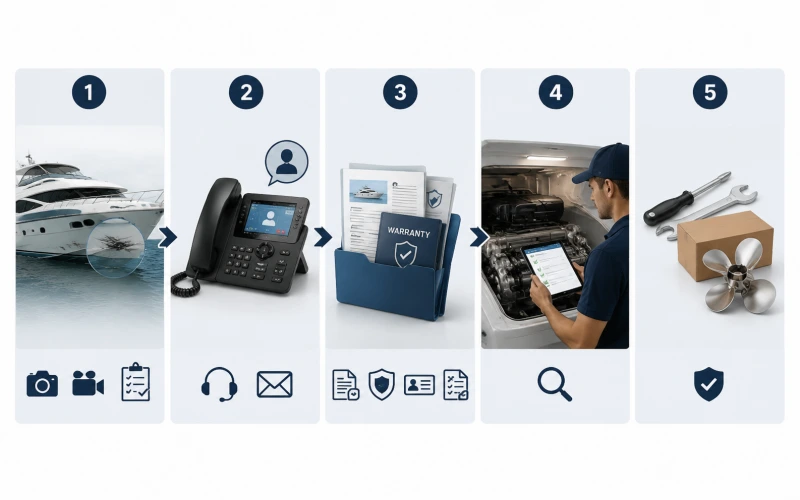
The warranty claim process may vary by manufacturer and dealer, but most claims generally follow similar steps.
Step 1: Document the Problem
Record the issue as soon as it appears, including photos, videos, operating conditions, warning messages, and equipment details.
Step 2: Contact the Warranty Provider or Authorized Contact
Contact the warranty contact specified in your documentation. Before arranging repairs independently, confirm whether prior approval is required. Unauthorized repairs may affect warranty coverage or reimbursement eligibility.
Step 3: Provide the Required Documents
Provide the documents requested, such as:
- Purchase documents
- Warranty certificate
- Yacht identification details
- Maintenance records
- Equipment information
Step 4: Inspection and Assessment
The manufacturer or authorized service provider may inspect the yacht or affected component to confirm whether the issue qualifies under the warranty terms.
Step 5: Repair or Replace the Affected Component
If the claim is approved, the manufacturer may repair the defect, replace the affected component, or provide another remedy specified in the warranty.
How Long Does a New Yacht Warranty Last?
There is no universal yacht warranty period. The duration depends on the yacht manufacturer, model, warranty type, and the components covered.A new yacht may have different warranty periods for different areas, such as:
- General manufacturer warranty
- Structural warranty
- Engine warranty
- Equipment manufacturer warranties
New Yacht Warranty vs. Extended Warranty
Once the original manufacturer warranty approaches its end, some owners may consider an extended warranty or service contract.An extended warranty can provide additional protection, but a longer warranty period does not automatically mean better coverage.
Before purchasing one, compare:
- Covered systems and components
- Exclusions
- Deductibles
- Labor coverage
- Service locations
- Claim procedures
- Per-claim or aggregate limits
- Transferability
New Yacht Warranty vs Used Yacht Warranty: What Buyers Should Know
A new yacht and a used yacht can have very different warranty situations. Understanding these differences helps buyers evaluate the real value and potential ownership costs.| Comparison | New Yacht | Used Yacht |
|---|---|---|
| Warranty Coverage | Usually includes the original manufacturer warranty | Depends on remaining warranty coverage and applicable transfer conditions |
| Transferability | May include transfer conditions set by the manufacturer | Depends on whether the warranty can be transferred to a new owner |
| Buyer Focus | Warranty terms, manufacturer support, and service availability | Remaining coverage, warranty transferability, and overall yacht condition |
| Main Risk | Limited coverage outside warranty terms and exclusions | Expired coverage, non-transferable warranties, or limited remaining warranty period |
When Does the Yacht Warranty Start?
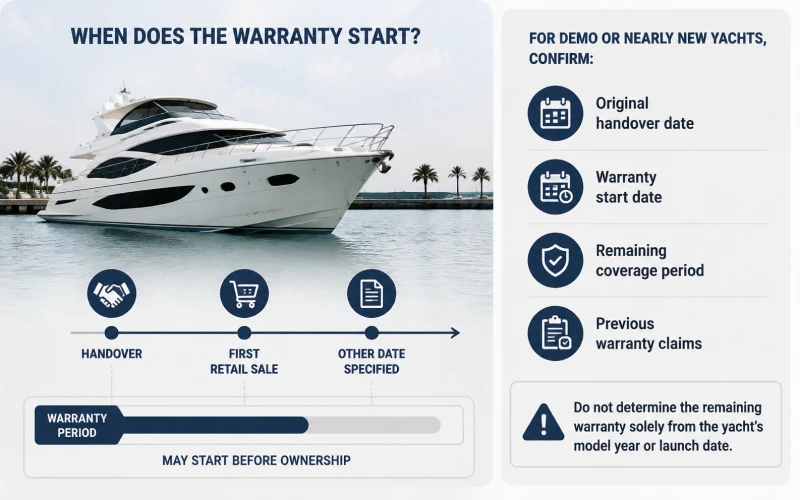
A yacht warranty does not always begin when a buyer takes ownership. Depending on the manufacturer, the warranty period may start from:
- Handover
- First retail sale
- Another date specified in the warranty agreement
For demo yachts or nearly new yachts, buyers should confirm:
- Original handover date
- Warranty start date
- Remaining coverage period
- Previous warranty claims
Can a Yacht Warranty Be Transferred to a New Owner?
Warranty transferability depends on the manufacturer and the specific warranty.Before purchasing a used, demo, or nearly new yacht, confirm:
- Whether the warranty is transferable
- Which warranty components can be transferred
- Whether manufacturer or dealer approval is required
- Whether a transfer application or fee applies
- How much warranty time remains
- Whether engine and equipment warranties follow separate transfer rules
Does a Yacht Warranty Cover Labor and Additional Repair Costs?
A yacht warranty may cover eligible repairs, but the owner should confirm which related costs are included.Costs Buyers Should Clarify
- Technician labor
- Diagnostic costs
- Installation costs
- Haul-out and relaunch
- Transportation of parts or the yacht
- Travel expenses for technicians
- Repairs performed outside the original dealer network
For international yacht buyers of large yachts, these details are especially important because a warranty claim may occur far from the yacht builder's home market.
For example, if a buyer purchases a new Azimut Fly 62 in Italy and later experiences a warranty-related issue while operating the yacht in Dubai, the defective component may qualify for warranty coverage. However, technician travel, transportation, local labor, or other service costs may depend on the applicable warranty terms.

Azimut Fly 62
- Length63.10 ft
- Cabins4
- Top speed30 kn
- TypeFlybridge yacht
The Azimut Fly 62 is a new-generation flybridge yacht launched by Azimut Yachts in 2024. Measuring approximately 19 metres in length, it is positioned in the 60-foot luxury cruising market. The vessel’s key selling point is its innovative ‘Beach Cockpit’ design, which breaks down the spatial boundaries of traditional flybridge yachts and seamlessly connects indoor and outdoor living.
Before Buying a New Yacht: Warranty Checklist
Before purchasing a luxury yacht, buyers should confirm the following warranty details:Reviewing these points before delivery can help buyers understand their real warranty protection and avoid unexpected ownership costs.
Final Takeaway: Read the Warranty Before You Buy
Before purchasing a new or nearly new yacht, obtain and review the complete warranty information for the yacht builder, engine manufacturer, and major equipment suppliers. Understanding coverage limits, exclusions, transfer conditions, and claim procedures can help buyers avoid unexpected costs after delivery.Compare new yachts from leading international builders, then confirm the applicable manufacturer warranty and after-sales support before purchase.
👉 View New Yachts for Sale
About This Guide
This guide explains new yacht warranty coverage, exclusions, warranty periods, transferability, repair costs, and claims. It is intended for international yacht buyers considering new, demo, or nearly new yachts.
Disclaimer
This article is for general information only. Yacht warranty terms vary by manufacturer, model, and component. Always check the latest official warranty documents and confirm the applicable terms with the manufacturer or authorized dealer before purchasing.
FAQ
Q1: What does a yacht warranty cover?
A: A yacht warranty generally covers eligible defects in materials, manufacturing, or workmanship during the applicable warranty period. Depending on the manufacturer, coverage may include the hull, structure, factory-installed components, or certain onboard systems. Engines and other equipment may have separate warranties.
Q2: Does a yacht warranty cover normal wear and tear?
A: Usually not. Normal wear, routine maintenance, consumable items, and cosmetic aging are generally treated differently from manufacturing defects. The exact exclusions depend on the warranty terms.
Q3: Do demo yachts still have a manufacturer's warranty?
A: A demonstration yacht may still have remaining manufacturer warranty coverage, but the original warranty period may already have started. Before buying, confirm the original handover date, remaining warranty period, claim history, maintenance records, and whether the warranty can be transferred.
Q4: Can I negotiate warranty terms when buying a new yacht?
A: Warranty terms are usually defined by the manufacturer, but buyers may be able to discuss additional support, extended coverage options, service arrangements, or dealer-provided benefits before purchase.
Q5: Can I repair a yacht myself and claim warranty costs later?
A: Usually not. Many warranties require prior approval before repairs are carried out. Unauthorized repairs may affect reimbursement or warranty coverage.
Q6: Does a yacht warranty cover repairs in another country?
A: A yacht warranty may provide coverage for eligible defects when the yacht is located in another country, but the process and related costs depend on the manufacturer's warranty terms. Before purchase, confirm available service locations, technician travel costs, transportation arrangements, and overseas support conditions.
Q7: Is a yacht warranty the same as yacht insurance?
A: No. A yacht warranty and yacht insurance protect against different risks. A warranty generally covers eligible manufacturing defects, while insurance typically addresses risks such as accidents, theft, weather damage, and other insured events.