The choice between a sports yacht and a flybridge yacht essentially depends on how you intend to use the boat, rather than simply on size or price.
If you prioritise the driving experience, a sense of speed and styling, and will mainly use the boat for short trips or frequent weekend outings, then a sports yacht is more suitable for you. If you value space, family comfort, socialising with a large group and extended stays on board, then a flybridge yacht would be the more sensible choice.
To summarise simply:
- Want to ‘go fast and have fun’ → Sport yacht
- Want to ‘stay longer and have more space’ → Flybridge yacht
In the market, whether you’re buying a sport yacht or browsing flybridge yachts for sale, the final decision comes down to how you intend to use the boat, rather than a comparison of specifications.
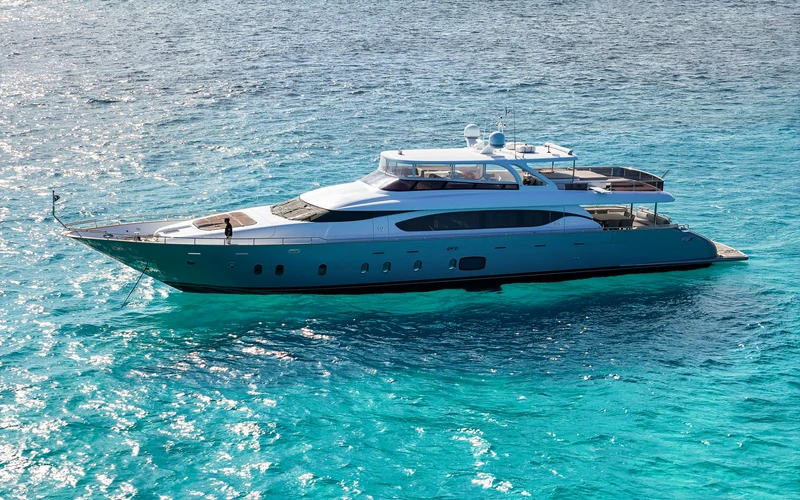
What is a sport yacht? Who is it suitable for?
A sports yacht is a type of vessel centred on the driving experience, emphasising speed, manoeuvrability and modern design. Compared to traditional yachts, it typically features a lower hull profile and a more efficient propulsion system, delivering more direct feedback to the driver.
This type of yacht is ideal for those who enjoy taking the helm themselves, particularly users who frequently undertake short trips or weekend getaways. The core value of a sports yacht is to make ‘the act of sailing itself a pleasure’.
Take the Wally WALLYPOWER 58X, for example. Renowned for its minimalist design and high-performance propulsion system, it is more like a ‘performance machine of the seas’ and is perfectly suited to those seeking the thrill of the drive.
👉 See Wally WALLYPOWER 58X

Wally WALLYPOWER 58X
- Length57 ft
- Cabins2
- Top speed50 kn
- TypeSport yacht
Wally WALLYPOWER 58X is a high-performance open motor yacht that combines avant-garde design with powerful propulsion, tailored for high-speed cruising and premium social experiences. Equipped with four 600hp outboard engines, it reaches a top speed of up to 50 knots while maintaining excellent handling and stability. The expansive open deck, paired with a two-cabin, three-head lower layout, supports both lively day entertaining and short overnight stays. Its iconic minimalist styling and limited market presence give it strong visual appeal and investment potential within its class.
Users of sports yachts typically share the following characteristics:
- Enjoy operating the vessel themselves
- Value speed and manoeuvrability
- Set sail frequently but undertake shorter voyages
What is a flybridge yacht? Who is it suitable for?
The core feature of a flybridge yacht is its ‘multi-level deck structure’, with a flybridge area added above the main deck to create a more three-dimensional layout, thereby significantly enhancing the living experience.
This type of yacht is more akin to a “villa at sea”, emphasising comfort, a sense of space and versatile usage scenarios, making it particularly suitable for families or groups.
Take the Azimut Fly 62, for example: its interior layout and living space design are highly refined, making it ideal for long-term family use or leisurely holidays.
👉 See Azimut Fly 62
Azimut Fly 62
- Length63.10 ft
- Cabins4
- Top speed30 kn
- TypeFlybridge yacht
The Azimut Fly 62 is a new-generation flybridge yacht launched by Azimut Yachts in 2024. Measuring approximately 19 metres in length, it is positioned in the 60-foot luxury cruising market. The vessel’s key selling point is its innovative ‘Beach Cockpit’ design, which breaks down the spatial boundaries of traditional flybridge yachts and seamlessly connects indoor and outdoor living.
Typical users of flybridge yachts include:
- Families
- Those who prioritise space and comfort
- Users seeking business hospitality and social functions
Sport Yachts vs Flybridge Yachts: Key Differences at a Glance
Before formally comparing sport yachts and flybridge yachts, it is essential to clarify a key point: the differences between these two hull types extend far beyond mere aesthetics or deck configurations; they represent a comprehensive divergence in design philosophy, operational logic and actual sailing experience.
Sport yachts emphasise ‘driver engagement’ and ‘speed and efficiency’, whilst flybridge yachts focus more on ‘spatial experience’ and ‘living comfort’. Therefore, when making a side-by-side comparison, we must look beyond mere specifications and consider real-world usage scenarios to understand their distinct roles in maritime living.
| Comparison Dimensions | Sport Yachts | Flybridge Yachts |
| Design Logic | Performance-oriented | Space-oriented |
| Hull Structure | Low-profile, streamlined | Multi-level deck |
| Driving Experience | More direct, more exhilarating | Smoother, more comfortable |
| Usage Scenarios | Short, frequent trips | Extended mooring |
| Social Aspects | Relatively weaker | Stronger |
Essentially, sports yachts lean towards being ‘driving tools’, whilst flybridge yachts lean towards being ‘living spaces’.
Analysis of Individual Advantages
The greatest advantage of a sports yacht lies in the ‘sense of involvement’ it offers during the driving experience. Thanks to its lighter hull and more concentrated power, it provides very direct feedback during acceleration, manoeuvring and high-speed cruising. This experience holds great appeal for those who enjoy taking the helm.
Take the Itama 62 RS, for example. It continues the classic Italian open-deck design philosophy, emphasising deck openness and a pure driving experience, with ‘the joy of sailing’ as virtually its sole core objective, making it ideal for those who love speed and a sense of freedom.
👉 Browse Itama yachts
Itama 62 RS
- Length62 ft
- Cabins3
- Top speed40 kn
- TypeSport yacht
The Itama 62 RS is an Italian open sport yacht built by Itama under the Ferretti Group. With a 62-foot hull, deep-V design, and twin MAN V12 engines, it reaches speeds of about 40 knots while maintaining stable handling. The spacious open deck is ideal for sunbathing and social cruising, while the lower deck features a comfortable three-cabin layout suitable for weekend trips and coastal cruising.
The advantage of flybridge yachts lies in the integrity of their spatial layout. Multi-level decks not only increase usable space but also allow for the independent separation of different functional zones; for instance, driving, leisure, dining and relaxation can take place simultaneously without interfering with one another.
Take the Galeon 460 FLY, for example. It incorporates flexible space design into the traditional flybridge structure, maximising interior space utilisation whilst retaining a certain sporty style, striking a balance between family use and modest performance requirements.
👉 View Galeon 460 FLY for sale
Galeon 460 FLY
- Length47.50 ft
- TypeSport yacht
The highly anticipated 460 FLY brings all the groundbreaking innovations of the award-winning 500 FLY into a more compact framework. This bold new design clearly demonstrates the daring path Galeon is taking to propel its yachts into the future. Once again equipped with features such as the automatic bow lounge area that quickly transforms into a sunbathing deck, rotating cockpit seats, and everyone's favorite function – Beach Mode, the 460 FLY ensures maximum utilization of the available space on board.
Comparison of Purchase Costs (2026 Market)
In the 2026 yacht market, the difference in purchase costs between sports yachts and flybridge yachts remains significant, though the overall price range has seen a slight correction compared to previous years. This is primarily due to the recovery of supply chains and an increase in new boat deliveries, which has intensified competition in the mid-range market.
Looking at the overall trend, the pricing of sport yachts is more heavily influenced by ‘performance and design premiums’, whilst flybridge yachts are more affected by ‘size and spatial layout’. Consequently, within the same class, flybridge yachts are typically more expensive.
📊 2026 Purchase Cost Comparison Table
| Cost Dimension | Sport Yacht | Flybridge Yacht |
| New Boat Price Range | $500,000 – $2,800,000 | $800,000 – $4,500,000 |
| Mainstream Sizes | 35–60 ft | 45–80 ft |
| Used Price Range | $300,000 – $1,800,000 | $500,000 – $3,200,000 |
| Resale Value | Above average (more stable for popular models) | Average (depends on brand and maintenance) |
| Depreciation Rate (5 years) | 20%–35% | 25%–40% |
Market data indicates that flybridge yachts typically command an initial purchase price approximately 15%–35% higher than that of comparable sport yachts, primarily due to their larger hull structures, more complex upper deck designs and higher construction costs.
For example, in the 40–60-foot range, sport yachts generally offer mid-to-high-end performance specifications, whereas flybridge yachts of the same class command a significantly higher price due to the additional flybridge structure and larger cabin space.
Comparison of Annual Ownership Costs
If the purchase price determines whether you ‘can afford to get on board’, then the annual ownership costs are the key factor in determining whether you ‘can afford to enjoy it in the long term’.
In practice, a yacht’s annual running costs typically consist of four core components: mooring fees, maintenance, fuel consumption and insurance. In the high-end market, crew costs may also be added.
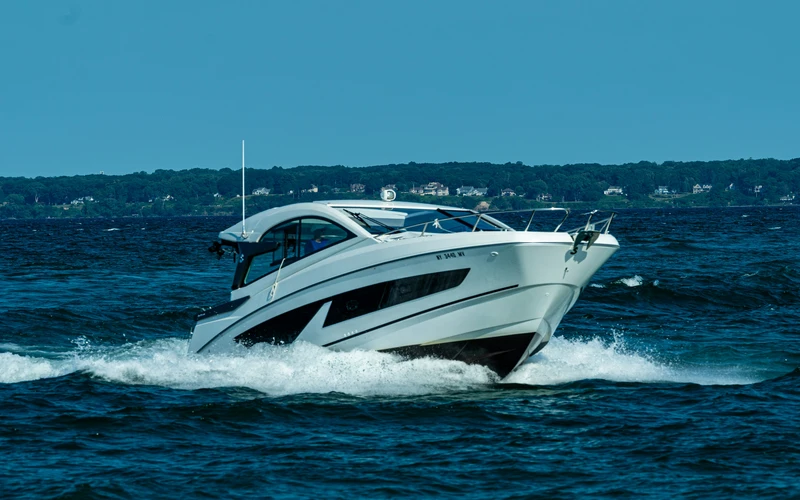
The general industry rule is:
👉 Annual running costs ≈ 5%–12% of the yacht’s purchase price
📊 2026 Annual Ownership Cost Comparison Table
| Cost Item | Sport Yacht | Flybridge Yacht |
| Annual maintenance costs | $20,000 – $80,000 | $40,000 – $150,000 |
| Mooring fees | $10,000 – $40,000 | $20,000 – $80,000 |
| Fuel Costs | $8,000 – $30,000 | $15,000 – $60,000 |
| Insurance Costs | $5,000 – $20,000 | $10,000 – $40,000 |
| Crew required | Usually not required | Medium to large yachts usually require crew |
The data shows that the annual costs for flybridge yachts are typically 1.5 to 2 times those of sports yachts, particularly in the 60-foot-plus size range, where maintenance and mooring costs rise rapidly.
For example, the average annual running costs for a 50-foot sports yacht are approximately $50,000–$90,000, whereas those for a flybridge yacht of the same class may reach $80,000–$150,000; this is primarily due to the larger hull area and more complex system maintenance requirements.
Furthermore, due to their more complex superstructure, flybridge yachts have higher requirements in terms of weather resistance and mooring conditions, which may result in additional berthing fees at certain ports.
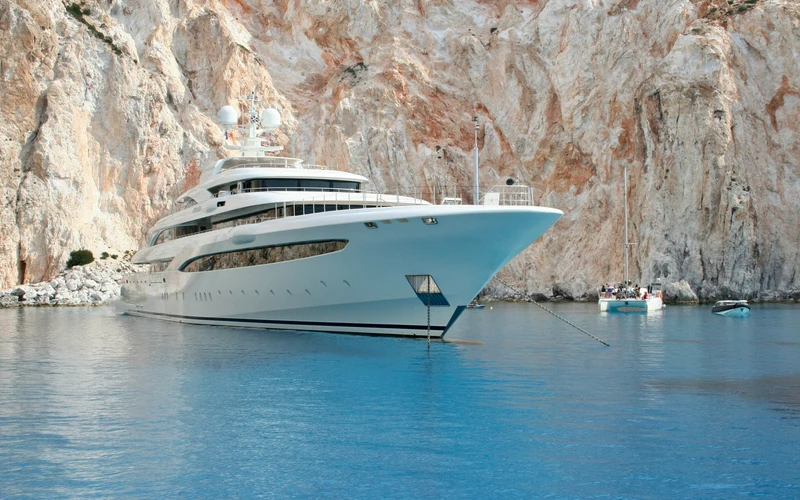
From a usage perspective: the fundamental differences between the two yacht types
When viewed from the perspective of actual usage, the differences between the two are very clear.
Sport yachts are better suited to ‘short, frequent’ use, such as quick trips out to sea, weekend cruises or gatherings with friends; they prioritise efficiency and the joy of sailing.
Flybridge yachts are better suited to ‘long, infrequent’ use, such as family holidays, multi-day moorings or social events; they prioritise comfort and the spatial experience.
Essentially, one is a ‘driver-oriented vessel’, whilst the other is a ‘lifestyle-oriented space’.
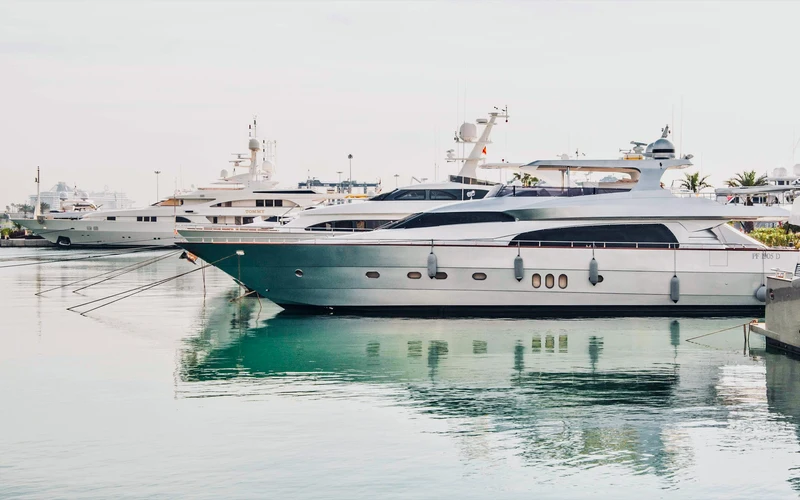
Recommended Choices for Different Budgets
With a limited budget, performance yachts typically offer better value for money, as they provide a superior performance experience at a lower cost.
In the mid-range budget bracket, flybridge yachts begin to demonstrate their advantages, being particularly suitable for family users or multi-purpose scenarios.
At the high-end of the budget spectrum, the choice is no longer a question of ‘affordability’ but one of ‘preference’: opt for a sports yacht if you prioritise the driving experience, or a flybridge yacht if you value spacious living.
Conclusion
There is no absolute superiority between sports yachts and flybridge yachts; they represent two distinct maritime lifestyles. If you seek speed and handling, a sports yacht is more suitable for you; if you value space and comfort, a flybridge yacht better meets your needs.
Ultimately, the key to your choice is not ‘which boat is better’, but ‘which lifestyle suits you best’.
FAQ
Q1: Which is faster, a sports yacht or a flybridge yacht?
A: Generally speaking, sports yachts are faster because their hulls are lighter and lower, and their propulsion systems are geared towards higher power output, making them ideal for those seeking the thrill of acceleration and the joy of handling. Flybridge yachts, on the other hand, place greater emphasis on stability and comfort, and therefore typically fall slightly short in terms of high-speed performance.
Q2: Are flybridge yachts suitable for beginners?
A: Flybridge yachts can be operated by beginners, but as they have a larger hull and a more complex structure, with more decks and control points, they require a certain amount of time to get used to. It is recommended that beginners start with a 40–50-foot class, ideally accompanied by professional training or the assistance of a skipper for a short period.
Q3: Which is better suited for family use?
A: Flybridge yachts are better suited for family use because their multi-deck layout provides separate leisure, dining and relaxation areas, with a clearer division of space that accommodates multiple people engaging in activities simultaneously. Sport yachts, on the other hand, have a more compact layout and are better suited for short-distance leisure and the driving experience.
Q4: Which is easier to resell?
A: Sport yachts generally have better market liquidity, as they appeal to a wider audience and have a lower entry barrier; mainstream brands, in particular, are easier to sell. However, the final resale value still depends on the brand, the condition of the boat, maintenance records, and current market demand.