In this guide, we’ll break down pricing, sizes, and how to choose the right model.
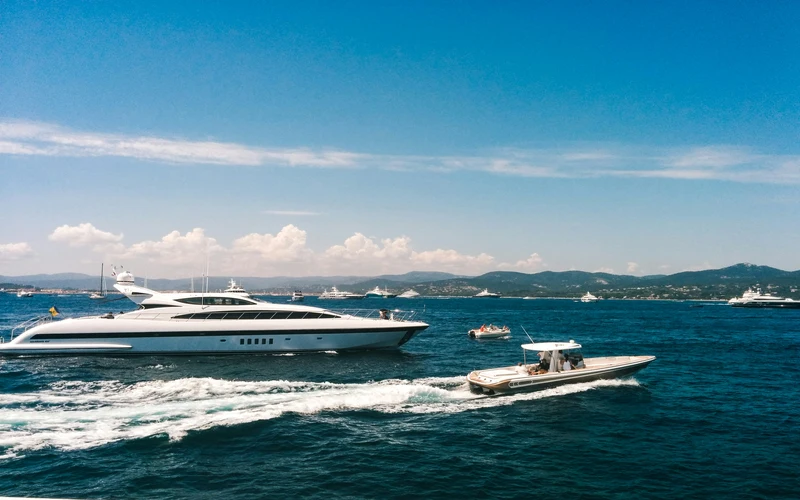
Key Factors That Influence Sport Yacht Pricing
The price of a sport yacht is not determined solely by size—it is the result of multiple factors working together. Understanding these variables helps you control your budget more precisely.
Size and Hull Design
Sport yachts in the 40–60 ft range typically belong to the entry or mid-level market, with simpler structures and fiberglass construction.
Above 70 ft, yachts often feature deep-V hulls, lightweight designs, and even carbon fiber structures to improve speed and stability—significantly increasing costs.
Engine Configuration
Sport yachts are usually equipped with high-performance engines, such as twin or triple setups. Some models even use jet drives.
The more powerful the system, the higher the purchase cost, maintenance expenses, and fuel consumption.
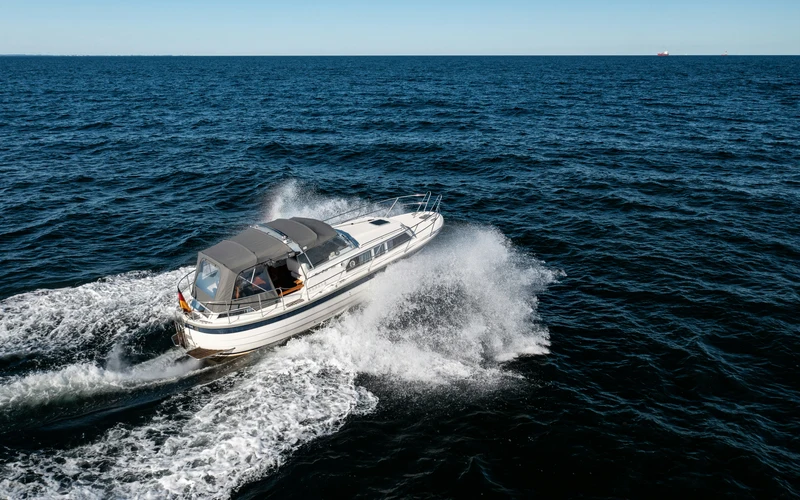
Brand and Design Premium
Premium brands represent not only quality and reliability but also design value.
For example, Nautor Swan Arrow blends sailing yacht aesthetics into a powerboat design, offering a highly distinctive look while maintaining excellent handling. For buyers seeking uniqueness, this type of yacht is especially appealing.
👉 Browse Nautor Swan Arrow

Nautor Swan Arrow Boat
- Length75 ft
- Cabins3
- Top speed37 kn
- TypeSport yacht
The Nautor Swan Arrow is the flagship of Swan's power yacht range, combining the Finnish builder's performance heritage with a contemporary walkaround motor-yacht platform designed for cruising and outdoor living. Its standout feature is the transformable aft platform, which opens to create an approximately 50-square-meter beach terrace. Together with a wide walkaround deck, protected cockpit and flexible indoor-outdoor living areas, the Swan Arrow is designed for owners who want both performance underway and generous social space at anchor.
Equipment and Customization
Features such as gyroscopic stabilizers, advanced navigation systems, teak decking, and custom interiors can significantly impact pricing.
In many cases, different configurations of the same model can vary in price by more than 30%.
Price Comparison by Size
Size affects not only price but also usage experience and application scenarios.
| Size Range | New Price Range | Used Price Range | Typical Speed | Usage Scenario | Key Features |
| 40–50 ft | $500,000 – $1.5M | $300,000 – $1M | 25–35 knots | Weekend leisure, day trips | Easy handling, lower costs |
| 50–70 ft | $1.5M – $4M | $1M – $3M | 28–40 knots | Family cruising, short trips | Balance of space and performance |
| 70–90 ft | $4M – $10M | $2.5M – $7M | 30–45 knots | Luxury entertainment, regional cruising | High performance + comfort |
| 90+ ft | $10M+ | $6M+ | 25–35 knots | Superyacht experience | Fully customized, high-end |
From a market perspective, the 60–80 ft range is the most popular, offering a strong balance between speed, space, and operating costs.
It’s important to note that compared to flybridge yachts of similar size, sport yachts are typically more expensive but offer less interior space, as their design prioritizes performance over livability.
Sport Yacht vs Flybridge Yacht
When choosing between yacht types, many buyers compare Sport Yacht for sale and Flybridge yacht for sale options. These two categories differ significantly in design philosophy and use cases.
In simple terms:
• Sport yachts focus on speed and driving experience
• Flybridge yachts focus on space and comfort
A sport yacht feels like a “sports car on water,” while a flybridge yacht is more like a “floating villa.”
Comparison Table:
| Criteria | Sport Yacht | Flybridge Yacht |
| Design | Performance-oriented, streamlined | Space-focused, multi-deck |
| Speed | High (30–45 knots) | Moderate wind speed (20-30 knots) |
| Driving Experience | Dynamic, responsive | Stable, relaxed |
| Space | Compact | Spacious, well-zoned |
| Upper Deck | Low profile or none | Full flybridge |
| Usage | Short trips, day cruising | Long trips, family vacations |
| Fuel Efficiency | Lower | Relatively higher |
| Docking | Easier (lower height) | More restricted |
| Privacy | Lower | Higher |
| Maintenance | Higher | Moderate |
Decision Insight:
• Frequent short trips → Sport yacht
• Longer stays or vacations → Flybridge yacht
Ultimately, the decision depends on how you plan to use the yacht—not which one is “better.”
New vs Used Sport Yachts
The choice between new and used yachts depends more on your needs and risk tolerance than your budget.
| Criteria | New Yacht | Used Yacht | Insight |
| Purchase Cost | High | Much lower | Used yachts have already depreciated |
| Depreciation | Fast (first 3 years) | Slower | New yachts may lose 20–30% early |
| Customization | Fully customizable | Limited | New builds offer flexibility |
| Technology | Latest | Slightly older | High-end models age slower |
| Risk | Lower | Higher | Requires professional survey |
| Delivery Time | Long (6–24 months) | Immediate | Faster access with used |
For most first-time buyers, choosing a 3–5 year old used sport yacht is the most rational option—avoiding steep depreciation while benefiting from a proven setup.
Annual Ownership Costs
Many buyers underestimate ownership costs—this is one of the most common regrets.Sport yachts typically have higher operating costs due to their performance nature.
| Cost Category | Annual expense ratio | Example (for $3M yacht) | Notes |
| Marina Fees | 5%–10% | $150,000 – $300,000 | Higher in prime locations |
| Fuel | 8%–15% | $240,000 – $450,000 | High consumption at speed |
| Maintenance | 5%–10% | $150,000 – $300,000 | Engines, hull, electronics |
| Crew | 0%–15% | $0 – $450,000 | Optional for smaller yachts |
| Insurance | 1%–3% | $30,000 – $90,000 | Depends on value and risk |
Overall, annual ownership costs are typically 10%–20% of the yacht’s value, sometimes higher for performance models.
Common Mistakes Buyers Make
One of the biggest mistakes is focusing only on purchase price while ignoring key long-term costs.
Fuel costs are often underestimated. High-speed cruising consumes significantly more fuel than displacement yachts.
Maintenance complexity of high-performance systems. For example, Wallypower 58X features advanced propulsion and futuristic design, offering exceptional performance—but also higher maintenance complexity and cost.
👉 See Wallypower 58X
Wally WALLYPOWER 58X
- Length57 ft
- Cabins2
- Top speed50 kn
- TypeSport yacht
Wally WALLYPOWER 58X is a high-performance open motor yacht that combines avant-garde design with powerful propulsion, tailored for high-speed cruising and premium social experiences. Equipped with four 600hp outboard engines, it reaches a top speed of up to 50 knots while maintaining excellent handling and stability. The expansive open deck, paired with a two-cabin, three-head lower layout, supports both lively day entertaining and short overnight stays. Its iconic minimalist styling and limited market presence give it strong visual appeal and investment potential within its class.
Marina limitations. Some sport yachts have deeper drafts or wider beams, making docking more expensive or limited in popular marinas.
Hidden upgrade costs. Electronics, interiors, and equipment upgrades often arise a few years after purchase.
Professional Buying Advice
Choosing a sport yacht is not about buying the most expensive one—it’s about buying the right one.
If you value pure driving experience and classic design, Itama 75 is a strong option. Its open-deck layout emphasizes a direct connection with the sea, making it a true “driver’s yacht.”
👉 View Itama 75 for sale
Itama 75 Boat
- Length77 ft
- Cabins4
- Top speed42 kn
- TypeSport yacht
The Itama 75, built by the Italian brand Itama, is an open high-performance sport yacht combining elegant design with powerful propulsion. Its spacious deck and comfortable salon support sunbathing and multi-day cruising, while twin engines reach a top speed of around 42 knots, making it ideal for leisure sailing, short trips, and high-end private vacations.
If you prefer a balance between performance and comfort, Sunseeker Predator 75 is a better choice. It combines powerful performance with well-designed interior space, suitable for both family and social use.
👉 View Sunseeker Predator 75 for sale
Sunseeker Predator 75
- Length75.66 ft
- Cabins3
- Top speed40 kn
- TypeSport yacht
The Sunseeker Predator 75 is a 75-foot sports yacht that combines high performance with modern luxury design. The new Predator 75 is equipped with twin MAN V12-1900 engines, capable of reaching speeds up to 40 knots.
Key Takeaways:
• Define usage frequency and cruising range (determines size)
• Choose established brands and proven models (reduces risk)
• Focus on total cost of ownership, not just purchase price
Conclusion
A sports yacht is a type of vessel that emphasises speed, design and handling, making it ideal for short-distance, frequent and highly recreational use. From 40 feet to over 90 feet, each size category has a clearly defined target audience.
When making a decision, the most important consideration is not ‘how big to buy’, but ‘whether it suits your lifestyle’. At the same time, it is essential to factor maintenance costs, fuel expenditure and long-term depreciation into your overall budget.
Choosing a sports yacht that truly suits your needs is far more important than blindly pursuing a particular brand or size.
FAQ
Q1: Which is better, a sport yacht or a flybridge yacht?
A: Neither is inherently better. Sport yachts focus on speed and handling, while flybridge yachts prioritize space and comfort.
Q2: Are sport yachts suitable for offshore cruising?
A: Generally not. They are designed for high-speed coastal cruising rather than long-distance offshore voyages.
Q3: Is it better to buy new or used?
A: In most cases, a 3–5 year old used yacht offers the best value.
Q4: Is a 60 ft sport yacht sufficient?
A: Yes, it is ideal for family and social use and is a mainstream market choice.
Q5: What is the most commonly overlooked factor when buying?
A: Fuel and maintenance costs, which significantly impact long-term ownership experience.