



Performance yachts are primarily aimed at those who enjoy the experience of sailing, seek the thrill of speed and appreciate stylish design. They are well-suited to owners who use their boats for short trips, weekend getaways and socialising, rather than for long-term living or ocean-going voyages.
Who is best suited to buying a performance yacht?
A sports yacht is, by its very nature, a vessel centred on the driving experience, rather than a maritime space designed purely for living comfort. Consequently, it is better suited to owners who view sailing as an ‘active pursuit’ rather than a ‘passive holiday’.
To summarise in a single sentence:
Sports yachts are ideal for those who wish to take the helm themselves, enjoy speed, and do not mind sacrificing some space in exchange for the pleasure of handling the vessel.
From a practical market perspective, this type of user typically exhibits the following characteristics:
They have an interest in mechanics or the act of driving itself; they go out to sea frequently but for relatively short, fragmented periods; they prefer to gain an intense maritime experience in a short space of time, rather than spending long periods living on board.
In terms of design philosophy, performance yachts are closer to ‘marine performance machines’, emphasising propulsion efficiency, handling feedback and streamlined profiles; consequently, they offer a distinctly different experience from flybridge or ocean-going cruising yachts.
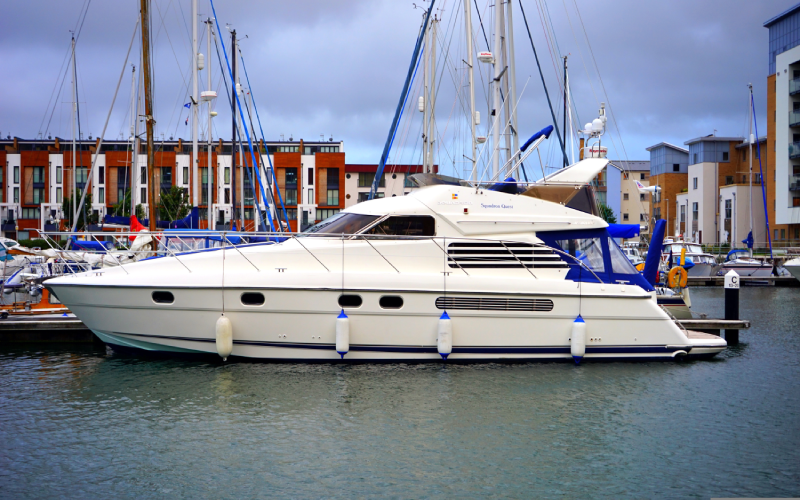
Different usage scenarios determine your yacht-buying strategy
The key to choosing a performance yacht has never been about size or brand, but rather ‘how you intend to use it’.
If your usage scenarios involve waters around urban areas—such as short trips of 2–6 hours departing from a harbour—then what you need is rapid departure capability, good fuel efficiency and straightforward mooring manoeuvres. In this context, the advantages of a performance yacht are very clear, as it requires almost no complex preparation and can be launched and returned at any time.
If your focus is on social entertainment—such as boat parties, corporate events or family weekend gatherings—then deck space, sound systems and the aft entertainment area become key considerations. Users in this category tend to prioritise the ‘on-board experience’ over cruising range.
There is also a category of users who consider cross-sea or longer-distance cruising. In such cases, performance yachts face certain limitations, as their design prioritises speed and manoeuvrability over long-term living support systems. Consequently, larger or hybrid-hull models are required in these circumstances.
In other words, the core logic of a boat-buying strategy is:
Determine your lifestyle first, then choose the boat – not the other way round.
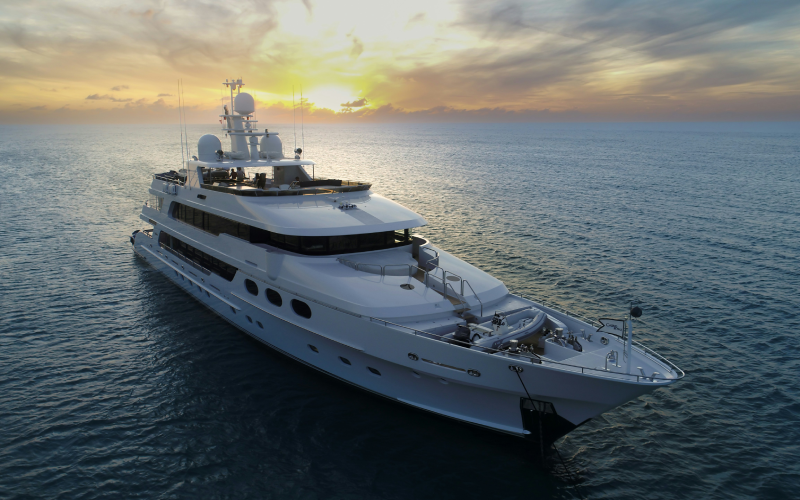
Five Typical Categories of Sport Yacht Owners
Sport yachts are not a ‘one-size-fits-all’ product; their design philosophy is geared towards specific usage scenarios and lifestyle compatibility. Consequently, in actual purchasing decisions, the type of user is often more important than the vessel’s technical specifications.
Based on market usage patterns and profiles of actual owners, several typical user groups that are best suited to performance yachts can be clearly identified; these types essentially cover the majority of high-frequency purchasing and usage scenarios.
Owners Who Love the Driving Experience
This category of user is typically very sensitive to ‘handling’, expecting the yacht to be more than just a means of transport, but a machine in which they can ‘participate in the driving’.
They pay close attention to throttle response, steering precision, hull stability at high speeds, and how the vessel handles in rough seas. In their view, the journey itself is the pleasure, rather than merely a means of reaching a destination.
Sport yachts possess a natural advantage in this regard. Their deep-V hull design effectively cuts through waves, whilst high-powered engines deliver a sports car-like acceleration experience, making the driving experience all the more immersive.
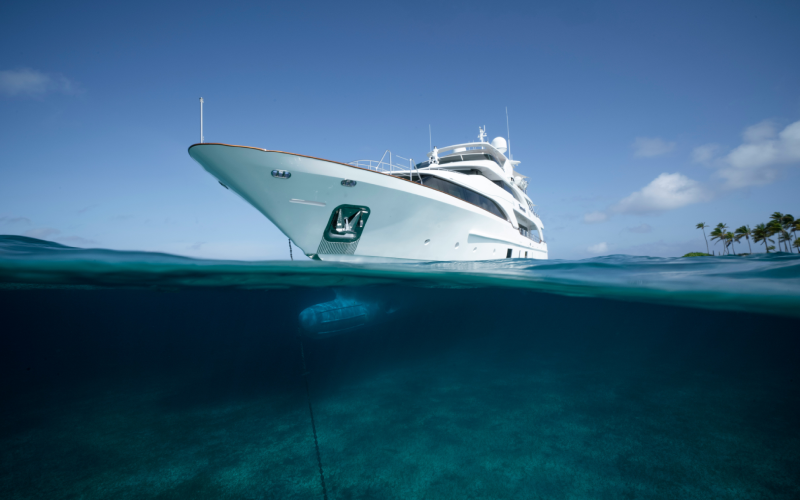
Those who enjoy short cruises and weekend getaways
This category of boat owners typically lives in coastal cities and has access to a permanent berth, but their time at sea is concentrated on weekends or holidays.
Their core requirement is ‘quick departure + quick return’. This means the yacht must offer low preparation costs and high manoeuvrability.
Compared to large flybridge yachts, the advantage of a sports yacht lies in its high operational efficiency, simple maintenance procedures, and more controllable fuel economy on short voyages. This makes it an ideal choice for high-frequency use.
Buyers who value exterior design and modern style
For this group of users, a yacht is not merely a tool, but a form of “visual expression”.
Sport yachts typically feature a low-profile hull, streamlined exterior and extensive glazing, making them highly distinctive at the marina. They convey a lifestyle that combines modernity, speed and refinement.
Many users even prioritise design over performance when making their choice, as the yacht itself is also part of their social capital.
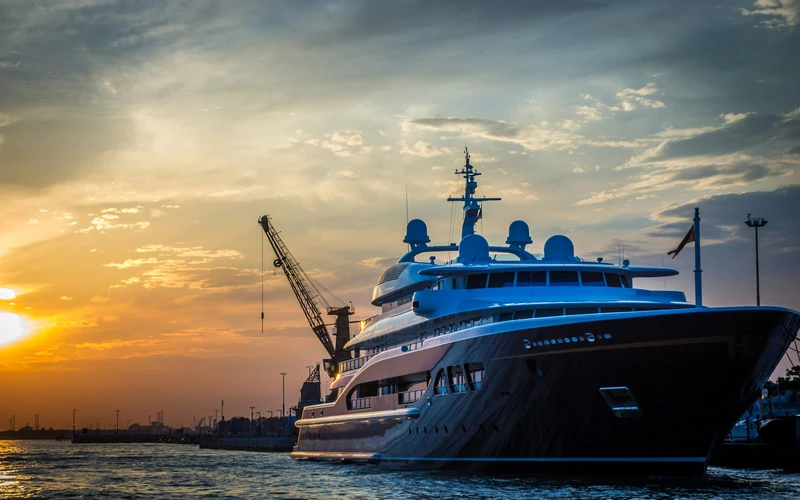
Young or First-Time Yacht Buyers
First-time buyers often lack extensive sailing experience and therefore tend to favour models that are ‘easy to understand and operate’. Sport yachts are highly intuitive in their operation; their steering systems resemble those of a car, requiring no complex sailing experience to get started.
Furthermore, they offer a flexible range of sizes; even small to medium-sized models are sufficient to meet everyday recreational needs, making them a very common choice for those starting out.
Users Prioritising Recreation Over Long-Term Living
The core requirement for this group of users is not ‘living on board’, but ‘having fun on board’. They place greater emphasis on open deck spaces, the layout of social areas, sound systems and the aft water sports platform.
Sport yachts are designed to allocate more space to open areas rather than enclosed living quarters, making them ideal for gatherings, parties and short getaways.
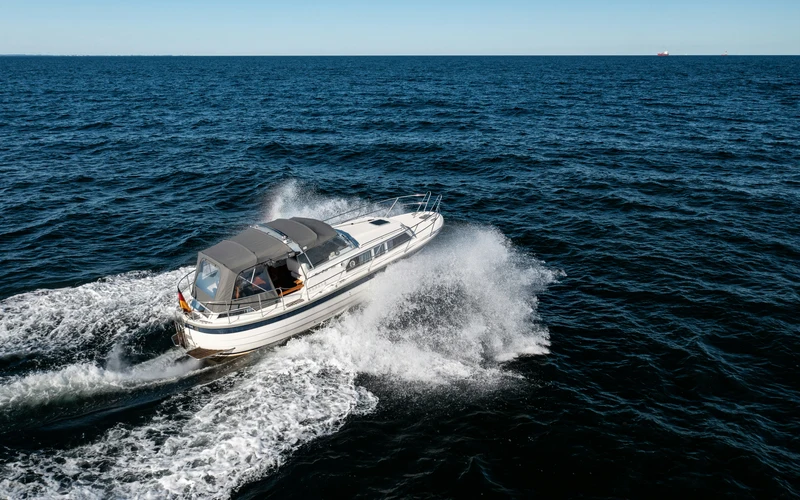
How to choose the right type of sport yacht?
Sport yachts can broadly be categorised into three types, each corresponding to a different usage philosophy.
The first type is the open-deck sport yacht, which emphasises a pure driving experience without complex superstructures, making it suitable for those seeking speed and manoeuvrability.
The second category is the hardtop sports yacht, which adds a sunshade structure whilst maintaining its sporty performance, making it more suitable for prolonged exposure to sunlight or use in tropical regions.
The third category is the sports flybridge hybrid, which retains a sporty appearance whilst adding an upper viewing area, resulting in higher space utilisation and making it more suitable for family users or multi-purpose scenarios.
When making your choice, it is important to bear one thing in mind:
It is not a question of which is more luxurious, but which best suits your frequency of use and style of sailing.
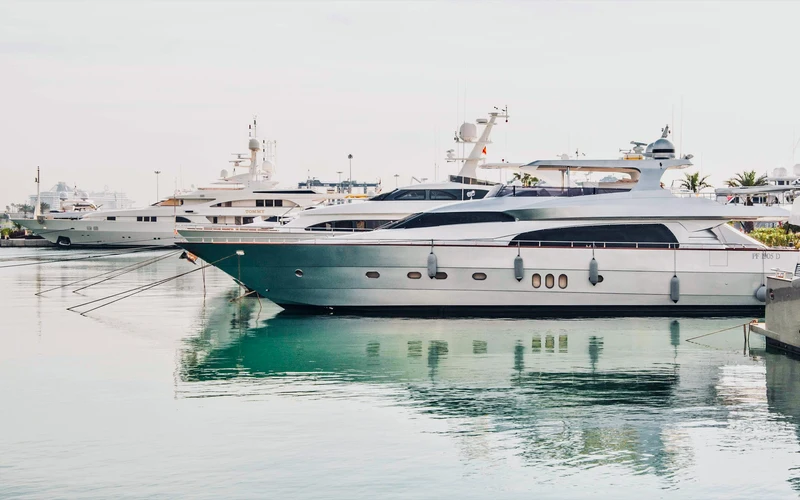
Size Selection Guide
When buying a sports yacht, size is arguably the most critical—yet most frequently underestimated—decision factor. Many people initially prioritise brand, engine power or exterior design, but only realise once they begin using the vessel that size is the core variable determining ‘how comfortable your experience will be’. It not only affects the amount of space on board, but also directly impacts sailing stability, fuel consumption, mooring costs and the difficulty of day-to-day maintenance.
More importantly, choosing a size is essentially choosing a ‘lifestyle at sea’. Different sizes correspond to entirely different usage philosophies: smaller sizes emphasise agility and the joy of driving; medium sizes emphasise balance and versatility; whilst larger sizes are closer to a living platform at sea. Therefore, understanding the true capabilities of each size range is more important than simply comparing specifications.
The table below will help you quickly establish a general framework for understanding:
| Size Range | Core Positioning | Typical Uses | Advantages | Limitations |
| 30–40 feet | Entry-level sports yacht | Short trips, solo sailing practice | Easy to handle, low cost, easy to moor | Limited space, not suitable for extended stays with multiple people |
| 40–55 feet | Mainstream comfort yacht | Family outings, weekend cruising | Balance of performance and comfort, versatile | Moderate long-distance cruising capability |
| 55–70 feet | Advanced multi-purpose | Social events, light cruising | Spacious, well-equipped | Higher maintenance costs, more complex operation |
| 70 feet and above | Luxury sports yacht | High-end socialising, bespoke lifestyle | Ultimate comfort and stability | High costs, requires professional management |
Budget Recommendations
The budget structure for a sports yacht can be divided into two parts: ‘acquisition costs’ and ‘ongoing costs’.
In terms of acquisition costs, the market is typically divided into several tiers:
Entry-level: approximately US$500,000–1.5 million; mid-range: approximately US$1.5 million–4 million; high-end: approximately US$4 million–8 million; and luxury: over US$8 million.
However, what is often overlooked are the running costs, which include mooring fees, fuel, insurance and maintenance expenses; these typically account for 8%–12% of the yacht’s value annually.
Furthermore, in the second-hand market, whilst many buyers focus on ‘used sport yachts for sale’, particular attention must be paid to engine hours, structural maintenance records and whether the vessel has undergone major repairs; otherwise, this may result in significant hidden costs.
Top Recommendations for Sport Yachts
Within the sport yacht market, design philosophies vary significantly across brands. Some prioritise handling performance, others emphasise space utilisation, whilst others focus more on overall styling and brand identity. Consequently, when making a selection, it is usually not simply a matter of comparing specifications, but rather considering ‘what kind of maritime experience you desire’.
👉 View Princess V50 Deck for sale

Princess V50 Deck
- Length52.06 ft
- Cabins2
- Top speed31 kn
- TypeSport yacht
Princess V50 Deck is a classic 50-foot luxury sports yacht from the V-Class series of Britain’s Princess Yachts, focusing on flexible handling and luxury leisure, and is a best-selling model in the mid-to-large luxury yacht market. The hull is made of high-strength fiberglass with a deep-V hull design, equipped with twin Volvo diesel engines, balancing power and stability. The interior is bright and modern with a flexible layout, available in open or enclosed main deck configurations, and is equipped with complete entertainment facilities, comfortably accommodating 6-8 people.
The Princess V50 Deck is a quintessential example of a modern sports yacht from the British brand Princess, with its strength lying in its excellent overall balance. The hull features a deep-V design, offering strong stability at high speeds, whilst the interior layout is geared towards family use, catering to both weekend outings and a degree of overnight comfort. For owners seeking a balance between handling and lifestyle, this vessel is a highly reliable choice.
👉 View Riva Florida 2000 M96L for sale
Riva Florida 2000 M96L
- Length88 ft
- Top speed40.50 kn
- TypeSport yacht
Perfection knows no bounds. The 88' Florida embodies this ideal, rewriting the rules of yacht design and delivering an unprecedented and exhilarating cruising experience. Its dynamic and tortuous lines encapsulate a dual soul, inspired by sports cars and embodied in the patented "convertible hardtop" design, allowing it to seamlessly blend the roles of a coupe and an open yacht.
The Riva Florida 2000 M96L leans more towards a ‘design-driven’ sports yacht; its value lies not only in its performance but also in its brand identity and visual appeal. Riva has long been renowned for its classic Italian styling, and this model continues the tradition of streamlined aesthetics and a highly distinctive design language, making it ideal for those who prioritise status and aesthetic taste. In other words, it is more akin to a ‘moving work of art’ than merely a means of transport.
👉 View Galeon 510 SKYDECK for sale
Galeon 510 SKYDECK
- Length53.20 ft
- TypeSport yacht
The SKYDECK model is a natural evolution of the award-winning 500 FLY. Sharing the hull design and all the great features that have made the 500 so popular, it manages to go one step further with its innovative top-deck design. The Galeon SKYDECK series uniquely combines the advantages of a classic flybridge with the unique sporty appearance of a hardtop, earning the model the 2016 World Yachts Trophies Innovation Design Award at the Cannes Yachting Festival.
The Galeon 510 SKYDECK, meanwhile, represents an innovative direction in modern sports yachts, with its most notable feature being ‘spatial versatility’. Thanks to its retractable and retractable superstructure, the vessel can seamlessly transition between an open deck and an enclosed cockpit, significantly enhancing its versatility. From a practical perspective, it is well-suited for families, multi-scenario socialising and frequent sea-going users, making it one of the best choices that combines functionality with entertainment.
Overall, these three models represent three distinct approaches: Princess leans towards balanced practicality, Riva towards design and brand value, and Galeon towards innovation and space utilisation. If you are undecided when choosing a sports yacht, you can start by considering which aspect matters most to you—driving experience, aesthetics or space—which should help narrow down your options.
Summary
Sport yachts are not ‘all-rounders’, but rather a product category with a highly defined positioning.
They are suited to those who value the driving experience, seek a sense of speed, prefer short to medium-range cruising, and wish to enjoy frequent interaction at sea.
If your goal is a ‘faster, freer and more engaging life at sea’, then a sports yacht is almost certainly the most suitable choice. However, if your core requirements are long-term living or ocean-going voyages, you will need to reassess the hull design.
FAQ
Q1: Are performance yachts suitable for beginners?
A: Yes, they are. Beginners can start with a yacht of around 40 feet; they are relatively easy to handle, with a steering mechanism similar to that of a car, so the learning curve is not steep and you’ll adapt quickly.
Q2: Can performance yachts be used for long-distance cruising?
A: They are suitable for short to medium-range cruising, but not for extended voyages across the open sea. Their design prioritises speed and manoeuvrability rather than long-term living quarters or endurance.
Q3: How should one choose between a performance yacht and a flybridge yacht?
A: Performance yachts prioritise driving pleasure and speed, whilst flybridge yachts emphasise space and comfort; the choice depends on the intended use and frequency of use.
Q4: Is maintenance on a performance yacht expensive?
A: Maintenance costs are moderately high, primarily comprising engine servicing, mooring fees and fuel consumption; costs increase significantly with higher usage frequency.
Q5: Is it advisable to buy a second-hand sports yacht?
A: It is possible, but you must check the engine hours, hull structure and maintenance records to avoid hidden issues that could lead to excessive maintenance costs later on.