Quick Answer
Sunreef Power Catamarans: Fast, luxurious, and ideal for short-distance cruising or high-end recreational experiences.
Sunreef Sailing Catamarans: Fuel-efficient, suitable for ocean exploration and sailing enthusiasts, with low operating costs.
Typical Buyer Cheat Sheet: Power vs. Sailing Catamarans
| Characteristics | Power Catamarans | Sailing Catamarans |
| Average Speed | 18–25 knots | 7–12 knots (wind-dependent) |
| Fuel Consumption | High (50–200 liters/hour) | Very low (primarily engine-assisted) |
| Maintenance Costs | High | Moderate |
| Operating Difficulty | Low | Medium-high (requires sailing experience) |
| Suitable Uses | Short-distance coastal cruising, luxury entertainment | Ocean-going exploration, fuel-efficient cruising |
| Purchase Budget | High | Medium-high |
What Are Sunreef Power Catamarans and Sailing Catamarans?
In my more than ten years of experience as a yacht broker, many clients have confused the concepts of power catamarans and sailing catamarans. Simply put:
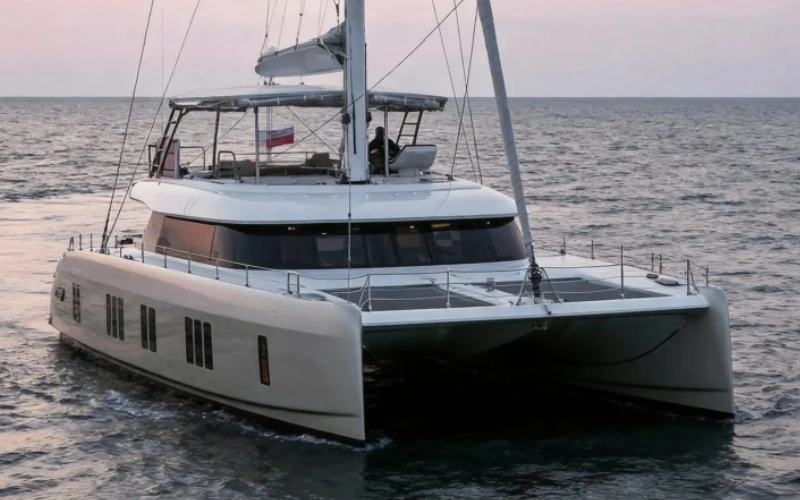
Power Catamarans: Primarily powered by engines, they offer high speed, easy handling, and spacious interior and deck areas, making them ideal for owners seeking a comfortable experience and quick travel. The Sunreef Power series is a prime example of power catamarans.
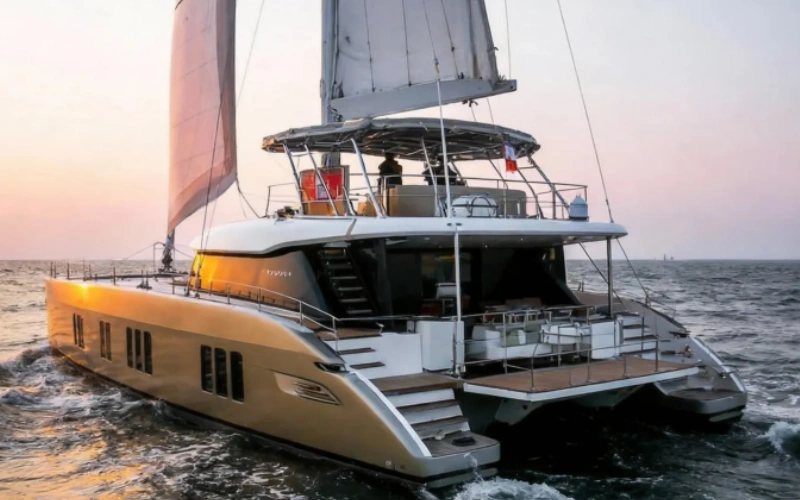
Sailing Catamarans: Primarily powered by sails, with auxiliary engines for support. They are energy-efficient and eco-friendly, making them suitable for long-distance cruising or ocean exploration. The Sunreef Sailing series represents classic sailing catamarans.
Key Differences: Power catamarans emphasize speed and comfort, while sailing catamarans emphasize the joy of sailing and cost-effectiveness.
Advantages and Applications of Sunreef Power Catamarans
Speed and Range Advantages
On a power catamaran, you can easily cruise at speeds of 18–25 knots, whereas traditional sailing catamarans can only reach 7–12 knots. I once personally took a client on a test sail of the Sunreef Power 60, covering over 50 nautical miles in just 3 hours—making it ideal for quick weekend getaways.
Typical Range and Fuel Consumption Table
| Model | Speed | Fuel Consumption | Typical Range |
| Sunreef Power 50 | 18 knots | 50–70 L/h | 250–300 nautical miles |
| Sunreef Power 60 | 20 knots | 80–120 L/h | 300–350 nautical miles |
| Sunreef Power 80 | 22 knots | 150–200 L/h | 350–400 nautical miles |
Comfort and Space Design
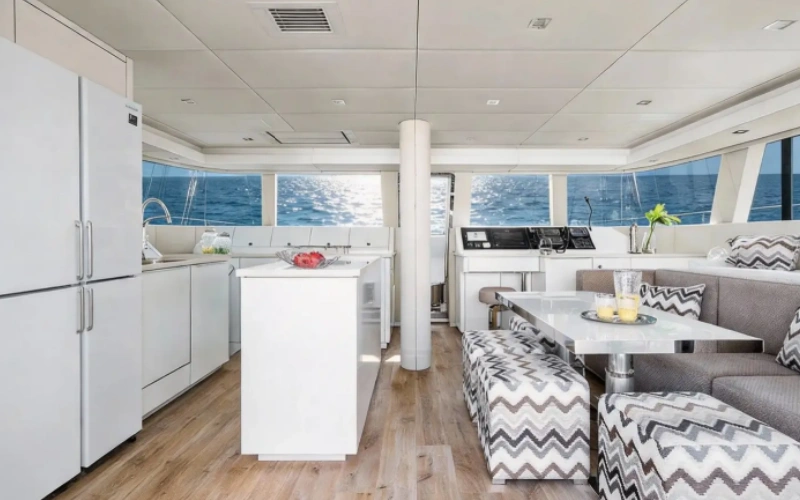
Power catamarans feature spacious cabin layouts with ample deck and interior space, making them ideal for family vacations or business entertainment. The Sunreef Power series typically includes a large living room, multiple cabins, and luxurious leisure areas, delivering a hotel-like experience at sea.
Ease of Operation and Maintenance Costs
Sunreef Power catamarans are relatively simple to operate, equipped with electronic navigation, push-pull controls, and automatic docking assistance systems, allowing for easy single-handed operation.
In terms of maintenance costs, due to the number of engines and high fuel consumption, the annual operating costs for power catamarans are 30–50% higher than those of sailboats of the same length.
Based on my past experience, the annual operating costs for a Sunreef Power 60 typically range from $80,000 to $150,000.
Advantages and Applications of Sunreef Sailing Catamarans
Energy Efficiency and Environmental Friendliness
Sunreef sailing catamarans rely primarily on wind power, with extremely low fuel consumption. Engines are mainly used for initial departure or as auxiliary propulsion in calm conditions. I once took a client on a voyage in the Mediterranean aboard a Sunreef Sailing 60; when wind conditions were favorable, we barely used the engines, and fuel consumption for a week-long voyage was less than 100 liters.
Sailing Range and Fuel Consumption Table
| Model | Average Speed | Engine Fuel Consumption | Typical Range |
| Sunreef Sailing 50 | 7–9 knots | 10–20 L/h | 300–350 nautical miles |
| Sunreef Sailing 60 | 8–10 knots | 15–25 L/h | 350–400 nautical miles |
| Sunreef Sailing 70 | 9–12 knots | 20–30 L/h | 400–450 nautical miles |
Sailing Pleasure and Adventure
Sailing requires crew members to master sail handling, wind direction assessment, and route planning. This experience is highly appealing to sailing enthusiasts and offers a unique pleasure that motor catamarans cannot replicate. Sailing catamarans are better suited for long-distance ocean voyages or expeditions.
Operating and Maintenance Costs
Sailing catamarans require a higher level of handling experience and are best suited for owners with a background in sailing. Annual maintenance costs are approximately 20–40% lower than those of motorboats, with savings primarily coming from fuel expenses and engine maintenance.
Comparison Table: Power Catamarans vs. Sailing Catamarans
| Characteristic | Power Catamaran | Sailing Catamaran | Notes |
| Average Speed | 18–25 knots | 7–12 knots | Power catamarans are faster |
| Fuel Consumption | High (50–200 L/h) | Low (10–30 L/h) | Significant difference in long-term operating costs |
| Operating Difficulty | Low | Medium-High | Sail catamarans require mastery of sailing techniques |
| Comfort | High | Medium-High | Power catamarans are better suited for luxury leisure |
| Typical Range | 250–400 nm |
300–450 nm | Sailing catamarans offer more economical long-distance cruising |
| Target Audience | Owners seeking speed and comfort | Owners who enjoy sailing and exploration | — |
| Purchase Budget | High | Medium-high | Power catamarans are slightly more expensive |
How to Choose Between Sunreef Power and Sailing Catamarans?
Based on Sailing Purpose
- Short coastal cruises or weekend leisure → Power catamarans are best
- Ocean exploration, slow cruising, or fuel-efficient voyages → Sailing catamarans are best
Based on Budget and Maintenance Capabilities
Power catamarans have high purchase and operating costs, making them suitable for owners with ample budgets; sailing catamarans require a higher initial investment but have lower long-term operating costs, making them more cost-effective.
Based on Experience Level
- Beginners or those seeking an easy-to-handle vessel → Motor catamarans
- Experienced sailors or those looking to improve their skills → Sailing catamarans
Conclusion
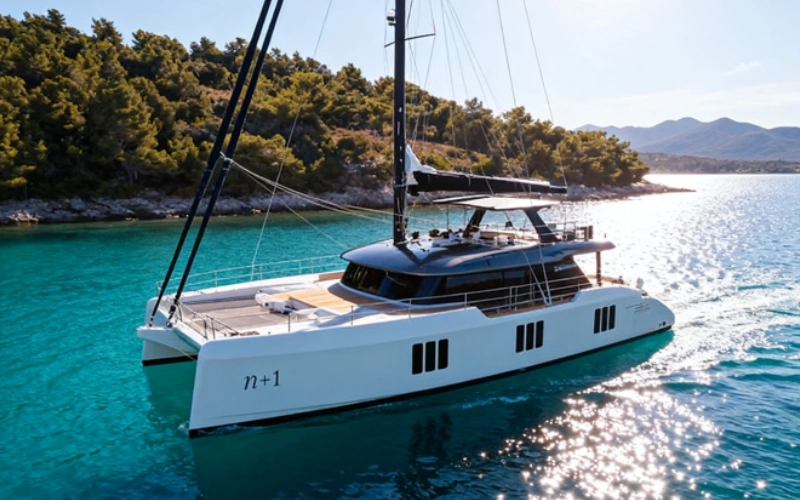
As a yacht broker with over a decade of experience who has personally captained numerous Sunreef motor and sailing catamarans, I recommend:
If you seek speed, luxury, and an effortless sailing experience, choose a motor catamaran.
If you seek fuel efficiency, the joy of sailing, and long-distance exploration, choose a sailing catamaran.
The final decision should be based on your sailing goals, budget, sailing experience, and long-term maintenance costs. After taking clients on numerous test sailings, I’ve found that a hands-on trial is the best way to make a decision.
About the Author
Emery, a yacht broker, yacht transaction consultant, and contributing writer for Yachting Magazine, has over a decade of experience in the yachting industry. As a SAMS-certified surveyor, he has been recognized as one of “Asia’s Top Ten Yachting Industry Experts” and honored with multiple industry accolades, including the “Outstanding Service Award for Yacht Brokers.”
Disclaimer
The content of this article is provided for general informational purposes only. The author offers insights and case studies based on personal yacht brokerage experience and publicly available data; however, this does not constitute professional investment, purchase, or navigation advice. Actual costs associated with purchasing, sailing, and operating a yacht may vary depending on region, vessel type, fuel prices, maintenance conditions, and individual usage habits. Readers should consult a professional yacht broker, a registered nautical advisor, or relevant legal and insurance experts before making any purchase or navigation decisions to ensure safety and compliance.
FAQ
Q1: How much faster are Sunreef power catamarans compared to sailing catamarans?
A: Sunreef power catamarans are 10–15 knots faster than sailing catamarans, though sailing catamarans can approach power-assisted speeds under favorable wind conditions.
Q2: What is the fuel budget for a power catamaran?
A: Taking the Sunreef Power 60 as an example, fuel costs for a one-week cruise of approximately 500 nautical miles can range from $5,000 to $8,000.
Q3: Which type of catamaran is better suited for long-distance cruising?
A: Sailing catamarans offer better fuel efficiency, but power catamarans are also capable in terms of range and comfort.