The best yachts for ocean crossing are stable, low-maintenance vessels such as catamarans. Based on a real Indian Ocean voyage, the Oceanwalker S60 demonstrates why stability, space, and system reliability are more important than speed.
Foreword
For many people, their first encounter with sailing comes through videos or social media. The images always show glorious sunshine, a deep blue sea, and a boat gliding quietly across the water—it looks like a relaxed, even slightly romantic, way of life.
But when Da Xiong and Tang Tang set sail from Phuket into the depths of the Indian Ocean this time, they soon realised one thing: ocean-going voyages have little to do with ‘looking good’. What you face every day is not scenery, but time, repetition, and a state of being that you must constantly maintain.
This time, they weren’t heading to a specific destination to tick it off their list, nor was it a short trip; it was a true ‘crossing’ in every sense of the word. Sailing westwards from Southeast Asia, they treated the entire Indian Ocean as a distance that had to be traversed.
When the voyage stretches to a scale measured in ‘weeks’, many seemingly trivial matters—such as whether a meal can be properly prepared, whether one can sleep soundly at night, or whether the equipment remains in working order—become the key factors determining the quality of the experience.
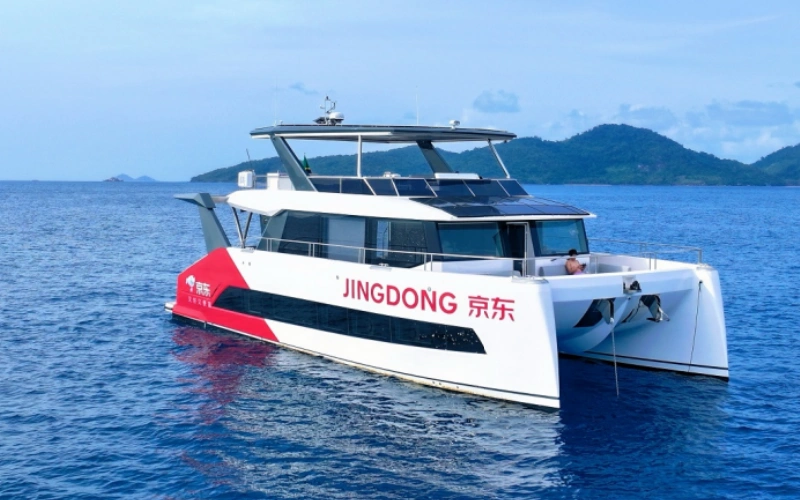
What exactly makes ocean-going voyages so difficult?
For many people, the first thought upon hearing ‘transoceanic voyage’ is the sheer distance involved, but the real difficulty lies not merely in the distance, but in the ‘continuity’.
Da Xiong had mentally prepared himself before setting off, but it was only once he had actually entered the route that he gradually came to appreciate this difference. The routes they had previously sailed, even when crossing seas, were generally ‘rhythmic’: a stretch of sailing, a stop, with opportunities for resupply and adjustments in between, and time for the crew to rest.
But on this Indian Ocean route, once you leave the initial section, the situation changes completely. You’ll find that there are very few places to dock, and the windows for resupply become far less flexible. Often, it’s not a matter of wanting to stop, but of having to keep going.
This is particularly true in the open waters of the middle section, where there is no land in sight and hardly any other vessels to be seen. Day or night, it’s just the sea; visually, there is almost no change. Your sense of time becomes very blurred; sometimes a day passes, and you can’t even tell the difference between today and yesterday.
Tang Tang made a particularly apt observation during her voyage: ‘You aren’t merely undertaking a journey; it’s more like entering a state of being.’ This state isn’t one of excitement, but of endurance; you must remain within it for a long time, whilst maintaining normal operations throughout.
Thus, the true difficulty of ocean-going sailing lies not in a single bout of rough weather, but in whether you can sustain life in such conditions for many days, or even weeks, on end.
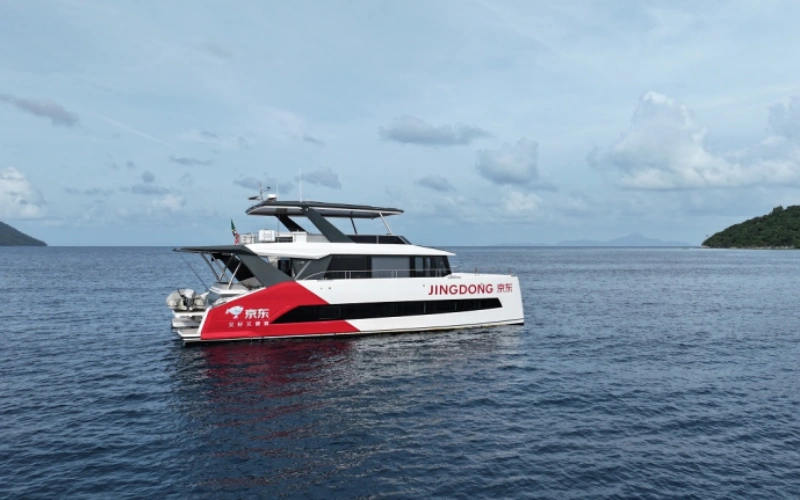
What Makes a Yacht Suitable for Ocean Crossing?
Answer: Catamaran.
During this voyage, Da Xiong and Tang Tang gradually came to realise a crucial point: the stability of the boat has a far greater impact on people than one might imagine.
In the first few days, the difference was not particularly noticeable; one might even have thought ‘they’re all much the same’. But as the voyage progressed, the advantages of the twin-hulled vessel gradually became apparent.
Monohulls move more noticeably in the waves, experiencing frequent rolling and pitching. Whilst one can adapt to this sensation in the short term, over time it becomes extremely tiring. This is particularly true when sleeping, as it is difficult to achieve a truly deep state of rest.
In contrast, catamarans such as the Oceanwalker S60 offer a smoother ride on the water. It is not that they remain completely still, but rather that their movements are characterised by a gentler, more rhythmic motion. Tang Tang once mentioned that, for the first time during a voyage, she slept for several hours straight without being woken by the rocking, something that had rarely happened before.
This difference may seem minor, but it becomes very noticeable when accumulated over time. If a person can rest properly every day, their mental state is completely different; they will be more composed when making judgements and handling matters.
So, from a certain perspective, stability is not merely a matter of comfort, but is directly related to sailing efficiency and safety—one of the key reasons why many buyers searching for catamarans for sale prioritise offshore capability.
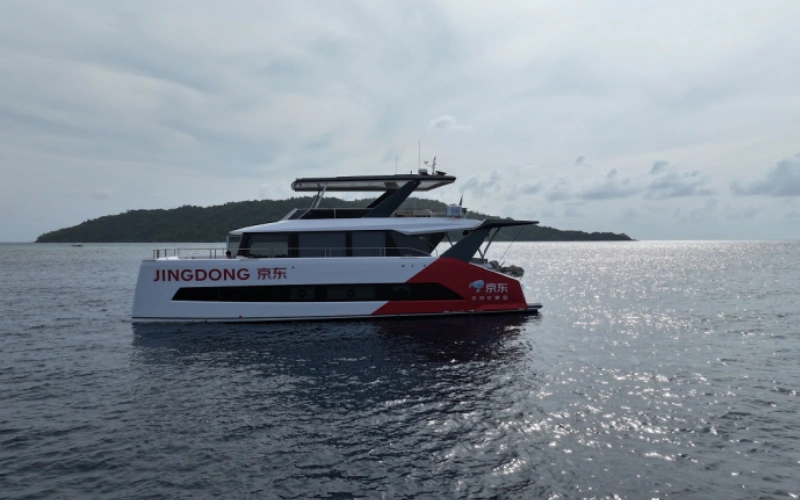
Why the Oceanwalker S60 was chosen as the platform for this ocean-going voyage
After deciding on this route, Da Xiong and Tang Tang actually spent quite some time selecting a boat. They were well aware that the criteria for this trip were completely different from before.
In the past, when choosing a boat, they might have considered factors such as speed, appearance and the joy of handling—things that provided more ‘immediate feedback’—but this time they were more concerned with whether the boat would last the long haul, rather than just a few days.
Da Xiong made a very practical point at the time: ‘If this boat has you dealing with problems every single day, you’ll certainly never reach your destination.’ This statement actually hits the nail on the head regarding the core of selecting a boat for ocean voyages – it’s not about how powerful its performance is, but whether it’s ‘low-maintenance’.
The Oceanwalker S60 was ultimately chosen because it offers a good balance across multiple dimensions. Firstly, there is the question of space. The catamaran design makes the living quarters feel more like a stable home environment rather than a temporary space. Tang Tang can cook properly, organise her belongings, and even maintain a relatively regular daily routine whilst underway.
Secondly, there is the issue of capacity. Resources such as fresh water, fuel and electricity may simply require ‘management’ in coastal waters, but on the open ocean, they are the ‘foundation of survival’. The Oceanwalker S60 is designed to make the use of these resources more relaxed, eliminating the need for daily penny-pinching; this psychological relief is actually very important.
Furthermore, there is the integrity of the overall systems. The various systems work together quite smoothly, requiring little frequent human intervention—something that becomes increasingly important when evaluating long range yachts for serious ocean passages.
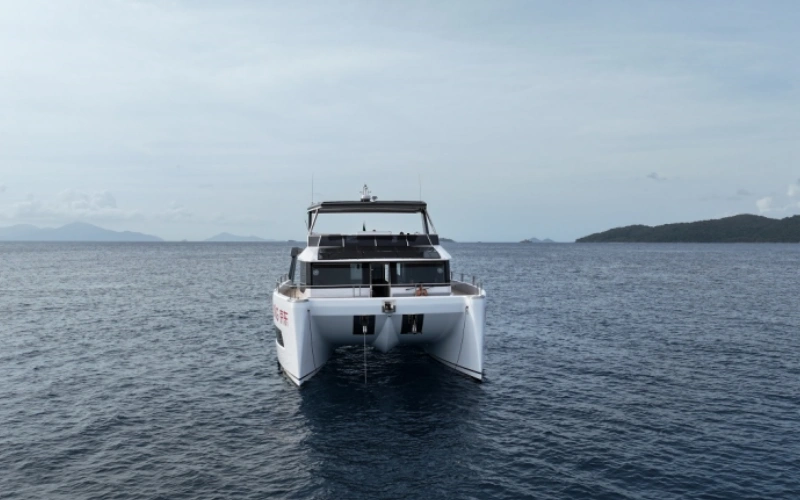
Best Yachts for Ocean Crossing (Real Example)
If you only look at the promotional materials, many boats claim to be suitable for ocean-going voyages, but it’s only when you’ve actually sailed a stretch of the Indian Ocean that you’ll know what ‘suitable’ really means.
During this voyage, the biggest impression the Oceanwalker S60 left on them was, in fact, that it ‘barely made its presence felt’. It sounds a bit odd, but this is actually an advantage.
Because in the open ocean, the last thing you want is for the boat to constantly throw up new problems. Equipment failures, unstable systems, and the need for frequent maintenance – all these disrupt your rhythm and keep you in a constant state of tension.
Yet throughout the entire voyage, this boat operated reliably for the most part. The water supply, electrical system and propulsion all remained in good working order, with no issues requiring major intervention.
Tongtong later summed it up: ‘The greatest strength of this vessel is that you don’t have to constantly be thinking about it.’ In other words, it doesn’t become a burden, but rather a reliable foundation upon which to rely.
Another point concerns the everyday experience. They weren’t merely ‘enduring the voyage’; they were genuinely living life on board. They could eat and rest normally, maintaining their own rhythm, which demonstrates that this vessel is not only capable of sailing but also of supporting long-term living.
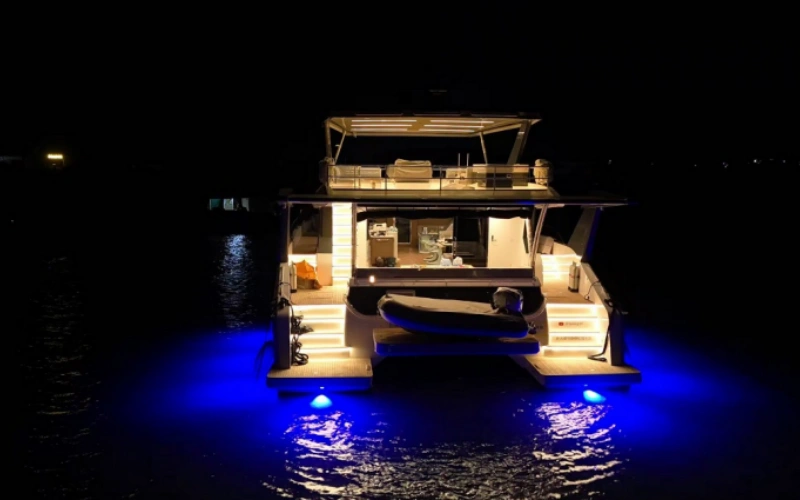
A real-life account from Phuket to Socotra
In terms of pace, this route is actually a process of gradually ‘getting into the swing of things’.
When they first set sail from Phuket, everything was still quite familiar. The sea conditions were relatively calm, and they could occasionally spot other vessels or islands in the vicinity, so there wasn’t much psychological pressure. During those early days, Da Xiong even felt that this voyage wasn’t as difficult as he had imagined.
But as the voyage progressed, that feeling began to shift. Boats grew fewer and fewer, the signal became increasingly unreliable, and the surroundings grew ever more monotonous. You saw almost the same scenery day in, day out, and this sense of repetition made time feel rather blurred.
Once we entered the central Indian Ocean, the sailing became very pure. With few external distractions and little room for choice, the daily task was simply to maintain course, control speed, and keep moving forward.
Tongtong said that the most noticeable change during that period was how one’s perception of time shifted. Sometimes a day would pass quickly, yet looking back, it felt as though nothing had happened; at other times, it seemed like an eternity had gone by, when in reality only a few hours had passed.
Upon reaching the Gulf of Aden, the environment suddenly became complex again. With more vessels in sight, they had to monitor their surroundings more frequently, and navigation required greater caution. By this point, however, they had fully adapted to the rhythm and no longer felt that initial sense of uncertainty.
When they finally reached Socotra, there was no particularly intense sense of ‘mission accomplished’; rather, there was a calm realisation: this journey had indeed been completed.
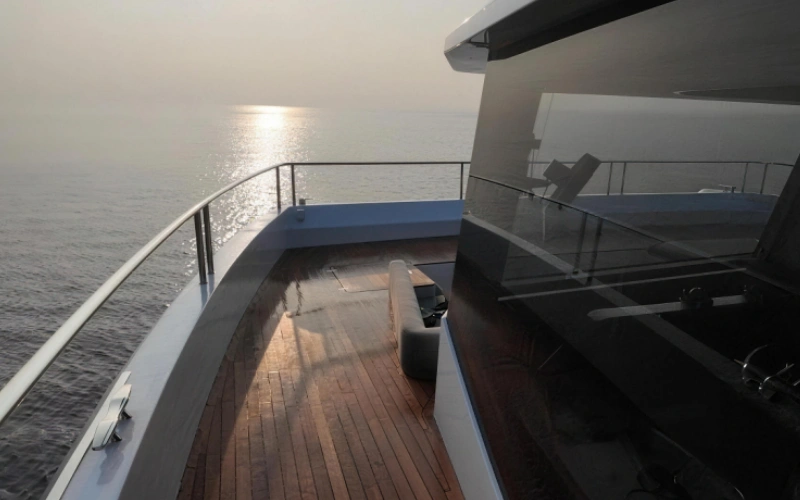
How did the Oceanwalker S60 perform during the transoceanic crossing?
Viewed as a whole, the Oceanwalker S60’s performance on this voyage can be summed up in two words: ‘stability’. However, this stability manifested itself in numerous details.
Firstly, regarding its seakeeping performance, its speed is not particularly aggressive, but it is very consistent. In the open ocean, this consistency is more important than speed, as it means you can plan your pace more easily without needing to make frequent adjustments.
Secondly, there is the feedback from the hull. In varying sea conditions, its behaviour shows no sudden changes; you never get the sudden feeling that ‘this section is difficult to control’. This consistency gives the skipper greater confidence and makes it easier to develop a routine.
Another aspect is noise and vibration. Spending long periods on board, if these factors are not well managed, they can have a significant impact on one’s mood. On this vessel, however, they remain within acceptable limits and do not interfere with daily life.
All in all, it is not a boat that ‘blows you away’, but one that ‘puts your mind at ease’.
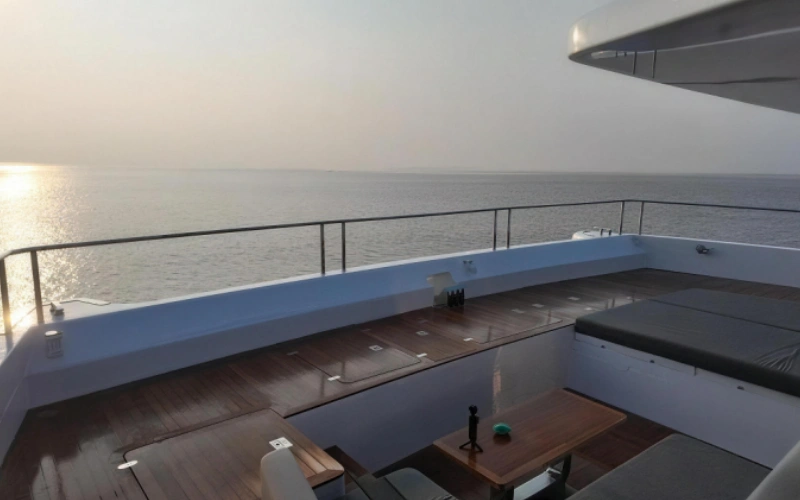
How Much Does an Ocean-Crossing Yacht Cost?
Seeing a route like this, many people naturally ask a very practical question:
how much does it actually cost to complete an Indian Ocean crossing on a bluewater yacht like the Oceanwalker S60?
The answer isn’t a single number. The price of a bluewater yacht depends on several factors, including size, brand, specifications, and whether the yacht is semi-custom or fully customized.
Taking a 60-foot class catamaran as a reference, this size is widely considered the minimum threshold for comfortably completing ocean crossings.
In today’s market, the price range for bluewater catamarans in this category is generally as follows:
| Category | Price Range (USD) | Suitable For |
| Entry-level bluewater catamarans | $1.2M – $1.8M | Basic offshore cruising, limited budget |
| Mainstream bluewater catamarans | $1.8M – $3.0M | Long-term cruising, family use |
| High-end custom bluewater yachts | $3.0M – $5.0M+ | High comfort, long-term liveaboard |
The Oceanwalker S60 typically falls into the mid-to-high-end segment of the bluewater yacht market, with the final price varying significantly depending on configuration and equipment.
For buyers browsing yachts for sale, this range provides a realistic benchmark for entering the ocean-crossing segment.
Can Beginners Cross the Ocean by Yacht?
If, having read about this voyage, you’re feeling a bit tempted, there’s one thing you need to be clear about: this isn’t a route you can embark on on a ‘whim’.
The reason Da Xiong and Tang Tang were able to complete it is that they already had considerable sailing experience under their belts, built up step by step from short to long-distance voyages.
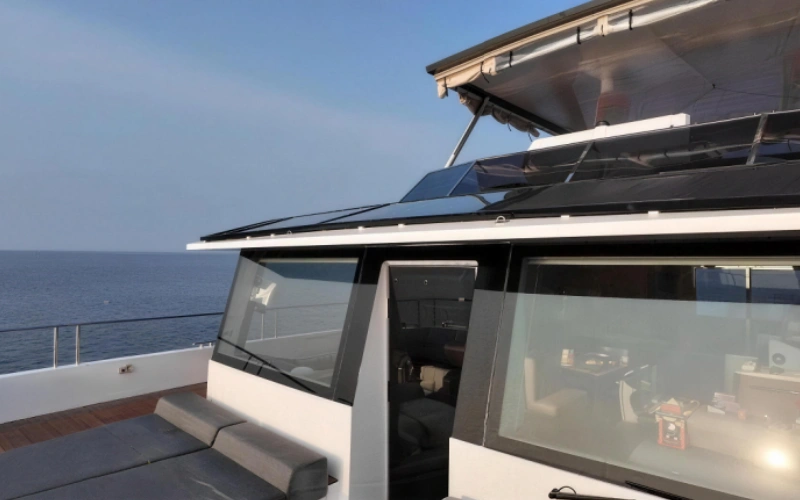
Ocean-going voyages require not just technical skills, but also the right habits. You must get used to living on board for extended periods, to the monotony of the surroundings, and to the repetitive daily routine.
Furthermore, you need sound judgement—for instance, on how to respond to changing weather, manage resources, and handle emergencies.
Of course, the choice of vessel is equally important. A boat suited to ocean-going voyages isn’t necessarily the fastest or the most luxurious, but rather the most stable, reliable and least prone to breakdowns.
Looking for an Ocean-Capable Yacht?
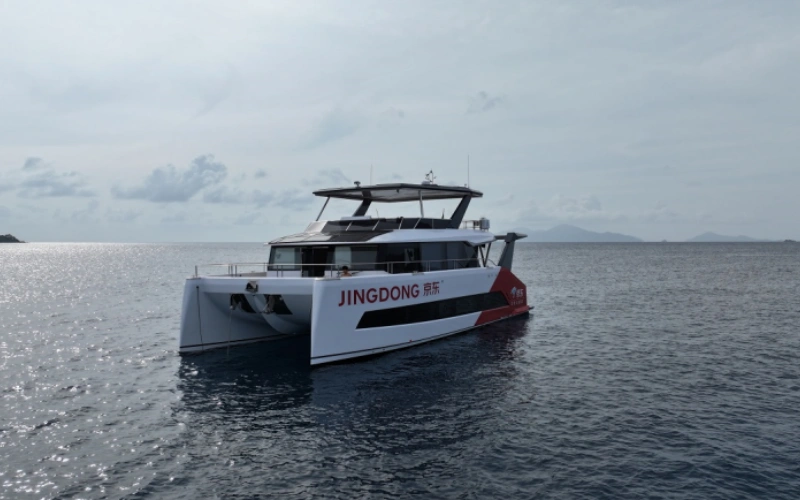
If your goal is to undertake long-range ocean passages like Da Xiong and Tang Tang—and truly live on board—then the Oceanwalker S60-Holiday is the more straightforward choice. Its design focuses on complete onboard living systems and long-term habitability, making it highly representative of modern ocean yachts built for real offshore living.
👉 Browse Ocean Yachts

Oceanwalker S60-Holiday
- Length60 ft
- Cabins4
- Top speed18 kn
- TypeCatamaran yacht
The Oceanwalker 60-Holiday, as the first yacht of the Oceanwalker shipyard, has beautiful lines, elegant flanks, innovative design, and large indoor and outdoor spaces. It has 4 cabins and 5 bathrooms, like a palace floating on the sea for cruising. Since its debut, it has been deeply loved by customers at home and abroad.
If you want to combine bluewater capability with social space and multi-purpose use, then the Oceanwalker S60-Urban is a better fit. It balances offshore performance with lifestyle flexibility, which is also why many buyers comparing new and used yachts often consider similar multi-role platforms.
👉View Catamarans
Oceanwalker S60-Urban
- Length60 ft
- Cabins4
- Top speed18 kn
- TypeCatamaran yacht
The Oceanwalker S60-Urban is a 60-foot luxury power catamaran designed around exceptional beam, family-oriented accommodation and large indoor-outdoor living spaces. The current YachtTrading configuration offers four guest cabins, five bathrooms, twin Volvo D6-440 engines and an estimated 540-nautical-mile range. With a beam approaching 27.5 feet and shallow draft, the S60-Urban is particularly relevant to buyers prioritizing onboard space, stability and relaxed cruising over outright speed.
If you would like to learn more about catamaran yachts, you can get expert advice.
Conclusion
Looking back on this voyage, it was actually not as ‘legendary’ as one might imagine; rather, it resembled a well-tested route.
What Da Xiong and Tang Tang achieved with the Oceanwalker S60 was not a breakthrough of limits, but rather a demonstration of one thing: provided the conditions are right, crossing the Indian Ocean can be accomplished reliably.
Throughout the entire journey, this vessel did not display any particularly outstanding performance, nor did it have any obvious weaknesses. Its role was simple: to operate steadily and consistently, allowing the crew to focus on the voyage itself.
And this, precisely, is the most essential capability for ocean-going voyages.
Because on a route such as this, what truly determines whether you reach the finish line is never a single moment, but rather your ability to sustain your performance throughout.
Profile of Da Xiong and Tang Tang
Da Xiong and Tang Tang are a married couple and sailing content creators on Douyin. Through four consecutive seasons of authentic documentation, they have showcased the entire journey from ‘learning to sail from scratch’ to ‘ocean-crossing expeditions’:
In Season One, they learned and practised along China’s coastline aboard the 72-foot monohull ‘Moon Ship’, completing their introductory phase; in Season Two, they entered a shipyard to systematically study vessel structure and maintenance; In Season 3, they spent two years cruising through Southeast Asia, gradually building up experience on long-distance voyages; now, in Season 4, they are sailing the Oceanwalker S60 to tackle a transoceanic crossing of the Indian Ocean, transforming sailing from a hobby into a genuine life at sea.
FAQ
Q1: What is the best yacht for ocean crossing?
A: A stable, reliable yacht with strong self-sufficiency is best. In practice, 50–60ft bluewater catamarans are widely considered ideal for long ocean passages.
Q2: Is a catamaran better than a monohull offshore?
A: For long passages, many prefer catamarans due to better stability, less rolling, and more living space. Monohulls can handle heavy weather well, but are generally less comfortable over time.
Q3: How long does it take to cross the Indian Ocean?
A: Typically 3 to 6 weeks, depending on route, weather, and cruising speed.
Q4: How much does an ocean yacht cost?
A: Around $1.2M to $5M+ for a 60ft ocean-capable yacht, depending on brand, build quality, and configuration.