Trimarans have a unique appeal in the boating arena, and it's important to consider a number of aspects when purchasing a trimaran, including construction, advantages and disadvantages. Trimarans skillfully blend the strengths of monohulls and catamarans, and excel in stability and space utilization. However, there are also disadvantages such as lack of experience, complex design and higher cost. In this post, we'll come together to explore trimaran construction and the pros and cons, so you can learn more about trimarans during the buying process.
The case for trimaran construction
Stability is a factor to focus on when you decide to buy a trimaran. With a traditional monohull, you have to balance drag and stability, and from a drag reduction standpoint, you may want the hull to be narrow and long. But from the aspect of keeping the boat stable and upright, a wide hull is needed, and a trimaran cleverly separates these two design requirements.
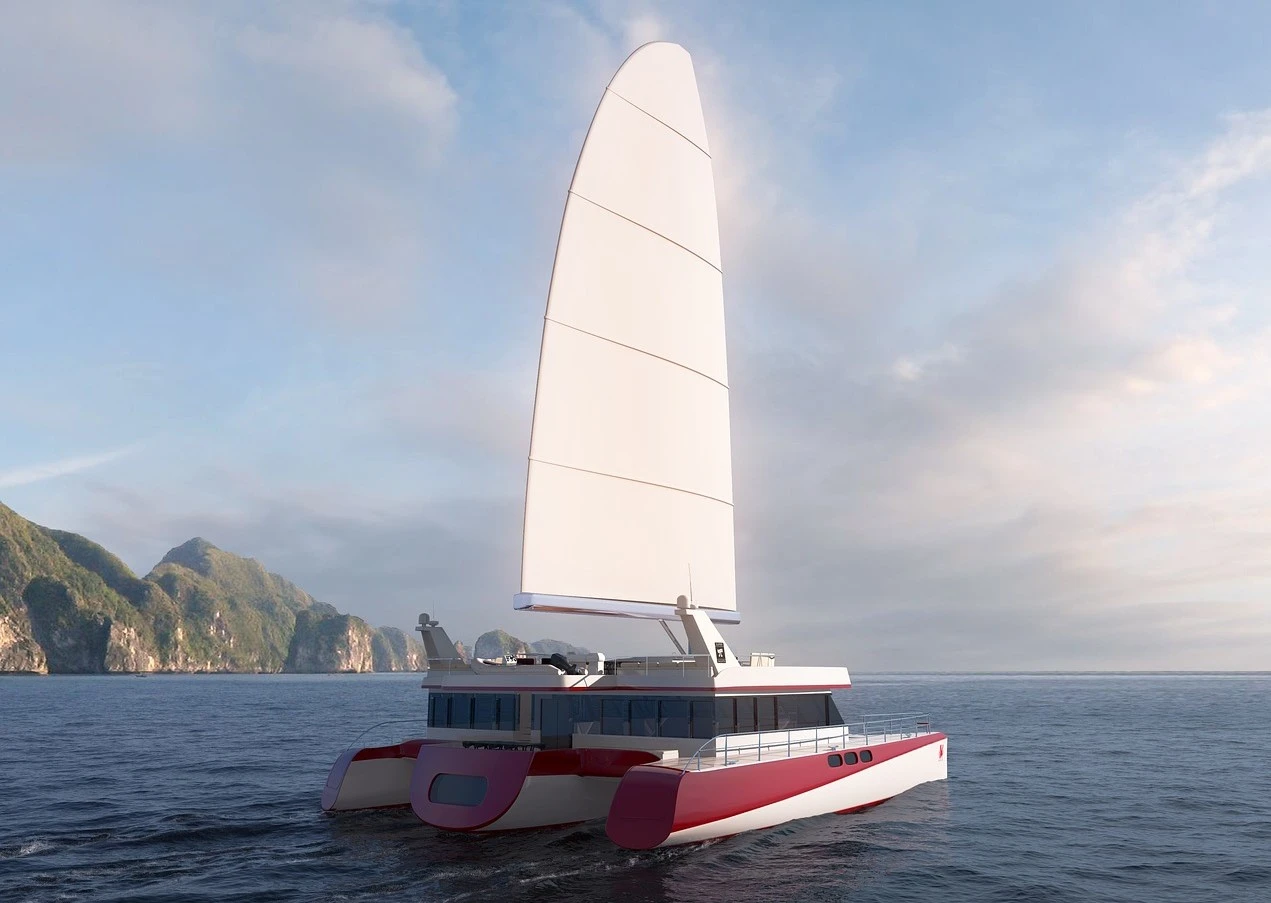
A trimaran consists of a long, narrow central main hull, and two relatively small side hulls. The central hull carries most of the ship's buoyancy, typically 90-95%, and achieves this by virtue of its long, narrow hull shape. The two side hulls are there to keep the boat stable, and due to the wide hull spacing on a trimaran, the side hulls don't need to provide much buoyancy to keep the boat stable, which makes it possible for only a small portion of the side hulls to be submerged in the water on many trimarans.
Pros of Buying a Trimaran
Trimarans offer a wide range of features that make up for the shortcomings of monohulls and catamarans, and the advantages are obvious. Here are the advantages of buying a trimaran:
Excellent performance
A trimaran is fast and capable of travelling at high speeds on the water. It has a good load capacity and is able to carry a large number of items. When sailing on the sea, it has a better ability to cope with wind and waves, and the boat wobble less. This is because the long and narrow center hull of the trimaran reduces heaving in the waves and the side hulls reduce rocking for a more comfortable ride.
Space Advantage
Trimarans have a large deck area, which makes it easy for people to move around, and there is also some space to be utilized underneath the main deck. And the spanning deck that connects the main hull to the side hulls is well designed; it is smaller than the spanning deck of a catamaran, without having to span a large gap, and is simpler to design. This allows the spanning deck to carry heavier loads, and its own structural weight is lighter and less costly.
High safety
The side hulls protect the center hull, so that in the event of danger, even if the hull is unfortunately damaged and sinks, the straddle decks connecting the main hull to the side hulls provide additional buoyancy to support the hull. Moreover, a trimaran is fundamentally different from a catamaran in that a catamaran will instantly lose its stability when one side of the hull is out of the water, whereas a trimaran will not be in such a situation, and its stability is very reliable, providing a safe and smooth sailing experience for the people on board, no matter whether they are in the rough sea or facing the complex and changeable sailing environment.
Cons of buying a trimaran
Lack of experience
One of the significant disadvantages of trimarans as they currently exist is the lack of relevant experience. Trimaran applications are uncommon in the military and even rarer in commercial use. This lower exposure makes many ship operators wary of it. Whilst caution should be exercised, it should not be used to overlook the many advantages of trimarans.
Complex design
Trimarans are complex to design due to their unique construction, with engineers having to take into account more factors than with conventional vessels, with the twisting and bending of the hull brought about across the deck. However, this can be solved with the help of tools, and the added cost of using tools is not prohibitive and is within the reach of most people.
Higher costs
Trimarans have extra hulls and spanning decks due to their unique construction compared to other vessel types, which leads to a significant increase in the amount of steel used in the construction process, which leads to higher costs. However, it is worth noting that if you compare the cost of this additional structure with the cost of additional machinery and equipment, you will find that the cost of the additional structure is relatively small.
The trimaran is a skillful blend of the best monohulls and catamarans, particularly in terms of stability and space utilization. It offers better stability than a monohull, and at the same time provides as much space as a catamaran. Due to these unique advantages of trimarans, buyers can give full play to their imagination when purchasing trimarans, according to their actual needs, and actively explore and excavate more novel and practical uses of trimarans, so that they can play their value in more fields.