What Is a Tender Boat?
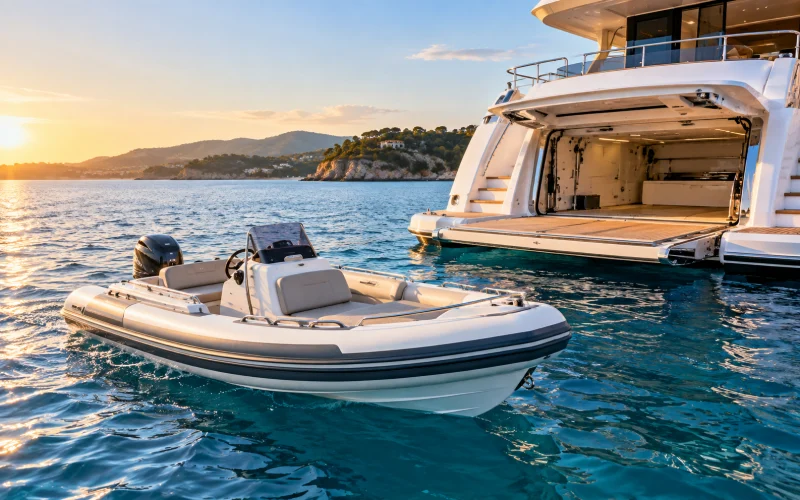
A tender boat, or yacht tender, is a smaller boat used to support a larger yacht or vessel. It typically transports people, supplies and equipment between the yacht and shore, especially when the main yacht is anchored offshore or cannot access shallow water or smaller marinas.The term "tender" refers to its function rather than a specific type of boat. Tenders can include inflatable boats, RIBs, center-console boats, jet boats and other small craft, depending on the yacht and its intended use.
The terms "tender" and "dinghy" often overlap. "Dinghy" generally describes a small boat, while "tender" refers more specifically to a boat used to support a larger vessel. In practice, a dinghy can serve as a yacht tender. In simple terms, a dinghy becomes a tender when it is used to support a larger yacht or vessel.
In simple terms, a tender extends a yacht's access beyond where the main vessel can conveniently go.
What Is a Tender Boat Used For?
A tender boat is mainly used for shore transfers, carrying supplies and equipment, and recreational activities. Its specific role depends on the size and configuration of the tender and the needs of the yacht.Getting Ashore and Exploring
One of the most common uses of a tender is carrying guests and crew between an anchored yacht and shore. A tender can also reach smaller marinas, beaches, bays and shallow coastal areas that may be difficult or impractical for the main yacht to access.This allows guests to explore nearby areas while the main yacht remains safely at anchor.
Carrying Supplies and Equipment
Tenders can transport more than passengers. Depending on their size and layout, they may carry:- Luggage and provisions
- Food and other supplies
- Diving and snorkeling equipment
- Watersports gear
- Other equipment needed during a cruise
Watersports and Recreation
Many tenders are also used for recreational activities such as fishing, snorkeling, diving and towing watersports. The right setup depends on the intended activity. For example, a watersports tender may prioritize engine power and towing capability, while a diving tender may need open deck space and easy water access.What Are the Different Types of Tenders?
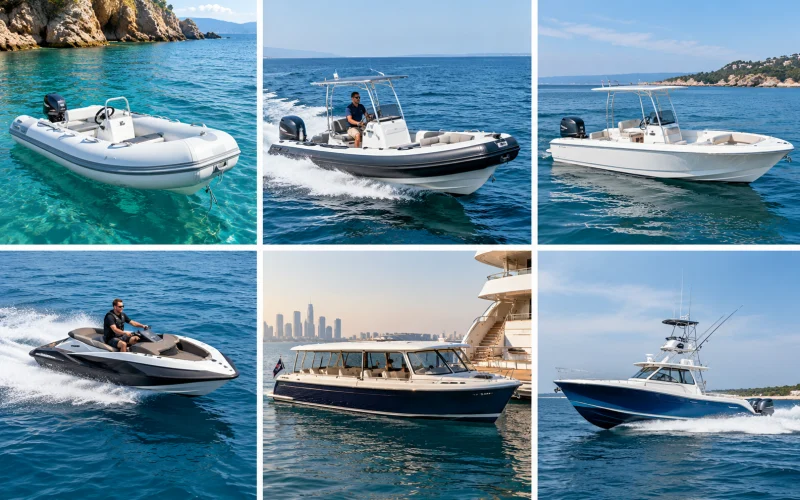
Tenders come in a range of designs, from compact inflatables to larger custom-built boats. The right type depends on the yacht's storage arrangement, passenger requirements and intended use.
Inflatable Tenders
Inflatable tenders are lightweight and relatively easy to transport, launch and store. They are often used for basic shore transfers and short trips around an anchorage, particularly when storage space is limited.RIB Tenders
A rigid inflatable boat (RIB) combines a rigid hull with inflatable tubes. RIBs offer a balance of stability, durability and performance, making them suitable for guest transfers, fishing, watersports and general use around the yacht.Open and Center-Console Tenders
Open tenders provide a simple, flexible layout with accessible deck space. Center-console designs add a central helm while retaining an open deck layout. Depending on their size and configuration, these tenders can be used for passenger transport, fishing, day cruising and watersports.Jet Tenders
Jet tenders use water-jet propulsion instead of an exposed propeller. They can offer responsive handling and are used for passenger transfers, watersports and other recreational applications where their design is suitable.Limousine and Custom Tenders
Larger yachts may carry specialized tenders designed around specific requirements. A limousine tender typically has an enclosed passenger area and is intended for comfortable guest transfers.Custom tenders can be built around the yacht's garage, crane or deck arrangement and may prioritize passenger comfort, watersports, range or performance.
Chase Boats
A chase boat is related to tender operations but is generally larger and more capable of operating independently. It may be used for fishing, watersports, guest transport or longer coastal trips. Larger chase boats are often operated independently rather than carried onboard the main yacht.How Are Tender Boats Stored on Yachts?
The way a tender is stored depends on the yacht's size, layout and launch-and-recovery system. For buyers, physical dimensions are only part of the compatibility check. The tender's weight and the rated capacity of the storage or lifting system also need to match.Tender Garage
Many larger yachts have a dedicated tender garage, often located toward the stern. A garage protects the tender when it is not in use and provides an integrated way to launch and recover it.For buyers, the key considerations include the garage's internal dimensions and opening, as well as the tender's length, beam, height and weight. Available space alone does not confirm that a particular tender will fit or that the yacht's handling system can safely accommodate it.
Davits and Cranes
Some yachts use davits or cranes to lift a tender into and out of the water. Buyers should check the loaded lifting weight, not just the tender's advertised dry weight. The actual load may include the engine, fuel, batteries and onboard equipment.Hydraulic Platforms
Some yachts use a hydraulic bathing platform or tender-lift system to carry and launch a tender. The platform's rated capacity, dimensions and lifting arrangement should be checked against the tender's loaded weight and dimensions.Towing
Some tenders can be towed behind the main yacht when the yacht's design and operating conditions allow it. This can provide an alternative when onboard storage is limited, but towing requires suitable equipment and consideration of sea conditions, tender size and weight.Yacht manufacturers may integrate tender storage into the yacht's original design. For example, the Princess S65 features a hydraulic bathing platform and a 3.3 m tender garage, illustrating how tender storage and launch arrangements can be incorporated into the yacht's overall design.
How Do You Choose the Right Tender for a Yacht?
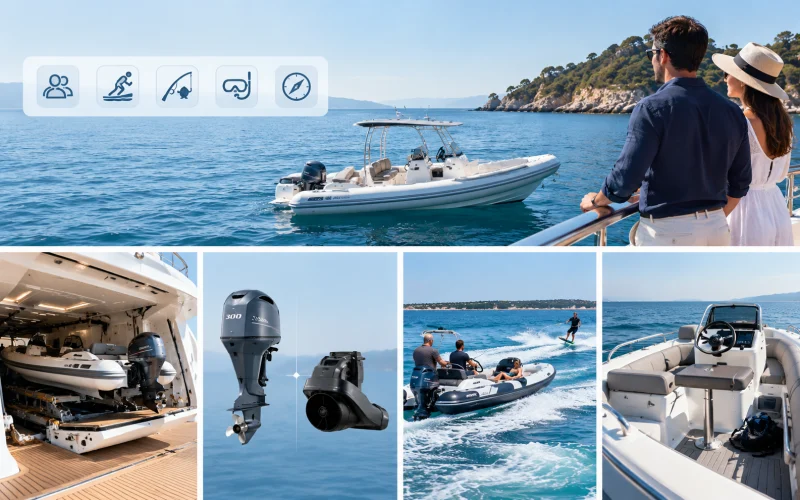
Choosing a tender is not simply a matter of selecting the largest or fastest boat. The right choice depends on how the tender will be used and whether it is compatible with the yacht's storage, launch and operating systems.
Define the Primary Use
Start with how the tender will actually be used. A tender intended mainly for shore transfers will have different requirements from one used for fishing, diving or watersports.| Primary Use | What to Prioritize |
|---|---|
| Shore and Guest Transfers | Seating, boarding and passenger capacity |
| Watersports | Engine power and towing capability |
| Fishing | Open deck and equipment space |
| Diving | Water access and gear capacity |
| Exploring | Range, comfort and maneuverability |
The intended use should guide the tender's size, layout, propulsion and equipment rather than simply choosing a boat based on speed or appearance.
Check Compatibility with the Yacht
Once the primary use is clear, make sure the tender is compatible with the yacht's existing arrangement.Key specifications to compare include:
- Tender length, beam and height
- Tender weight
- Available storage space
- Garage, davit, crane or platform capacity
- Launch-and-recovery system
Consider Propulsion and Performance
Outboard engines are widely used on yacht tenders and can be relatively straightforward to access for servicing or replacement. Jet propulsion is another option for certain tender designs and operating conditions.The choice should depend on the tender's intended use, operating environment and maintenance requirements. A tender used mainly for short trips around an anchorage may have different performance requirements from one intended for longer coastal journeys or watersports.
Match Passenger Capacity and Layout
Passenger capacity, seating arrangement and deck space should reflect how the tender will actually be used.A tender primarily used for guest transfers may prioritize comfortable seating and easy boarding, while a fishing or diving tender may benefit from a more open deck layout and additional equipment space.
For larger yachts, the tender's finish and onboard features may also form part of the overall guest experience.
Does Every Yacht Need a Tender?
No. Not every yacht requires a dedicated tender.The need for a tender depends on the yacht's design, cruising plans and intended use.
A smaller yacht may use a compact inflatable tender, while some yachts may not carry a dedicated tender at all. Larger yachts are more likely to have dedicated tender-storage areas and lifting equipment because the tender can play a significant role in guest transportation and recreation.
For a yacht buyer, the important question is not simply whether a tender is present, but whether the tender arrangement makes sense for the way the yacht will be used.
What Should Yacht Buyers Check When Buying a Used Yacht with a Tender?
When buying a used yacht, the tender should be considered as part of the overall vessel configuration, but its condition and ownership status should also be verified separately.A tender can be significantly newer or older than the yacht itself, and its engine and equipment may have a separate service history. Buyers should therefore assess the tender on its own condition rather than assuming that the yacht's age reflects the age or condition of its tender.
Inspect the Tender's Condition
Ask for information such as:- Make and model
- Year
- Engine hours
- Maintenance and service records
- Hull or inflatable tube condition
- Equipment included
For an older tender, its condition may also affect whether the buyer needs to budget for servicing, repairs or eventual replacement.
Check Whether the Tender Is Included
Do not assume that a tender shown with a yacht is automatically included in the purchase. A tender shown in the yacht's photos is not necessarily included in the sale. The sales agreement and inventory should clearly identify the tender and associated equipment included in the transaction. This may include the tender itself, its outboard or other propulsion system, spare equipment and accessories.Depending on the jurisdiction, the tender may have its own registration, documentation or ownership records. Buyers should confirm the applicable requirements and whether the tender is separately documented.
Inspect the Yacht's Tender System
The tender is only one part of the system. Buyers should also inspect the garage, davit or crane, hydraulic platform, launch-and-recovery equipment, and related fuel or charging arrangements.If the tender may eventually be replaced, confirm that the yacht's storage and lifting system can accommodate the intended replacement.
For international yacht buyers, confirming the tender's condition, documentation and inclusion in the sale can help avoid uncertainty during the purchase process.
Conclusion
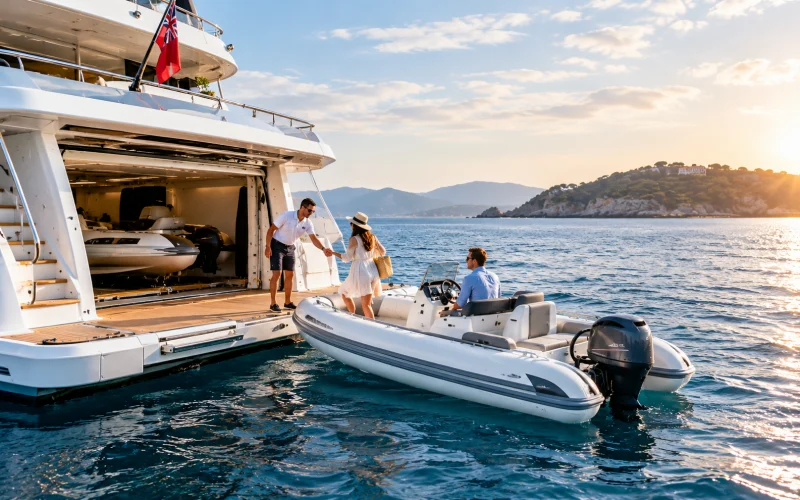
A tender is not simply a small boat carried by a yacht. It is part of the yacht's overall operating setup, providing additional access, transportation and recreational capability.
For yacht buyers, the key considerations are the tender's condition, dimensions, weight, storage arrangement and launch system. On a used yacht, also confirm that the tender and its associated equipment are clearly included in the sale.
Planning to Buy a Yacht?
If you're comparing yachts for sale, consider the vessel's overall configuration—not just its size, layout or price. Tender storage, lifting equipment and onboard systems can also affect how a yacht works for your intended use.
About This Guide

This guide was prepared by the YachtTrading Editorial Team for yacht owners and international yacht buyers researching yacht tenders. It covers common tender types, storage and launch systems, yacht compatibility, and key checks when a tender is included with a used yacht.
Last Reviewed: 29 September 2026
Disclaimer
This guide is for general informational purposes only. Yacht specifications, tender equipment, lifting capacities and items included in a yacht sale can vary by vessel and configuration. Buyers should verify the relevant specifications, equipment inventory and contractual documents for the specific yacht before making a purchase decision.
FAQ
Q1: Is a tender boat the same as a dinghy?
A: Not necessarily. The terms overlap, but a tender is generally a small boat used to support a larger vessel, while "dinghy" is a broader term for a small boat.
Q2: What types of boats can be used as yacht tenders?
A: Common options include inflatable tenders, RIBs, open boats, center-console boats, jet tenders and custom-built tenders. The appropriate type depends on the yacht's storage arrangement and intended use.
Q3: Do yachts come with tender boats?
A: It depends on the yacht and the terms of the sale. A tender shown with a used yacht should not automatically be assumed to be included. Buyers should check the sales agreement and inventory.
Q4: How do I choose the right tender for my yacht?
A: Start with the tender's intended use, then consider passenger capacity, layout, propulsion, dimensions and weight. The tender must also be compatible with the yacht's storage, lifting and launch-and-recovery system.
Q5: How is a tender boat stored on a yacht?
A: Tender boats may be stored in a dedicated garage, on a deck or hydraulic platform, or lifted using davits or cranes. Some tenders can also be towed behind the yacht, depending on the yacht's design and operating conditions.
Q6: What size tender do I need for my yacht?
A: The appropriate tender size depends on the yacht's available storage or lifting capacity, passenger requirements and intended use. Buyers should check the tender's length, beam, height and loaded weight against the yacht's garage, davit, crane or platform specifications.