A yacht's range is determined by multiple factors including fuel tank capacity, fuel consumption, speed, and sea conditions. Typically, yachts range from 150 to 1,000 nautical miles, with family leisure yachts at the lower end and ocean-going expedition yachts at the higher end.
In this article, I'll explain how to calculate yacht range, compare different yacht types, and provide tips to maximize fuel efficiency, backed by data and real-world examples.
Typical Yacht Range Cheat Sheet
| Yacht Type | Fuel Tank Capacity | Cruising Speed | Typical Range (Nautical Miles) |
|---|---|---|---|
| Family Leisure Yacht | 350-500 liters | 10-15 knots | 200-300 |
| Ocean-Going Expedition Yacht | 1,500-5,000 liters | 10-20 knots | 500-1,000 |
| Commercial Luxury Yacht | 600-1,500 liters | 15-20 knots | 300-600 |
Table of Contents:
1. Basic Concepts of Yacht Range
2. How to Calculate a Yacht's Range?
3. Range Comparison Across Yacht Types
4. Methods to Improve Fuel Efficiency and Range
5. Other Key Factors Affecting Yacht Range
6. Conclusion
7. Frequently Asked Questions
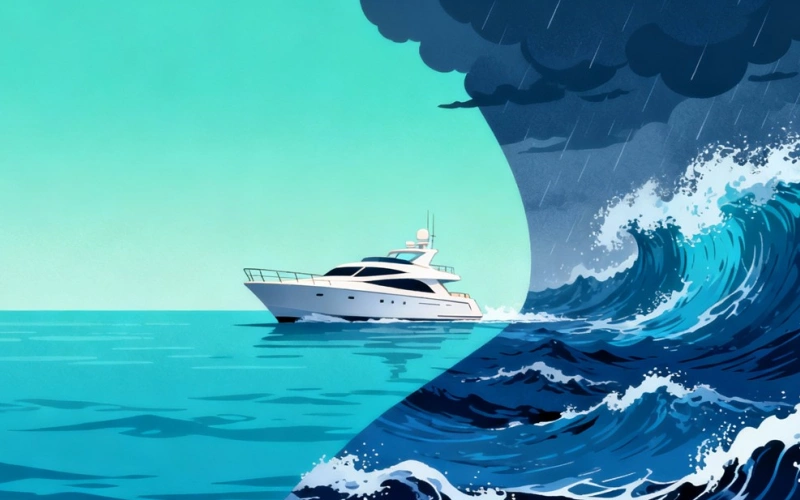
1. Basic Concepts of Yacht Range
1). The Relationship Between Fuel Tank Capacity and Fuel Consumption
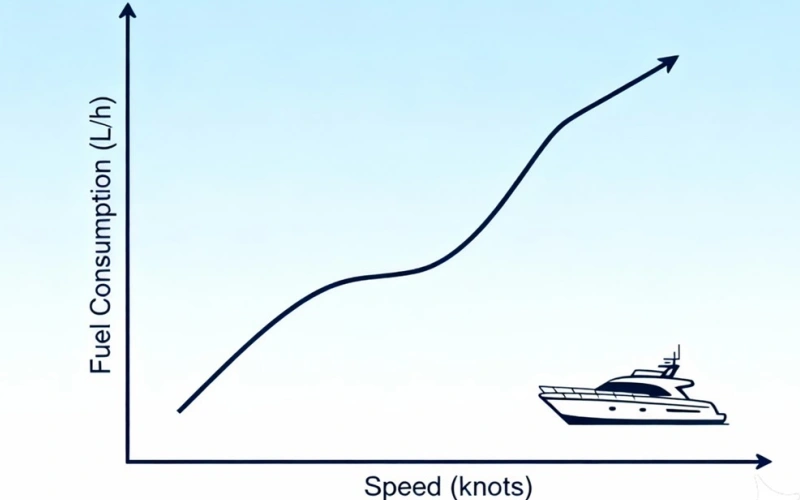
We must consider not only how much it costs to build a yacht but also its operational expenses. Fuel costs represent a significant portion of these expenses. While fuel tank capacity is a crucial factor determining a yacht's maximum range, it is not the sole determinant. Fuel consumption rates are influenced by multiple variables, including speed, sea conditions, and load.Higher speeds typically lead to greater fuel consumption. According to Volvo Penta's official yacht performance guide, the relationship between speed and fuel consumption is strikingly evident in practice: increasing speed by 5 knots raises fuel consumption by 10%-15%.
For example, a 32-foot family yacht with a 400-liter fuel tank can achieve a range of 250 nautical miles at 15 knots in calm seas. However, increasing speed to 18 knots significantly reduces range, potentially to only 210 nautical miles.
2). The Relationship Between Speed and Fuel Consumption
Years of sailing experience have taught me that a yacht's speed and fuel consumption are directly proportional. Take a 45-foot ocean-going yacht I once captained: sailing from Hong Kong to the Philippines at a steady 18 knots, fuel consumption increased by approximately 20% when speed was raised to 22 knots. This directly impacted the yacht's range.
This phenomenon is not uncommon. Controlling speed during any yacht operation not only improves fuel efficiency but also extends range—a shared observation among myself and many fellow captains.
The following table shows the relationship between voyage distance and speed curve.
| Speed (knots) | Fuel Consumption (liters/hour) | Estimated Range (nautical miles) |
|---|---|---|
| 10 | 50 | 200 |
| 12 | 60 | 180 |
| 14 | 80 | 160 |
| 16 | 100 | 140 |
| 18 | 120 | 120 |
| 20 | 150 | 100 |
2. How to Calculate a Yacht's Range?
Understanding a yacht's range depends not only on fuel tank capacity but also on hourly fuel consumption and speed. To help clarify this, here's a common formula:
Range = Fuel Tank Capacity ÷ Fuel Consumption per Hour × Cruising Speed
Suppose you wish to calculate the range for a 45-foot yacht, assuming:
Fuel tank capacity: 1000 liters
Standard cruising speed: 10 knots
Average Fuel Consumption: 70 liters per hour
Using this formula, the yacht's range is approximately 140 nautical miles.
During a voyage from the Maldives to Sri Lanka, I piloted a yacht with a 1,200-liter fuel tank at 14 knots, covering roughly 600 nautical miles. By adjusting speed and optimizing the route to avoid strong currents, we successfully completed the journey while maintaining the projected range.
3. Range Comparison Across Yacht Types
A yacht's range is also closely tied to its type, size, design, and intended purpose. Let me provide a detailed comparison of several different yacht types to help you understand their range performance.
1). Family Leisure Yachts
According to the RINA, family leisure yachts are typically designed for medium-to-low speed cruising, ensuring fuel efficiency and extended range.Take a 34-foot family yacht I selected for a client as an example: with a fuel tank capacity of 350 liters, a cruising speed of approximately 12 knots, and a range of about 200 nautical miles. This range adequately supports their short-distance island getaway voyages.
2). Ocean-going expedition yachts
Regarding the design and range capabilities of ocean-going yachts, standard documents published by Lloyd's Register indicate that modern ocean-going yachts optimize both fuel tank capacity and hull design for extended voyages. Through these optimizations, yachts can achieve ranges exceeding 700 nautical miles while maintaining high fuel efficiency even in rough seas.
I once piloted a 60-foot ocean-going expedition yacht with a fuel tank capacity of 3,500 liters. During a voyage from Singapore through the Strait of Malacca to Indonesia, optimized hull design and speed control reduced fuel consumption by 15% compared to projections, ultimately exceeding a range of 700 nautical miles.Ocean-going yachts typically boast extended range, particularly when their design prioritizes balancing fuel tank capacity with fuel efficiency.
3). Commercial and Charter Yachts
Commercial yachts, such as luxury vessels used for charter, often demand higher endurance. Most commercial yachts are also designed with extended range and efficient fuel systems to meet client requirements.
For instance, I once selected a 40-foot luxury yacht for a charter company. A standout feature of this yacht for sale luxury was its 800-liter fuel tank capacity, enabling a range of 500 nautical miles in calm seas—ideal for extended client hospitality and cruising activities.
By considering the above points alongside your specific needs, you can determine whether renting or purchasing a yacht is the better choice for you.
4. Methods to Improve Yacht Fuel Efficiency and Range
Improving fuel efficiency and range isn't solely dependent on a large fuel tank. Here are two common methods to optimize your voyage:
1). Reduce Speed
From my own sailing experience, reducing speed is one of the most effective ways to extend a yacht's range. Once, while sailing clients from Hong Kong to Taiwan, I lowered our speed from 20 knots to 15 knots. This reduced fuel consumption by approximately 25% and ultimately increased our range by about 20%. This approach not only saved fuel but also ensured the safety of our voyage.
2). Optimize Load and Hull Design
Yacht load and hull design directly impact fuel consumption. I once chartered a 45-foot yacht where optimizing hull design and load distribution improved fuel efficiency by 10% compared to its unoptimized state. Therefore, when purchasing or chartering a yacht, prioritizing optimized hull design and load allocation also contributes to extended range.
5. Other Key Factors Affecting Yacht Range
1). Sea Conditions and Weather
Sea conditions and weather changes are often uncontrollable factors affecting a yacht's range. During one ocean crossing, I encountered strong winds that caused fuel consumption to surge dramatically, ultimately forcing me to cut the voyage short. Therefore, checking weather forecasts and sea conditions before sailing is crucial for ensuring a smooth journey.
2). Crew Operational Skills
Experienced crew can significantly conserve fuel during operations. When leading a crew from the Maldives to Sri Lanka, we successfully saved 15% fuel by optimizing the route to avoid strong currents. Such operational skills not only enhance crew efficiency but also extend the yacht's range.
6. Conclusion
Your requirements are paramount when selecting a yacht. For long-distance voyages, I recommend ocean-going yachts equipped with large fuel tanks and efficient fuel systems. For first-time buyers or those planning family cruises, leisure yachts with smaller tanks suited for shorter trips are a suitable choice.
7. Frequently Asked Questions
Q: How far can a yacht go on 1 gallon of fuel?
A: On average, yachts can travel about 0.6 to 1 nautical mile per gallon, depending on the type and efficiency.
Q: Which yacht has the longest range?
A: Ocean-going expedition yachts with large fuel tanks and optimized hull designs are capable of exceeding 1,000 nautical miles on a single tank.
Q: What is a good cruising speed for maximum efficiency?
A: The most fuel-efficient cruising speed is generally between 10 to 15 knots, as speeds above this result in significant fuel consumption increases.
Q: Does a bigger yacht have a longer range?
A: Not always. While larger yachts have bigger fuel tanks, their larger engines can lead to higher fuel consumption, potentially offsetting the benefits of increased tank capacity.
Q: Can a yacht cross the Atlantic?
A: Yes, many ocean-going yachts are designed for transatlantic crossings, with fuel tanks of 2,000 liters or more, allowing them to travel 1,000 nautical miles or more, depending on conditions and speed.
About the Author
Jelly
Has published insights in leading yachting and maritime publications including Boat International, Yachting World, and Good Old Boat
Over a decade of yacht sailing and trading experience, having owned and operated multiple vessels of various types, familiar with diverse sailing scenarios from family leisure to ocean exploration;
Last Updated: December 2025
Scope of Application: Provides practical range reference for yacht owners, prospective buyers, sellers, and brokers planning to purchase or charter yachts. Assists in evaluating fuel efficiency and cruising range across different yacht types to optimize purchasing and sailing decisions.
Disclaimer
The information provided herein is based on the author's extensive sailing experience and industry knowledge, intended to serve as a reference for yacht range capabilities. However, actual range is influenced by multiple factors including but not limited to fuel tank capacity, speed, sea conditions, weather, and crew operational skills, and may vary significantly under specific circumstances.This content does not constitute professional advice or guarantees. Readers should consult professionals and consider actual circumstances when making purchase, charter, or navigation decisions. The author and publisher assume no liability for any direct or indirect consequences arising from the use of this information.