A pre-owned CHB yacht may cost approximately $40,000–$350,000 to purchase, while basic annual ownership expenses commonly range from about $9,000 to $32,000 before fuel, major repairs and refit work. Older CHB yachts may also require periodic engine, electrical, plumbing or interior upgrades that can add several thousand to tens of thousands of dollars.
How Much Does It Cost to Own a Pre-Owned CHB Yacht?
In the global classic cruiser market, CHB yachts are typically characterized by “practical layout and proven cruising capability and manageable maintenance costs when well maintained.” Their overall cost structure is not straightforward but consists of the purchase price, annual maintenance costs, and long-term hidden expenses.
In the used yacht market in North America and the Caribbean, CHB has long been the go-to choice for those “on a budget but looking to enter the mid-size cruising segment.” However, many boat owners initially underestimate the long-term ownership costs, which is one of the most common misconceptions in the market.
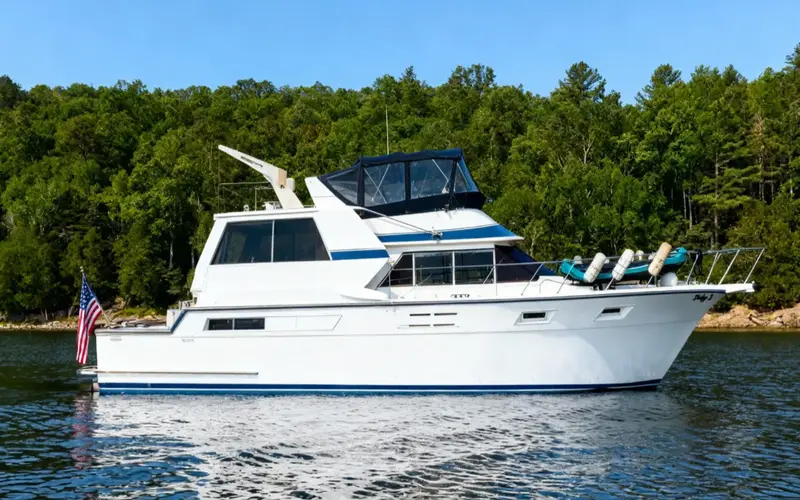
How Does the CHB Yacht Hold Its Value in the Pre-Owned Market?
Well-maintained CHB yachts can retain buyer interest in the classic cruiser market, particularly when they have documented maintenance records, updated systems and sound hull condition.
In the North American used yacht brokerage market, many seasoned boat owners with years of sailing experience choose these yachts as their second or third transitional cruising boats, rather than simply as consumer-grade vessels for short-term experiences.
Analysis of Price Ranges by Year and Size
In the pre-owned CHB yacht market, a vessel’s size and year of manufacture directly determine its price range and intended use. Generally speaking, larger vessels with more comprehensive features have a wider price range, but their maintenance costs and operational complexity also increase accordingly, as shown in the table:
| Length (ft) | Production Year | Used Market Price Range (USD) | Market Positioning |
|---|---|---|---|
| 34–36 ft | 1980–1990 | 40,000–90,000 | Entry-level Coastal Cruiser |
| 38–42 ft | 1985–1995 | 70,000–180,000 | Mainstream Family Cruiser |
| 45–50 ft | 1985–1998 | 150,000–350,000 | extended coastal cruising & Upgraded Model |
From the perspective of the overall market structure, CHB yachts have a very clear price tiering system, with different sizes corresponding to entirely different usage scenarios and ownership strategies. Smaller boats are more suited for entry-level experiences, while those 40 feet and above are increasingly used for family cruising and even light offshore sailing.
Key Factors Affecting the Price of Pre-Owned CHB Yachts
- Engine operating hours
- Whether the hull has moisture intrusion, deck-core damage or laminate issues
- Whether the electrical system has been updated
- Whether the interior has been refurbished
- Whether a complete maintenance record is available
A Comprehensive Breakdown of Maintenance Costs for Pre-Owned CHB Yachts
As a classic vintage motorboat manufactured between the 1970s and 1990s, the CHB shows signs of age-related wear and tear in its hull, engine, and interior. Its annual expense structure is distinctly layered, extending far beyond fixed costs such as docking fees, insurance, and fuel to include periodic major overhauls performed every few years, as well as hidden renovation costs that are easily overlooked by novice boat owners.
| Cost Category | Estimated Annual Cost |
|---|---|
| Marina berthing | $6,000–$22,000 |
| Insurance | $1,000–$3,500 |
| Routine servicing and maintenance | $2,000–$7,000 |
| Fuel | Depends on usage |
| Haul-out and bottom service | Periodic or annual |
| Repairs and system upgrades | Highly variable |
These figures exclude financing, depreciation, major engine work, extensive refits and unusually high fuel usage.
Analysis of Engine and System Maintenance Costs
Although common CHB diesel systems (such as Detroit Diesel) are durable, maintenance costs rise significantly as they age.
- Minor repairs: $500–2,500
- Intermediate repairs: $3,000–12,000
- Major overhauls: $15,000–30,000+
Aging propulsion, fuel and electrical systems should be inspected regularly by qualified marine technicians, particularly before purchase and before extended cruising.
Hidden Costs of Long-Term Ownership
Hidden costs are often underestimated by boat owners and include:
- Electrical system upgrades
- Navigation and electronic equipment updates
- Interior refurbishment
- Waterproofing repairs
Many customers enter an “upgrade phase” within three years of their initial boat purchase—this is a very typical market trend.
Recommended Used CHB Yacht Models
In the used power cruiser market, CHB represents a classic diesel-powered cruiser. The differences between its various models are not limited to size; they also directly determine the power configuration, fuel efficiency, and range.
Based on my observations of the used yacht market in North America, CHB’s clients generally fall into three categories: entry-level powerboat owners, family cruisers, and owners who prefer long-range cruising or liveaboard lifestyles. Therefore, different sizes, engine configurations, and layout designs directly influence their final choice.
Recommended Classic Entry-Level Motor Cruisers
Represented by the 1978 CHB 34-foot motor cruiser, this is one of the most typical entry-level diesel-powered boats in the CHB lineup.
👉

1978 CHB 34 Aft Cabin
- Build Year1978
- Length34 ft
- Cabins3
- Top speed8 kn
- TypePower yacht
The 1978 CHB 34 Aft Cabin is a classic 34-foot aft cabin cruiser renowned for its robust fibreglass hull, practical interior layout and dependable powerplant. Featuring a Ford Lehman 120 HP diesel engine, spacious saloon, three-cabin configuration and comprehensive living facilities, this vessel is well-suited for coastal and offshore leisure cruising and family boating life.
Based on actual market feedback, the biggest advantages of this model are its simple design and proven propulsion system. It is a typical monohull diesel-powered cruiser, well-suited for owners entering the motorboat market for the first time.
In the client cases I’ve handled, this size is typically used for:
- Learning how to operate a motorboat and understand navigation principles
- Weekend coastal cruising and short-distance voyages
- Small family or two-person use scenarios
Its core advantages include:
- A well-established maintenance system for diesel powerplants
- A simple hull structure with manageable repair costs
- Handling characteristics similar to traditional trawler-style boats
However, due to space limitations, this model is better suited as a “functional cruiser” rather than for long-term living.
Recommended Family Motor Cruisers
The 1988 CHB 46-foot Flybridge Motor Cruiser is the quintessential example of a family-class diesel-powered yacht in the CHB lineup.
In terms of power configuration and layout, this model features a standard two-deck flybridge motor cruiser design that balances the captain’s visibility with living space.
👉
1988 CHB 46 Motor Yacht
- Build Year1988
- Length46.25 ft
- Cabins2
- Top speed18 kn
- TypePower yacht
The 1988 CHB 46 Motor Yacht is a classic 46-foot aft cabin semi-displacement motor yacht, featuring robust construction and spacious interiors ideal for coastal cruising and extended stays.
this model is one of the most popular choices among family clients, and is particularly well-suited for:
- Inshore cruising for families of 3–6 people
- Extended weekend stays at sea
- Light interregional motor cruising
Its key features include:
- An upper flybridge that provides a superior view for maneuvering the vessel
- A dual-diesel propulsion system for greater stability
- Interior layout more closely resembling that of a small liveaboard motor yacht
- More comprehensive deck areas for socializing and leisure
However, it’s important to note that this class of 46-foot motor yachts places significantly higher demands on berthing and maintenance, making it a prime example of a category where “comfort and cost rise in tandem.”
Recommendations for Long-Range and Liveaboard Motor Yachts
The 1987 CHB 55-foot large motor cruiser is a model within the CHB lineup that is closer to a “long-range motor yacht platform.”
👉
1987 Californian 55 Cockpit Motor Yacht
- Build Year1987
- Length55 ft
- Cabins2
- Top speed18 kn
- TypePower yacht
The 1987 Californian 55 Cockpit Motor Yacht represents a classic flagship cruiser of the 55-foot class, blending timeless aesthetics with practical layouts.
this model is typically used for:
- Long-distance coastal cruising
- Semi-permanent liveaboard use
- Converted long-range powerboat platforms
Its key advantages include:
- Larger fuel and water storage systems
- A more stable diesel power output configuration
- A clearer separation between crew and living quarters
- Greater wave resistance and navigational stability
However, its maintenance costs, berthing fees, and system management complexity are also significantly higher than those of the 40-foot class, making it a typical example of a motor cruiser where “greater capability comes at a higher cost.”
From the perspective of the motor cruiser market structure, these three CHB models essentially form a complete ownership progression:
- 34 feet: Entry-level diesel motor cruiser (entry-level ownership option)
- 46-foot: Family flybridge power cruiser (mainstream)
- 55-foot: Long-range/liveaboard power cruiser (advanced)
Based on my observations, one very clear pattern has emerged: the value of a powerboat does not depend on its size alone, but rather on how well its propulsion system matches its intended use. This is also why CHB continues to attract buyers in the used boat market.
Should You Buy a Pre-Owned CHB Yacht?
This is a critical question that all clients must consider before entering the market for pre-owned classic motor yachts, and it is also the key criterion for determining whether a deal will ultimately be closed. When it comes to classic models like the CHB, the decision is not simply a matter of “whether to buy,” but rather “whether it is suitable for long-term ownership.”
Analysis of Suitable Buyers
- Those looking to enter the classic motor yacht market
- Willing to Accept Certain Maintenance Costs
- Have a Permanent Berth or Management Support

Analysis of Unsuitable Buyers
- Those seeking a “zero-maintenance yacht experience”
- Those unwilling to bear long-term operating costs
- Those who require the latest technology and smart systems
3 Key Questions to Consider Before Purchasing
Do You Have a Long-Term Berth?
A stable berth not only affects convenience but also directly determines whether your annual cost structure remains manageable.
Are Maintenance Resources Available?
The availability of a nearby repair team familiar with diesel engines and classic hulls will significantly impact future maintenance efficiency and costs.
Are You Willing to Accept Annual Fixed Costs?
Ongoing expenses—including insurance, mooring, and basic maintenance—are the primary source of cash flow pressure during long-term ownership.
Conclusion
Overall, pre-owned CHB yachts continue to offer high stability and long-term buyer appeal in the classic power cruiser market. Their strengths lie not in short-term appreciation or modern amenities, but in their robust hull structure, proven diesel propulsion systems, and long-term cruising capabilities—which are also the core reasons for their sustained liquidity in the North American and Caribbean pre-owned yacht markets.
However, from a practical ownership perspective, the true cost of a CHB extends beyond the purchase price; it is the long-term maintenance regimen that ultimately determines the level of expenditure. Especially given that these vessels are generally over 30 years old, maintenance frequency, the degree of system aging, and the previous owner’s maintenance records all significantly impact subsequent operating costs. In the numerous client cases I have handled, what truly drives the difference in total costs is often not the purchase price, but rather the investment in system maintenance and upgrades over the following 3–5 years.
Therefore, pre-owned CHBs are better suited for owners who embrace the “classic yacht + ongoing maintenance” model. These owners typically possess clear budget planning skills and understand that a yacht is a long-term operational asset, not a one-time consumer good.
From a market positioning perspective, it remains a cost-effective entry-level option for those looking to enter the classic motor yacht market—provided that the decision is based on a thorough assessment of the boat’s condition and a long-term cost projection.👉 Considering purchasing a pre-owned CHB or a similar classic motor cruiser? View currently available pre-owned CHBs and get expert advice on buying a yacht.
Disclaimer
The content of this article is for reference only and does not constitute any investment or yacht purchase advice. The information regarding the prices, costs, and market analysis of pre-owned CHB yachts presented herein is based on publicly available information and industry experience as of 2026 and is intended solely for market reference.
This article has not received sponsorship from any shipyard, brand, or financial institution, nor has the author been involved in any related vessel transactions. Actual vessel condition, specifications, and prices may vary depending on the market and region; Buyers should rely on an independent pre-purchase marine survey, engine inspection, maintenance records and sea trial before completing a purchase. and professional survey results for confirmation. Before purchasing a vessel, it is recommended to engage an independent surveyor to conduct a comprehensive inspection and sea trial evaluation. Neither the author nor the YachtTrading shall be liable for any losses arising from the use of the information in this article.
About the Author
Andrew Rogers is a yacht broker specializing in the pre-owned yacht and classic motor cruiser markets. He has long been active in the fields of yacht transactions and client consulting in North America and the Caribbean. In his day-to-day brokerage work, Andrew frequently provides clients with comprehensive yacht-purchase advice, including hull structural assessments, engine condition evaluations, annual ownership cost analyses, and berthing and maintenance plans. He helps boat owners clearly understand the true long-term costs and risks associated with ownership before making a purchase, thereby assisting clients in selecting vessels that best meet their practical needs.
FAQ
Q1: Is maintenance for a used CHB yacht expensive?
A: Overall, maintenance costs are moderate, but the specific expenses depend on the boat’s age and the condition of the engine. If the maintenance records are good, costs can be kept within a reasonable range; otherwise, repair expenses may be higher.
Q2: Are CHB yachts suitable for long-term living?
A: Yes, but some modifications are required, such as upgrading the electrical system and optimizing living facilities. Models 40 feet and longer are better suited for long-term living.
Q3: Are used CHB yachts prone to breakdowns?
A: The structure itself is quite durable, but since these boats are generally older, the key factor is maintenance frequency rather than design flaws.
Q4: Is a pre-purchase survey required when buying a used CHB yacht?
A: A pre-purchase survey is mandatory. It is recommended that an independent surveyor conduct a sea trial and structural inspection; this is a crucial step to avoid costly repairs later on.
Q5: Are the long-term holding costs high?
A: Over a 10-year period, maintenance costs may approach or even exceed the purchase price; therefore, long-term budget planning must be done in advance.