For those looking to buy a used yacht, the best choice is a 40–60 foot motor yacht from a mainstream luxury brand, aged between 5 and 10 years, with a complete and transparent maintenance history.
👉 If your budget is under $1M, the strongest segment is used motor yachts from 40–55ft built by established brands like Sunseeker, Princess, Azimut, and Ferretti.
Used Yacht Decision Cheat Sheet
| Criterion | Best Choice |
| Size | 40–60ft |
| Age | 5–10 years |
| Brand | Mainstream mass-produced luxury brands |
| Maintenance Record | Complete, traceable, verifiable |
| Annual Maintenance Budget | Approximately 5%–10% of the yacht’s value |
| Purchasing Process | Check the records first, then conduct a sea trial, and finally negotiate the price |
What Makes the Best Used Yacht to Buy?
Whenever I discuss used yachts with clients, I always shift the focus from ‘which one is the most expensive’ to ‘which one is least likely to cause regret’. Because the true decision behind buying a used yacht isn’t about seeking a one-off thrill, but about ensuring it can be easily resold in three years’ time, won’t eat up your budget on repairs within five years, and provides peace of mind every time you take to the water.This approach aligns with industry best practice: before purchasing a yacht, conduct a pre-purchase inspection, system tests and a sea trial, then decide whether to proceed with the sale.
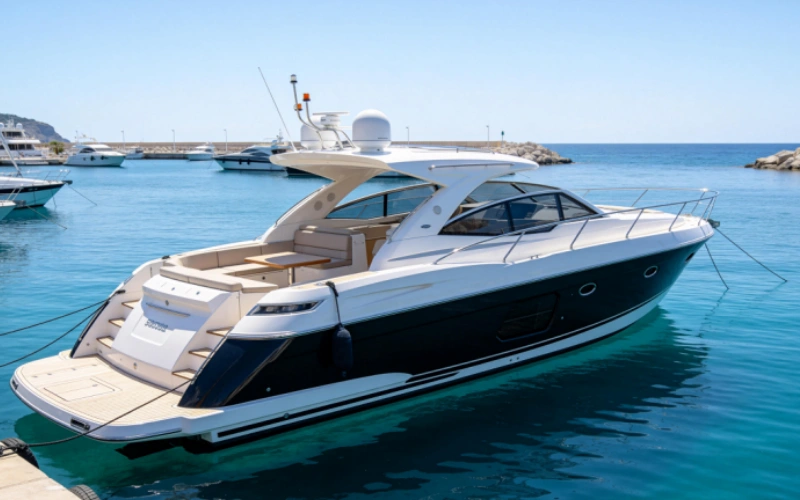
Below are the three core indicators I have distilled from over 100 yacht transactions:
Yacht Marketability
The ‘value’ of a pre-owned yacht isn’t determined the moment it’s listed, but by whether the market is willing to buy it when you decide to sell.In the transactions I’ve handled, the advantage of mainstream luxury brands often lies not in the most high-spec configurations, but in the ease of finding a second owner who understands the vessel, can afford it, and is willing to take it on.
This is why brands such as Sunseeker, Princess, Azimut and Ferretti always feature on my shortlist.
True Cost of Ownership
Many first-time yacht buyers focus on the purchase price, but what truly determines whether they will regret their decision are mooring fees, maintenance costs, parts replacement, post-sea-trial repairs, and engine servicing cycles.BOAT International’s report, ‘The hidden costs of owning a yacht’, estimates annual maintenance and repair costs at 5%–10% of the yacht’s price; I regard this as the most practical budget baseline.
Yacht Depreciation
A yacht’s value decreases as it ages, with depreciation rates varying significantly across different age brackets. This is one of the most important factors to consider when deciding ‘when to buy’.Brand-new yachts depreciate most rapidly in the first three years; after five years, their value typically drops to 50–60% of the original price. Thereafter, depreciation tends to level off for vessels over ten years old. The specific breakdown is as follows:
| Age of Boat | Advantages | Risks | Recommended? |
| 0–3 years | Latest specifications and cutting-edge technology | Highest depreciation rate; expensive | ❌ |
| 3–5 years | Value for money begins to emerge | Prices remain relatively high | ⚠️ |
| 5–10 years | Best value for money | Manageable maintenance risks | ✅ |
| 10+ years | Lowest prices | High maintenance risks; outdated technology | ❌ |
Optimal purchasing window: It is generally recommended to choose models sold by the first owner 3–5 years after manufacture, or those in the second depreciation phase (approximately 5–10 years), as this offers a good balance between new utility value (specifications, design) and depreciation levels.
For example, a popular brand yacht that is five years old will have a cumulative depreciation rate of around 30%–35%, whilst a large yacht that is ten years old will have a depreciation rate approaching 50%.
👉 See available listings now
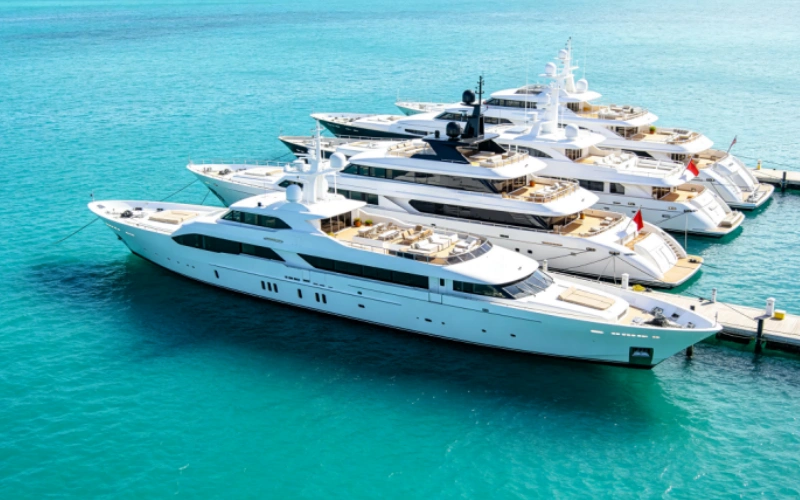
Used Yacht Price by Size
| Size Range | Typical Price Range | Buyer Profile |
|---|---|---|
| 30–40ft | $150K–$500K | First-time buyers |
| 40–50ft | $400K–$900K | Family cruising |
| 50–60ft | $700K–$1.5M | Long-range comfort |
| 60ft+ | $1M–$5M+ | High-end ownership |
👉 Explore used yachts by size
Most Reliable Used Yacht Brands
First, let me state my opinion: I believe the most reliable used yacht brands on the market are the mainstream, popular ones. Below, I’ll explain the differences between mainstream and niche brands—and why I prefer the former!Advantages of Mainstream Brands
The greatest benefit of mainstream, mass-produced luxury brands is not ‘prestige’, but rather their service networks, parts availability, resale speed and market recognition.Buying a yacht is a very practical matter: in the future, you’ll be dealing not only with the experience of sailing, but also with dealers, repair shops, insurance companies and the next buyer.
Advantages of Niche Brands
Niche yacht brands have two advantages: they appear to be cheaper, and their designs are more distinctive.But the issues are equally clear: they’re harder to sell, repairs are more difficult, and there’s a higher probability of incomplete documentation. If you’re buying a second-hand yacht for the first time, I wouldn’t make this your first choice.
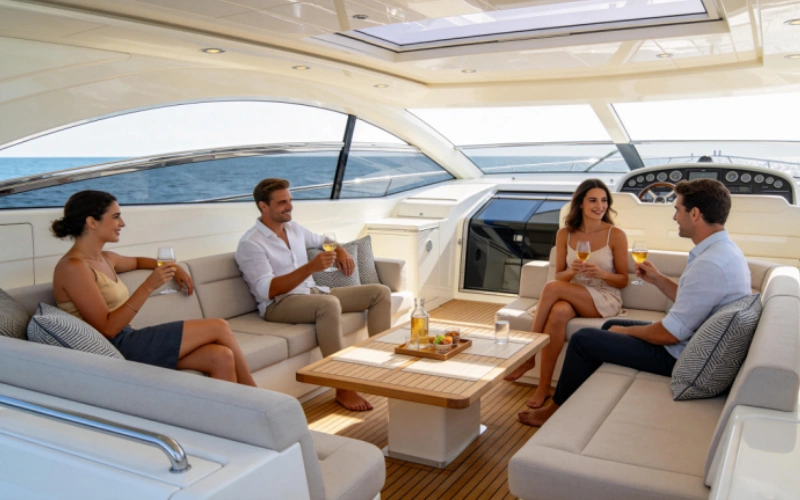
British vs Italian Brands
- British brands place greater emphasis on practicality, seaworthiness and relatively straightforward maintenance;
- Italian brands prioritise design, lines, spatial awareness and a social atmosphere.
Comparison of Market Liquidity for Pre-Owned Yacht Brands
| Brand Type | Representative Brands | Global Market Liquidity | Parts Availability | Maintenance Ease | Resale Value |
| Mainstream British | Sunseeker / Princess / Fairline | High | High | High | Medium |
| Mainstream Italian | Azimut / Ferretti | High | Medium | Medium | Medium |
| German/Nordic | Bavaria / Nimbus | Medium | High | High | Low |
| Niche Custom | Custom / Boutique Yards | Low | Low | Low | High |
👉 View Azimut yachts currently for sale
Best Used Yacht Type Comparison
| Type | Best For | Price | Risk Level | Notes |
|---|---|---|---|---|
| Motor Yacht | All-around cruising | $$$ | Low | Best resale liquidity |
| Flybridge Yacht | Family & outdoor living | $$$$ | Medium | Most popular segment |
| Sport Yacht | Speed & driving experience | $$$ | Medium | Higher maintenance load |
Top 7 Best Used Yachts to Buy
The following seven are, in my view, the most worthwhile second-hand candidates to consider seriously and the ones for which a decision is easiest to make. They are not the ‘only answer’, but they all share a common trait: within their respective market segments, they offer a balanced combination of overall risk and value.Sunseeker Manhattan 52
Best suited for: family cruising, socialising and entertainment, long weekend getawaysPros: Spacious overall, well-designed layout, excellent social deck areas; powerful engines and fast cruising speed; Sunseeker’s popularity ensures strong market liquidity. Ample supply in the second-hand market, with prices comparable to Princess yachts of the same class (2010 model listed at approximately $690,000).
Risks: Earlier models of the Manhattan 52 utilised electronic systems that were cutting-edge at the time; some electrical circuits or air conditioning systems may now be showing their age, leading to higher maintenance and upgrade costs. Prior to purchase, the electrical systems and engine maintenance records should be thoroughly inspected.
Azimut 55 Fly
Best suited for: Long weekend cruising for those seeking Italian luxury design and efficient use of spacePros: Stylish exterior and top-tier layout. Azimut places great emphasis on guest accommodation and panoramic lighting in its flybridge yacht designs, with deck space utilisation leading its class. The engines are relatively efficient and offer a comfortable ride, making it well-suited for cruising. Supply of the Azimut 55 is not scarce in the mainstream second-hand market (starting price for a 2020 model is approximately $345,000).
Risks: Relatively high maintenance costs. The yacht incorporates numerous high-tech systems and hydraulic deck designs, resulting in higher long-term maintenance and engineering costs; major engine overhauls or electronic upgrades are required more frequently. It is advisable to carefully review the maintenance records before purchase.
Princess V50
Best suited for: Family use and novice owners looking to upgradePros: Excellent handling, linear hull stability, and outstanding Princess build quality. This deck cruiser offers excellent space utilisation and comfort, making it ideal for families of up to six people. As Princess yachts generally retain their value well, a well-maintained V50 can command a good price on the second-hand market.
Risks: The specification is somewhat basic, requiring independent upgrades. Some early versions feature simpler cleaning and electrical systems, meaning buyers accustomed to high-spec models may need to invest further in modifications.
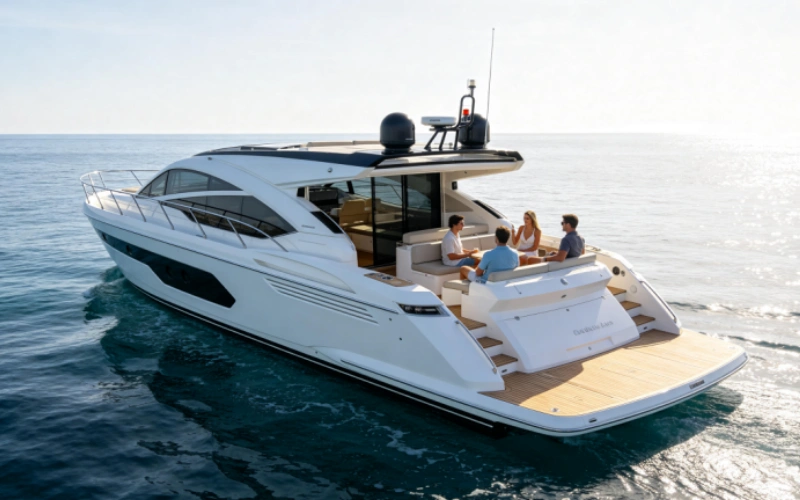
Ferretti 530
Best suited for: Owners who prioritise luxury and comfort and appreciate a stable cruising experiencePros: Ferretti is renowned for classic luxury; the 530 model features exquisite interior materials and layout, with outstanding specifications in the first-class cabin and master suite. It offers excellent stability, good long-range performance and a comfortable ride. The second-hand market is relatively stable: for example, a 2014 Ferretti 530 is listed at around US$750,000, reflecting its strong resale value.
Risks: Maintenance costs are higher. Ferretti yachts often feature complex hydraulic systems and high-end interiors, requiring frequent servicing and incurring expensive repair costs. A thorough pre-purchase survey is essential, with particular attention to major overhaul costs and the availability of spare parts.
Fairline Targa 50
Best suited for: Enthusiasts of British-designed speedboats seeking a family cruiser with low maintenance costsPros: As a leading British brand, Fairline prioritises practicality and reliability. The Targa 50 features a spacious deck with excellent visibility and a well-planned interior layout. The yacht’s propulsion system is well-established, with service centres widely available across Europe and the US, resulting in relatively affordable ongoing maintenance costs. Its understated British style may be less flashy, but it offers greater peace of mind in terms of upkeep.
Risks: The second-hand market is not as extensive as that for Italian brands. As the Fairline market is relatively concentrated in Europe and the US, there are fewer second-hand options in the Asia-Pacific region; buyers may need to take additional factors into account, such as transport and import duties.
Princess V65
Best suited for: High-end cruising for large families or entertainment purposesPros: Another classic model from the Princess brand, offering a spacious feel, luxurious fittings and high resale value. An optional large crew cabin is available, making it ideal for extended voyages.
Risks: Maintenance costs rise as the yacht ages, particularly as older vessels often require interior refurbishment and engine overhauls.
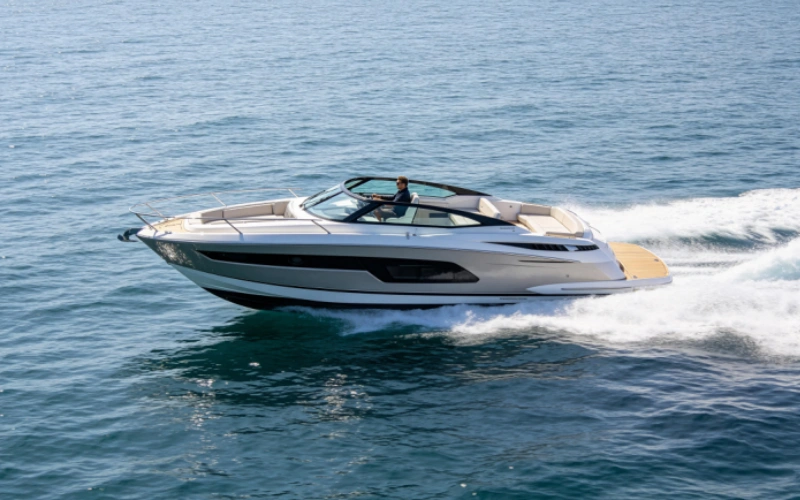
Sunseeker Predator 57
Best suited for: Owners who enjoy driving dynamics and a sports car-like experiencePros: The Predator series is dynamic and powerful, earning it the reputation as the ‘sports car of yachts’. Although the interior space is not as generous as that of flybridge yachts of the same length, its compact layout makes it ideal for short-distance cruising. The Sunseeker brand is popular, ensuring ease of resale.
Risks: The hull is relatively narrow and elongated, resulting in average seakeeping capabilities. Buyers seeking a smooth and stable experience at sea should exercise caution. Furthermore, earlier models feature a high degree of electronic systems, leading to relatively higher maintenance costs.
Best Used Motor Yachts Under $1M
| Brand/Model | Length (ft) | Beam (m) | Age (years) | Top Speed (knots) | Fuel Capacity (litres) | Suitable for | Estimated Annual Maintenance Costs (%) |
| Sunseeker Manhattan 52 | 52 | 4.87 | 5–10 | 27 | 2,200 | Family holidays / Short cruises | 5%–8% |
| Princess V50 | 50 | 4.08 | 5–10 | 32 | 1,550 | Sporty sailing / Sea trials | 5%–7% |
| Azimut 55 Fly | 55 | 4.9 | 5–10 | 28 | 1,800 | Family / Entertaining | 6%–9% |
| Ferretti 530 | 53 | 4.8 | 5–10 | 30 | 2,200 | Comfort Cruising / Leisure | 6%–8% |
| Fairline Targa 50 | 50 | 4.32 | 5–10 | 31 | 1,309 | Sport / Socialising | 5%–7% |
👉 Where to Find Quality Used Yachts? Browse to view used yachts for sale
Common Mistakes to Avoid When Buying a Used Yacht
Incomplete or missing maintenance records. If the seller cannot provide a full history of maintenance and repairs, the risk is extremely high.Yachts over 15 years old with no history of major refits. Such older yachts may harbour hidden risks such as ageing bolts and seawater corrosion, making future repair costs difficult to estimate.
Models from obscure manufacturers or those heavily modified by private owners. Unproven shipyards mean spare parts and accessories may be scarce later on; Yachts that have been excessively modified may also have compromised structural integrity and electrical systems.
Models not popular in the mainstream market. For example, certain models that are only popular in specific regions may struggle to find buyers when resold once they have fallen out of the mainstream market.
If you encounter any of the above situations, it is better to spend more time and effort searching for a yacht in good condition than to make a hasty purchase simply because it is ‘cheap’. Exercising caution when buying is often the best way to save money.
What to Check Before Buying a Used Yacht?
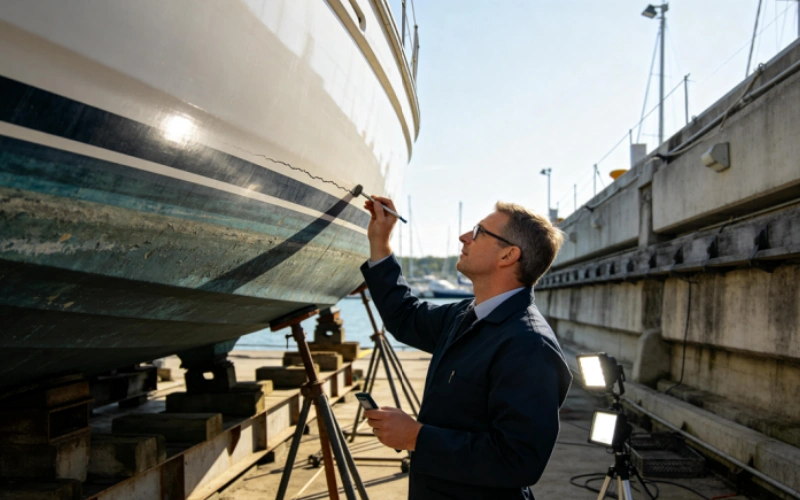
To secure a top-quality second hand yacht, thorough research is essential. Here is a concise guide on what to look for in a used yacht:Engine and Propulsion System: Have a professional technician conduct a comprehensive test run to assess the operational condition, noise levels and vibration of engines such as MTU, MAN and Volvo Penta, ensuring all parameters fall within normal ranges. Also inspect the oil-water separator, cooling system and propeller wear.
Hull Structure: Assess the integrity of the hull, deck and keel structures, checking for leaks, cracks, delamination and other issues. For refurbished vessels, pay particular attention to repair marks and the quality of surface coatings.
Electrical System: Confirm that the batteries, generator, switchboard, lighting and navigation equipment are functioning correctly. Review the wiring diagrams to prevent potential electrical safety hazards.
Corrosion and Water Ingress: Carefully inspect both the interior and exterior of the vessel for signs of dampness, salt stains or rust spots, particularly in the engine room, water tanks, bulkheads and ceiling panels. If left unaddressed, these issues can lead to more significant consequences later on.
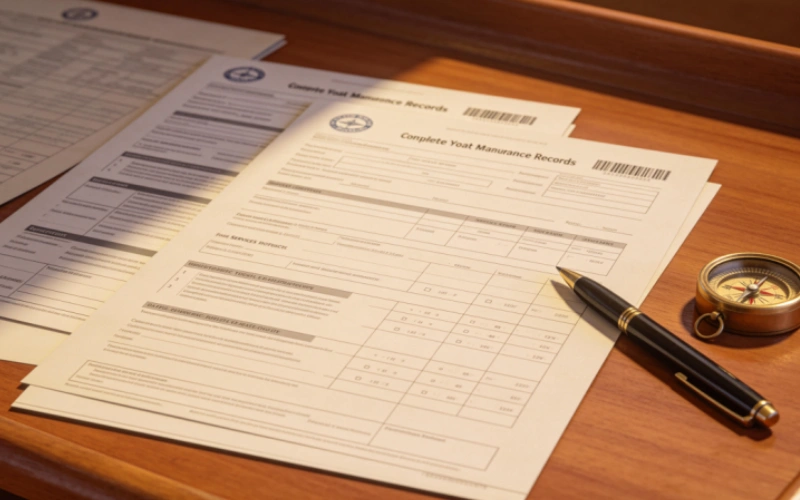
Verification of Maintenance Records: Cross-reference relevant maritime regulations to verify cruising records, maintenance logs and invoices for annual overhauls. A complete maintenance history can significantly reduce future operational risks.
Only after completing the above checks and finding no anomalies should you proceed with price negotiations and purchase with confidence.
Conclusion
The best second hand yacht to buy is not necessarily the cheapest or the largest, but the one that offers the ‘lowest risk, highest liquidity and manageable holding costs’. It may well be a medium-sized yacht with a clear history and a well-maintained condition.👉See more of the best used yachts to buy→ Get expert recommendations
About the Author
Emery
Yacht Broker / Yacht Transaction Consultant / Contributing Writer for Yachting Magazine
SAMS Certified Surveyor No.: AMS #2458
Previously named one of “Asia’s Top 10 Yachting Experts” and recipient of the “Yacht Broker Outstanding Service Award”, amongst others
Last updated: April 2026
Suitable for: First-time buyers, families, budget-conscious buyers and those prioritising maintenance costs and resale value
Disclaimer
The content of this article is based on the author’s experience in the yacht brokerage and transaction sector, as well as publicly available market information. It is provided solely for informational and educational purposes and does not constitute investment advice, legal advice, or a commitment to purchase in any form. The yacht prices, performance specifications, maintenance costs, and market performance mentioned herein may vary depending on the time, region, and individual condition of the vessel. Actual conditions should be verified through professional inspection reports, official documentation, and the latest information from dealers.
Before making any decision to purchase a yacht, readers are advised to engage qualified marine surveyors, brokers, and legal or financial advisors to conduct independent evaluations and due diligence. Neither the author nor the publishing platform shall be liable for any direct or indirect losses arising from the use of the information in this article.
FAQ
Q1: What is the best used yacht to buy?
A: For most buyers, the best value in used yachts lies in mainstream motor yachts measuring 40–60 ft, 5–10 years old, with complete maintenance records and high market liquidity.
Q2: What is the most reliable yacht brand?
A: Reliability isn’t determined solely by the brand name, but rather by the specific model, engine configuration, and how the previous owner maintained the vessel. In terms of the overall dynamics of the used market, mainstream luxury brands generally offer easier access to parts, service, and resale support.
Q3: Is it better to buy a new or used yacht?
A: If your goal is to “spend your budget on the experience,” a used yacht is often more cost-effective; if your goal is to “start completely from scratch and accept higher depreciation,” a new yacht offers greater peace of mind.