If you are looking for a yacht under US$1 million for long-term living, start with your intended lifestyle rather than a fixed boat length.
A compact power catamaran can work well for owners who spend most of their time in a marina and make coastal trips, while a larger catamaran can offer more cabin space for extended stays. A trawler such as the Nordhavn 43 is a different choice, focused more on long-range cruising, fuel efficiency and onboard systems than speed.
The US$1 million limit in this guide refers to the yacht's purchase price, not the total cost of moving aboard. Allow separately for transaction costs, initial refit work and ongoing ownership expenses. If your total available capital is only US$1 million, your actual purchase-price ceiling should be lower.
Liveaboard Yacht Examples With Verified Under-$1M Asking Prices
| Model / Generation | Used or New | Asking-Price Evidence | Best-Fit Lifestyle | Main Trade-off | Listing / Source |
|---|---|---|---|---|---|
| Fountaine Pajot MY4.S, 2023 | Used | US$690,000 asking price on YachtTrading listing | Couples or small families; marina and coastal living | Compact length, but its wide beam can limit berth options | YachtTrading listing |
| Leopard 45, 2t022 "Why Kno" | Used | US$499,000, excluding tax; Tortola, British Virgin Islands; checked Sep. 17, 2026 | Four-cabin liveaboard and coastal cruising | Post-charter condition and refit status need confirmation | Leopard Brokerage |
| Nordhavn 43, 2017 "Lucky Stars" | Used | US$979,000 published asking price; currency and tax status should be confirmed | Long-range cruising and owners prioritizing range and onboard systems | Very close to the US$1M purchase-price ceiling | Nordhavn Brokerage |
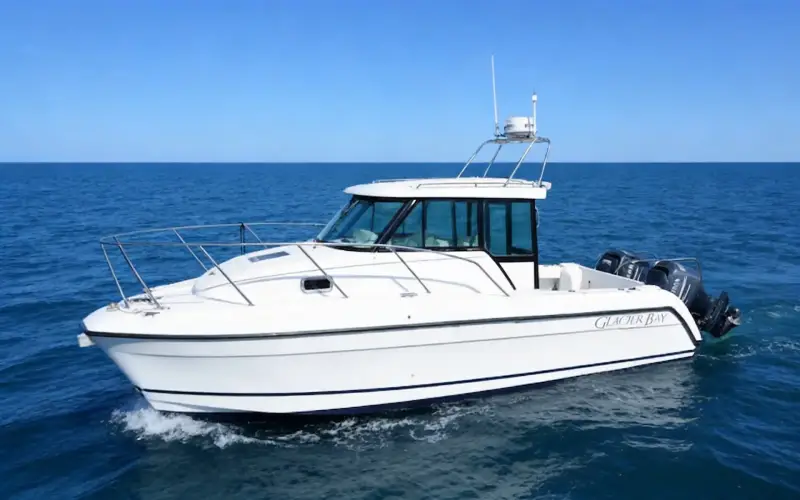
Three Liveaboard Yacht Models With Verified Under-$1M Asking Prices
The models below represent three different approaches to liveaboard ownership, from compact power-catamaran living to four-cabin cruising and long-range trawler operation. Each has a specific public asking-price sample within the US$1 million purchase-price limit, although the price and condition of any individual yacht must be verified before purchase.Fountaine Pajot MY4.S — Compact Power Catamaran
Best for: Couples or small families who prioritize marina living, coastal cruising and a relatively compact yacht.Living Advantages: The MY4.S uses a power-catamaran layout to create useful living space without requiring a conventional monohull of similar length. The saloon, galley and cockpit form the main living areas, while the wide beam provides useful cabin and storage space for its size. Its Sportop layout and opening overhead section can also provide natural light and ventilation.
Main Trade-Off: At around 36 feet, it remains a compact liveaboard. Storage, private working space and separation between living areas are more limited than on the Leopard 45 or Nordhavn 43. Its relatively wide beam can also make berth availability an important consideration.
Before Buying: Check the actual cabin layout, ventilation, water and battery capacity, and available storage. Confirm that the specific boat's equipment matches how you intend to live aboard.
Price Evidence: A 2023 MY4.S was listed on YachtTrading at US$690,000. This is a specific asking-price sample, not a market-wide valuation.

2023 Fountaine Pajot MY4.S
- Build Year2023
- Length36.08 ft
- Cabins3
- Top speed28 kn
- TypeCatamaran yacht
The 2023 Fountaine Pajot MY4.S is a power catamaran featuring sleek lines and a modern design, engineered to deliver an efficient cruising experience, luxurious comfort, and dynamic offshore performance. Whether for coastal exploration, weekend getaways, or long-distance cruising adventures, the MY4.S is equipped to meet a wide range of needs.
Leopard 45 — Four-Cabin Liveaboard Catamaran
Best for: Families or couples who want separate cabins and more defined living space for extended stays aboard.Living Advantages: The Leopard 45's four-cabin, four-head configuration provides more private sleeping and bathroom areas than the smaller MY4.S. Separate cabins can also be useful when family members, guests or occasional crew need their own space, making the layout more practical for extended periods aboard.
Main Trade-Off: More accommodation also means more systems and interior areas to maintain. The specific 2022 “Why Knot” listing was a former charter yacht, so its delivery condition matters as much as the advertised layout.
Before Buying: Review the charter operating history, refit scope and completion status. Pay particular attention to the engines, generators, air-conditioning, plumbing and electrical systems.
Price Evidence: Leopard Brokerage advertised the 2022 “Why Knot” at US$499,000 excluding tax when checked on September 17, 2026. The listing noted a post-charter refit, so buyers should confirm the actual delivery condition.
Nordhavn 43 — Long-Range Trawler
Best for: Owners who see the yacht primarily as a long-range cruising platform rather than a weekend boat.Living Advantages: The enclosed living areas, dedicated sleeping accommodation and storage are useful for owners spending extended periods aboard. Its onboard systems are designed around longer passages and lower-speed operation rather than fast coastal cruising.
Main Trade-Off: The Nordhavn 43 is not aimed at buyers who prioritize speed or maximum interior volume for the purchase price. At a published asking price of US$979,000, the 2017 “Lucky Stars” example sits close to the US$1 million purchase-price limit, leaving little room within that limit for a higher purchase price.
Before Buying: Inspect the engine room and machinery access, fuel and water systems, generator, stabilizer system if fitted, and maintenance records. On a long-range yacht, the condition and service history of these systems can materially affect the ownership budget.
Price Evidence: The 2017 “Lucky Stars” was publicly listed by Nordhavn Brokerage at US$979,000. Currency and tax status should be confirmed with the seller before using the figure for a purchase budget.
Which Liveaboard Yacht Type Fits Your Plans?
The right yacht type depends mainly on how you expect to live aboard and where you plan to cruise. The examples above cover three different approaches, but other yacht types may also suit a liveaboard lifestyle.| Intended Use | Type to Consider | Main Reason | Main Trade-Off |
|---|---|---|---|
| Mostly Marina Living and Coastal Trips | Power catamaran | Efficient use of beam provides useful living space for the yacht's length | Wider beam can limit berth availability |
| Family Living and Extended Cruising | Power or sailing catamaran | More accommodation and outdoor living space for longer stays aboard | Sailing yachts require attention to rig and sail systems; power cats have higher fuel dependence |
| Long-distance Cruising | Trawler | Designed around range, economical cruising and extended onboard operation | Lower cruising speed and potentially more complex machinery |
| Marina Lifestyle with Occasional Coastal Trips | Flybridge motor yacht | Extra outdoor social space and higher cruising speed | Fuel and maintenance costs can be higher than on more efficient cruising designs |
These are starting points rather than fixed categories. The actual yacht's layout, equipment, condition, maintenance history and cruising specification still need to be assessed individually.
What Makes a Yacht Suitable for Long-Term Living?
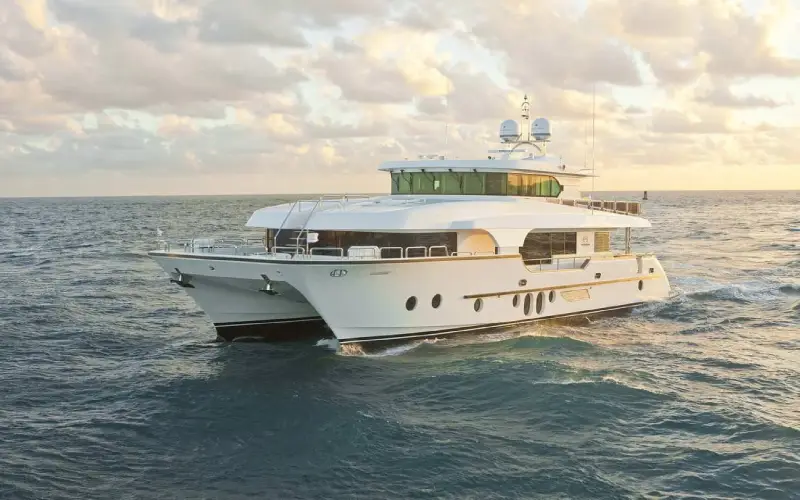
A yacht can look suitable for long-term living on paper but work very differently once you spend weeks or months aboard. Before buying, assess the boat against your actual living pattern rather than relying on length alone.
| Check | What to Assess Before Buying |
|---|---|
| Living Pattern | Will you live aboard year-round in a marina, cruise frequently, or spend significant time at anchor? Match the yacht's systems and layout to your intended use. |
| Layout | Check the number of regular occupants, fixed berths, galley setup, workspace and usable storage. A yacht that works well for two people may feel very different with four aboard. |
| Daily Systems | Check refrigeration, laundry facilities, ventilation, air-conditioning or heating, and how these systems are powered. |
| Off-Grid Living | Review freshwater capacity, holding tanks, battery capacity, generator and charging systems against the time you expect to spend away from shore power. |
| Marina Fit | Confirm the yacht's actual length and beam, available berth sizes and the marina's long-term liveaboard rules before purchase. |
| Maintainability | Inspect engine-room access, equipment service areas, spare-parts availability, maintenance records and known outstanding repairs. |
Does Yacht Size Matter?
A 40–55-foot yacht can be a useful starting range for buyers seeking a balance between living space and ownership costs, but it is not a fixed requirement. The Fountaine Pajot MY4.S, for example, is considerably shorter but uses its catamaran beam and layout differently from a conventional monohull. For a compact yacht like this, the number of occupants, storage needs and intended use may matter more than length alone.
Annual Costs for Long-Term Yacht Living
Buying the yacht is only part of the budget. For a long-term liveaboard, annual costs depend heavily on where the boat is kept, how often it cruises and how much work the owner handles personally.The 10% rule is sometimes used as a broad yacht-ownership benchmark, but it should not be treated as the annual budget for the smaller liveaboard yachts covered here. Actual costs depend on the vessel, location, equipment, usage and level of owner involvement.
For this article, a more useful starting point is an owner-operated yacht with no permanent crew, separating a mainly marina-based lifestyle from one involving frequent cruising.
Annual Liveaboard Cost Framework
| Cost Item | Mainly Marina-Based | Frequent Cruising | What to Check |
|---|---|---|---|
| Berthing | Usually the main fixed cost | Home berth plus transient berths | Get an actual annual quote based on the yacht's length and beam |
| Insurance | Depends on yacht value, age and location | May change with cruising area and navigation limits | Obtain a quote for the specific yacht and intended cruising area |
| Routine Maintenance | Engine, generator, systems, hull and equipment servicing | Same core items plus more frequent engine and equipment use | Review service schedules and the surveyor's recommendations |
| Fuel | Lower if the yacht moves infrequently | Potentially a major variable cost | Estimate from expected engine hours and the boat's actual consumption |
| Communications | Mobile data, marina internet or satellite service as required | Higher data and connectivity needs may apply | Match the plan to where you expect to cruise |
| Equipment / Repair Reserve | Set aside for replacement and unexpected repairs | Allow for additional wear from higher usage | Keep this separate from money already spent on routine maintenance |
These categories should be priced for the specific yacht, home port and intended cruising programme rather than added together from generic industry ranges. A marina-based owner and an owner cruising several months each year can have very different annual budgets even when their yachts are similar in value.
Insurance Depends on the Actual Yacht and Cruising Area
Of the recurring ownership costs, boat insurance cost is often one of the items most easily overlooked by new buyers. Insurance should be quoted against the specific vessel rather than estimated as a universal percentage of purchase price. Premiums can vary with the yacht's value, age, construction, cruising area and other underwriting factors.For a yacht under consideration, obtain an insurance indication before purchase and check whether the intended cruising area, hurricane exposure or extended periods away from the home port affect the terms.
Maintenance Is Not the Same as a Repair Reserve
Routine maintenance covers planned work such as engine and generator servicing, hull cleaning, antifouling and equipment inspections. A separate reserve is useful for less predictable expenses such as replacing equipment or dealing with unexpected failures.For a more detailed breakdown of boat maintenance cost in 2026, see our guide to the main maintenance expenses and budgeting factors.
Keeping routine maintenance and unexpected repairs separate makes the annual budget easier to understand and avoids counting the same expense twice.
A repair reserve is a budgeting provision, not necessarily an expense incurred during that year. It represents money set aside for unexpected repairs, equipment replacement or larger maintenance work that may arise later.
Build Your Own Annual Budget
Instead of applying a fixed percentage to the yacht's purchase price, start with the costs you can actually quote:Annual yacht ownership budget = berth + insurance + scheduled maintenance + estimated fuel + communications + other recurring operating costs + repair/equipment reserve
For example, a buyer comparing a MY4.S, Leopard 45 and Nordhavn 43 should obtain a berth quote, insurance indication and recent maintenance information for the specific yacht before deciding how much cash to keep available after the purchase.
Food, personal travel, transportation and other household expenses should be treated as living expenses, not yacht operating costs. They belong in a separate household budget.
Use our guide to yacht ownership costs to separate purchase capital, recurring expenses and longer-term resale assumptions.
Buying Checks That Matter Most for a Liveaboard
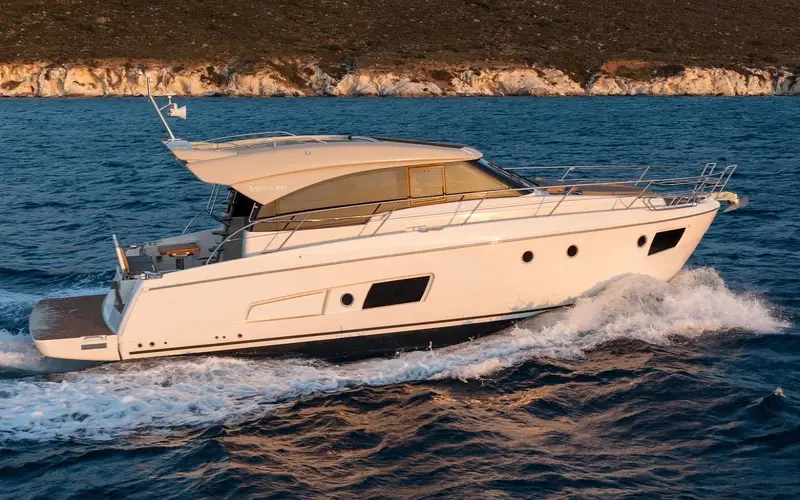
Before committing to a liveaboard yacht, focus on the factors that can materially affect daily use and ownership costs:- Do Not Buy on LOA Alone — Check actual usable living space, storage and berth requirements
- Check Systems, Not Just Interiors — Especially batteries, generator, water systems, air-conditioning and engine access
- Review Service History Before Budgeting — Distinguish routine maintenance from deferred work and refit needs
- Complete a Professional Survey Before Closing — Particularly for used yachts and vessels near the top of the purchase-price limit
Summary
A purchase price below US$1 million can cover a wide range of used liveaboard yachts, but the right choice depends on how the boat will actually be used. The examples in this guide show three different approaches: compact power-catamaran living, four-cabin catamaran cruising and long-range trawler operation.Buyers should keep transaction costs, initial refit work and ongoing ownership expenses outside the purchase-price limit when building the total budget.
When requesting options, provide your budget, expected number of occupants and primary cruising area so the available yachts can be assessed against your actual liveaboard requirements.
👉 Browse Used Yachts for Sale
👉 Compare New Yachts for Sale
About the Editorial Review
This guide was prepared by the YachtTrading editorial team and reviewed against publicly available brokerage listings, yacht valuation references, brand model information and common ownership-cost benchmarks. Because yacht prices vary by condition, location, engine hours, specification and market demand, all price ranges should be treated as general guidance rather than fixed offers.
Disclaimer
This content is provided for informational purposes only and is based on publicly available yacht listings, model information and general ownership considerations. It does not constitute legal, tax, or investment advice. Yacht transactions involve complex legal, financial, and technical matters. Actual purchasing processes may vary due to regional regulations, vessel type differences, or individual circumstances.
Before making any yacht purchase decisions, readers are advised to consult licensed professionals (such as attorneys, tax advisors, licensed yacht brokers, or surveyors) for personalized guidance tailored to their specific situation. Neither the author nor the publisher shall be liable for any direct or indirect losses arising from reliance on the information provided herein.
FAQ
Q1: What is the ideal size of yacht for long-term living?
A: There is no universal size. Around 40–55 ft can be a useful starting range, but beam, layout, storage, systems and marina restrictions can matter more than LOA alone.
Q2: Which is better suited to long-term living: a catamaran or a monohull?
A: A catamaran can provide more usable beam and living space for its length, while a monohull may offer different berth, handling and marina advantages. The choice depends on how and where you plan to live aboard.
Q3: How much does it cost per year to live on a yacht full-time?
A: There is no reliable single figure that applies to every liveaboard yacht. Build the budget from actual marina, insurance, maintenance, fuel, communications and repair-reserve costs for the specific yacht and cruising area. Food and personal living expenses should be budgeted separately.
Q4: Can you find a long-distance cruising yacht with an asking price under $1 million?
A: Yes. Public asking-price examples do exist below US$1 million. A 2017 Nordhavn 43, "Lucky Stars," was listed at $979,000 when checked for this guide. This is an asking price, not a confirmed transaction price, and excludes other purchase and ownership costs.
Q5: Which is better suited for long-term living: a new or a pre-owned yacht?
A: Neither is automatically better. A new yacht can offer current specifications, factory support and a configuration chosen by the buyer, while a pre-owned yacht can provide access to established models at a lower asking price. For either option, compare the purchase price with the yacht's actual equipment, condition, maintenance history and expected refit needs.