



A vessel insurance premium calculator is a tool that helps boat owners quickly estimate annual insurance premiums before purchasing a policy. Users simply need to enter information such as the vessel’s value, age, type, engine specifications, navigation area, mooring location, and driving experience. The system then provides a rough estimate of the premium based on industry average rates and risk factors.
Boat Insurance Cost Calculator
I usually recommend that clients prepare the following information first:- Vessel Type
- Age of the vessel
- Current market value
- Berthing location
- Operating waters
- Sailing experience
- Small recreational boat: 0.6%–1.2%
- Sailboat: 0.7%–1.3%
- Motor yacht: 0.9%–1.8%
- Luxury yacht: 1.0%–2.5%+
- Boat age over 15 years: +10%–25%
- Coastal or offshore use: +10%–40%
- Hurricane-prone mooring area: +15%–50%
- Clean boating record: -5%–15%
- Safety course completed: -5%–10%
Using this formula and the vessel’s value, you can calculate the following estimated premium:
| Boat Value | Estimated Annual Insurance Premium |
|---|---|
| 20,000 USD | 200–400 USD |
| 50,000 USD | 350–700 USD |
| 100,000 USD | 600–1,500 USD |
| 500,000 USD | 3,000–8,000 USD |
| Over 1,000,000 USD | Above 8,000 USD |
Disclaimer:
The figures above represent an estimated range based on average rates in the U.S. boat insurance market and are provided for reference only. Actual premiums may vary depending on factors such as the type of boat, its age, engine specifications, navigation area, mooring location, the owner’s boating experience, claims history, and the selected coverage.
For a worked example of a lower-value recreational vessel, see our guide to boat insurance for a $20,000 boat.
How Are Boat Insurance Premiums Calculated?
Boat insurance premiums are not simply calculated as a fixed percentage of the vessel’s value; instead, they are determined through a comprehensive calculation using risk assessment models by the insurance company. When boat owners share full details about their craft, insurers can price their quote with greater accuracy.According to data from the article 'How Much Does Boat Insurance Cost? A Complete Guide,'boat insurance premiums in the U.S. generally range from $300 to $600 per year in 2026, while premiums for higher-value motor yachts and luxury yachts can reach several thousand dollars.
How Boat Insurance Calculators Work
The core logic behind most online boat insurance calculators is based on the following formula:Estimated Premium = Boat Value × Base Rate × Risk Factor
The risk factor is primarily determined by:
- Age of the boat
- Engine horsepower
- Area of use
- Driving experience
- Claims history
- Mooring location

What is the average cost of boat insurance in 2026?
For most consumers planning to purchase a boat, “How much does boat insurance cost per year?” is always one of the top concerns. Based on guidelines released by insurance companies in April 2026 and actual market quotes, insurance premiums for standard recreational boats generally range from $300 to $600 per year, while premiums for higher-value motorboats, cruisers, and luxury yachts can reach thousands or even tens of thousands of dollars.For owners considering mid-size cruising yachts, insurance costs can vary significantly depending on vessel length, value, and usage area. You can also refer to our detailed guide on yacht insurance costs for 30–50 ft vessels for a more specific breakdown of annual premiums by yacht size.
Premium Ranges Based on Vessel Value
Vessel value is one of the most direct factors affecting insurance premiums. Typically, insurance companies calculate premiums based on the vessel’s current market value, depreciation, and potential claims risk; therefore, the higher the vessel’s value, the higher the insurance premium tends to be. However, from an industry-wide perspective, as vessel value increases, the proportion of the premium relative to the vessel’s value does not rise indefinitely but rather tends to stabilize, as shown in the table below:| Vessel Value | Annual Premium Ratio against Hull Value |
|---|---|
| Below 50,000 USD | 1%~2% |
| 50,000~200,000 USD | 1%~1.5% |
| 200,000~1,000,000 USD | 0.8%~1.2% |
| Over 1,000,000 USD | Case-by-case underwriting |
Based on actual cases, I once assisted a client in purchasing a luxury motor yacht valued at approximately $850,000. The final annual insurance premium was about $9,500, representing roughly 1.1% of the vessel’s value—which is generally in line with the industry average. It is important to note that this percentage is merely a market reference; actual premiums are also influenced by factors such as the vessel’s age, operating area, mooring location, the owner’s sailing experience, and the scope of coverage.
Eight Key Factors Affecting Boat Insurance Premiums
Over the years of assisting clients with insurance coverage, I have found that the vast majority of differences in insurance quotes stem from the following eight factors. Even for boats of similar value, premiums can vary significantly due to differences in operating environments and owner circumstances. Understanding these factors helps in more accurately estimating insurance costs.Vessel Value
The higher the vessel’s value, the greater the claims risk for the insurer, so premiums are typically higher. Generally, premiums for high-value yachts are significantly higher than those for ordinary recreational boats.
Vessel Age
The older the vessel, the higher the risk of equipment deterioration and breakdowns. Vessels over 15 years old usually require a survey report, and some older vessels may face stricter underwriting requirements.
Engine Type
High-horsepower engines and high-performance powerboats generally incur higher repair costs and carry a greater risk of accidents, resulting in relatively higher insurance premiums.
Navigation Area
Navigation on inland lakes involves lower risks, whereas coastal, offshore, or deep-sea navigation faces greater weather and sea condition risks, leading to higher premiums.
Mooring Environment
Vessels moored in private boat sheds or enclosed marinas are safer, and premiums are generally lower than for vessels moored long-term at open public docks.
Frequency of Use
The more frequently a vessel is used, the greater the probability of collisions, equipment failures, or accidents, so premiums will increase accordingly.
Driving Experience
Boat owners with extensive driving experience or who have completed safety training courses can typically secure more favorable insurance rates, and some insurers may offer premium discounts.
Claims History
Frequent claims may lead insurers to classify you as a high-risk client, potentially resulting in higher premiums upon renewal; a clean claims record, however, can help you secure more favorable quotes.
Agreed Value vs Actual Cash Value
The most fundamental step in configuring insurance is determining the coverage limits. As an industry consultant with extensive experience assisting clients with boat purchases and insurance, I’ve observed that a common practice is to insure the vessel at 100% of its market value to avoid “underinsurance” during claims. Currently, mainstream policies are primarily divided into two types:- Agreed Value
- Actual Cash Value (ACV)
Comparison of Insurance Costs for Different Types of Vessels
Insurance costs are closely linked to vessel type. In addition to the vessel’s value, differences in navigation risks, maintenance costs, equipment complexity, and operational scenarios among various vessel types directly influence insurance quotes. As an industry consultant with extensive experience assisting clients with boat purchases and insurance, I have observed that many boat owners tend to overlook insurance costs when comparing boat prices. In reality, annual premium expenses for different vessel types can vary by a factor of several times. Therefore, understanding the insurance cost levels for various vessel types during the boat selection phase is crucial for controlling long-term ownership costs.Insurance Costs for Small Recreational Boats
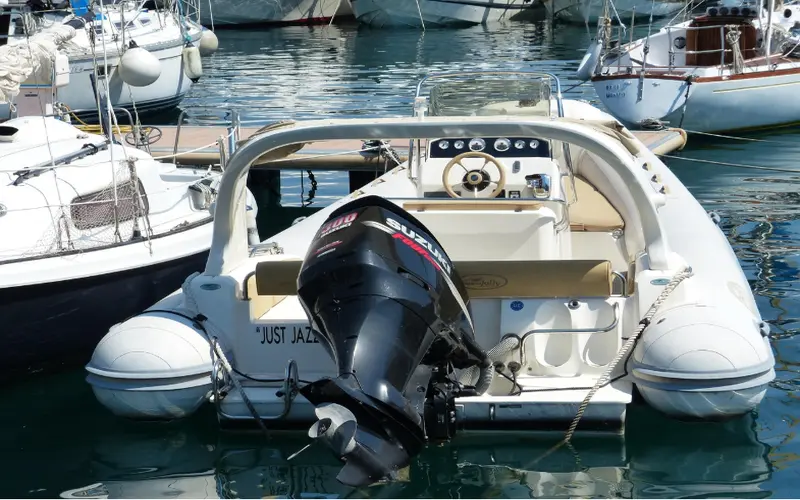
Typical Annual Premium: $120–$300
👉

2026 World Cat 230 DC
- Length23 ft
- Top speed36.41 kn
- TypeCatamaran yacht
The 2026 World Cat 230 DC is a nearly new dual console power catamaran located in Sarasota, FL, designed for buyers who want a stable, fuel-efficient, and highly versatile platform in a compact 23-foot class. Powered by twin Yamaha 115HP outboards with only 16 original hours, this vessel delivers a quiet, smooth, and confident ride that stands out in both coastal waters and nearshore conditions. The catamaran hull form significantly reduces roll at rest and improves comfort underway, making it especially appealing for families and anglers who prioritize safety and ride quality over traditional monohull designs.
Small recreational boats, fishing boats, and pontoon boats are among the vessel types with the lowest insurance costs. Due to their smaller hulls, lower speeds, and limited maintenance costs, the risk borne by insurers is relatively low, so premiums are typically kept within a few hundred dollars per year. For users on a tight budget or first-time boat buyers, these vessel types offer the lowest insurance barrier to entry.
Motor Yacht Insurance Costs
Annual premium typically: $800–$2,500
👉
Wally WALLYTENDER43
- Length43 ft
- Cabins1
- Top speed40 kn
- TypePower yacht
The WALLYTENDER 43 from Wally is a high-end performance dayboat that combines speed with refined design. Featuring a lightweight hull and deep-V structure, it is powered by twin Volvo Penta D6-440 engines, delivering a top speed of up to 40 knots. Its open-deck layout emphasizes social interaction and leisure, complemented by a large sunshade system and flexible cockpit arrangement for multi-scenario use. The lower deck offers basic overnight accommodation for short trips. Overall, it is designed for premium coastal leisure and high-speed cruising, ideal for users who value performance, aesthetics, and lifestyle quality.
Motor yachts are currently the most popular boat type in the U.S. market and the category I encounter most frequently with clients. Compared to small recreational boats, motor yachts typically feature larger engines, higher speeds, and more electronic equipment, resulting in significantly higher insurance costs. For 30- to 50-foot cruising motor yachts, premiums are often 5 to 10 times higher than those for smaller vessels.
Sailing Boat Insurance Costs
Annual premium typically: $300–$800
👉
2026 Beneteau Oceanis 30.1
- Length30 ft
- Cabins2
- Top speed8 kn
- TypeSailboat
The 2026 Beneteau Oceanis 30.1 is a small cruising sailboat designed for beginners and light cruising, renowned for its lightweight hull and efficient sails in the 30-foot class. Compared to traditional sailboats of the same size, it emphasizes ease of handling and space utilization, providing a near-larger boat living experience within a limited space.
Many people assume that since sailboats are expensive, their insurance premiums must be high as well. However, in reality, premiums for most sailboats fall between those of small recreational boats and power yachts. Because sailboats travel at lower speeds, the incidence of collisions is relatively low, and engines are used less frequently, insurance companies typically offer lower rates. For vessels of the same value, sailboat premiums are often lower than those for powerboats.
Luxury Yacht Insurance Costs
Typical annual premium: $1,500–$7,500+
👉
Sunseeker 95
- Length92.10 ft
- Cabins5
- Top speed26 kn
- TypeBusiness yacht
The Sunseeker 95 yacht is a large high - performance business yacht that incorporates Sunseeker's latest cutting - edge design and innovative manufacturing processes, demonstrating a new design direction for the brand's large yachts and is an exciting work. The 95 yacht adopts an elegant and stretched streamlined design, with the grace of a super yacht and many practical functions.
Luxury yachts are among the categories with the highest insurance costs. Annual insurance premiums for entry-level luxury yachts range from $1,500 to $7,500; for high-end luxury yachts valued at over $1 million, annual premiums typically range from $8,000 to $25,000 or more; as for superyachts, pricing is determined on a case-by-case basis. The high premiums for luxury yachts stem from the high cost of the vessel itself, as well as the fact that they are generally equipped with sophisticated electronic control systems, generator sets, roll stabilization systems, and high-powered main engines. Consequently, repair and claims settlement costs remain high in the event of an accident, resulting in overall insurance costs that are significantly higher than those for ordinary recreational boats.
Summary: In terms of premium levels, small recreational boats have the lowest insurance costs, typically less than $300 per year; sailboats have relatively lower accident risks and thus more affordable premiums; motor yachts, due to their higher speeds and more complex equipment, incur significantly higher insurance costs; and luxury yachts, because of their high purchase prices and high repair costs, usually have premiums far exceeding those of other boat types. For new boat owners on a limited budget, small recreational boats and sailboats are more cost-effective options, while motor yachts and luxury yachts require a higher annual insurance budget.
Preferred Insurance Plans for First-Time Boat Owners
For first-time boat buyers, I generally prioritize insurance plans that balance premium cost with coverage scope. Many beginners tend to focus solely on price when selecting insurance, but in actual maritime use, the comprehensiveness of coverage is often more critical than the premium amount. A well-structured policy can significantly reduce the risk of additional expenses in the event of an accident.Choosing an Insurance Plan Based on Usage Frequency
Different usage patterns call for different insurance structures; selecting the right plan can effectively control costs, as shown in the table below:| Usage Frequency | Recommended Insurance Plan |
| Occasional Use | Basic Liability Insurance |
| Weekend Use | Comprehensive Insurance |
| Long-term Voyage | Full Coverage Insurance |
Generally speaking, the higher the frequency of use and the longer the duration of exposure to risk, the greater the need to increase insurance coverage accordingly. Many clients adjust their insurance structure when they transition from short-distance recreational cruising to long-distance cruising in order to mitigate potential risks.
Balancing Premiums and Coverage
The key to choosing insurance lies not in finding the “lowest price,” but in ensuring “comprehensive risk coverage.” A well-structured insurance plan typically requires striking a balance between cost and coverage.Based on my experience, I recommend focusing on the following key areas:
- Do not purchase only the cheapest insurance available
- Increase liability coverage limits (to mitigate the risk of third-party claims)
- Add pollution liability coverage (mandatory in some regions or essential in high-risk areas)
- Include towing and salvage services (to address groundings or mechanical failures)
How to Reduce Marine Insurance Costs?
Marine insurance is a significant component of a shipowner’s long-term holding costs. Although premiums are influenced by factors such as vessel type, age, operating region, and claims history, many shipowners can effectively reduce insurance expenses with minimal changes to coverage through proper planning. The following methods are widely recognized by insurance companies as effective strategies for lowering costs.Enroll in Marine Safety Training Courses
Many insurers factor a shipowner’s navigational experience and safety awareness into their risk assessment systems. For new shipowners or less experienced skippers, enrolling in certified marine safety training courses not only enhances navigational skills but may also qualify them for certain premium discounts.For example, in the United States, some insurers recognize safety courses offered by the U.S. Coast Guard Auxiliary (USCG Auxiliary) or relevant maritime associations. Upon completing the training, shipowners can typically submit their certificates to the insurer to apply for a premium discount.
Choose a Secure Storage Facility or Marina
The vessel’s mooring environment directly influences the insurer’s risk assessment. Compared to long-term mooring in open waters, storing a vessel in a yacht marina with security measures, a secure boat house, or a professional dry dock can effectively reduce the risk of theft, collisions, and damage caused by severe weather.Insurance companies generally prefer mooring facilities that meet the following criteria:
- 24-hour surveillance systems
- Access control measures
- Storm-proof mooring facilities
- Professional maintenance and inspection services
Prudently Increase the Deductible
The deductible refers to the portion of the claim cost that the vessel owner must cover out of pocket. Generally, the higher the deductible, the lower the risk borne by the insurer, resulting in a corresponding decrease in annual premiums.Maintain a Clean Claims Record
The insurance industry places great emphasis on historical claims data. Frequent submission of small claims may lead insurers to view the shipowner as a higher-risk client, resulting in higher renewal premiums.For minor losses, some boat owners choose to cover repair costs themselves to maintain a clean claims record. In the long term, a lower claims frequency typically helps secure more favorable renewal rates.
Insurance companies generally prefer to offer lower rates to clients who meet the following criteria:
- No record of major incidents
- Long-term, continuous coverage
- Few claims
- Good sailing record
Bundle Multiple Policies When Possible
If a boat owner holds home, auto, marine, or other property insurance policies, they should inquire with their insurer about bundling discounts.Many insurance providers offer discounts to customers who purchase multiple insurance products at the same time, such as:
| Bundle Insurance Package | Available Discount |
|---|---|
| Home Insurance + Vessel Insurance | Premium Discount |
| Auto Insurance + Vessel Insurance | Premium Discount |
| Combined coverage for multiple vessels | Volume Discount |
In addition to reducing costs, consolidating multiple policies under a single management system can also streamline the renewal process and improve the efficiency of insurance management.
Conclusion
Boat insurance is not merely a legal or marina management requirement; it is also a significant component of a boat owner’s long-term ownership costs. For many first-time boat buyers, the purchase price is often the most obvious consideration, while insurance premiums, mooring fees, and maintenance costs ultimately determine the actual boating experience over the coming years. As this article demonstrates, there are significant differences in insurance costs across different boat types, price points, and usage scenarios; the annual premium for a small recreational boat can differ by a factor of ten or more compared to that of a luxury yacht.Based on my years of experience serving clients in the yacht buying and selling market, the best approach is not simply to seek out the lowest-priced insurance, but to select a coverage plan that aligns with your specific usage needs within your budget. For example, the insurance structure and risk coverage required by a family that occasionally goes out on weekends are completely different from those needed by an owner who engages in long-term coastal cruising.
If you are considering purchasing a boat, we recommend researching insurance costs and long-term ownership expenses during the boat selection phase, rather than waiting until after the transaction is complete to look for an insurance plan. This not only allows for more accurate budget planning but also helps you identify the boat type that truly meets your needs. 👉 Get an official quote from a licensed marine insurance provider.
Disclaimer
Last updated: June 2026
Data sources include public insurer guidance, recent market quote examples, and yacht ownership cost planning experience. This article is intended solely as a general planning reference and does not constitute professional advice regarding insurance, legal matters, finance, or underwriting. Before making a purchase decision, please obtain a formal quote from a qualified marine insurance provider. This article has not been sponsored by any shipyard, financial institution, insurer, or brand, and the author has not participated in any brokerage transactions involving the vessels mentioned herein. Yacht specifications are based on publicly available information as of 2026. Actual prices, ownership costs, and insurance premiums may vary due to regional differences, vessel conditions, policy terms, and market fluctuations. Before purchasing, be sure to engage an independent surveyor (unaffiliated with the seller) to conduct a sea trial and verify relevant certificates. Neither the author nor this platform assumes any liability for losses arising from decisions made based on the information in this article. Relevant regulations, fees, and insurance requirements are subject to change; please verify the latest information before making any decisions.
About the Author
Andrew Rogers has many years of experience in the yacht industry and regularly researches topics related to yacht ownership, operating expenses, and market trends. Drawing on industry observations and publicly available information, he shares practical insights on yacht ownership costs, maintenance considerations, and long-term budget planning. His content is intended to serve as a general yacht ownership cost planning reference, helping prospective buyers and owners better understand the financial factors involved in purchasing and owning a yacht.
FAQ
Q1: How much does boat insurance typically cost per year?
A: Standard boat insurance in the U.S. typically costs $300–$600 per year, while coverage for luxury yachts can exceed $5,000.
Q2: Does the age of the boat affect the insurance premium?
A: Yes. Generally, boats over 10 years old begin to have a significant impact on rates, and those over 15 years old may require a survey report.
Q3: Can I purchase boat insurance without any boating experience?
A: Yes, but premiums are usually higher. Completing a safe boating course often qualifies you for a discount.
Q4: Is boat insurance mandatory?
A: In the U.S., most states do not require mandatory insurance for private boats, but many marinas, boat yards, and financial institutions require liability or comprehensive coverage. Even if not legally required, purchasing insurance remains the best way to manage risk.
Q5: How do I balance premiums and coverage?
A: Don’t just look for the cheapest policy; focus on liability limits, pollution liability coverage, and towing and salvage services. Striking a reasonable balance between premiums and coverage can effectively reduce future unexpected expenses.
Q6: Do insurance costs vary significantly by boat type?
A: Very significantly. Premiums are lowest for small recreational boats, relatively affordable for sailboats, moderately high for powerboats, and fall into the high-risk, high-cost category for luxury yachts, where annual premiums can be dozens of times higher than those for small boats.