The price of an 80-foot yacht depends on more than length. Age, yacht type, condition, equipment, location and tax status can make similarly sized boats very different purchases. This guide compares dated asking-price examples and separates them from running costs and confirmed sale prices.
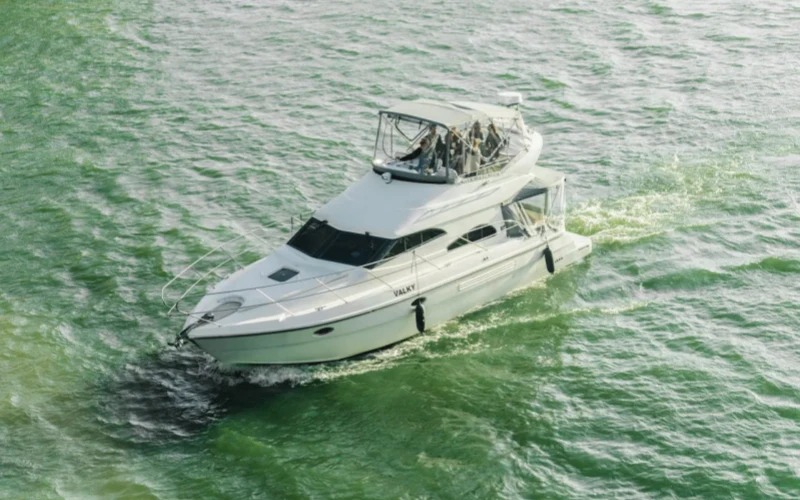
What Does "80-Foot Yacht" Mean Here?
For this guide, an 80-foot yacht refers to a vessel in the approximate 78–84-foot length overall (LOA) range. This range applies only to this sampling and does not constitute an official industry classification.
The examples focus on private recreational monohull motor yachts, including flybridge and cockpit designs. Commercial fishing boats, specialist workboats, sailing yachts and catamarans are not included in the same price comparison.
All prices are asking prices displayed on YachtTrading listing pages in USD, not confirmed transaction prices. Listing details and availability should be verified with the seller before purchase.
Current Asking-Price Examples
The following examples are based on six yacht listings displayed on YachtTrading. These yachts are all private recreational motor yachts, with a total length of approximately 78 to 84 feet.
Price and listing check: 4 November 2026.
| Yacht / Model Year | LOA | Listing Status | Asking Price (USD) | Tax Status | Location |
|---|---|---|---|---|---|
| Minhua 78 (2015) | 78.40 ft | Used listing | $363,000 | Not stated | China |
| Sunseeker 80 Flybridge (2011) | 80.05 ft | Used listing | $1,658,000 | Not stated | China |
| Lazzara 80 Open Fly (2004) | 80 ft | Used listing | $1,165,000 | Not stated | Palma, Spain |
| Heysea 82 Luxury Yacht (2014) | 81.97 ft | Used listing | $920,000 | Not stated | China |
| Horizon 82 Cockpit Motoryacht (2006) | 82 ft | Used listing | $1,595,000 | Not stated | California, USA |
| Pearl 82 (2026) | 83 ft | Listed in new-yacht category | $8,256,905 | Not stated | Confirm with seller |
Note: Prices are asking prices, not confirmed transaction prices. Prices and inventory information are subject to change. Tax status is not specified in these listings. Buyers should request written confirmation of VAT or sales-tax treatment before comparing the prices or making an offer.
Across the six YachtTrading listing pages checked on 4 November 2026, displayed asking prices ranged from $363,000 to $8,256,905. These figures represent individual listing prices, not a typical market range or a valuation of all 80-foot yachts. Prices and availability should be confirmed with the respective sellers.
New vs Used: Why Similar Sizes Have Different Prices
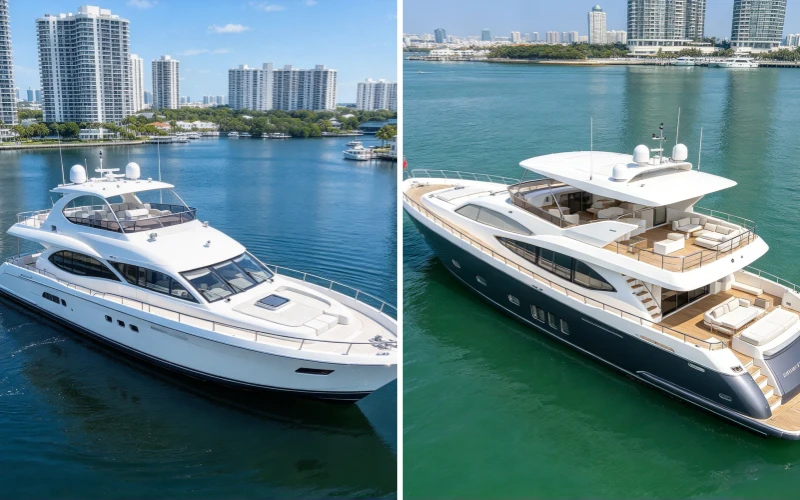
Two yachts of similar length can have very different asking prices. For example, the 2004 Lazzara 80 is listed at $1,165,000, compared with $1,658,000 for the 2011 Sunseeker 80. Despite their nearly identical LOAs, there is a price difference of almost $500,000. Factors such as build year, builder, condition, equipment and location can all influence how a yacht is priced.
Build Year and Age
A newer yacht may have more recent onboard systems, updated equipment and a more modern interior. Older yachts may have a lower asking price, but buyers should look closely at maintenance records, equipment condition and any refit work that may be needed.
Builder and Model
Builders differ in design, layout, construction methods, standard equipment and interior finish. Brand reputation can influence resale interest, but the specification and condition of the individual yacht are essential when comparing listings.
Condition and Refit History
A yacht with documented engine servicing, electrical upgrades and recent refits may be priced differently from one requiring substantial work. Buyers should check what was upgraded, when the work was completed and whether supporting records are available.
Engine Configuration and Equipment
Engine make, power, operating hours, generators, stabilizers, navigation systems and other onboard equipment all affect a yacht's specification. Two yachts of similar length may have significantly different equipment packages and operating histories.
Location and Tax Status
A yacht listed in China, Spain or the United States may involve different delivery arrangements, local taxes, import requirements and transaction costs. Buyers should check the applicable tax position and consider where they intend to register and operate the yacht.
New, Stock and Used Status
A recent build year does not automatically mean a yacht is unused or available as new stock. Buyers should establish whether the vessel is new and unused, previously used, completed inventory or still subject to a build agreement. Availability and expected delivery dates should also be confirmed with the seller.
The 2025 Riva Diva 82 listed in Monaco provides an example of why this distinction matters. The 24.91-meter yacht is advertised at €6,999,000, excluding VAT. However, the listing identifies the yacht as used, while its promotional description calls it brand-new. Buyers should therefore confirm the yacht's actual usage, ownership history and delivery status before treating it as a new or used vessel.
What the Asking Price Includes—and What It May Not
A yacht's asking price does not necessarily cover every item shown in its photographs or promotional materials. Equipment, optional upgrades and delivery arrangements should be confirmed in writing before an offer is made.
Before comparing two listings, check whether the quoted price includes:
- Installed engines, generators and onboard systems.
- Navigation and communication equipment.
- Tenders, water toys and spare parts, if advertised.
- Optional upgrades and recently installed equipment.
- Delivery, commissioning or handover arrangements, where applicable.
- Any applicable VAT, sales tax or import duties.
Tax treatment depends on the yacht's location, ownership and transaction structure. A listing that does not state its tax position should not be assumed to be VAT paid or tax free.
Ask the seller for a written equipment inventory and confirmation of what will be handed over with the yacht. Also establish whether the quoted price includes delivery or whether transportation and handover costs will be arranged separately.
Purchase Price vs Annual Ownership Costs

Buying an 80-foot yacht involves more than paying the asking price. Owners also need to budget for ongoing operating and maintenance expenses. Annual expenses depend on the yacht's systems, operating location, usage and ownership arrangements.
Typical costs include:
- Crew: Depending on the yacht's layout, operating requirements and cruising schedule, professional crew may be needed.
- Maintenance and Repairs: Engines, generators, stabilizers, air-conditioning, navigation systems and other equipment require regular servicing.
- Berthing: Marina fees depend on the yacht's location, length, season and the type of berth.
- Insurance: Premiums vary according to the yacht's value, cruising area, usage, claims history and other underwriting factors.
- Fuel: Consumption depends on engine type, speed, distance travelled and operating conditions.
- Winter Storage and Refit Work: Depending on where the yacht is kept, seasonal storage and planned maintenance may add to annual costs.
There is no single annual ownership figure that applies to every 80-foot yacht. A yacht used for occasional private cruising will have a different cost profile from one operated frequently with a full-time crew.
Before buying, ask for recent maintenance invoices, crew and operating information where available, and a realistic estimate of annual costs for the yacht's intended cruising area.
For a broader overview of ownership expenses across different yacht sizes, see our guide to How Much Does a Yacht Cost.
How to Compare Two 80-Foot Listings
Two yachts with similar lengths and asking prices may differ considerably in condition, equipment and ownership costs. Before deciding between them, compare the details below rather than relying on the listing price alone.
| Comparison Factor | What Buyers Should Check |
|---|---|
| Build Year | Age of the hull, machinery and onboard systems |
| Builder and Model | Design, construction specifications, reputation and market demand |
| Engine Hours | Reported operating hours, service history and mechanical condition |
| Maintenance Records | Regular servicing, repairs and major component replacements |
| Refit History | Work completed, dates, invoices and any outstanding requirements |
| Layout | Cabin arrangement, guest capacity, crew accommodation and usable space |
| Equipment | Stabilizers, generators, navigation systems, tenders and other installed options |
| Tax Status | VAT or sales-tax position and any applicable import duties |
| Location | Delivery costs, local survey arrangements and suitability for the intended cruising area |
| Ownership and Title | Ownership records, the seller's authority to sell and any outstanding claims or encumbrances |
| Availability and Delivery | Whether the yacht is still available, its current location, handover arrangements and expected delivery date |
A professional pre-purchase survey is an important part of the buying process. Before committing to a purchase, buyers should arrange an independent inspection of the yacht and its major systems. Examples include engine and mechanical inspections, sea trials, and inspections of electrical, navigation, and other shipboard systems.
The survey findings can help buyers identify potential repair costs and decide whether further inspections or price negotiations are necessary.
Available 80-Foot Yachts and Next Steps
The right 80-foot yacht is not necessarily the one with the lowest asking price. It is the one whose condition, configuration, ownership costs and intended use match your requirements.
If you are still comparing yacht sizes, our guides to 60-foot yacht prices and 90-foot yacht costs can help you explore smaller and larger options before making a decision.
Listing prices and availability can change. Before arranging a viewing, contact the seller to confirm that the yacht is still available, request the latest specifications and equipment inventory, and clarify its tax status and delivery arrangements.

About This Guide
This guide compares asking-price examples for 80-foot-class yachts and explains the key factors affecting purchase prices and ownership costs. Information is based on YachtTrading listings and publicly available yacht details checked on 4 November 2026.
Disclaimer
This article is for informational purposes only and does not constitute financial, legal or professional buying advice. Buyers should verify all details with sellers and arrange independent inspections before purchasing.
FAQ
Q1: Is it better to buy a new or used 80-foot yacht?
A: A new yacht may offer more choice over layout, finishes and equipment, as well as builder warranty coverage. A used yacht may provide more space or equipment for a lower purchase price, but its condition and maintenance history need careful assessment. The better choice depends on budget, intended use and willingness to manage maintenance or upgrades.
Q2: What costs should I consider beyond the asking price of an 80-foot yacht?
A: In addition to the purchase price, buyers should consider taxes, insurance, berth fees, fuel, crew, maintenance, surveys and any immediate repairs or upgrades. Delivery and registration costs may also apply, depending on the yacht's location and the buyer's plans.
Q3: What should I check before buying an 80-foot yacht?
A: Review the yacht's ownership and maintenance records, engine hours, service history, refit documentation, equipment inventory and tax status. Arrange an independent pre-purchase survey, with additional engine inspections and sea trials where appropriate.