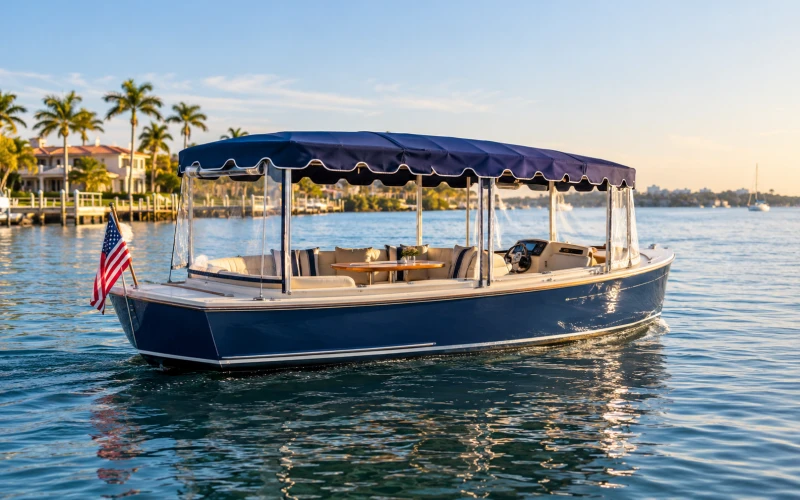
What Is a Duffy Boat?
A Duffy boat is a branded electric boat designed primarily for comfortable, low-speed recreational cruising. Unlike a generic term for electric boats, Duffy refers specifically to boats manufactured by Duffy Electric Boat Company.Depending on the model, a Duffy boat may feature covered or partially enclosed passenger areas, multiple seating zones and onboard amenities. Compared with many powerboats built for speed or watersports, Duffy boats place greater emphasis on passenger comfort and relaxed operation.
How Does a Duffy Boat Work?
A Duffy boat uses stored battery power to drive an electric motor, which propels the boat through the water. Its main systems support electric propulsion and onboard functionality.- Electric Propulsion: The electric motor drives the boat, while the helm controls allow the operator to adjust speed and direction.
- Battery System: The batteries store the energy used for propulsion and may also power onboard accessories, depending on the model.
- Charging System: An onboard charger replenishes the batteries when connected to a compatible power supply, following the manufacturer's instructions.
How Do You Operate and Charge a Duffy Boat?
Operating a Duffy boat generally involves three steps:- Before Departure: Check the boat's readiness, confirm the controls are functioning, and disconnect the charging cable.
- While Cruising: Use the helm controls to adjust speed and direction, following safe boating practices.
- After Use: Connect the boat to a compatible power supply and follow the manufacturer's charging instructions.
Duffy Boat Features, Speed and Range
Duffy boats combine electric propulsion with a passenger-focused layout. Speed, running time, charging requirements and onboard features vary by model, so buyers should compare the specifications of the boat they intend to purchase.Speed, Range and Key Specifications
Duffy boats are designed primarily for low-speed recreational cruising rather than watersports or high-speed travel. The table below compares two Duffy models using the manufacturer's published specifications.| Specification | Bay Island 22 | Sun Cruiser 23 |
|---|---|---|
| Length | 22 ft | 23 ft 6 in |
| Beam (Width) | 9 ft 3 in | 9 ft 3 in |
| Draft | 29 in | 29 in |
| Passenger Capacity | 12 people | 12 adults |
| Top Speed | 6 mph (about 5.2 knots) | 6 mph (about 5.2 knots) |
| Running Time | Approximately 10 hours at cruising speed; 4 hours at top speed | Approximately 10 hours at cruising speed; 4 hours at top speed |
The figures above are manufacturer-published specifications for the Bay Island 22 and Sun Cruiser 23. They apply to these specific models and should not be treated as universal figures for every Duffy boat.
Running time refers to how long a boat can operate on a charge, while cruising range refers to the distance it can travel. Actual performance depends on battery configuration and condition, speed, passenger load and water conditions. When planning a trip, allow sufficient battery capacity for the return journey rather than relying solely on advertised figures.
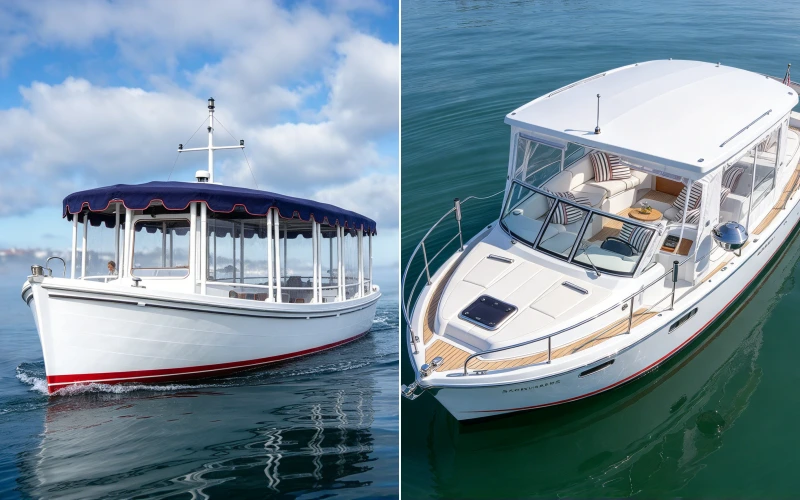
Battery Runtime and Charging Time
Duffy boat battery performance varies by model, battery configuration, battery condition and operating conditions.According to Duffy's official FAQ, smaller boats with a single battery pack can operate for approximately 3.5 hours at an average speed slightly above 5 mph, covering around 17.5 miles in calm conditions without current. The FAQ also gives an estimated 12-hour charging time for a single battery pack, with approximately seven hours needed to reach 75% charge.
These FAQ figures describe a single-pack example rather than a charging specification for the two models above. The current Bay Island 22 and Sun Cruiser 23 features sheets list lithium battery systems. Confirm the installed battery capacity, charger and power supply before estimating charging time.
Seating, Canopies and Onboard Comfort
Duffy boats typically emphasize passenger seating and practical onboard amenities. Depending on the model and options, features may include:- Seating and Tables: Forward and aft seating areas, with table arrangements that vary by model.
- Canopies and Enclosures: Shade canopies or additional enclosure panels, depending on the configuration.
- Storage: Under-seat compartments or other built-in storage spaces.
- Equipment and Options: The current Bay Island 22 features sheet includes a stereo and USB charging ports, while a refrigerator is listed as an option. The Sun Cruiser 23 options sheet also lists an ice maker.
Before purchasing, compare the actual layout and included equipment with the manufacturer's specifications. For a used boat, inspect the upholstery, canopy fabric, enclosure panels, storage compartments and installed electronics for wear or damage. Confirm the permitted passenger capacity separately from the number of available seats.
Handling and Maneuverability
A Duffy boat's handling is best assessed during low-speed cruising, turning, and docking. Steering response, helm visibility, and control in confined spaces are particularly important when operating around marinas and other vessels.Duffy's Power Rudder system directs propulsion thrust as the operator steers. On a used boat, confirm which drive system is fitted and assess its response during a sea trial.
If possible, arrange a supervised sea trial before buying. Pay attention to the following:
- Low-Speed Steering: Does the boat respond predictably to steering adjustments?
- Forward and Reverse: Do the controls engage and respond consistently?
- Docking Approach: Can you reduce speed and position the boat comfortably near a dock or slip?
- Helm Visibility: Can you clearly see nearby vessels, dock edges, and potential obstructions?
- Maneuverability: Does the boat handle comfortably within the spaces where you expect to use it?
What Are Duffy Boats Used For?
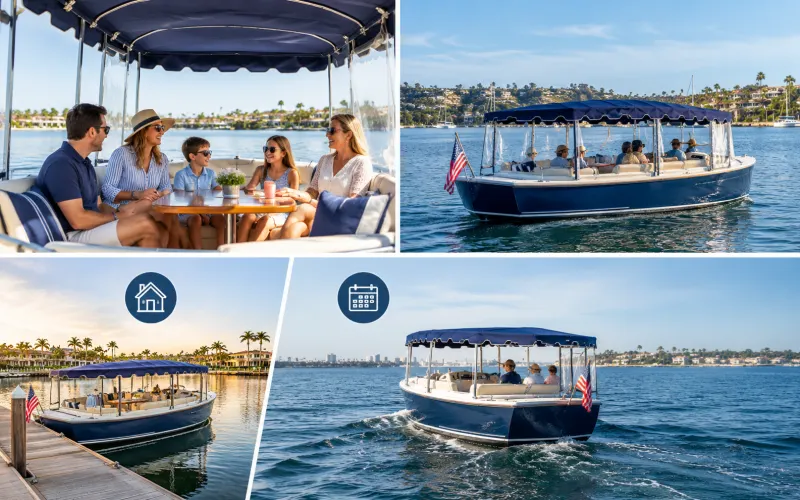
Duffy boats are commonly used for short recreational outings, cruising in suitable inland and coastal waters, and relaxed trips with family or friends. Their practical uses depend on the boat's seating layout, passenger capacity, range, and the waterways where the specific model can safely operate.
Family Outings and Social Cruising
Duffy boats can be a practical choice for family outings, casual sightseeing and small-group gatherings. The right layout depends on how many people typically join your trips and how much space you need for food, drinks and personal belongings.When choosing a Duffy boat for these activities, consider:
- Group Size: Choose a layout that comfortably accommodates your usual group.
- Seating and Storage: Check whether there is enough room for passengers and personal belongings.
- Weather Protection: Confirm whether a canopy or enclosure is included or available as an option.
Cruising in Harbors, Bays and Suitable Lakes
Duffy boats are generally associated with recreational cruising in protected or otherwise suitable waters, such as certain harbors, bays, and lakes. The actual operating area depends on the model's design, local conditions, and applicable boating rules.Before planning a route, consider the following:
- Water Conditions: Wind, waves, currents, and changing weather can affect comfort, handling, and operating safety.
- Route Length: Check the boat's usable range under realistic conditions and allow enough battery capacity for the return trip.
- Local Restrictions: Confirm navigation rules, speed limits, access restrictions, and any requirements that apply to the intended waterway.
- Vessel Limitations: Review the manufacturer's guidance on operating conditions and intended use.
Private Ownership and Rental Experiences
Buying a Duffy boat may be a better fit for people who plan to use it regularly and want greater control over their boating schedule. However, owners must budget for storage, charging, maintenance and repairs.Renting may be more practical for occasional outings or for people who want to try a Duffy boat before purchasing one. Rental operators generally handle maintenance and storage, subject to the rental agreement.
If you are unsure whether ownership is worthwhile, renting first can help you assess the boat's seating layout, handling and overall cruising experience.
Pros and Cons of Duffy Boats
Duffy boats' quiet electric propulsion system and passenger-centric layout are attractive to some buyers, but speed limitations, charging convenience and ownership costs should also be taken into account.Pros of Duffy Boats
Quiet OperationElectric propulsion generally produces less operating noise than a typical gasoline-powered recreational boat, making Duffy boats well suited to relaxed cruising and conversation.
Comfortable Passenger Layout
Many Duffy models feature passenger-oriented layouts designed for comfortable social outings.
No Gasoline Refueling for Main Propulsion
Battery-powered propulsion eliminates the need for gasoline refueling, although owners must plan for charging and battery maintenance.
Cons of Duffy Boats
Limited SpeedDuffy boats are not designed for buyers who prioritize high-speed cruising or watersports.
Range and Charging Limitations
Owners need to plan around the boat's usable range, charging access and recharge time.
Ongoing Ownership Costs
Storage, routine maintenance, electrical-system servicing and potential battery replacement can add to the purchase price.
Limited Suitability for Some Waterways
A Duffy boat may not suit every route or water condition. Check the specific model's design limitations and manufacturer guidance before operating in unfamiliar or exposed waters.
Duffy Boat vs. Pontoon Boat vs. Other Electric Boats
Duffy boats, pontoon boats, and other electric boats can all serve recreational purposes, but they differ in typical layout, propulsion options, and intended use. The best comparison depends on the specific models, not just the boat category.Duffy is a boat brand, pontoon describes a boat design, and electric describes propulsion. These categories can overlap; the comparison below highlights typical buying considerations rather than mutually exclusive boat types.
| Comparison | Duffy Boat | Pontoon Boat | Other Electric Boats |
|---|---|---|---|
| Performance | Typically low-speed cruising | Varies by engine and design | Varies by motor, hull, and model |
| Layout | Passenger-focused seating; configuration varies | Spacious deck; seating and layout vary | From compact utility layouts to performance designs |
| Power and Charging | Battery-powered electric propulsion | Gasoline, electric, or other configurations | Electric propulsion; battery and charging systems vary by model |
| Range | Depends on battery capacity and cruising conditions | Depends on propulsion, fuel or battery capacity, and conditions | Depends on battery, motor, hull, and speed |
| Suitable Waters | Check model limits and intended operating conditions | Depends on hull, power, and vessel specifications | Depends on hull design and manufacturer guidance |
| Best Suited for | Relaxed, low-speed recreational outings | Group outings, leisure, or other uses depending on configuration | Buyers seeking a specific combination of efficiency, speed, utility, or handling |
For a broader overview of recreational vessel categories, see this guide to different types of boats, which explains how boat designs, propulsion systems, and intended uses differ.
Which Option Best Fits Your Needs?
- Choose a Duffy boat if you mainly want low-speed recreational cruising and a passenger-oriented layout.
- Consider a pontoon boat if you want a spacious deck and more flexibility in layout or propulsion options.
- Compare other electric boats if you have specific requirements for speed, range, size, or handling.
What to Know Before Buying a Duffy Boat
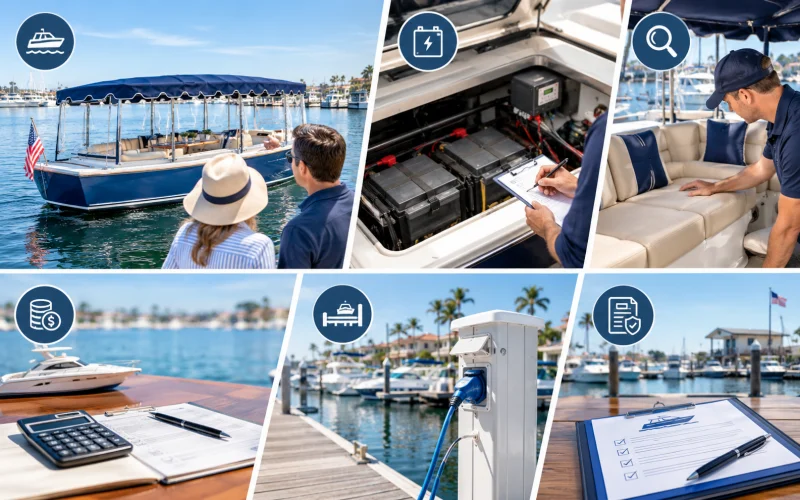
As checked on October 27, 2026, Duffy's model pages list MSRP figures of US$74,900 for the Bay Island 22 and US$84,500 for the Sun Cruiser 23. These are model-specific reference prices. Request a current quote confirming options, delivery, taxes and any other applicable charges.
Before buying a Duffy boat, verify that the specific model suits your intended use, assess the condition of its battery and electrical systems, inspect the vessel, and calculate the full cost of ownership. For a used boat, prioritize documented maintenance records and independent inspection over verbal assurances from the seller.
Choose the Right Model and Passenger Capacity
Start with how you plan to use the boat rather than choosing by appearance or seating layout alone. Confirm the following for the exact model and year:- Passenger Capacity and Maximum Load: Check the boat's capacity plate or manufacturer documentation, including any applicable weight limits. The number of seats does not establish the permitted passenger count.
- Model Specifications: Verify dimensions, draft, propulsion configuration, and any model-specific operating limitations.
- Typical Route: Estimate the distance, expected cruising time, and conditions on your usual route. Allow a reserve for the return trip rather than relying on the maximum advertised range.
- Required Equipment: Confirm which accessories and onboard systems are included in the sale and which would require additional purchases.
- Vessel Identity and Ownership Records: Match the hull identification number to the boat's documents, review the seller's ownership records and confirm the documentation needed to transfer the boat in the relevant jurisdiction.
Evaluate Battery Condition and Charging Equipment
Before buying a Duffy boat, verify the battery system's condition, service history and charging equipment. A full-charge display alone does not establish the battery's remaining usable capacity.Ask the seller for:
- Battery Details: Make, model, chemistry where applicable, installation date and available replacement records.
- Battery Condition Assessment: A documented evaluation by a qualified marine or electrical technician, including usable capacity where appropriate.
- Charging Equipment Inspection: Confirmation that the charger, cables and connectors are compatible and functioning correctly.
- Charging Access: Confirmation that your intended marina or storage location permits charging and provides a compatible power supply.
- Repair and Replacement Estimates: Current quotes for battery or charger replacement if testing identifies problems.
Inspect the Hull, Electrical Systems and Equipment
Arrange a professional condition inspection before finalizing the purchase, particularly for a used Duffy boat. Focus on the hull, electric propulsion system, electrical components, and onboard equipment that could require expensive repairs.| Inspection Area | What to Check |
|---|---|
| Hull and Exterior | Cracks, impact damage, previous repairs, signs of water intrusion, and deterioration around fittings |
| Electric Propulsion | Motor condition, unusual noise, warning indicators, and available service records |
| Electrical System | Wiring, connectors, switches, displays, corrosion, and signs of overheating or water damage |
| Canopy and Onboard Equipment | Condition and operation of included covers, seating, tables, storage, and electronics |
| Safety Equipment | Required equipment for the intended jurisdiction, its condition, and applicable expiry or service dates |
Request available maintenance invoices, repair records, and details of known defects. Confirm which equipment is included in the sale and ask the seller to disclose known issues in writing.
A supervised sea trial can help identify operational problems, but it does not replace a professional inspection. If significant defects are found, obtain repair estimates before negotiating the purchase price.
Estimate Ownership and Maintenance Costs
The total cost of owning a Duffy boat extends beyond its purchase price. Before buying, budget for the following expenses:- Initial Costs: Purchase price, applicable taxes and fees, financing, transport and any immediate repairs.
- Recurring Costs: Marina berth or storage, electricity, routine maintenance, and applicable insurance or registration expenses.
- Major Repairs: Potential battery replacement, propulsion-system repairs, charger faults and other significant electrical work.
For a broader budgeting framework, see our guide to boat ownership costs, then adapt the expense categories to an electric day boat.
Confirm Storage, Marina Access and Local Requirements
Before completing the purchase, confirm that you have a practical and permitted place to keep the boat and operate it as intended.- Berth Dimensions: Check available berth length and width, draft restrictions, access clearances, and any marina-specific vessel limits.
- Power Access: Confirm whether the berth or storage facility offers a compatible power supply and explicitly permits the charging arrangement you need.
- Storage and Transport: If the boat will be stored ashore or moved by trailer, verify storage dimensions, access, transport requirements, and any relevant weight or towing constraints.
- Registration and Safety Rules: Check the requirements that apply to the boat's location, registration status, and intended use. Requirements can differ by jurisdiction and vessel type.
- Marina Terms: Review berth availability, fees, insurance requirements, electrical-use policies, and any restrictions on maintenance or storage.
Planning to Buy a Boat?
If you're considering buying a boat, compare its features, running costs and intended use with other types of recreational boats before making a decision. Exploring different models and listings can help you understand which option best suits your needs and budget.

About This Guide
This guide draws on Duffy's official model pages, features sheets and FAQ, checked October 27, 2026. Verify specifications and equipment for the boat's model year and installed configuration.
Disclaimer
This guide provides general information. Before purchasing or operating a boat, obtain appropriate professional advice and confirm the requirements for the intended waterway.
FAQ
Q1: Are Duffy Boats Suitable for First-Time Boat Owners?
A: Yes, a Duffy boat may suit a first-time owner seeking low-speed recreational cruising, provided they understand the boat's operating limits, safety requirements and charging needs.
Q2: How Far Can a Duffy Boat Travel on One Charge?
A: Range varies by model, battery condition, speed, passenger load and water conditions. Check the manufacturer's specifications for the specific boat and allow sufficient battery capacity for the return trip.
Q3: What Should I Check When Buying a Used Duffy Boat?
A: Check the battery system, hull, electric propulsion, charging equipment and maintenance records. A professional inspection and supervised sea trial can help identify potential problems.
Q4: Are Duffy Boats Suitable for Offshore Use?
A: Do not assume a Duffy boat is suitable for offshore travel. Check the specific model's intended operating conditions and manufacturer guidance before considering exposed waters.
Q5: Are Duffy Boats Expensive to Maintain?
A: Costs depend on the boat's age, condition, storage and repair needs. Obtain local maintenance quotes and factor in potential battery replacement and electrical repairs before buying.