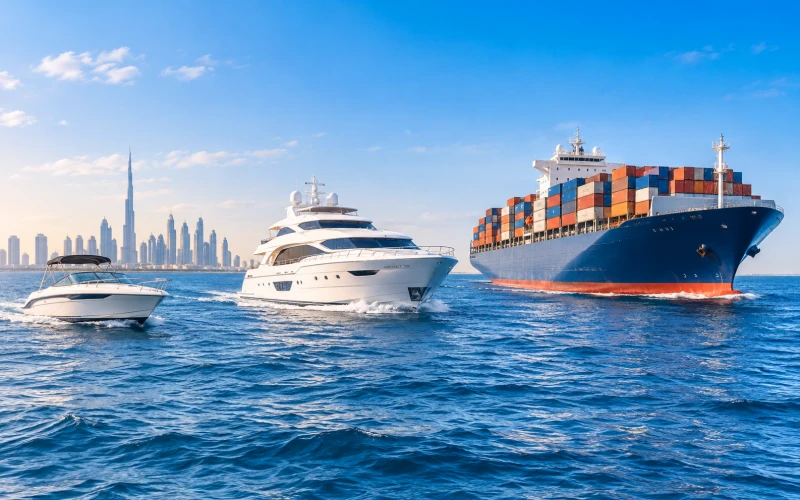
Boat vs Yacht vs Ship at a Glance
| Comparison | Boat | Yacht | Ship |
|---|---|---|---|
| Definition | General term for watercraft | Vessel primarily intended for recreation | Usually a larger vessel for commercial or specialist operations |
| Typical Size | Ranges from small craft to larger working boats | From small recreational yachts to superyachts | Typically larger vessels, with considerable variation in dimensions |
| Main Purpose | Recreation, fishing, transport and work | Private cruising, sailing and chartering | Cargo transport, passenger services and professional operations |
| Design Focus | Practicality and intended function | Comfort, accommodation and cruising performance | Capacity, efficiency and operational requirements |
| Operation | Owner-operated or professionally operated | Owner-operated or managed by a professional crew | Generally operated by qualified professional crews, depending on vessel and operation |
| Examples | Fishing boat, RIB, dinghy, day cruiser | Motor yacht, sailing yacht, explorer yacht | Container ship, tanker, cruise ship, naval vessel |
What Is a Boat, a Yacht and a Ship?
Although the three terms all refer to watercraft, they describe different aspects of a vessel.What Is a Boat?
A boat is a general term for a watercraft used on rivers, lakes, coastal waters or open seas. It covers a wide range of vessels, from small recreational craft to larger fishing and working boats.Common examples include fishing boats, rigid inflatable boats (RIBs), dinghies, day cruisers and small sailing boats. Their construction and equipment depend on their intended activities.
There is no universal length limit that defines a boat. Technical standards use specific measurement criteria for particular categories of craft. For example, ISO 8666:2020 establishes standardised dimensions and related data for small craft with a hull length of up to 24 metres. However, this is a technical measurement standard, not a universal legal definition of a boat.
What Is a Yacht?
A yacht is a vessel primarily designed for recreational activities, such as private cruising, sailing and leisure travel.Common yacht types and labels include:
- Motor Yachts: Recreational vessels powered primarily by engines.
- Sailing Yachts: Vessels that use sails as their primary means of propulsion, sometimes supported by an auxiliary engine.
- Superyachts: Large luxury recreational yachts, generally featuring extensive accommodation and onboard facilities.
What Is a Ship?
A ship generally refers to a vessel designed for large-scale commercial, passenger, military or specialist maritime operations.Common examples include container ships, tankers, bulk carriers, cruise ships, offshore support vessels and naval ships. These vessels are built to fulfil specific operational requirements, such as transporting cargo, carrying passengers or supporting maritime activities.
In everyday language, the term ship is most commonly associated with larger commercial or specialist vessels. However, its legal definition may also include other types of watercraft, including yachts.
Key Differences Between Boats, Yachts and Ships
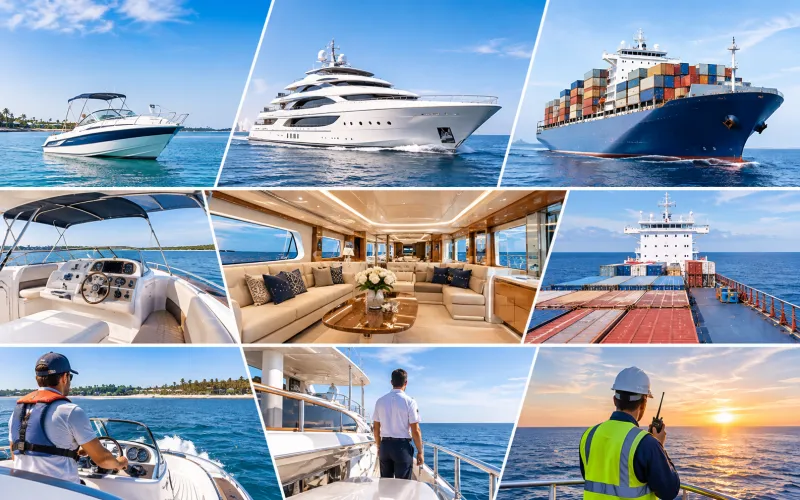
Although boats, yachts and ships can sometimes overlap in terminology, they differ in their typical size, design, operation and intended use.
Size and Gross Tonnage
Size is one of the most visible differences between boats, yachts and ships, although length alone cannot determine how a vessel is classified.Boats range from small dinghies to substantial fishing and working vessels. Yachts also vary considerably in size, from compact recreational craft to superyachts exceeding 100 metres. Ships are typically larger, with dimensions suited to their cargo, passenger or specialist operational requirements.
Gross tonnage (GT) is a dimensionless index calculated from the moulded volume of a ship's enclosed spaces. It is neither a measure of weight nor a direct volume reading in cubic metres.
Two vessels of similar length can have significantly different gross tonnages because of differences in their internal volume and design. Certain maritime regulations use GT to determine applicable safety, certification and operational requirements.
Design and Onboard Facilities
The design of a vessel reflects its intended function and the needs of the people using it.Recreational boats generally prioritise practicality and ease of use. Their layouts may include open seating areas, fishing equipment, storage or basic accommodation, depending on the type of boat.
Yachts place greater emphasis on comfort and recreational facilities. Depending on their size and design, these may include:
- Cabins and sleeping accommodation.
- Salons and dining areas.
- Galleys and bathrooms.
- Sun decks and swimming platforms.
- Navigation and communication systems.
The differences in design are therefore not simply about luxury. They reflect the different requirements of recreational and professional maritime activities.
Crew and Operation
The crew requirements of a vessel depend on its size, intended use, operating area and applicable regulations.Many smaller recreational boats can be operated by their owners, provided they meet local licensing and safety requirements. Larger yachts and commercial ships generally require more structured crew arrangements, with responsibilities divided among qualified masters, officers and other personnel. The specific requirements depend on the vessel's size, operation and applicable maritime regulations.
Typical Uses and Operating Environments
The operating range of a vessel is not determined by whether it is called a boat, yacht or ship. Smaller recreational boats are commonly used on lakes, rivers and coastal waters, while larger yachts may be equipped for extended offshore and ocean voyages. Commercial ships also operate across different distances, from short coastal routes to international shipping lanes.A vessel's actual operating range depends on factors such as hull design, propulsion, fuel capacity, navigation equipment and safety systems, rather than its everyday classification alone.
Real-World Examples: A Superyacht vs a Commercial Ship
The Azzam and Emma Maersk provide two useful examples of how yachts and commercial ships differ in their intended purposes and operations.| Feature | Azzam | Emma Maersk |
|---|---|---|
| Vessel Type | Motor superyacht | Container ship |
| Length Overall (LOA) | 180.65 m | 397.71 m |
| Delivery Year | 2013 | 2006 |
| Primary Purpose | Private recreational cruising | Commercial cargo transport |
| Operational Role | Luxury private yachting | International container shipping |
How Do Boats, Yachts and Ships Overlap?
Although boats, yachts and ships are commonly used to describe different types of watercraft, their meanings can overlap in everyday language and under certain maritime laws.What Is the Difference Between a Boat and a Yacht?
A yacht is generally considered a type of recreational boat, but not every boat is a yacht. The distinction mainly relates to intended use: boats serve a broad range of recreational, commercial and working activities, while yachts are primarily designed for leisure cruising and sailing.For a more detailed comparison, see our guide to choosing between a boat and a yacht.
Can a Yacht Also Be Considered a Ship?
Yes. Although yachts and ships are generally used to describe different types of vessels in everyday language, a yacht may also fall within the legal definition of a ship.Under section 313 of the UK Merchant Shipping Act 1995 , "ship" includes vessels used in navigation in the context of that Act. Separately, the COLREGs apply to vessels in the waters covered by Rule 1, including recreational yachts. Their application does not establish a universal distinction between a yacht and a ship.
How Are Private and Commercial Yachts Regulated?
A yacht's regulatory requirements depend on how it is used, as well as its size, flag state and operating area. Private recreational yachts and commercially operated yachts may therefore be subject to different certification, safety and crew requirements.Private Yachts
Private yachts are generally used by their owners, families and invited guests for personal recreation rather than paid charter services.They must still comply with applicable registration, navigation, safety and environmental requirements. However, certain international maritime conventions provide exemptions for pleasure yachts not engaged in trade.
For example, Article 5(1)(d) of the International Convention on Load Lines excludes pleasure yachts not engaged in trade from the Convention's application. This exemption does not mean private yachts are exempt from all maritime regulations. Requirements still depend on the flag state, vessel characteristics and operating area.
Commercial Yachts
Commercial yachts are operated for business purposes, including paid charter services. Compared with privately operated yachts, they may face additional requirements relating to passenger capacity, crew qualifications, vessel certification and safety management.Where the REG Yacht Code applies, Part A sets standards for qualifying motor and sailing yachts in commercial use for sport or pleasure. Its main length criterion is a load line length of at least 24 m, and its application provisions include limits on cargo and passenger carriage. Part A addresses yachts carrying no cargo and no more than 12 passengers.
As a result, two yachts of similar size may be subject to different regulatory requirements depending on whether they are operated privately or commercially.
Which Term Should You Use?
In everyday conversation, boat, yacht and ship are generally used according to a vessel's intended purpose and common description. Boat is the broadest term, yacht usually refers to recreational vessels, and ship commonly describes larger commercial, passenger or specialist vessels.
For formal documentation, however, the appropriate vessel classification and measurement criteria should follow the requirements of the relevant authority, registry or insurance provider. Depending on the document and its purpose, relevant information may include the vessel's dimensions, gross tonnage, passenger capacity, flag state and intended operation.
Explore Yachts for Sale
Whether you are looking for a new yacht for private cruising or a pre-owned vessel that suits your budget and boating needs, explore available listings on YachtTrading.

About This Guide
This guide explains the differences between boats, yachts and ships using internationally recognised maritime standards, relevant maritime conventions and official government guidance. It focuses on common terminology, vessel characteristics and the regulatory factors that influence how different vessels are classified and operated.
Last Reviewed: November 10, 2026
Disclaimer
This article is for general informational purposes only and does not constitute legal, maritime safety or regulatory advice. Vessel classification and compliance requirements vary according to flag state, vessel type, intended use, dimensions and operating conditions. Consult the relevant maritime authority or a qualified maritime professional for advice concerning a specific vessel.
FAQ
Q1: What Is the Main Difference Between a Boat, Yacht and Ship?
A: A boat is a general term for watercraft used for different purposes. A yacht is primarily designed for recreational use, while a ship is generally a larger vessel used for commercial, passenger, military or specialist operations. However, these terms can overlap depending on everyday usage and legal definitions.
Q2: Is a Yacht a Boat or a Ship?
A: A yacht can be both. In everyday language, a yacht is a type of recreational boat. Under certain maritime laws and conventions, it may also fall within the definition of a ship. The applicable classification depends on the legal context and jurisdiction.
Q3: What Is the Difference Between a Ship and a Boat?
A: A boat is a broad term covering different types of watercraft, while a ship generally refers to a larger vessel used for commercial, passenger or specialist operations. However, there is no universal size threshold that legally separates boats from ships.
Q4: Can a Yacht Be Considered a Commercial Vessel?
A: Yes. A yacht used for paid charter services or other business activities may be classified and regulated as a commercial vessel. Compared with private yachts, commercial yachts may face additional requirements for passenger safety, certification and crew qualifications, depending on the flag state and operating area.
Q5: Is There a Legal Difference Between a Boat, Yacht and Ship?
A: There is no single international legal definition that universally separates boats, yachts and ships. Maritime regulations use different classifications depending on vessel size, intended use, passenger capacity, flag state and operating conditions. A yacht may therefore fall within the legal definition of a ship under certain national laws or international conventions.
Q6: Is a Boat Smaller Than a Ship?
A: Generally, ships are larger than boats, but there is no universal size threshold separating the two. Some large working boats can be substantial in size, while maritime regulations use different criteria, including length, gross tonnage and vessel type, to determine specific requirements.