



This guide compares IPS vs shaft drive yachts to help buyers understand the pros, cons, and key differences before purchasing their next yacht.
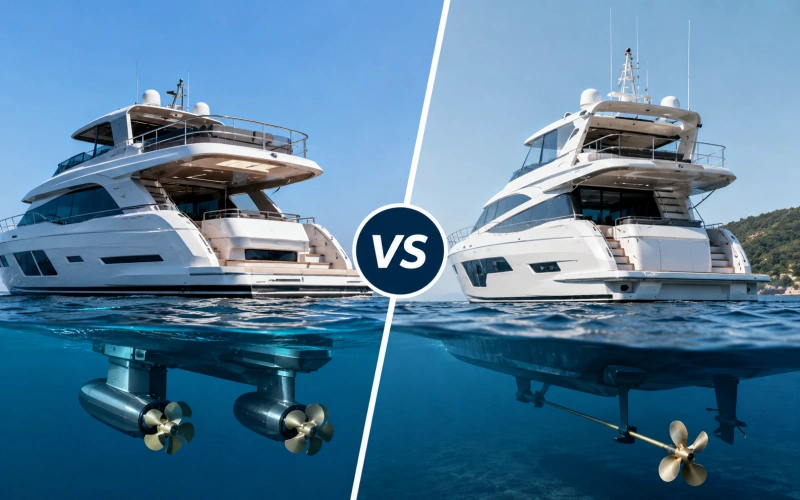
IPS Pod Drive vs Shaft Drive Yacht: Key Differences for Buyers
IPS (also known as pod drive propulsion) and traditional shaft drive systems use fundamentally different propulsion designs. For yacht buyers, the choice between an IPS pod drive and shaft drive yacht affects maneuverability, fuel efficiency, maintenance requirements, and the overall ownership experience.| Factor | IPS | Shaft Drive |
|---|---|---|
| Typical Fit | Owner-operated and coastal cruising yachts | Larger, offshore and long-range cruising yachts |
| Docking | Easier with joystick control | Requires more traditional handling skills |
| Reliability | Good with proper maintenance | Proven mechanical system with long service history |
| Maintenance | Requires specialized technicians | Easier worldwide support and servicing |
| Resale | Popular on modern yachts | Strong traditional appeal among experienced buyers |
| Long-Range Cruising | Less commonly selected | More common choice for extended cruising |
These are typical market applications rather than strict rules; the best propulsion system depends on the yacht's overall design and intended use.
IPS vs Shaft Drive Yacht: Docking and Handling Performance
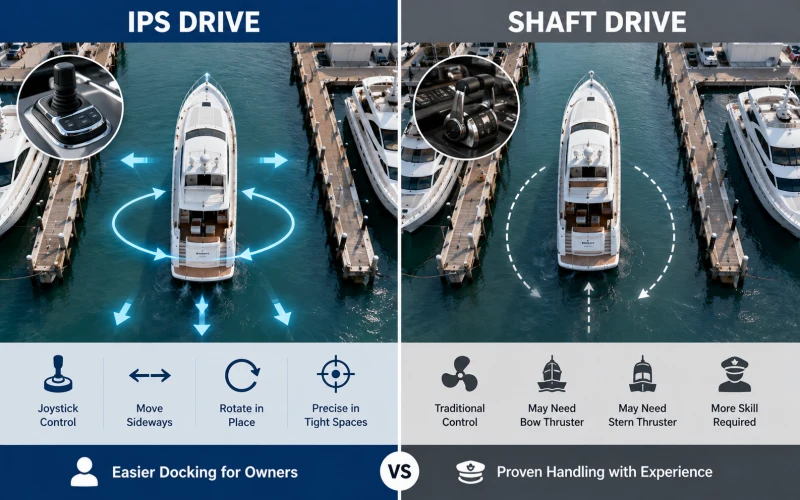
For many private yacht owners, the biggest difference between IPS and shaft drive appears during docking.
IPS Drive
With joystick control, IPS-equipped yachts can:- Move sideways
- Rotate in place
- Make precise adjustments in tight spaces
- Owners who operate their own yacht
- Boats without full-time crew
- Marinas with limited maneuvering space
- Frequent docking situations
Shaft Drive
Shaft drive can also provide excellent maneuverability, especially in the hands of an experienced captain.Many professional operators prefer shaft drive because of:
- Predictable handling characteristics
- Direct mechanical feedback
- Long-term operating experience
- Bow thrusters
- Stern thrusters
- Captain experience
IPS vs Shaft Drive: Fuel Efficiency and Performance
On yachts specifically designed around IPS propulsion, the system can offer efficiency advantages compared with some conventional shaft-drive installations.Potential benefits include:
- Improved propulsion efficiency
- Reduced drag compared with some conventional layouts
- Better acceleration characteristics
- Lower fuel consumption in certain operating conditions
Important factors include:
- Hull design
- Yacht weight
- Engine selection
- Cruising speed
- Sea conditions

Princess F45
- Build Year2022
- Length47.10 ft
- Cabins2
- Top speed29 kn
- TypeFlybridge yacht
The Princess F45, launched by Princess Yachts, is a classic entry-level flybridge luxury yacht measuring approximately 45 feet in length, offering a perfect balance of performance, space and comfort.This model continues Princess’s tradition of British craftsmanship and sporting heritage, combining an efficient hull design with powerful propulsion to deliver a smooth and enjoyable cruising experience.
In contrast, larger motor yachts, explorer yachts, and long-range vessels typically continue to use conventional shaft drive systems because of their mechanical simplicity and offshore capability.
Therefore, buyers should evaluate the complete yacht design rather than assuming one propulsion system is always more economical.
IPS vs Shaft Drive: Maintenance and Reliability
For yacht buyers, maintenance and reliability are closely connected because the propulsion system directly affects long-term ownership experience, service availability, and operating confidence.Neither IPS nor shaft drive is automatically more reliable or less expensive to maintain. Reliability and serviceability should be considered separately. A shaft drive may be easier to service in more locations, while the actual reliability of either system depends heavily on installation quality, maintenance history, and operating conditions. The better choice depends on yacht size, cruising environment, maintenance quality, and whether the yacht is used for coastal cruising or long-range voyages.
IPS Maintenance and Reliability Considerations
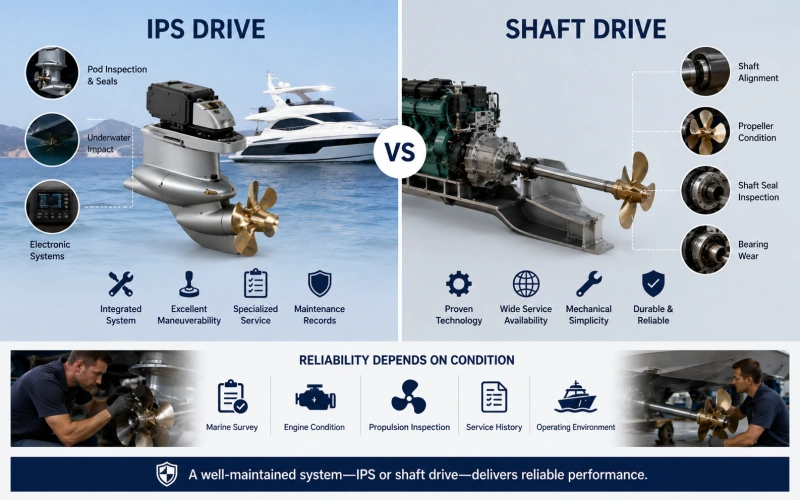
IPS systems combine propulsion, steering, and electronic control into an integrated pod unit. This design provides excellent maneuverability and joystick control, but it also means the system requires specific knowledge and equipment for servicing.Important considerations for buyers include:
- Complete IPS service records
- Pod inspection and seal condition
- Previous underwater impact history
- Availability of qualified IPS technicians in cruising areas
For used yacht buyers, a well-maintained IPS yacht with documented service history can be a strong choice.
Shaft Drive Maintenance and Reliability Considerations
Shaft drive remains one of the most established propulsion systems in the marine industry. Its mechanical design has been proven over decades on motor yachts, commercial vessels, and long-range cruising boats.Key maintenance checks include:
- Shaft alignment records
- Propeller condition
- Shaft seal inspection
- Cutlass bearing wear
- Signs of vibration or mechanical damage
Potential issues, such as shaft misalignment or propeller damage, are usually mechanical problems that can be identified and repaired through regular inspections.
Underwater impacts can also damage conventional shaft-drive components, including propellers, shafts, struts, bearings, and shaft seals, so underwater damage history should be checked on both propulsion types.
For owners planning offshore passages or extended cruising, the straightforward design of shaft drive remains a major advantage.
Which System Is More Reliable?
The reliability difference between IPS and shaft drive is often less important than the condition of the specific yacht.A properly maintained IPS yacht can provide years of dependable operation, while a neglected shaft-drive yacht can develop significant problems.
Before purchasing a used yacht, buyers should prioritize:
- Professional marine survey results
- Maintenance documentation
- Engine condition
- Propulsion system inspection
- Previous operating environment
For IPS yachts, buyers should pay particular attention to pod service history, underwater impact records, and electronic control systems. For shaft-drive yachts, shaft alignment, vibration history, and drivetrain condition should be carefully inspected.
IPS vs Shaft Drive Yacht: Ownership Cost Considerations
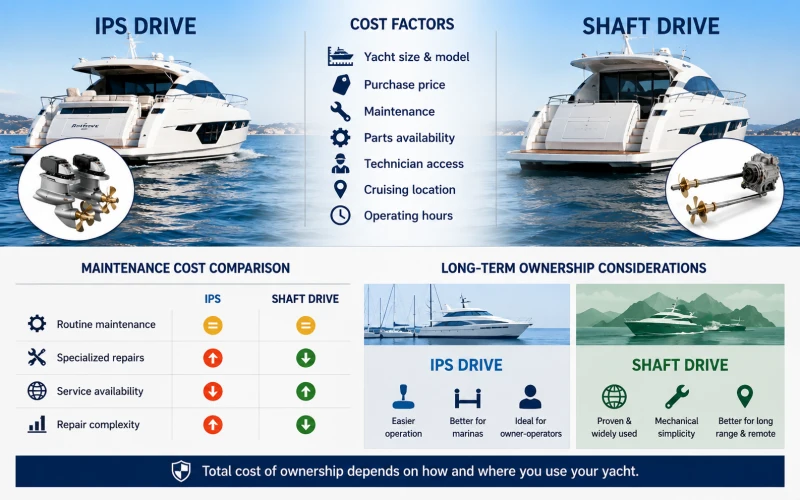
Cost is an important factor when comparing IPS and shaft drive yachts, but the difference is not simply that one system is always cheaper.The total cost of ownership depends on:
- Yacht size and model
- Initial purchase price
- Maintenance requirements
- Parts availability
- Technician access
- Cruising location
- Operating hours
Initial Purchase Cost
IPS is commonly found on modern production yachts, especially in the 40–70ft cruising yacht market. These yachts often appeal to buyers who value easier operation and advanced handling technology.Shaft drive is used across a wider range of yachts, from smaller motor yachts to large displacement and explorer vessels. The propulsion system itself does not determine yacht price, as factors such as brand, size, construction quality, and equipment package usually have a much greater impact.
When comparing similar yacht models, buyers should evaluate the complete specification rather than choosing based only on propulsion type.
IPS vs Shaft Drive Maintenance Cost Comparison
Maintenance costs vary by yacht model, usage, and service location. Neither IPS nor shaft drive is always cheaper, but the cost structure is different.| Cost Factor | IPS | Shaft Drive |
|---|---|---|
| Routine Maintenance | Similar | Similar |
| Specialized Repairs | Usually higher | Usually lower |
| Service Availability | More limited | More widely available |
| Repair Complexity | Higher | Lower |
IPS may require specialized technicians and diagnostic equipment, which can increase repair costs for certain issues. Shaft drive systems are generally easier to service worldwide, but major mechanical repairs can still be expensive.
Long-Term Ownership Considerations
The best propulsion system from a cost perspective depends largely on how the yacht will be used.For owners who:
- Operate their own yacht
- Cruise frequently in marinas
- Value easier docking
For owners who:
- Plan long-distance cruising
- Operate in remote areas
- Prioritize mechanical simplicity
Shaft drive may provide greater confidence because of its proven design and global familiarity.
Long-term yacht ownership costs are influenced by service availability, maintenance planning, operating hours, and the cruising environment. Buyers should evaluate the total ownership profile of the yacht rather than focusing only on the propulsion system.
Should You Buy an IPS or Shaft Drive Yacht?
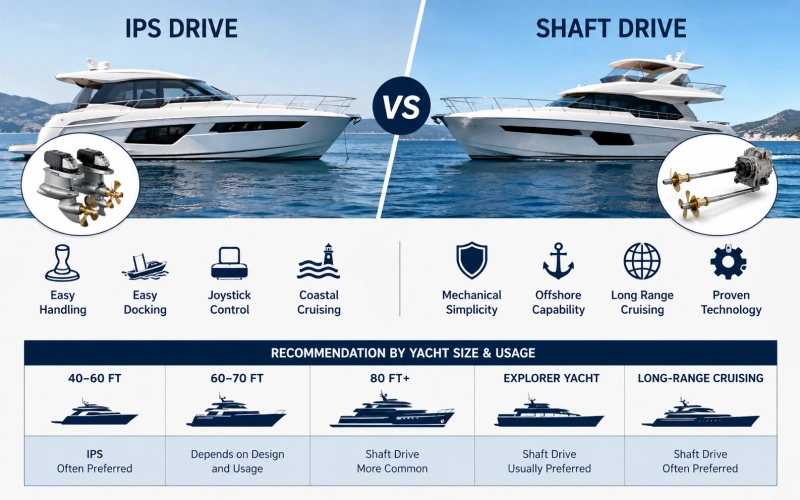
When deciding whether to buy an IPS or shaft drive yacht, there is no universal winner. IPS is often the better choice for owners who prioritize easy docking, joystick control, and coastal cruising, while shaft drive is usually preferred for larger yachts, offshore passages, and owners who value mechanical simplicity.
Choose IPS If You:
- Operate your own yacht
- Cruise mainly coastal waters
- Dock frequently in marinas
- Prefer joystick control
- Plan offshore cruising
- Want mechanical simplicity
- Cruise remote areas
- Prefer traditional systems
Typical IPS vs Shaft Drive Applications by Yacht Size
| Yacht Type | Typical / Common Choice |
|---|---|
| 40–60ft Cruising Yacht | IPS increasingly common |
| 60–70ft Flybridge Yacht | Depends on design and intended usage |
| 80ft+ Motor Yacht | Shaft drive more common |
| Explorer Yacht | Shaft drive is usually preferred |
| Long-Range Cruising Yacht | Shaft drive is often preferred |
IPS vs Shaft Drive: Resale Value Considerations
IPS has become increasingly accepted in the modern luxury yacht market.It is particularly popular among:
- New-generation yacht owners
- Owners who prefer self-operation
- Buyers of modern cruising yachts
Used yacht prices are mainly influenced by:
- Yacht brands and reputation
- Yacht condition
- Engine hours
- Maintenance history
- Market demand
- Larger yachts
- Offshore cruising capability
- Traditional engineering preferences
Final Thoughts: Choosing the Right Yacht Propulsion System
There is no universally better propulsion system between IPS and shaft drive. The right choice depends on the yacht design, intended use, maintenance history, and ownership plans.For yacht buyers, propulsion type should be evaluated together with the vessel’s overall condition, engine performance, service records, and professional survey results.
A well-maintained yacht with the right propulsion system for its intended use will usually provide a better ownership experience than choosing one technology over another based only on specifications.
Planning to Buy a Yacht?
Browse current yachts for sale and compare models with different propulsion systems before making your decision.
👉 Used Yachts for Sale
About This Guide
This guide helps yacht buyers compare IPS pod drive and shaft drive systems based on key ownership factors, including maneuverability, maintenance, reliability, efficiency, and suitability for different yacht types.
Disclaimer
This guide provides general information for yacht buyers and should not be considered professional marine advice. IPS and shaft drive performance, maintenance, and costs vary by yacht model, usage, and maintenance history. Buyers should always complete a professional survey and inspect the propulsion system before purchase.
FAQ
Q1: Is IPS better than shaft drive on a yacht?
A: Neither system is always better. IPS is often preferred for owner-operated cruising yachts because of easier docking and joystick control, while shaft drive is favored for larger yachts and long-range cruising due to its proven reliability and service availability.
Q2: Are IPS drives reliable?
A: Yes, modern IPS systems are reliable when properly maintained. Buyers should check pod condition, service history, and underwater impact records, especially when purchasing a used yacht.
Q3: Are IPS yachts more expensive to maintain?
A: IPS maintenance is not always more expensive, but pod inspections and specialized repairs can cost more because of the system’s complexity and need for trained technicians.
Q4: Which is better for a used yacht: IPS or shaft drive?
A: The better choice depends on yacht type, usage, and maintenance history. A well-maintained IPS yacht can be an excellent option, while shaft drive may be preferable for buyers prioritizing simplicity and long-range cruising capability.
Q5: What size yachts usually use IPS drives?
A: IPS is most common on modern cruising yachts around 40–70 feet, while larger yachts and long-range vessels often use shaft drives.
Q6: Which yacht brands use IPS drives?
A: IPS propulsion is commonly found on modern cruising yachts from brands such as Princess, Azimut, Jeanneau Prestige, and other builders offering Volvo Penta IPS-equipped models. It is especially popular on owner-operated flybridge yachts where easy maneuvering and joystick control are important advantages.
Q7: Do professional yacht captains prefer shaft drives?
A: Many professional captains value shaft drive for its mechanical simplicity, reliability, and worldwide service availability. However, IPS is also widely used on modern yachts and can provide excellent handling benefits.