Quick Answer:
The MMSI requirement for yachts typically refers to the obligation for vessels equipped with DSC VHF radios, AIS automatic identification systems, or GMDSS safety communication equipment to apply for and register a unique MMSI number. This number identifies the vessel's communication identity, supports digital calling functions, and automatically transmits distress signals during emergencies, thereby ensuring navigational safety and communication compliance.
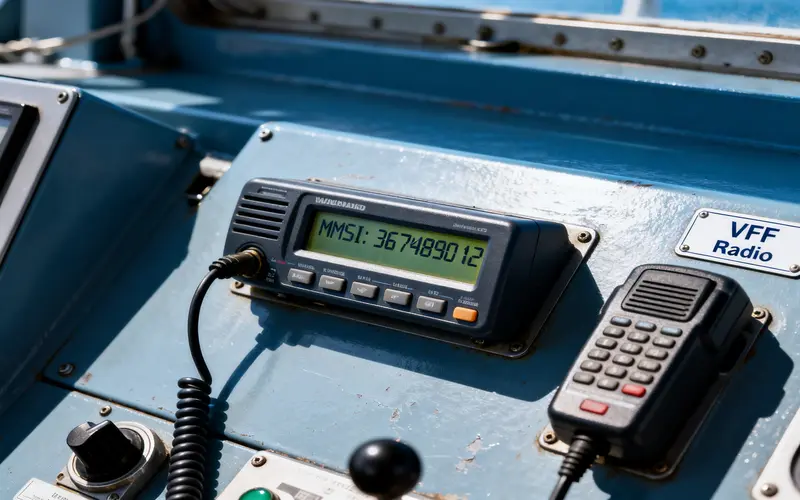
The Fundamental Concept and Importance of Yacht MMSI
MMSI is a nine-digit number used to identify a vessel's radio communication equipment and is closely connected with yacht radio license regulations governing marine communication compliance.It is typically programmed into a yacht's communication and safety systems and can be understood as the vessel's “communication identity” at sea.
In modern yacht navigation, MMSI primarily supports digital communications between vessels and between vessels and shore stations, such as:
- Identifying a vessel's radio communication identity
- Enabling digital calls between VHF radios
- Providing vessel identification data for AIS systems
- Facilitating automatic data exchange in ship-shore communication systems
Beyond routine communication functions, MMSI plays a critical role in maritime safety systems. During emergencies, this number enables devices to automatically transmit vital information, including:
- Vessel identification details
- Real-time positioning data
- Distress and safety signals
Compliant with IMO GMDSS standards, this information assists search and rescue agencies in rapidly assessing vessel conditions, thereby enhancing rescue efficiency.
In practical operations, many shipowners prioritize verifying the registration status of the MMSI when purchasing second-hand yachts or upgrading navigation equipment. Since this number is directly linked to the vessel's communication system, incorrect information or incomplete registration may result in limited device functionality and increased safety risks during emergencies.
Scope of Application and Conditions for Use of Yacht MMSI
Whether a yacht requires an MMSI depends primarily on the type of vessel communication equipment installed and its intended navigation purpose. As digital communication systems become standard equipment, most modern yachts require MMSI registration when utilizing safety communication devices.
Common types of equipment requiring MMSI configuration
| Equipment Type | Primary Function | MMSI Configuration Required |
| DSC VHF Radio | Digital ship-to-ship and ship-to-shore calling | Typically required |
| AIS Automatic Identification System (AIS installation guide) | Broadcasting vessel position and identity information | Typically required |
| Integrated Navigation and Communication System | Multi-device data integration | Depends on system configuration |
| GMDSS Safety Communication Equipment | Maritime distress and rescue communications | Typically required |
These devices automatically identify vessel identities and transmit navigation data via MMSI, ensuring the proper functioning of communication and safety features.
Common navigation and operational scenarios requiring MMSI
Configuring MMSI is critical for safety and compliance in the following situations:
- Engaging in transnational or ocean voyages
- Entering congested or heavily regulated waterways
- Engaging in commercial charter or bareboat operations
- Participating in long-distance cruises or international races
- Regularly utilizing AIS for navigational safety management
MMSI enables vessels to maintain stable communication with port authorities, coast stations, and surrounding ships while rapidly identifying vessel identities, thereby enhancing navigational safety.
Do All Yachts Need an MMSI?
Not all yachts are required to obtain an MMSI. The requirement mainly depends on onboard communication equipment, navigation area, and operational purpose.
- Domestic use only: Yachts operating solely in local waters may not require MMSI unless digital communication systems are installed.
- No DSC or AIS equipment: Vessels without DSC-enabled VHF radios or AIS systems typically do not require MMSI registration.
- International voyages: Offshore and international navigation generally requires MMSI to meet communication and safety standards.
- Commercial charter: Charter and professional operation yachts usually require MMSI for regulatory compliance and safety management.
Personal Experience
While assisting a yacht owner in evaluating a pre-owned cruising yacht and navigation equipment upgrades, I encountered a vessel preparing for a Caribbean cruise. The owner replaced the AIS and DSC VHF equipment but neglected to re-register the MMSI.
Consequently, although the equipment powered on normally, several easily overlooked issues emerged:
- Failed DSC digital call tests
- AIS unable to broadcast complete vessel identification information
- Potential safety risks in shore-to-vessel communication systems
Only after re-registering the MMSI during pre-departure checks did the communication systems regain full functionality, with digital calls and vessel identification restored to normal.
Such scenarios are common during yacht resales, equipment upgrades, or electronic system reinstallations. They underscore that the MMSI is not merely a communication identifier but directly impacts the reliability of the entire safety communication system.
Application and Registration Procedures for Yacht MMSI
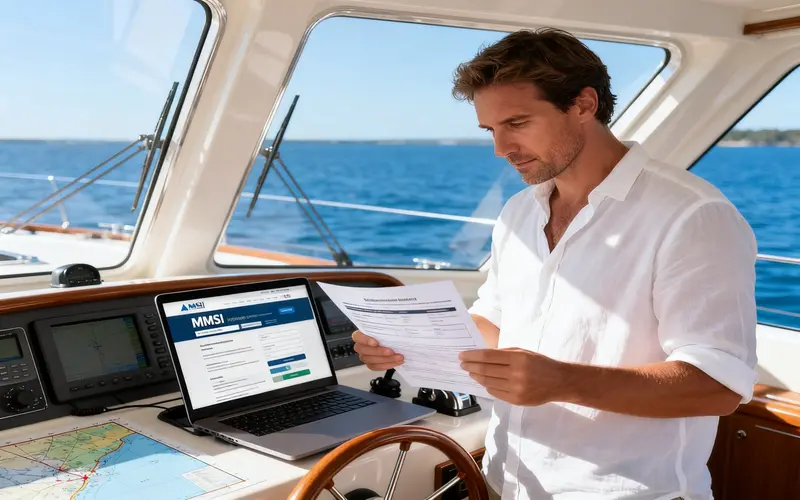
Registering an MMSI is a crucial step to ensure the proper functioning of a vessel's communication systems and navigation safety. While the application process for an MMSI varies slightly across different countries and regions, the fundamental steps remain similar.
Confirm MMSI Registration Requirements
- Vessel Type: Most modern yachts equipped with safety communication devices such as DSC VHF, AIS, or GMDSS require MMSI registration.
- Navigation Purpose: Scenarios like transnational voyages, ocean voyages, commercial charters, and international competitions typically mandate a valid MMSI.
- Equipment Configuration: If the yacht has an integrated navigation system, verify whether it includes built-in MMSI configuration functionality or requires separate registration.
⚠️ Tip:
- Before registering an MMSI, confirm your equipment type and navigation requirements to avoid duplicate applications or information errors.
- MMSI allocation follows ITU Radio Regulations to standardize global maritime communication. The first three digits, known as the MID, identify the vessel’s country of registry.
- Additionally, the MMSI should align with the vessel’s call sign to ensure accurate digital and voice communication.
Official Channels for Applying for an MMSI
1).National Maritime Administration
- U.S. vessels may apply for an MMSI through the USCG (U.S. Coast Guard).
- British vessels may apply for an MMSI through the Maritime and Coastguard Agency (MCA).
2). Through a Ship Broker or Agency
- Experienced brokers can assist shipowners in preparing documentation, completing application forms, and submitting them to relevant maritime authorities.
- The advantage is reduced errors, making this particularly suitable for first-time MMSI applications or operating vessels across multiple jurisdictions.
3). Required Application Materials
Typically include:
- Vessel registration certificate or hull number
- Owner identification documents
- Vessel communication equipment model and specifications
- Contact details and vessel usage description
Completing the MMSI registration within 1–2 weeks is achievable with fully prepared materials. Missing or inaccurate information often significantly prolongs the approval process.
4). Obtaining and Configuring MMSI
- Upon approval, the maritime authority will assign a unique nine-digit MMSI number.
- Program the MMSI into the vessel's VHF DSC, AIS, or GMDSS system to ensure automatic identification of the vessel's identity.
- Test whether the equipment can properly send/receive DSC calls and AIS messages to ensure distress functions are operational.
⚠️ Note: The MMSI is a vessel-specific identifier. Once assigned, it must not be arbitrarily changed, as this may compromise distress alerting and communication capabilities.
5). International Navigation and Update Considerations
- If the vessel changes its country of registry, a new MMSI application or update must be submitted to the maritime authority of the new country.
- Changes to MMSI information (e.g., owner details, vessel name, or contact information) must be promptly reported to the registration authority to maintain distress signal validity.
Even though MMSI registration is generally straightforward, yacht owners often make several avoidable mistakes during ownership transfers or equipment updates.
Common MMSI Mistakes Yacht Owners Make
Failing to update MMSI after buying a second-hand yacht:
Outdated registration details may cause distress alerts to display incorrect vessel or owner information.
Entering the wrong MMSI into DSC or AIS equipment:
Incorrect programming can prevent digital calls and distress signals from functioning properly.
Using a foreign MMSI after vessel reflagging:
Changing a yacht’s registration country usually requires applying for a new MMSI to remain compliant.
Maintaining duplicate or inactive MMSI registrations:
Multiple or outdated MMSI records may cause communication conflicts and emergency identification errors.
Proper MMSI application and configuration form the foundation of vessel safety communications, ensuring distress signals, AIS data, and DSC calls function reliably at sea.
Practical Applications of MMSI and Recommendations for Shipowners
In the preceding sections, we have outlined the fundamental role of MMSI in communication and safety systems. This section will further explore the practical value of MMSI in daily navigation, safety management, and equipment maintenance from operational and shipowner management perspectives.
Practical Value of MMSI in Navigation Management
- Enhancing Navigation Coordination Efficiency
In congested waters or during port entry/exit, vessels can rapidly establish directional communication via MMSI, reducing channel occupancy and manual communication time while ensuring clearer, more efficient navigation instructions.
- Ensuring Stable Equipment System Operation
Modern yachts typically employ integrated multi-device navigation systems. MMSI ensures data synchronization between AIS, DSC, and integrated communication systems, preventing identification conflicts or information errors between devices.
- Strengthening Navigation Safety Management Records
By binding MMSI to vessel identity, it aids in recording communication and navigation data, providing critical reference evidence for accident investigations, insurance claims, or navigation compliance audits.
- Optimizing emergency management procedures
With MMSI information pre-programmed into communication devices, emergency protocols can automatically retrieve vessel identity and location data, reducing manual steps and enhancing emergency response efficiency.
By standardizing MMSI management, vessel owners not only improve communication reliability but also contribute to establishing a more comprehensive navigation safety management system.
Management Recommendations for Shipowners
1.Ensure MMSI Registration Status Remains Valid
- Regularly verify MMSI validity, especially when vessels change registry or owner information.
2.Properly Configure Vessel Communication Equipment
- Program MMSI into DSC VHF, AIS, and GMDSS systems and conduct functional testing.
3.Update Vessel and Equipment Information
- Promptly update MMSI registration details for any changes in vessel name, owner, or equipment to ensure accurate distress reporting.
4.Train Crew on MMSI Functionality
- Ensure crew proficiency in DSC calling, AIS status monitoring, and emergency signaling operations.
5.Ensure compliance during international voyages
- MMSI usage and registration requirements vary by country. Owners should always verify destination regulations before undertaking extended international cruising.
- Regulatory readiness can be further strengthened by reviewing a complete yacht compliance checklist prior to departure.
Typical Application Cases
- Case A (MMSI Configured)
A long-distance yacht experienced mechanical failure. A DSC call sent directly via MMSI to nearby vessels and coastal stations prompted swift rescue vessel arrival, preventing escalation.
- Case B (MMSI Not Configured)
Another yacht encountered distress but lacked properly configured MMSI. The distress signal failed to trigger automatic recognition, delaying rescue response. The owner had to manually seek help via satellite phone, creating safety risks.
Proper MMSI application directly impacts vessel safety and emergency response efficiency, making it an essential management tool for owners.
💡 Key Takeaway:
Proper management and utilization of MMSI ensures reliable vessel communications, distress alerts, and navigation monitoring—a critical pillar of modern yacht safety management.
Summary:
Properly understanding and implementing yacht MMSI requirements is crucial for ensuring the stable operation of vessel communication systems and enhancing maritime safety. Maintaining accurate MMSI registration information, complete equipment configuration, and timely updates of relevant documentation not only improves navigation compliance but also provides more reliable safety support for vessels during emergencies.
About the Author:
Andrew Rogers brings years of yacht brokerage and vessel appraisal experience, specializing in assisting clients with yacht purchases, resales, and upgrades. He possesses expertise in navigation safety and communication system management, including MMSI registration, providing professional and reliable guidance to yacht owners.
Disclaimer:
This content is provided for informational purposes only, aiming to help readers understand yacht communications, safety, and management practices. While we strive to ensure accuracy, we assume no liability for any losses or risks arising from the use of this information. Before purchasing, registering, or operating a yacht and its equipment, always comply with local laws and regulations, and consult professional agencies or brokers for formal advice.
FAQ
Q1: Do I need an MMSI for my yacht?
A: Yes, if equipped with DSC VHF, AIS, or GMDSS. MMSI enables digital calls, vessel ID, and automatic distress signals. Without it, safety functions won't work.
Q2: Can I use the previous owner's MMSI on a second-hand yacht?
A: No. MMSI is owner-specific. You must re-register to avoid DSC failures, incomplete AIS data, and communication risks.
Q3: What documents are needed for MMSI application?
A: Vessel registration, owner ID, equipment specs, and contact details. Takes 1–2 weeks with complete documents. Apply via maritime authority or broker.
Q4: Does my MMSI work internationally?
A: Yes, but check destination regulations. Change of registry requires new MMSI. Update owner/vessel info promptly to maintain distress validity.
Q5: How do I test if my MMSI is configured correctly?
A: Test DSC calls, check AIS broadcasts, and verify distress button function. Regularly validate MMSI, especially after upgrades or ownership changes.