The total cost of owning a yacht consists of the purchase price and annual operating costs. The larger the yacht, the more exponentially the costs increase.
👉 Cost of owning a yacht = Purchase price + Annual operating costs (including maintenance, mooring fees, insurance, fuel, crew, etc.).
👉 Annual operating costs ≈ 10%–15% of the purchase price.
👉 The more frequently you use it → the higher the fuel costs.
👉 Mooring locations: Bays and inland lakes are relatively inexpensive, while popular yacht marinas (such as Miami and Saint-Tropez) can charge annual fees of hundreds of thousands of dollars.
As a yacht broker and transaction advisor with over 10 years of experience in yacht sales and sailing, I have personally handled the transactions and maintenance of dozens of yachts across the Mediterranean and the United States. I understand that the purchase price is just the tip of the iceberg; what matters most are the subsequent maintenance and operating costs.
Below, I’ll break down the yacht cost per year based on authoritative industry data and my firsthand experience.
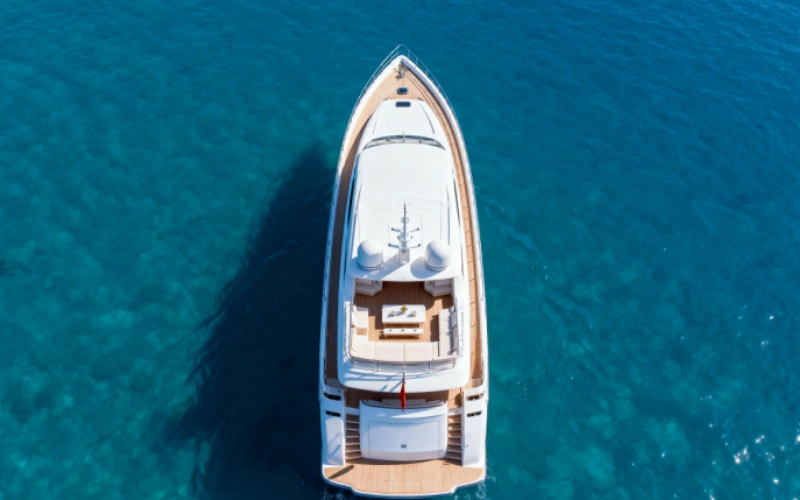
What Does It Cost to Own a Yacht Annually?
Key Takeaways
Annual Cost Ratio: Generally, a yacht’s annual operating costs amount to approximately 10%–15% of its purchase price. In other words, for a $1 million yacht, you should budget roughly $100,000–$150,000 annually for operations.Frequency of Use: The more you sail, the higher your fuel and consumables costs will be—and these costs can even increase non-linearly. For every 10% increase in speed, fuel consumption can rise by 20%–30%, so moderating your speed and sailing time is key to reducing expenses.
Berthing Location: Yacht berthing fees vary by location. Standard marinas along the U.S. coast typically charge $150–$350 per foot per year, while luxury marinas (such as those in Monaco or Saint-Tropez) can cost as much as $50,000–$100,000 per year.
Typical Annual Costs of Owning a Yacht
Below is an example breakdown of annual costs for a 40-foot yacht, provided for reference only:| Cost Category | Percentage of Annual Expenses | Annual Cost for a 40ft Yacht | Notes |
| Berthing Fees | 20%–40% | ~$8,000–$25,000 | Charged by the foot or at a fixed rate; varies significantly by region. Fees are highest along popular coastlines and at marinas in major cities. |
| Maintenance | 15%–25% | ~$5,000–$15,000 | Includes engine maintenance, hull cleaning, antifouling paint application, deck maintenance, electrical inspections, etc. Regular maintenance extends the boat’s lifespan and prevents major repairs. |
| Fuel | 10%–30% | ~$3,000–$20,000 | Costs fluctuate significantly based on sailing time and speed. For example, 50 hours per year at 20 gallons per hour can cost tens of thousands of dollars; costs are even higher for high-speed cruising or long voyages. |
| Insurance | 5%–10% | ~$2,000–$8,000 | Typically about 0.5%–2% of the yacht’s value. Rates increase in coastal or high-risk areas, or with an inexperienced captain. |
| Crew (optional) | 20%–50% | $30,000+ | Small yachts are often self-skippered by the owner and require no crew; medium to large yachts require at least one captain (annual salary approx. $45K–$90K), and full-time crew wages can run into the hundreds of thousands. |
👉 Not sure what your yacht will cost?
Get a personalized ownership cost estimate based on your budget.
Docking and crew are often the biggest expenses, while fuel can spike with faster cruising or long trips.
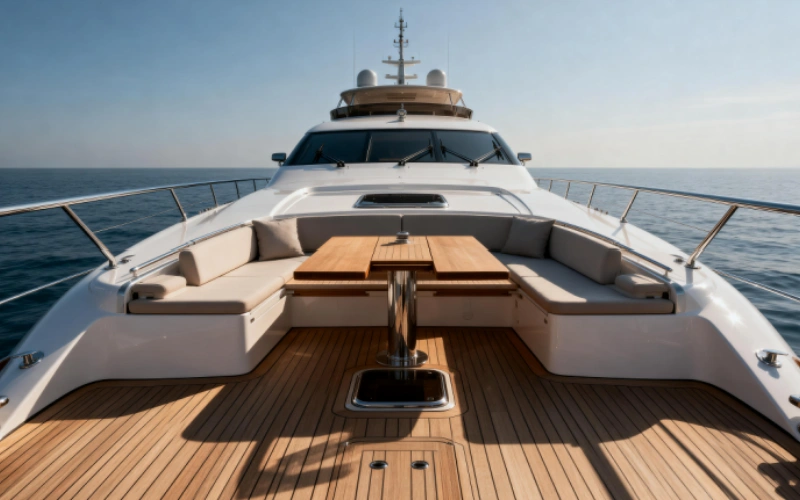
Yacht Purchase Cost vs Ownership Cost
One-Time Purchase Costs
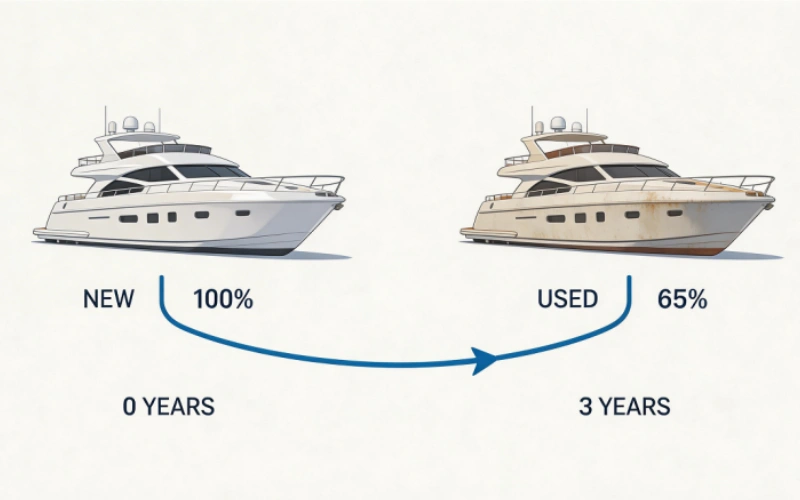
New vs Used Yachts- New yachts: fully equipped, higher initial price, fast depreciation (30–50% in first few years).
- Used yachts: cheaper (20–50%), may require repairs upfront.
- U.S. sales tax: 6–10%
- EU VAT: up to 20%+
- Hundreds to thousands for registration, survey, delivery, agent fees
- Broker commissions ~10%; legal, inspection, and other costs vary
Real-Life Experience
In 2024, I facilitated the sale of a 42-foot motor yacht—the Bavaria R40—for a client in South Florida:- Purchase Price: Approximately $620,000
- Total First-Year Costs: Approximately $85,000
- Dockage: $24,000
- Maintenance + Minor Repairs: $13,000
- Fuel: $18,000
- Insurance: $5,500
- Other Miscellaneous Fees: $24,500
This is why I always tell my clients: “Buying a yacht isn’t hard; maintaining it is the real challenge.”
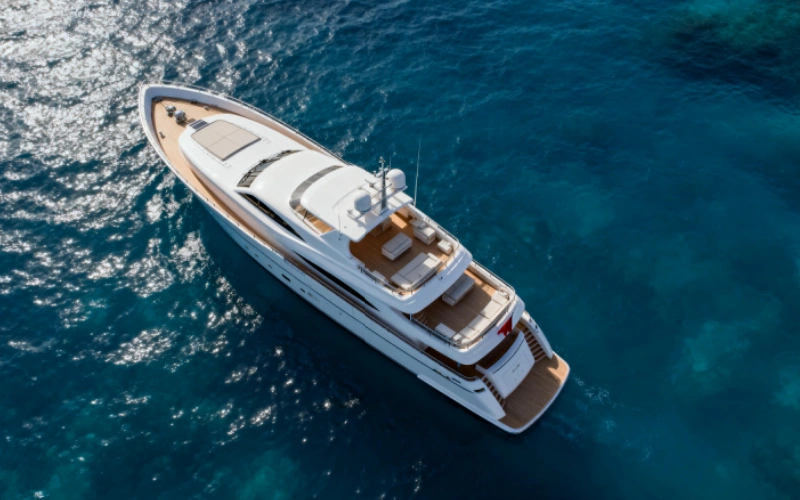
Yacht Maintenance and Repair Costs
Annual Maintenance
Routine maintenance is an essential expense for any yacht, significantly extending its lifespan and preventing major repairs.Common items include:
Hull cleaning: Maintains high cruising speeds
Antifouling paint application: Prevents marine organism growth
Engine and transmission maintenance: Oil changes, water pump impellers, filter replacements
Deck and interior maintenance: Polishing, wood deck care
Air conditioning system inspections, electrical system checks, etc.
It is generally recommended to set aside approximately 5%–10% of the yacht’s value annually for routine maintenance.
I recommend that owners strictly adhere to an annual maintenance schedule: for example, performing a major engine service and applying antifouling paint annually, and inspecting the propeller and electrical systems quarterly, to prevent minor issues from escalating into major problems.
Unexpected Repairs
Even with timely maintenance, unexpected failures can occur due to the complexity of yacht systems, such as engine shutdowns, electrical short circuits, or broken outboard propellers. The costs of such repairs are often high.For example, I once saw a 30-foot sailboat owner who, after six months of use, discovered severe corrosion in the engine’s water pump, requiring an emergency overhaul that cost approximately $7,500; another 45-foot motor yacht, only three years old, incurred emergency repair costs exceeding $25,000 due to a broken propeller shaft.
Organizations such as the ABYC emphasize the importance of preventive maintenance—regular inspections and upkeep can reduce unplanned repair costs by approximately 15%–25%. That’s why I often tell clients that it’s far more cost-effective to spend money on maintenance than to spend much more on emergency repairs.
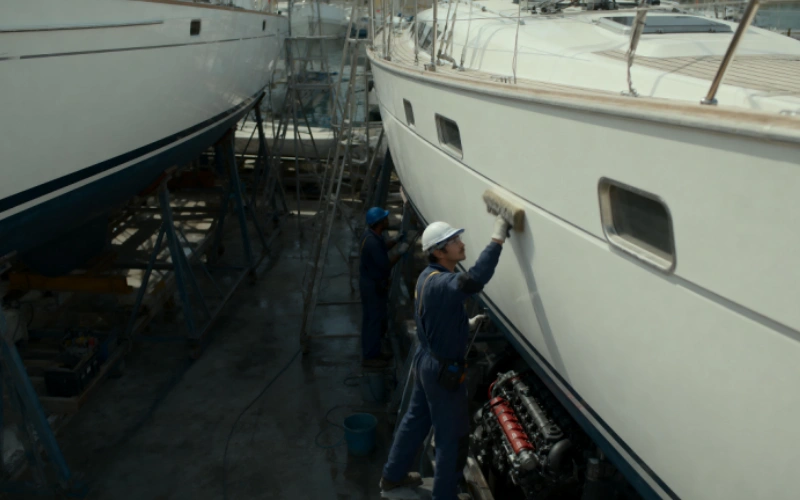
Marina and Docking Fees Explained
Yacht docking fees often account for a significant portion of annual expenses. They are primarily influenced by the following factors:Location: Marina fees vary greatly by region. Generally, annual docking fees in inland lakes or bay areas in the U.S. are relatively low, typically ranging from $150 to $350 per foot per year.
In popular areas like Florida and the East Coast, a 40–60-foot yacht typically costs $25,000–$40,000 per year; whereas in high-end European ports such as Monaco and Saint-Tropez, berthing fees for a yacht of the same size can reach $50,000–$100,000 per year.
Yacht Size: Most marinas charge based on the yacht’s length; larger yachts occupy longer berths, so the fees are naturally higher. The annual fee for a 50-foot yacht can be more than double that of a 30-foot yacht.
Amenities: High-end marinas with electricity, water, security, and luxury clubhouses are more expensive, while basic small marinas are cheaper.
High and Low Season Differences: Some ports in tropical or monsoon regions charge additional fees or require boats to be hauled out during peak seasons (hurricane season or tourist season), while rates are relatively lower during the off-season.
My Experience:
In popular ports like Miami, the annual fee for mooring a 50-foot yacht can easily exceed $30,000; in some popular ports in the Western Mediterranean, this fee can even double to over $60,000.
I once helped a client select a marina in Florida: for two marinas with identical amenities located right next to each other, the annual fees differed by nearly $10,000.
Therefore, you must be cautious when choosing a port of call: over the long term, marina fees may exceed a portion of the yacht’s purchase cost. Many new owners only realize this after buying a yacht, as they often overlook the significant price differences between ports.
Yacht Fuel Costs and Efficiency
Fuel costs are the most variable expense for yachts and generally increase in proportion to the vessel’s size:Fuel Consumption Comparison by Yacht Type
| Type | Fuel Consumption | Cost Characteristics |
| Sailboats | Very low | Most economical; primarily consumes diesel or gasoline for engines and auxiliary equipment |
| Small Motor Yachts | Moderate | Manageable, suitable for daily coastal cruising |
| Large Yachts | Very High | High costs for long-distance cruising; a 20% increase in speed may result in over a 50% increase in fuel consumption |
I often remind owners: While high-speed cruising is exhilarating, fuel costs can double. For example, accelerating a 45-foot motor yacht from 25 knots to 30 knots increases fuel consumption by nearly 55%.
Crew, Insurance, and Hidden Costs
Crew Costs
Small yachts are typically skippered by the owner and require no additional crew. As the vessel exceeds 50 ft, most owners hire a captain to helm the boat; a professional captain is especially necessary if the owner is unfamiliar with navigation or frequently undertakes long-distance voyages.- Captain: $40,000–$80,000/year
- Engineer: $35,000–$60,000/year
- Crew: $25,000–$50,000/year
Insurance Costs
In most sailing regions, yacht insurance is mandatory. Premiums range from 1%–3% of the vessel’s value, depending on the yacht’s type, age, and operating region.Factors affecting insurance costs: The country of registration, operating region, the owner’s sailing experience, and past claims history all influence premium fluctuations.
The larger the vessel, the more frequent the voyages, and the more extensive the claims history, the higher the costs.
Hidden Costs
In addition to the regular expenses mentioned above, yachts also involve some easily overlooked costs:- Winter storage: $2,000–$15,000/year
- Depreciation: New yachts depreciate most rapidly during the first three years
- Upgrades and renovations: Electronics, furniture refurbishment, etc., ranging from $5,000 to $50,000 per year
Total Cost of Ownership by Yacht Size
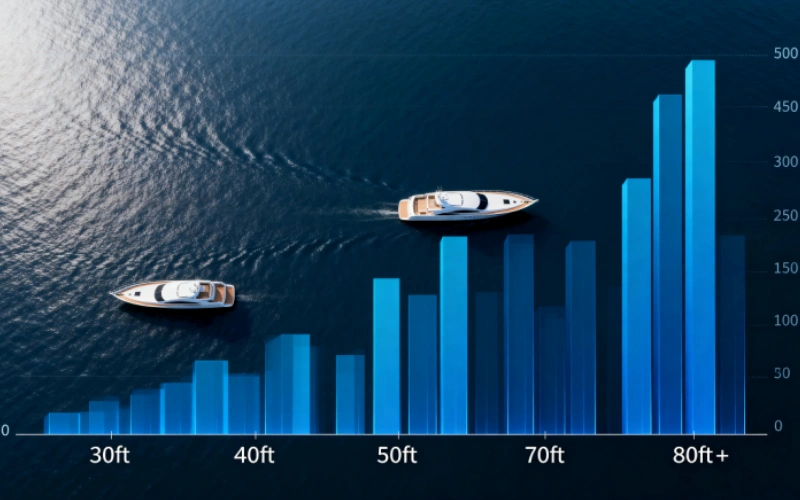
Yacht costs are strongly correlated with size: the larger the yacht, the higher the cost. Based on experience, costs can generally be estimated according to the following categories:| Yacht Size | Typical Purchase Price | Annual Operating Costs | Suitable for |
| 20–30 ft | $20K–$150K | $5K–$20K | Entry-level small boat owners |
| 30–50 ft | $150K–$1M | $15K–$120K | Families or recreational users |
| 50–80ft | $1M–$5M | $100K–$500K | High-net-worth individuals |
| 80ft+ | $5M+ | $500K–$3M+ | Ultra-high-net-worth individuals |
👉 Browse 40–50ft yachts for sale.
Monthly Cost vs Annual Cost Breakdown
| Yacht Size | Monthly Cost | Annual Cost |
| 30 ft | $1,000–$3,000 | $12K–$36K |
| 50 ft | $3,000–$10,000 | $36K–$120K |
| 80 ft | $10K–$40K | $120K–$500K |
Seeing monthly vs annual numbers helps you budget realistically for maintenance, fuel, insurance, and dock fees before buying.
Motor Yacht vs Sailing Yacht Cost Comparison
Fuel Source: Motor yachts rely primarily on fuel, resulting in high fuel consumption; sailing yachts rely mainly on wind power, with extremely low fuel consumption (fuel is used only to power auxiliary engines or generators).Maintenance Complexity: Motor yachts are equipped with engines, transmission systems, hydraulic systems, electrical systems, and air conditioning, requiring regular maintenance; sailing yachts have relatively simple systems, but the hull, mast, and sails require additional maintenance. Generally speaking, motor yachts involve more maintenance tasks and are more expensive to maintain.
Usage Scenarios: Motor yachts are ideal for those seeking speed and a cruising experience unaffected by wind direction, allowing for quick travel to destinations; sailing yachts are more energy-efficient and eco-friendly, suitable for leisurely long-distance voyages, but they have lower speeds and more operational limitations.
👉 In the long run: Sailing yachts are more cost-effective and environmentally friendly. However, motor yachts offer a more convenient and comfortable way to sail, with greater ease of use. The choice between the two depends on your sailing preferences and budget.
If you frequently take short trips and don’t mind refueling and maintenance, choose a motor yacht; if you want to experience the tradition of sailing and reduce fuel costs, a sailing yacht is the more economical choice.
Conclusion
Is Owning a Yacht Expensive?Owning a yacht is more than a purchase—it’s a lifestyle investment. Monthly costs (from $1K to $40K) and annual expenses (from $12K to $500K+) depend on size, usage, and location.
💡 Human takeaway: Before buying, plan your yacht budget carefully. Consider monthly vs annual expenses, berthing fees, fuel, maintenance, crew, and insurance. This ensures your dream yacht doesn’t turn into a financial burden.
👉 Plan Your Yacht Budget Before You Buy
Talk to our yacht experts to estimate your total cost (purchase + annual expenses) and find the right yacht for your lifestyle.
About the Author
Emery
Yacht Broker / Yacht Transaction Consultant / Contributing Writer for Yachting Magazine
SAMS Certified Surveyor #2458
Selected as one of “Asia’s Top 10 Yachting Experts” and recipient of the “Yacht Broker Outstanding Service Award,” among others
Last Updated: March 2026
Scope: This article is intended for prospective owners planning to purchase 30–80-foot medium to large yachts who are concerned about purchase price, annual operating, and maintenance costs.
Disclaimer
All content provided in this article is for informational purposes only and does not constitute financial or investment advice. The costs of purchasing and maintaining a yacht vary depending on location, yacht type, frequency of use, and various other factors; actual costs may differ. Data cited in this article regarding annual operating costs, repair expenses, mooring fees, etc., is based on industry experience and market trends and may be subject to change over time, market fluctuations, and policy changes. Before making a decision to purchase a yacht, we strongly recommend consulting a professional yacht broker, financial advisor, and relevant experts to conduct detailed financial planning and cost assessments. The author assumes no liability for any losses or inconveniences arising from the use of the information in this article.
FAQ
Q1: How much does it cost to own a yacht annually?
A: As a general rule of thumb, the total annual cost of owning a yacht is approximately 10%–15% of the purchase price. For example, a $2 million yacht may cost $200,000–$300,000 per year.
Q2: Is it more cost-effective to rent a yacht or buy one?
A: If you use the yacht infrequently, renting is much more cost-effective because there are no fixed costs; if you sail frequently, buying a yacht is more economical. Generally speaking: infrequent use → rent; frequent use → buy.
Q3: What is the most expensive part of owning a yacht?
A: Typically, it is berthing fees and crew costs. Premium marinas and professional crew are very expensive.