Quick answer: Are Fountaine Pajot yachts suitable for bluewater cruising?
Yes, Fountaine Pajot catamarans are generally very well suited to bluewater cruising. The brand is renowned for its stable catamaran hulls, spacious and comfortable living quarters, and high sailing efficiency. Many models are specifically designed for long-term cruising and family sailing, offering a living experience akin to a ‘floating home’ whilst maintaining excellent sailing performance. However, suitability for bluewater cruising also depends on the specific model, equipment configuration and the owner’s sailing experience.
What is bluewater cruising?
Bluewater cruising generally refers to long-distance sailing in the open sea, rather than simply sailing in coastal or inshore waters. Typical bluewater cruising involves crossing multiple countries, spending extended periods at sea and traversing different climate zones.
Bluewater cruising generally has the following characteristics:
| Characteristic | Description |
| Long-distance voyages | May span hundreds or even thousands of nautical miles |
| Extended time at sea | Crew may live at sea continuously for weeks or months |
| High degree of self-sufficiency | Reliance on onboard energy, fresh water and storage systems |
| Weather challenges | May face strong winds, heavy seas and complex weather conditions |
Consequently, a sailing yacht suitable for bluewater cruising typically requires good stability, a reliable structure, ample storage space and a comfortable living environment.
Why Fountaine Pajot catamarans are ideal for cruising
As one of the world’s leading catamaran manufacturers, Fountaine Pajot has specialised in the design of cruising catamarans since its establishment in 1976. Compared to many brands that prioritise performance, Fountaine Pajot places greater emphasis on comfort and practicality during extended voyages.
Firstly, the catamaran structure is inherently well-suited to ocean-going voyages. Compared to monohulls, catamarans offer greater lateral stability, meaning the hulls heel less during sailing, making life on board more comfortable for the crew.
Secondly, Fountaine Pajot emphasises space utilisation in its designs. The wide spacing between the hulls provides a vast living area, allowing the saloon, galley and helm to be situated on the same level—a layout that proves highly convenient for extended voyages.
Furthermore, many of the brand’s models offer ample storage space, solar system options and efficient energy management systems—all essential features for ocean cruising.
The Advantages of Fountaine Pajot for Ocean Cruising
Stability and Safety
One of the greatest advantages of catamarans is their stability. The wide spacing between the hulls significantly reduces rolling, resulting in a smoother ride in rough seas. For extended voyages, this stability not only enhances comfort but also reduces crew fatigue.
Spacious Living Areas
Fountaine Pajot catamarans typically offer more living space than monohulls of the same size. Spacious saloons, multiple private cabins and large deck areas make them ideal for family or multi-person ocean cruising.
Good Cruising Efficiency
Whilst some catamarans prioritise comfort, Fountaine Pajot maintains a good balance in terms of cruising efficiency. When sailing downwind or on a beam reach, many models are capable of maintaining high cruising speeds.
Energy Self-Sufficiency
Many long-distance cruising owners install solar panels, battery banks and freshwater production systems on board. Fountaine Pajot has incorporated sufficient space for these installations into its designs, enabling the boats to achieve a high degree of energy self-sufficiency at sea.
Strong Market Reputation
Fountaine Pajot has consistently enjoyed a solid reputation within the global cruising community. Many long-term cruising owners choose this brand because it strikes a good balance between comfort, reliability and ease of handling.
Potential Drawbacks of Fountaine Pajot for Overseas Cruising
Although Fountaine Pajot is well-suited to cruising, it is not without its flaws.
Firstly, some models are designed with a greater emphasis on comfortable cruising rather than pure performance sailing. Consequently, when sailing in strong winds or against the wind, their speed and steering stability may not match those of certain high-performance catamarans.
Secondly, catamarans typically have wider hulls, which may present limitations when mooring at certain jetties or in small harbours. At the same time, mooring fees for catamarans are often higher than for monohulls of the same size.
Furthermore, maintenance costs may also be higher. Dual engine systems, additional equipment and a larger surface area mean that maintenance work is more complex.
Fountaine Pajot Models Best Suited to Overseas Cruising
Fountaine Pajot’s product range covers cruising catamarans from 40 feet to over 70 feet. Different sizes are suited to different types of cruising plans.
40–45-foot class
Catamarans in this size range are generally considered the entry-level size for ocean cruising. They are relatively easy to handle whilst still offering ample space and storage capacity.
Representative models include:
- Fountaine Pajot Isla 40
- Fountaine Pajot Astrea 42
- Fountaine Pajot Elba 45
These models are generally well-suited to family cruising or small crews.
45–50-foot class
This size is often regarded as the ‘sweet spot’ for ocean cruising. Boats in this class offer greater storage space, improved sailing performance and enhanced comfort.
Representative models include:
- Fountaine Pajot Elba 45
- Fountaine Pajot Tanna 47
- Fountaine Pajot Saona 47
Many long-term cruising owners choose this size because it strikes an ideal balance between sailing performance, space and cost.
Ocean-going Flagships over 50 feet
For owners planning extended round-the-world voyages or seeking a higher level of comfort, catamarans over 50 feet are often the ideal choice.
Representative models include:
- Fountaine Pajot Alegria 67
- Fountaine Pajot Samana 59
These large catamarans offer more spacious deck areas, more luxurious cabins and more powerful energy systems, making them ideal for long-term life at sea.
Fountaine Pajot Overseas Cruising Model Comparison
| Model | Length | Cruising Type | Suitable For |
| Isla 40 | 40 ft | Entry-level cruising | Small families |
| Astrea 42 | 42 ft | Short to medium-term cruising | Families or couples |
| Elba 45 | 45 ft | Ocean cruising | Long-term sailors |
| Tanna 47 | 47 ft | Blue-water cruising | Multi-crew |
| Samana 59 | 59 ft | Luxury ocean cruising | High-end cruising |
Fountaine Pajot vs Other Cruising Catamarans
In the cruising catamaran market, Fountaine Pajot is often compared with the following brands:
- Lagoon
- Leopard Catamarans
- Nautitech
Generally speaking:
| Brand | Characteristics |
| Fountaine Pajot | Balance of comfort and sailing performance |
| Lagoon | Maximum space, high living comfort |
| Leopard | Robust construction, suitable for long-distance cruising |
| Nautitech | More performance-oriented |
Therefore, if you are looking for a cruising catamaran that combines sailing performance with comfortable living space, Fountaine Pajot is usually a very well-balanced choice.
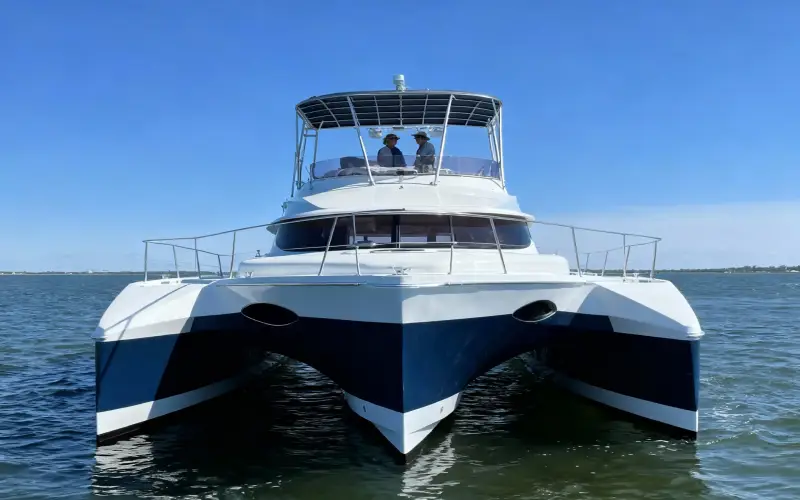
What to Consider Before Purchasing a Fountaine Pajot for Ocean Cruising
Before purchasing an ocean-going cruising yacht, there are several key factors to consider.
Firstly, there is the size of the vessel. Smaller boats are easier to handle but have limited storage space; larger boats offer greater comfort but come with higher costs and maintenance expenses.
Secondly, there is the equipment configuration. Overseas cruising typically requires additional equipment, such as:
- Solar power systems
- Watermakers
- Autopilot systems
- Long-range communication equipment
Furthermore, budget and maintenance costs must be taken into account. Ocean cruising is not merely a single voyage but a long-term lifestyle, so it is vital to choose a vessel that suits your financial means and sailing experience.
Summary
Overall, Fountaine Pajot catamarans are a highly popular choice for ocean cruising. They strike an excellent balance between stability, space and sailing efficiency, making them ideal for family cruising and long-term life at sea.
If you are planning a blue-water cruise, Fountaine Pajot’s 40–50-foot models are usually sufficient, whilst larger models can offer an offshore living experience akin to that of a luxury yacht.
Ultimately, the best offshore cruising catamaran for you will depend on your sailing plans, budget, and requirements for comfort and performance.
Riley Miller
Riley Miller is the owner of the “Serendipity” yacht, a contributing columnist for Yachting Monthly, and the author of 17 in-depth analyses on yacht cost management. He also serves as an advisory committee member of the European Second-Hand Yacht Association (ESYA) and holds the International Certificate of Competence (ICC-UK-2019C-17429), with certified cruising areas covering the Mediterranean and the western Atlantic coast.
Disclaimer
This article is based on publicly available market data, broker listings, and industry depreciation reports.
The content is provided for informational purposes only and reflects the author’s personal experiences and perspectives. It does not constitute legal, tax, or investment advice. Yacht transactions involve complex legal, financial, and technical considerations, and actual purchasing processes may vary depending on regional regulations, vessel types, or individual circumstances.
Before making any yacht purchasing decisions, readers are advised to consult licensed professionals—such as attorneys, tax advisors, licensed yacht brokers, or marine surveyors—for guidance tailored to their specific situation.
Neither the author nor the publisher shall be liable for any direct or indirect losses arising from reliance on the information presented in this article.
FAQ
Q1: Is Fountaine Pajot suitable for round-the-world sailing?
A: Yes. Many sailors have successfully circumnavigated the globe on Fountaine Pajot catamarans. Provided the vessel is properly configured and thoroughly prepared, they are perfectly capable of long-distance voyages.
Q2: Which is better suited for ocean cruising: Fountaine Pajot or Lagoon?
A: Lagoon yachts generally offer more interior space, whilst Fountaine Pajot yachts are typically more agile in terms of sailing performance. Both are excellent choices for cruising, and the decision largely comes down to personal preference.
Q3: What size should an ocean-going cruising catamaran be?
A: Generally speaking, 40–50-foot catamarans are considered the ideal size for ocean cruising. They offer ample space whilst remaining relatively easy to handle.