



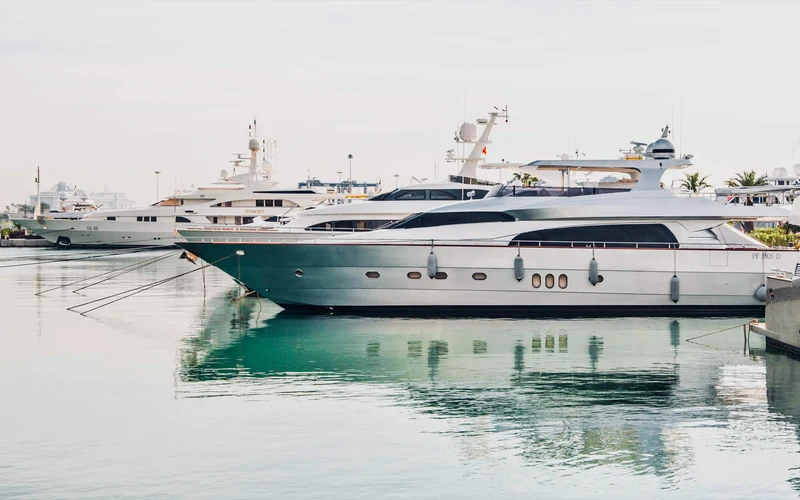
What factors influence the purchase price of a business yacht?
There is no standardised pricing for business yachts. Even if two yachts are of similar length, the final sale price may vary significantly due to differences in brand, age, engines, interior fittings, electronic equipment and the extent of customisation. Therefore, to determine whether a business yacht fits within your budget, you should consider a range of factors comprehensively, rather than simply estimating the price based on the yacht’s length.
Yacht Size
Size is typically one of the most direct factors influencing the price of a business yacht. An increase in length not only implies larger cabins, decks and entertainment spaces, but also more complex propulsion systems, additional equipment and higher construction costs.
For business hospitality, a 40–50-foot yacht generally offers a good balance between space and operating costs, making it suitable for hosting small groups of clients, corporate events and private business use. If there is a need to accommodate more guests, incorporate separate meeting areas or provide a higher standard of accommodation, a yacht measuring 50–70 feet or even larger should generally be considered.
Yacht Types
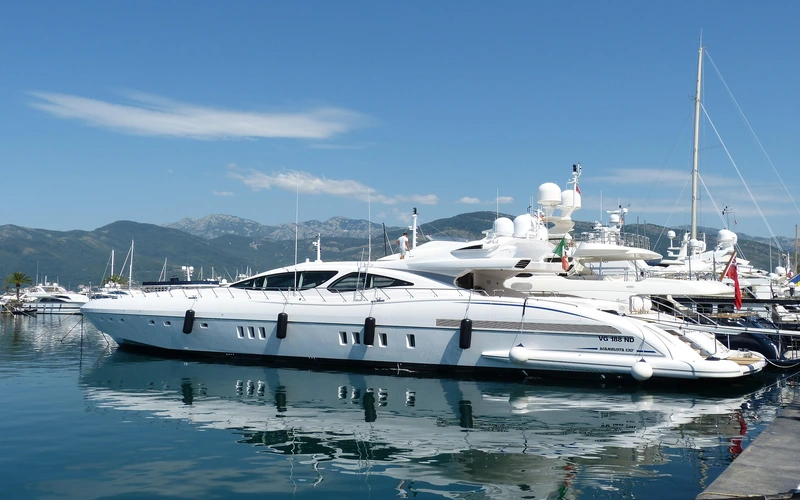
Different yacht types have different design objectives, resulting in significant variations in price.
Sport yachts typically prioritise speed, manoeuvrability and aesthetic design; flybridge yachts offer larger outdoor activity spaces; cruisers prioritise long-distance cruising and accommodation capacity; whilst large motor yachts offer more comprehensive cabin, dining, meeting and entertainment facilities.
If business use primarily involves short-distance client hospitality, there is no need to purchase a large yacht. Conversely, for multi-day business trips or extended client hospitality, greater space and longer range may be more important than the mere pursuit of speed.
For large-scale business hospitality and high-end client events, factors beyond size—such as brand, build standards and spatial planning—must also be considered. For example, the Bilgin 163 is well-suited to buyers requiring greater hospitality space and a high-end business networking environment; its spacious layout and comprehensive living facilities are better suited to extended business voyages and hosting high-profile clients.
👉 View the Bilgin 163 for sale

Bilgin 163
- Length163 ft
- Cabins6
- Top speed17 kn
- TypeBusiness yacht
The Bilgin 163 is a 50‑meter full‑displacement superyacht from Turkey’s Bilgin Yachts, designed for long‑distance cruising with a focus on volume, comfort, and contemporary design. Featuring a steel hull, aluminum superstructure, and elegant exterior lines, it offers generous living spaces across four decks. Ideal for global family travel, luxury charters, and private entertaining
Brand and Build Quality
The yacht brand also influences the purchase price. Brands with established design systems, shipbuilding expertise and a global after-sales network typically enjoy higher market recognition.
Brand value is not only reflected in the price of a new yacht but may also affect liquidity in the second-hand market and future resale value. Therefore, when comparing business yachts, one should not merely compare the purchase prices of two vessels; one should also consider the maintenance network, spare parts supply, market demand and future resale prospects.
Engines and Propulsion Systems
The propulsion system is a significant component of a business yacht’s price. The number of engines, their power output, brand, propulsion method and generator configuration all influence the final price.
If the yacht is required to undertake frequent high-speed cruising, buyers will typically require a more powerful propulsion system; however, higher engine power also entails higher purchase costs, fuel consumption and ongoing maintenance costs. Therefore, for business purposes, the choice of propulsion should be determined by the actual cruising distance and frequency of use, rather than simply opting for the most powerful configuration.
Interiors and Business Specifications
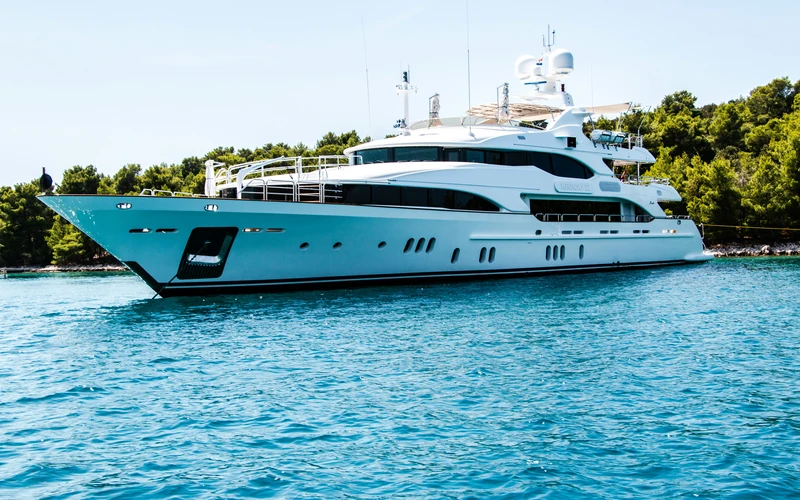
A notable distinction between business yachts and standard leisure yachts is the greater emphasis placed on hospitality and social spaces.
Conference tables, separate lounge areas, dining areas, high-end audio systems, communications equipment, satellite internet and bespoke interiors may all increase the purchase cost. If the yacht is primarily used for entertaining corporate clients, these features may offer practical value; however, if it is only used occasionally for private leisure, there is no need to pay extra for a large amount of business-oriented equipment.
Age and Condition
The price of a second-hand business yacht is usually significantly lower than that of a new yacht of the same class, but a low purchase price does not necessarily equate to a low total cost.
A second-hand yacht that is priced lower but has numerous issues with its engines, air conditioning, generator, electrical systems and hull may require substantial repairs after purchase. Therefore, when purchasing a second-hand business yacht, professional survey, sea trials and maintenance records should be factored into the overall budget.
How Do Prices Vary Across Different Sizes of Business Yachts (2026)
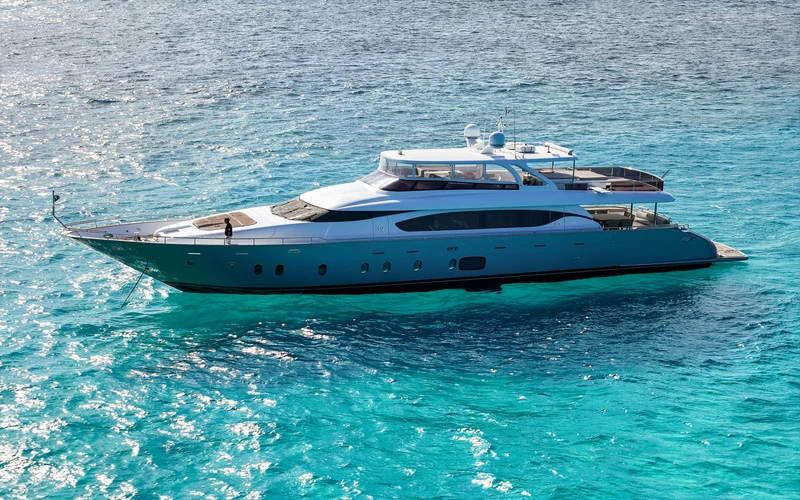
The business yacht market in 2026 covers a very broad spectrum, ranging from small to medium-sized business hospitality yachts to large luxury motor yachts, all of which can be utilised for business activities to varying degrees. Yacht prices on the current market vary considerably; recent listings in the Singapore market, for instance, range from approximately US$550,000 to US$28 million.
The prices below are primarily intended to establish a budgetary framework; actual transaction prices will be influenced by factors such as brand, age of the vessel, specifications, condition, market region and exchange rates.
| Yacht Size | Typical Price Range in 2026 | Suitable Business Uses |
| 30–40 feet | Approx. $200,000–$800,000 | Small-scale client hospitality, short-distance business activities |
| 40–50 feet | Approx. $300,000–$1,500,000 | Corporate hospitality, business networking, weekend use |
| 50–60 feet | Approx. $800,000–$3,000,000 | High-end client hospitality, multi-day business trips |
| 60–80 feet | Approx. $2,000,000–$10,000,000+ | Large-scale corporate events, high-end hospitality |
| 80 feet and above | From $5,000,000 upwards, up to tens of millions of dollars | Large-scale business events, brand showcases and high-end private use |
If your budget falls within the large business yacht range, the 2026 Absolute 70 Navetta serves as a benchmark model in the 70-foot class. With its spacious interior and exterior areas and comfortable cruising profile, it is well-suited for high-end client hospitality, multi-day business cruises and owners seeking a blend of business and private use.
👉 See the 2026 Absolute 70 Navetta
2026 Absolute 70 Navetta
- Length70 ft
- Cabins4
- Top speed27 kn
- TypeSuper yacht
The 2026 Absolute 70' Navetta combines contemporary style with performance, offering a luxurious sea experience. Its spacious design and modern features make it a standout choice.
It should be noted that these price ranges do not constitute quotations for any specific brand or model. Yachts of the same size may vary in price by a factor of several times depending on their age and specifications. For example, a well-maintained pre-owned yacht from an established brand may be considerably cheaper than a new yacht of the same size; conversely, a new yacht from a high-end brand or a highly customised vessel may be significantly more expensive than the ranges indicated above.
If you are working to a limited budget, the 40–50-foot range is generally worth focusing on. It offers a relatively comprehensive suite of cabin, outdoor activity and entertainment spaces, whilst avoiding the very high crew, mooring and maintenance costs associated with larger yachts.
Brand-new business yachts vs second-hand business yachts
Choosing between a new and a second-hand yacht is a crucial step in determining the overall budget for a business yacht. Neither option is inherently superior; the decision ultimately depends on your budget, frequency of use, requirements regarding specifications, and tolerance for maintenance risks.
Brand-New Business Yachts
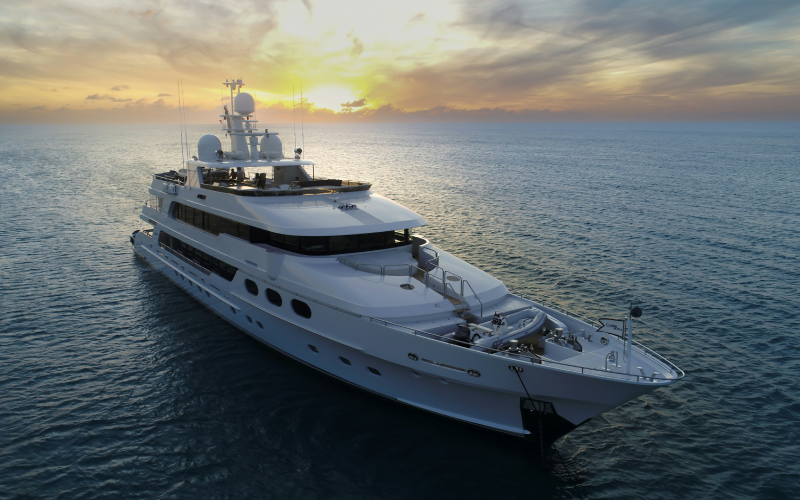
The greatest advantage of a new yacht is that its condition is more controllable. Buyers can select the cabin layout, interior materials, electronic equipment and propulsion configuration according to their business needs, and can usually count on after-sales support from the shipyard.
For corporate hospitality, a new yacht also makes it easier to establish a consistent brand image. For example, a company can plan the meeting areas, lounge areas, entertainment zones and communication systems in line with its actual business activities.
However, the purchase cost of a new yacht is higher, and buying a brand-new vessel does not mean there will be no maintenance costs in the future. The owner will still need to bear long-term expenses such as mooring fees, insurance, fuel, servicing, cleaning and equipment maintenance.
Used Business Yachts
The greatest advantage of used business yachts is the lower entry threshold. For first-time buyers of business yachts, used business yachts can offer larger vessel sizes and more extensive specifications for a lower capital outlay; however, the ultimate value still depends on the vessel’s condition, maintenance history and the state of the equipment.
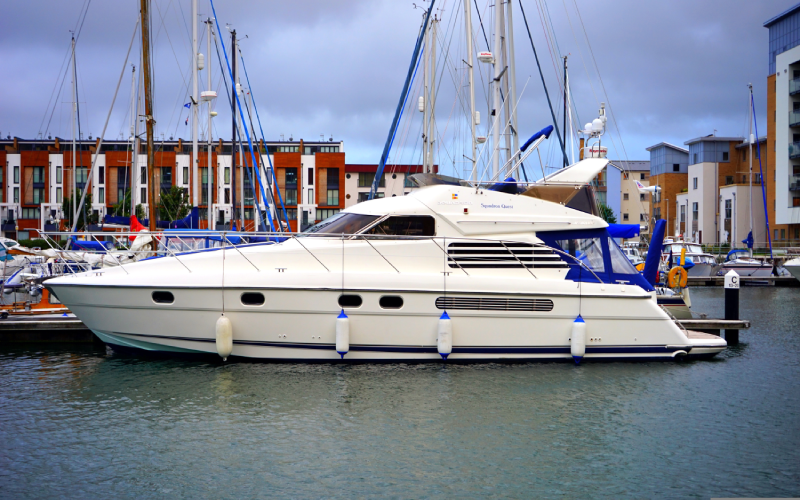
Furthermore, mature second-hand yachts have typically already undergone some initial depreciation, allowing buyers to assess the actual condition, maintenance history and market value more directly.
However, the risks associated with second-hand yachts are more concentrated on the vessel’s condition. Engine operating hours, maintenance records, hull condition, electrical systems, air conditioning, generators and navigation equipment should all undergo professional inspection.
Therefore, before purchasing a second-hand business yacht, it is advisable to carry out a comprehensive marine survey and sea trial. For vessels priced significantly below the market average, particular attention should be paid to investigating whether there are any overdue maintenance issues, ageing equipment or major structural problems.
For buyers on a tighter budget who primarily engage in short-haul business activities, smaller vessel models may also be a viable option. For example, the Sea Cat 22 is better suited to hosting small groups of clients, inshore activities and infrequent use; its compact size reduces operational pressures relating to mooring, fuel and routine maintenance.
👉 Browse the Sea Cat 22 yacht
Sea Cat 22
- Length72 ft
- Cabins3
- Top speed30 kn
- TypeBusiness yacht
The Sea Cat 22 is a 22-meter business expedition catamaran, combining luxury comfort with long-range cruising capability. With three decks, multifunctional salon and dining areas, and three VIP cabins, it is ideal for corporate hospitality, VIP receptions, and extended offshore voyages. Equipped with high-speed engines and tender/jet ski facilities, it also supports water sports and executive leisure activities.
Detailed Breakdown of Annual Maintenance Costs
The true cost of a business yacht extends beyond the purchase price. According to data on yacht ownership costs published in 2026, annual operating and ownership costs typically amount to approximately 10–25 per cent of the vessel’s value, with the exact proportion varying significantly depending on size, age, frequency of use, crew configuration and mooring location.
Therefore, if a business yacht is purchased for US$1 million, one cannot simply assume that US$1 million constitutes the entire budget. The following costs must also be paid on an ongoing basis during actual use.
Berthing and Marina Fees
Berthing is typically one of the fixed annual expenses for a business yacht. Costs are influenced by the yacht’s length, the city in question, the marina’s grade and the season during which it is moored.
If a yacht is moored long-term in a popular city or a high-end marina, berthing fees may increase significantly. For yachts used frequently for business purposes, the marina’s location must also take into account transport links and the client’s arrival experience.
Repair and Maintenance
Maintenance costs include engine servicing, hull cleaning, anti-fouling treatment, generator maintenance, electrical system inspections, air-conditioning maintenance and navigation equipment servicing, amongst others.
The larger the yacht and the more complex its systems, the more maintenance work is typically required. With pre-owned yachts, additional repair costs arising from ageing equipment must also be taken into account; therefore, the maintenance budget cannot be estimated based solely on the purchase price.
Buyers should also be mindful of ‘Yacht Maintenance Blind Spots’—maintenance items that are easily overlooked during routine inspections, such as electrical systems, cooling systems, seals, air-conditioning units and concealed pipework. Problems with these components may not immediately affect normal navigation, but can lead to significant repair costs if left unaddressed over time.
Fuel and Energy
Fuel costs are directly related to frequency of use. High-speed cruising, long-distance voyages and frequent business activities all increase fuel consumption.
If a business yacht is primarily used for short-distance hospitality, fuel expenditure can be reduced by carefully managing sailing time and cruising speed; if extended voyages are required, particular attention should be paid to comparing the efficiency of the propulsion system and the yacht’s range during the purchase phase.
Insurance
Insurance premiums are typically linked to the vessel’s value, sailing areas, age, intended use and the owner’s risk profile.
Commercial use may entail higher frequency of use and a greater number of passengers; therefore, insurance arrangements cannot be based solely on the standards applicable to ordinary private leisure yachts. Before purchase, the owner should obtain a quotation from an insurer based on the specific yacht model and intended use.
Crew
Small commercial yachts of around 40 feet may be operated by the owner or a small crew, but as the yacht’s size increases, the need for a captain and professional crew members generally increases.
Crew wages, accommodation, training, certification and associated administrative costs can constitute a significant annual expenditure for large commercial yachts. For large yachts requiring year-round operation, crew costs in particular need to be factored into the budget in advance.
Management and Other Expenses
Large commercial yachts may also incur costs relating to professional management, registration, communications, software, cleaning, provisioning and equipment upgrades.
It is therefore more prudent to categorise annual costs into ‘fixed costs’ and ‘usage-based costs’. This allows for a more accurate assessment of a business yacht’s actual costs under both high-frequency and low-frequency usage scenarios.
How Do Different Usage Patterns Affect the Costs of a Business Yacht?
For the same business yacht, the annual costs may vary significantly depending on whether it is used for only a few weeks a year or is frequently at sea throughout the year. Consequently, the budget should be drawn up based on actual usage patterns.
Corporate Client Hospitality
If the yacht is primarily used for client hospitality, the focus should be on comfortable communal areas, dining spaces, privacy and communications equipment.
This type of use typically does not require extremely high cruising speeds, but places higher demands on interior maintenance and service quality. Frequent client hospitality also means that costs for cleaning, catering, soft furnishings and equipment maintenance are likely to increase.
Business Meetings and Corporate Events
If a yacht is to be used for team meetings or corporate events, more open space and flexible seating arrangements are required.
In such cases, rather than opting for a high-speed sports yacht, priority should be given to models featuring spacious decks, comfortable saloons and good shade. A well-designed layout can enhance the efficiency of every business event.
High-End Clients and Brand Showcase
Some companies purchase business yachts to strengthen their brand image. In such cases, the importance of exterior design, interior quality, brand positioning and the level of customisation increases.
The purchase price of such yachts is typically higher, and the subsequent costs of interior maintenance and upgrades may also be higher. Therefore, companies should clearly assess the actual commercial value that brand showcase can bring before deciding whether high-specification configurations are necessary.
Combining Private and Business Use
If a business yacht is to be used for both family leisure and client entertainment, the 40–60-foot range is generally worth prioritising for comparison.
This usage requires a balance between business and private spaces. For example, a relatively separate private lounge area could be situated at the bow, whilst the main saloon and aft deck are used for client entertainment. This avoids purchasing an overly large yacht solely for business purposes.
How Should You Manage Your Budget Before Purchasing a Business Yacht?
The key to managing a business yacht budget lies not simply in seeking the lowest price, but in avoiding long-term cash flow pressures following the purchase.
For business owners purchasing a business yacht for the first time, it is vital to understand the basic process of ‘how to buy a yacht’. The sensible sequence is to first determine the business purpose and budget, then shortlist sizes and hull types, followed by a condition survey, professional inspection and sea trial, before finally proceeding to price negotiations and the transaction process.
Determine Purpose First, Then Size
Do not simply opt for a larger yacht just because your budget allows it. First, determine how many guests you need to accommodate on each occasion, the typical distance of your voyages, and the number of days of use per year, before deciding on the size.
If your actual requirements only necessitate a 40–50-foot yacht, purchasing one over 70 feet may result in significant unnecessary costs for mooring, maintenance and crew.
Separate the purchase budget from the operating budget
It is advisable to divide the budget into at least two parts:
The first part is the purchase budget, which includes the yacht’s price, survey, sea trials, taxes, registration, delivery and initial upgrades.
The second part is the ownership budget, which includes mooring, insurance, fuel, maintenance, crew and management fees.
This prevents you from investing all your funds in the purchase price whilst neglecting the cash flow required for subsequent operations.
Set aside funds for unexpected repairs
Yachts are complex mechanical systems; even if they are in good condition at the time of purchase, repairs may be required for the engine, generator, air conditioning, electronic equipment or other systems.
Particularly for second-hand business yachts, a repair reserve should be established in addition to the annual budget, rather than waiting until a fault occurs before seeking funds.
Do not over-prioritise specifications
Bespoke interiors, high-powered engines, sophisticated entertainment systems and extensive electronic equipment all increase the initial purchase price, whilst also potentially raising subsequent maintenance costs.
For business purposes, priority should be given to investments that directly enhance the client experience or operational efficiency, rather than paying high costs for equipment that is rarely used.
Compare different yachts using the total cost over 3–5 years
When comparing business yachts, focusing solely on the purchase price can easily lead to misjudgements.
A more reasonable approach is to calculate: Total cost over 3–5 years = Purchase price + Transaction costs + Annual operating costs × Years of use − Estimated resale value
This method helps buyers realise that a second-hand yacht with a lower purchase price but higher maintenance costs may not necessarily be more economical than a more expensive yacht in better condition.
Summary
The price of business yachts is primarily influenced by their size, hull type, brand, age, propulsion system, interior fittings and the extent of customisation. In 2026, business yachts on the market will span a wide price range, from small yachts costing several hundred thousand dollars to large luxury yachts costing several million or even tens of millions of dollars.
For most corporate clients’ hospitality and business networking needs, the choice of yacht should not be based solely on the purchase price. Annual mooring fees, insurance, fuel, maintenance, crew and management costs must also be factored into the budget. Current industry data generally regards annual ownership and operating costs as significant expenses in addition to the purchase price, with some market benchmarks indicating these can amount to as much as 10–25 per cent of the vessel’s price.
Therefore, before purchasing a business yacht, the most sensible approach is to first determine the intended use and required size, then compare new and pre-owned vessels, and finally assess which option best suits your budget based on the total cost of ownership over a 3–5-year period.
FAQ
Q1: How much does a business yacht cost?
A: The price of a business yacht ranges from several hundred thousand to tens of millions of US dollars, depending on size, brand, age, propulsion system and specifications. The 40–50-foot range is typically the size most worth considering for medium-sized business hospitality, whilst the price of large business yachts increases rapidly with length and specifications.
Q2: What are the annual maintenance costs for a business yacht?
A: Annual ownership and operating costs for a business yacht should generally be budgeted as a percentage of the purchase price, though there is no fixed figure applicable to all yachts. The yacht’s age, size, frequency of use, number of crew, berth location and condition will all significantly affect the actual costs. Industry data for 2026 generally suggests that overall annual costs range from approximately 10 per cent to 25 per cent of the purchase price.
Q3: Is it better value for money to buy a new or a pre-owned business yacht?
A: If you have a sufficient budget and wish to benefit from new specifications and greater control over the yacht’s initial condition, a new yacht is more suitable; if you wish to reduce the initial outlay and acquire a larger vessel, a well-maintained pre-owned business yacht may be more attractive. Whether a pre-owned yacht offers good value ultimately depends on the results of the survey, the maintenance history and future maintenance requirements.
Q4: Are 40–50-foot business yachts suitable for corporate use?
A: Yes, they are. Yachts in the 40–50-foot range typically strike a good balance between guest reception space, accommodation capacity and operating costs, making them suitable for corporate hospitality, business networking, short-haul events and a combination of private and business use. If you need to accommodate more guests or undertake extended voyages, you should consider a larger vessel.
Q5: Which costs associated with business yachts are most easily overlooked?
A: The costs most easily overlooked are usually not the purchase price, but rather the long-term operating costs, such as mooring, maintenance, insurance, crew, fuel and equipment upgrades. For pre-owned yachts, particular attention should also be paid to post-purchase overhaul and refurbishment costs, as a single major repair can significantly alter the original budget.
Q6: How can one reduce the cost of ownership for a business yacht?
A: The most effective approach is to select a size and propulsion system that matches the actual intended use, whilst avoiding unnecessarily high-specification features. At the same time, choosing a suitable berth, establishing a regular maintenance schedule and addressing minor faults promptly will also help to minimise long-term maintenance expenditure. For pre-owned yachts, it is particularly important to carry out a professional survey and sea trial prior to purchase.