Quick Answer: Are used Leopard catamarans worth buying?
Yes, in most cases, used Leopard Catamarans are well worth buying.
Built by the South African shipyard Robertson and Caine, this brand is renowned for its robust construction, stable sailing performance and spacious cruising accommodation. Even vessels over ten years old, provided they have been properly maintained, remain capable of long-distance cruising or extended life aboard.
Furthermore, compared to new boats, second-hand Leopards typically offer better value for money, making them a popular choice for many cruising sailors entering the catamaran market.
Why Are More Buyers Choosing Used Leopard Catamarans?
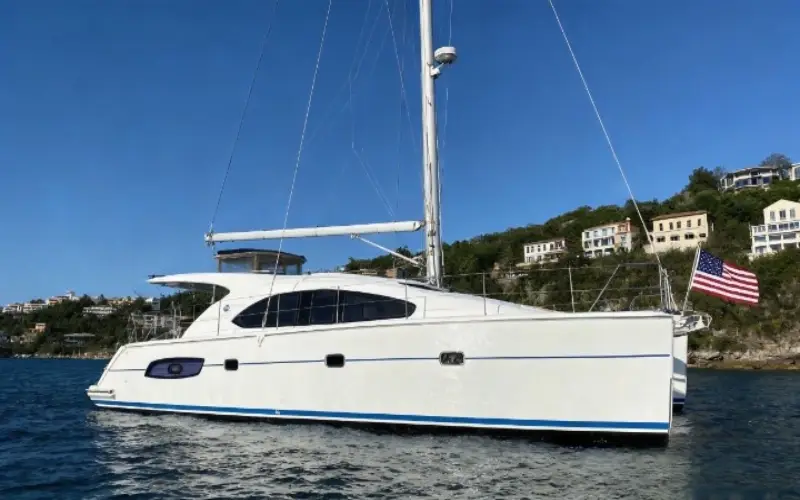
In recent years, demand for catamarans among cruising sailors has continued to grow, and the Leopard brand is one of the most popular choices in this market. Firstly, Leopard catamarans are renowned for their stability and safety. The wide beam and robust structural design give the vessels excellent stability under sail, which is particularly important for long-distance voyages. Many sailors prefer catamarans for their superior stability when undertaking transoceanic or extended voyages.
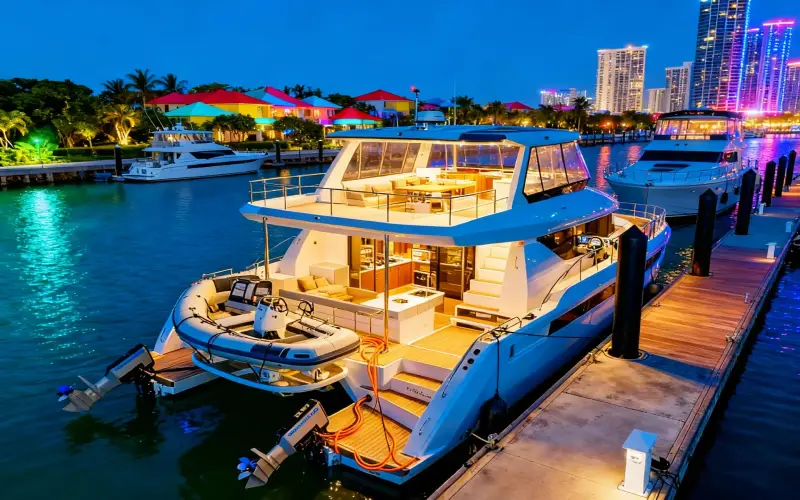
Secondly, Leopard catamarans offer distinct advantages in terms of interior layout. Compared to monohulls of the same size, catamarans provide more spacious saloons, larger deck areas and a greater number of separate cabins. This design is ideal for family sailing or cruising with a larger crew, ensuring that crew members can maintain a comfortable living environment even during extended voyages.
Furthermore, there is a relatively abundant supply of second-hand Leopard catamarans on the market. As many of these vessels were previously part of charter fleets, they come with comprehensive maintenance records and a history of regular servicing. Although these boats have logged significant hours at sea, fleet management typically maintains them to strict standards, which to a certain extent guarantees their overall condition.
Common Used Leopard models on the market
In the second-hand market, Leopard sailing catamarans are primarily concentrated in the 38- to 50-foot size range. This size range offers ample living space without making handling too difficult or maintenance costs excessively high, making it the most popular choice among cruising sailors.
Among the smaller catamarans, the Leopard 38 sailing catamaran and the Leopard 40 sailing catamaran are the most common models. These vessels are generally regarded as entry-level options for cruising catamarans; they are relatively simple to operate and have lower maintenance costs, making them ideal for couples or small families.
When moving up to the mid-sized cruising catamaran category, the Leopard 44 and Leopard 45 sailing catamarans rank among the most popular models on the market. Many sailors regard this size as the ideal balance for a cruising catamaran, offering ample living space whilst delivering more stable sailing performance.
If buyers place greater emphasis on comfort and space, then large cruising catamarans will be more appealing. Examples include the Leopard 48 sailing catamaran and the Leopard 50 sailing catamaran. These models typically feature larger deck areas, more luxurious interior layouts and greater long-distance cruising capabilities, making them ideal for family voyages across the open seas.
Reference guide to common Leopard model sizes:
| Model | Length | Typical Use |
| Leopard 38 | 38 ft | Entry-level cruising, small family sailing |
| Leopard 40 | 40 ft | Coastal cruising, sailing for two |
| Leopard 44 | 44 ft | Long-distance cruising |
| Leopard 45 | 45 ft | Transoceanic sailing |
| Leopard 48 / 50 | 48–50 ft | Extended ocean cruising |
Guide to Buying a Used Leopard Catamaran
Purchasing a second-hand cruising catamaran typically involves several stages. Firstly, buyers need to clarify their sailing requirements and budget. Factors such as whether they plan to undertake transoceanic voyages, the number of people living on board, and the intended sailing area will all influence the final choice of boat. Furthermore, the budget should not only cover the purchase price but also take into account future maintenance costs, mooring fees and insurance premiums.
Once the budget has been established, the next step is to select a suitable Leopard model. Different models vary in terms of layout, hull design and equipment configuration, so a comprehensive assessment based on sailing plans is required. For instance, if long-term life on board is planned, the number of cabins, storage space and energy systems become particularly important.
Once a potential vessel has been identified, the buyer must carefully review its history, including sailing records, maintenance records and details of any equipment upgrades. Particular attention should be paid to vessels that were previously part of a charter fleet, focusing on engine operating hours, the condition of the sails, and wear and tear on deck equipment.
A professional survey is an essential step prior to the formal transaction. A surveyor will conduct a comprehensive inspection of the hull structure, engine systems, electrical equipment and sails, and provide a detailed report. This is followed by a sea trial to test the vessel’s performance under actual sailing conditions and confirm that the engine and handling systems are in good working order.
Price Guide for Pre-owned Leopard Catamarans
The price of a pre-owned Leopard catamaran is typically closely linked to the vessel’s age, model, equipment configuration and condition. Generally speaking, smaller catamarans command lower prices, whilst larger, ocean-going models are more expensive.
Pre-owned Leopard price range guide (2026):
| Model | Pre-owned price range |
| Leopard 38 | $280,000 – $350,000 |
| Leopard 40 | $320,000 – $420,000 |
| Leopard 44 | $420,000 – $550,000 |
| Leopard 45 | $550,000 – $700,000 |
| Leopard 50 | $750,000 – $1,000,000+ |
It is important to note that a vessel’s price depends not only on its age but is also closely linked to its equipment configuration. For example, the presence of a solar power system, a desalination unit or upgraded navigation electronics can all have a significant impact on the price.
Tips for Negotiating the Purchase of a Pre-owned Leopard
In yacht transactions, price negotiation is often one of the most critical stages of the entire purchasing process. Experienced buyers usually conduct thorough market research prior to negotiations, comparing the asking prices of similar models to assess whether the seller’s offer is reasonable.
A survey report is often the most important tool in negotiations. If the surveyor identifies equipment requiring repair or replacement, the buyer can request a reasonable price reduction based on the repair costs. For instance, ageing sails, the need for electronic upgrades or engine maintenance costs can all serve as grounds for price adjustments.
Furthermore, market timing can influence the outcome of a transaction. In certain cruising regions, sellers are more willing to accept reasonable offers during the off-season. Consequently, for buyers who are not in a rush to purchase, choosing the right time to buy can often secure a more favourable price.
How to Find the Best Value Yacht
Finding a second-hand Leopard catamaran that is truly worth purchasing requires gathering information from multiple sources. Many buyers turn to international yacht brokerage firms to source vessels, as professional brokers typically provide more comprehensive vessel information and assist buyers in navigating the complex transaction process.
Furthermore, major yacht trading platforms publish a wealth of information on second-hand boats, enabling buyers to quickly compare prices, specifications and conditions across different vessels. By reviewing multiple listings and conducting on-site inspections, buyers are often better placed to determine which boat offers the best value for money.
Summary
In the cruising catamaran market, Leopard catamarans have long enjoyed an excellent reputation thanks to their stable structural design, spacious living quarters and reliable sailing performance. For buyers seeking a vessel for family cruising or ocean voyages, a well-maintained second-hand Leopard catamaran often offers exceptional value for money.
By planning their budget sensibly, selecting the right model, conducting a professional survey and negotiating rationally throughout the transaction, buyers can certainly find a reliable and reasonably priced vessel on the second-hand market. If chosen wisely, such a boat will not only accompany the owner on many years of cruising but also retain a stable market value in the future.
Riley Miller
Riley Miller is the owner of the “Serendipity” yacht, a contributing columnist for Yachting Monthly, and the author of 17 in-depth analyses on yacht cost management. He also serves as an advisory committee member of the European Second-Hand Yacht Association (ESYA) and holds the International Certificate of Competence (ICC-UK-2019C-17429), with certified cruising areas covering the Mediterranean and the western Atlantic coast.
Disclaimer
This article is based on publicly available market data, broker listings, and industry depreciation reports.
The content is provided for informational purposes only and reflects the author’s personal experiences and perspectives. It does not constitute legal, tax, or investment advice. Yacht transactions involve complex legal, financial, and technical considerations, and actual purchasing processes may vary depending on regional regulations, vessel types, or individual circumstances.
Before making any yacht purchasing decisions, readers are advised to consult licensed professionals—such as attorneys, tax advisors, licensed yacht brokers, or marine surveyors—for guidance tailored to their specific situation.
Neither the author nor the publisher shall be liable for any direct or indirect losses arising from reliance on the information presented in this article.
FAQ
Q1: Are second-hand Leopard catamarans suitable for ocean-going voyages?
A: Yes, many sailors use Leopard catamarans for transoceanic and even round-the-world voyages.
Q2: Is it worth buying a Leopard retired from a charter fleet?
A: Provided the maintenance records are complete and the vessel has undergone a professional survey, such boats typically retain a high level of utility.
Q3: What is the most important step when purchasing a second-hand Leopard?
A: A professional survey and sea trial are crucial steps in ensuring the vessel’s quality.
Q4: What is the lifespan of a Leopard catamaran?
A: With proper maintenance, many Leopard catamarans can remain in service for over thirty years.