Quick Answer: What Are the Main Types of Fishing Boats?
The main types of fishing boats include center console boats, walkaround boats, cabin cruisers, sportfishing yachts, and inshore boats such as bay boats and flats boats. These boats are typically categorized based on where they are used (inshore vs offshore) and their level of comfort and fishing capability.
As a yacht broker with over 15 years of experience, I've helped clients purchase everything from $50,000 entry-level fishing boats to $3M+ sportfishing yachts. From compact inshore boats to fully equipped offshore fishing yachts, each type serves a distinct purpose.
This guide will walk you through the most popular fishing boat types, helping you choose the right one based on usage, features, and budget.
Center Console Fishing Boat
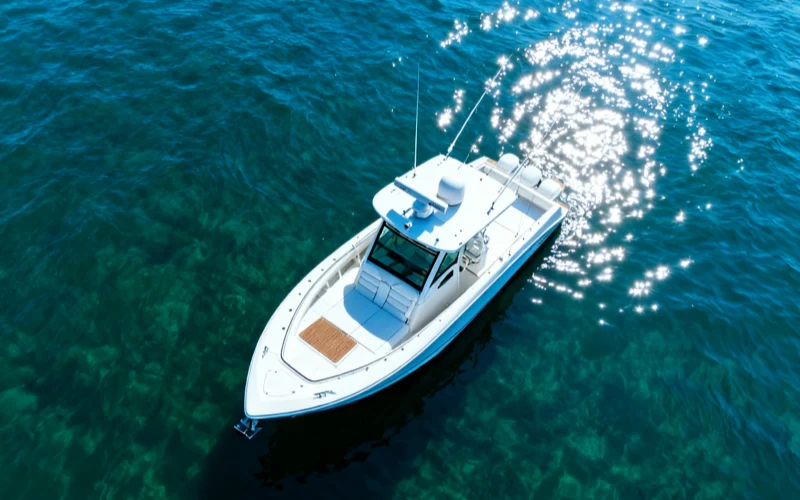
Center-console fishing boats are currently one of the most popular types of fishing boats on the global market, with demand continuing to grow, particularly in the United States and the Middle East.
What Is a Center Console Boat?
A center console fishing boat features a helm station positioned in the middle of the deck, allowing for full 360° walkaround access.
Most models range from 25 to 55 feet. With recent advancements, larger center consoles now overlap with offshore fishing capabilities traditionally reserved for bigger yachts.
Key Features
- 360° fishable deck space
- Outboard engine configuration (lower maintenance)
- Shallow draft for versatile access
- Advanced electronics (GPS, fishfinder, radar)
- Modular layout for customization
Best Use Cases
- Inshore fishing
- Light offshore day trips
- Family + fishing hybrid use
- Weekend outings
Pros
- Easy to operate (great for beginners)
- Strong resale market
- Efficient fishing layout
- Lower maintenance costs
Cons
- Limited weather protection
- No full cabin for overnight trips
- Less comfort in rough seas
In my transactions, center consoles account for over 40% of sales. Most first-time buyers with budgets between $80,000–$300,000 choose this type.
When Should You Choose a Center Console?
① You don't need overnight capability
② Fishing is your primary goal
③ You want strong resale value
If your main priorities are “frequent use, low complexity, and the ability to balance work and family life,” a center console fishing boat is one of the safest bets.
Walkaround Fishing Boat
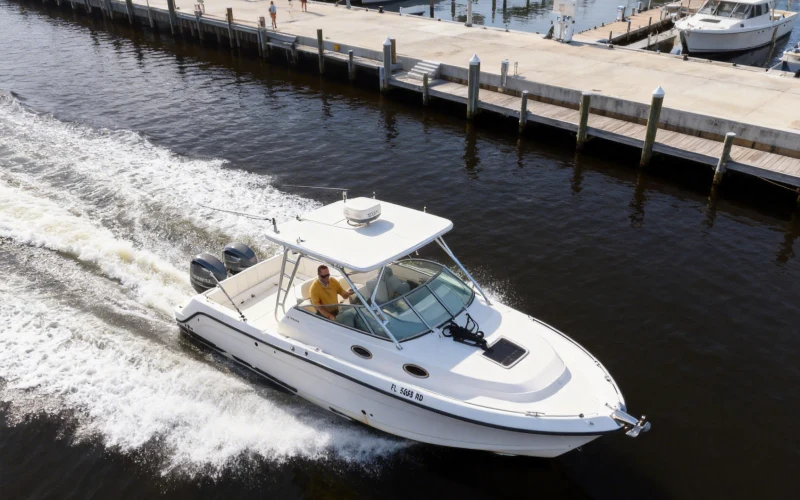
A walkaround fishing boat is a practical vessel designed for both fishing and basic cruising.
What Is a Walkaround Boat?
Walkaround fishing boats typically range in length from 24-35 feet and feature a small forward cabin and narrow side decks, making it easy to move safely to the bow.
Key Features
- Compact cabin (sometimes with a toilet)
- Walkable side decks
- Semi-enclosed helm area
- Multi-purpose design
Best Use Cases
- Family boating
- Weekend trips
- Light fishing + leisure
Pros
- More comfortable than center consoles
- Safer movement onboard
- Balanced functionality
Cons
- Reduced fishing space
- Less efficient layout
- Smaller resale market
When Should You Choose a Walkaround Boat?
① Need basic overnight capabilities
② Frequently take family members out on the water
③ Willing to accept reduced fishing efficiency
For buyers with budgets between $100,000–$350,000, this is a practical and versatile option.
Cabin Cruiser
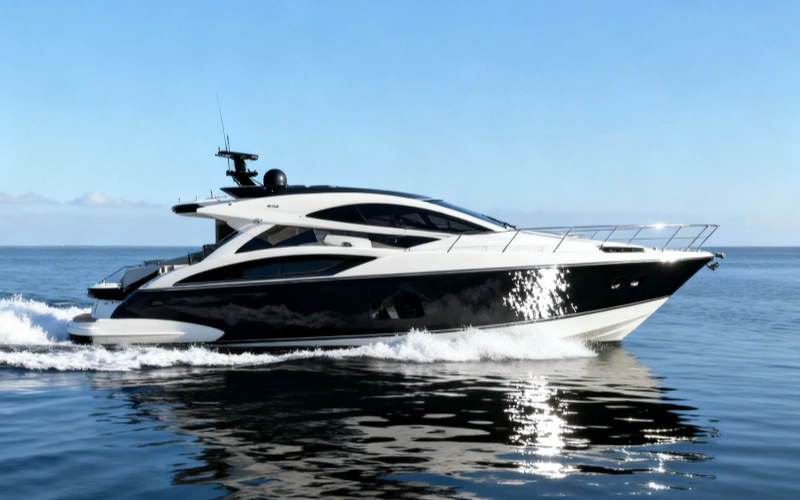
In the fishing boat category, cabin cruisers are considered a choice that prioritizes comfort.
What Is a Cabin Cruiser?
Cabin cruisers typically range in length from 28-50 feet and are designed with comfort in mind, featuring enclosed living spaces that include:
- Berths (sleeping area)
- Galley (kitchen)
- Head (bathroom)
I once helped a client purchase a 40-foot cabin cruiser for family vacations and business entertaining.
Key Features
- Fully enclosed cabin
- Overnight capability
- Extended cruising range
- Comfortable interior layout
Best Use Cases
- Multi-day trips
- Family vacations
- Entertaining guests
- Occasional fishing
Pros
- High comfort level
- Multi-purpose usage
- Privacy
Cons
- Limited fishing functionality
- Higher maintenance costs
- Requires more skill to operate
When Should You Choose a Cabin Cruiser?
① Plan to spend the night on board or stay for more than one day
② Need to host family or clients
③ Be prepared for higher maintenance and mooring costs
In terms of budget, these types of boats typically fall within the $150,000–$600,000+ range, depending on size and specifications.
Sportfishing Yacht
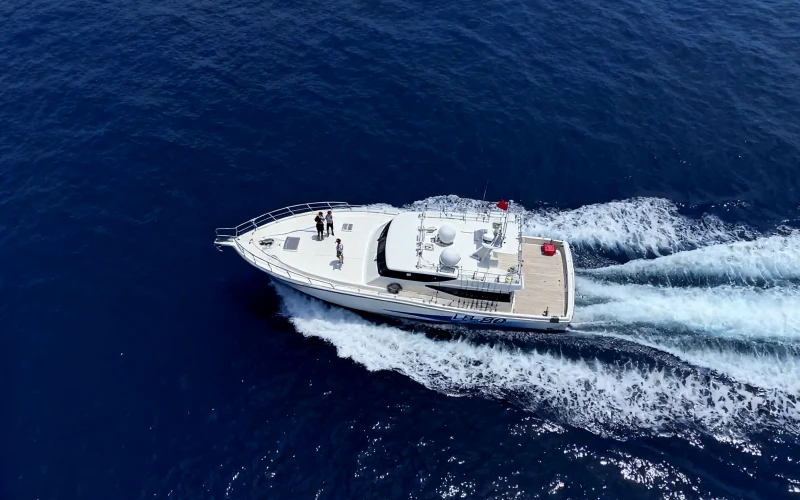
Sport fishing yachts are the fishing boat category that most closely resembles a professional offshore platform, while also offering the comfort and amenities of a luxury yacht.
What Is a Sportfishing Yacht?
Sportfishing yachts are typically 40-80 feet or longer and are ocean-going boats specifically designed for deep-sea fishing and long-distance cruising. When choosing this type of vessel, buyers should also consider reputation, build quality, offshore performance, and resale value. Exploring the best fishing boat brands can help identify manufacturers that match different fishing styles, budgets, and ownership goals.
Key Features
- Professional fishing equipment (outriggers, fighting chair, livewell)
- Advanced navigation systems
- Deep-V hull for rough seas
- Luxury interior with cabins and crew quarters
- Long-range capability
Best Use Cases
- Deep sea fishing
- Offshore expeditions
- Private luxury use
- Charter operations
Pros
- Exceptional offshore performance
- Premium comfort
- High resale value
- Professional-grade equipment
Cons
- Expensive ($500,000–$5,000,000+)
- High operating costs
- Often requires crew
I once assisted a client in purchasing a BERTRAM 61 CONVERTIBLE sportfishing yacht for deep-sea fishing in the Caribbean.
If you plan to use it for the long term, need to venture into the open sea, and value comfort, a sportfishing boat is the best choice.
Inshore Fishing Boats: Bay Boats, Flats Boats & Technical Skiffs
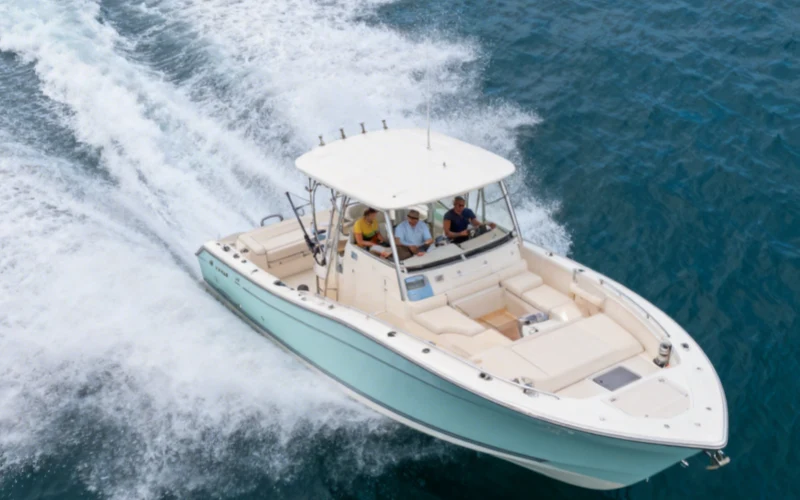
Inshore fishing boats are designed for shallow waters such as bays, estuaries, and lagoons.
Bay Boat
Best all-around inshore option
- Size: 18–26 feet
- Draft: 12–24 inches
- Wide Beam: 8.5 feet (about 2.6 meters) or wider
Features
- Stable wide beam
- Raised casting platforms
- Versatile layout
Best for: Bay fishing, family use, light offshore trips
I have quite a few clients in Florida who use Bay boats as their everyday boats for going out on the water, because they strike a good balance between stability and functionality.
Flats Boat
Highly Specialized Shallow-Water Boat
- Size: 12–25 feet
- Draft: 6–10 inches
Features
- Ultra-lightweight construction
- Push pole platform
- Silent operation
Best for: Sight fishing (bonefish, tarpon, redfish)
I once arranged the purchase of a similar vessel for a client in the Bahamas; their primary requirement was not comfort, but the ability to approach schools of fish without being detected.
Technical Skiff
Technical boats fall between Bay Boats and Flats Boats, placing greater emphasis on structural strength and environmental adaptability.
Features
- Reinforced hull
- Impact-resistant
- Low maintenance
Best for: Fishing guides, rough environments, frequent use
Limitations of Inshore Boats
This type of inshore fishing boat has clear limitations:
- Not suitable for offshore or open waters
- Limited storage and range
- Sensitive to weather changes
- Highly specialized
If you plan to operate exclusively in shallow or nearshore waters, this type of boat will be more efficient than a large yacht.
Fishing Boat Types by Category
When choosing the ideal fishing boat, it's useful to categorize them based on specific criteria such as fishing area, comfort level, and budget.
By Fishing Area
- Inshore Boats → Bay, Flats, Skiff
- Offshore Boats → Center Console, Sportfishing
By Comfort Level
- Open Boats → Center Console, Bay Boat
- Cabin Boats → Walkaround, Cabin Cruiser
By Budget
- Under $100K → Small Inshore Boats
- $100K–$500K → Center Console / Walkaround:
- $500K+ → Sportfishing Yachts
This concise categorization helps you quickly narrow down the best boat type based on your needs and budget, boosting your search for the perfect fishing vessel.)
Offshore vs Inshore Fishing Boats
Many first-time buyers focus solely on appearance or size when choosing between inshore boats and offshore fishing yachts, but the actual operating environment is the key factor in determining the right boat type.
| Category | Offshore Boats | Inshore Boats |
|---|---|---|
| Size | 35–80+ ft | 16–30 ft |
| Range | Long-distance | Short-range |
| Hull | Deep-V | Shallow/flat |
| Conditions | Rough seas | Calm waters |
| Cost | Higher | Lower |
Key Difference
- Offshore = safety + endurance
- Inshore = flexibility + shallow access
Selection Advice
① Do you plan to venture more than 10–20 nautical miles offshore?
- Yes → A boat designed for more remote waters
- No → A boat designed for coastal waters is more suitable
② Are there shoals or complex terrain in your primary waters?
- Yes → A boat designed for coastal waters has an advantage
- No → You can consider a boat designed for offshore waters
③ Is the frequency of use high (several times a month)?
- High-frequency use → A simple-structured inshore boat is more practical
- Low-frequency, long-distance voyages → An offshore boat is more reasonable
If you are undecided between the two, we recommend prioritizing a boat type that matches your primary waters over one with the most comprehensive features.
Best Fishing Boats by Use Case
Here's a quick guide to the best fishing boat types based on different needs and use cases:
- Best Fishing Boat for Beginners → Center Console
- Best Fishing Boat for Offshore Fishing → Sportfishing Yacht / Large Center Console
- Best Fishing Boat for Inshore Fishing → Bay Boat / Flats Boat
- Best Fishing Boat for Family Use → Walkaround / Cabin Cruiser
- Best Fishing Boat for Budget Buyers → Small Center Console / Used Boats
- Best Fishing Boat for Luxury Experience → Sportfishing Yacht
Talk to a broker: find the best fishing boat for offshore or inshore use
Buyers still deciding between fishing, cruising and recreational designs can compare the wider range of boat types and their primary uses.
How to Choose the Right Fishing Boat
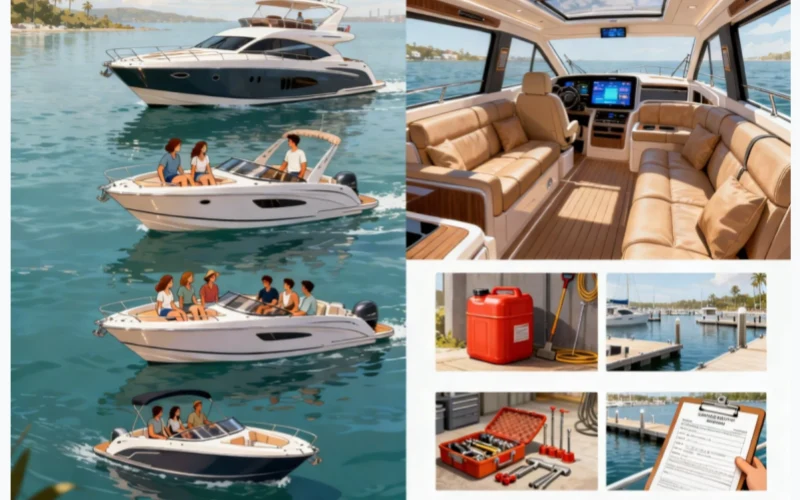
When choosing the right type of fishing yacht, you should focus on the following factors:
Application Scenarios
- Offshore Fishing → Center-console or sport fishing boats: Excellent wave-cutting ability and cruising performance
- Inshore Fishing → Bay boats or shallow-water boats: Excellent shallow-water access and maneuverability
Budget Range
Your budget determines not only the size of the boat but also the level of features and maintenance costs.
- $20,000–$80,000 → Entry-level Fishing Boat
- $80,000–$300,000 → Center Consoles, Semi-cabin, and High-end Inshore Boats
- $500,000+ → Large Center-console and Sportfishing Yachts
Number of Passengers
The number of passengers directly affects the hull structure and space requirements.
- Small Groups of 2–4 People → Small or Medium-sized Open Fishing Boats
- Families → Cabin cruisers or walkaround models
- Client Entertainment / Business Use → Cabin Cruisers or Sportfishing Yachts
Comfort Requirements
Comfort determines how long you can stay out on the water.
- Day Use → Open-deck Boats (Center Console / Bay Boat)
- Overnight/Long-Distance Cruising → Cabin Boats (Cabin Cruiser / Sportfishing Yacht)
Long-Term Costs
Annual operating costs for a yacht are often overlooked, but in my view, they are more important than the purchase price.
These primarily include:
- Fuel costs
- Regular maintenance
- Docking/marina fees
- Crew costs (if applicable)
- Resale value
According to the Real Cost of Owning a Yacht, the annual cost of owning a yacht typically amounts to 10% to 20% of the yacht's purchase price.
Choosing a fishing boat isn't just about "picking a boat"; it's about finding the one that best suits your needs. The most suitable boat isn't necessarily the largest one, but rather the one that offers the most stability and is the easiest to maintain.
👉 Get a personalized fishing yacht recommendation (based on your budget & fishing style)
Aluminum vs Fiberglass Fishing Boats
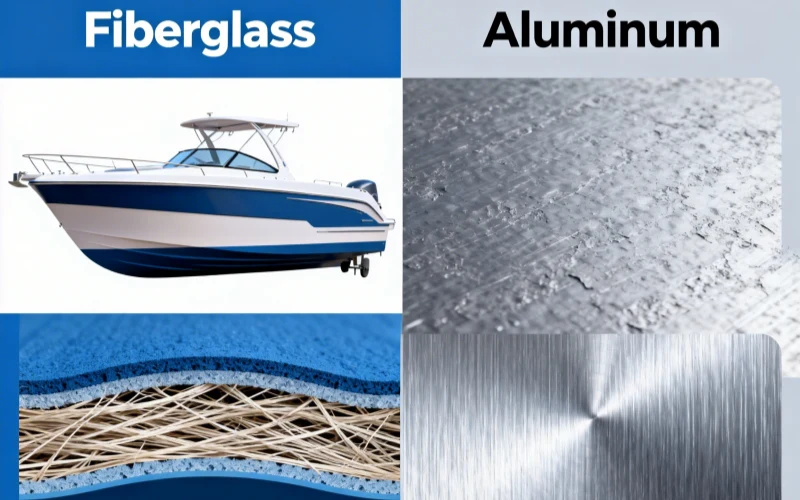
In the fishing boat market, the two most common hull materials are fiberglass and aluminum, each of which is suited to entirely different applications.
Fiberglass-Hulled Fishing Boats
In the high-end yacht and fishing boat market, fiberglass remains the dominant material. In my sales portfolio, over 90% of luxury fishing yacht orders feature fiberglass construction.
Why Is FRP More Popular?
Modern FRP manufacturing techniques have advanced to include composite sandwich structures and resin infusion technology, enabling a better balance between hull strength, weight control, and comfort.
Key Features
- Smoother sailing performance
- Higher build quality
- Better noise control
- Stronger resale value
Aluminum-Hulled Fishing Boats
Aluminum hulls do not account for a large share of the luxury yacht market, but they are highly practical in specific operating environments. I have worked with clients from Alaska, Canada, and remote waters in the Middle East who have very clear needs for aluminum boats.
The Core Logic of Aluminum Boats
- The design focus of aluminum boats is not on comfort, but on durability and impact resistance.
- In rocky, shallow, or complex waters, or in extreme environments, aluminum structures offer greater toughness than fiberglass.
Key Features
- High impact resistance
- Relatively lightweight
- Relatively simple maintenance
- Suitable for expedition use
Which is better, fiberglass or aluminum boats? I don't think they're comparable, because they serve completely different purposes:
- Fiberglass: Better suited for comfort, offshore cruising, and the high-end market
- Aluminum: Better suited for durability, challenging environments, and professional applications
The choice of hull material often directly determines your user experience and maintenance costs over the next 3–5 years. Therefore, I recommend that you first clarify your intended use before deciding on the material, rather than the other way around.
Fishing Boat Prices
Price differences among various types of fishing boats primarily stem from their size, intended use, and level of equipment.
For a more detailed breakdown of fishing boat prices by type and size, including hidden ownership costs and inspection-related factors, see our latest fishing boat pricing analysis.
| Boat Type Level | Price Range | Common Boat Types | Key Features | Ideal Users |
|---|---|---|---|---|
| Small Fishing Boats | $20,000 – $80,000 | Small Center Console, Basic Bay Boats, Flats Boats | Basic functions, simple structure, low maintenance costs | First-time boat buyers, light fishing enthusiasts |
| Medium Fishing Boats | $80,000 – $300,000 | Center Console (Mainstream), Walkaround, Entry-Level Cabin Cruiser | Balanced features, family-friendly, upgraded configurations | Family users, those combining leisure and fishing |
| Luxury Sportfishing Yachts | $500,000 – $5,000,000+ | Sportfishing Yachts, Large Custom Fishing Yachts | Strong offshore capabilities, full living space, professional equipment | High-end owners, offshore fishing, charter operations or business use |
Note: Pricing may overlap depending on configuration, brand, and onboard equipment.
Among the boats I've sold, medium-sized fishing boats account for the largest share—about 45%—because they strike a good balance between cost, functionality, and versatility.
👉 See available fishing boats for sale under $300K / $500K
New vs Used Fishing Boats
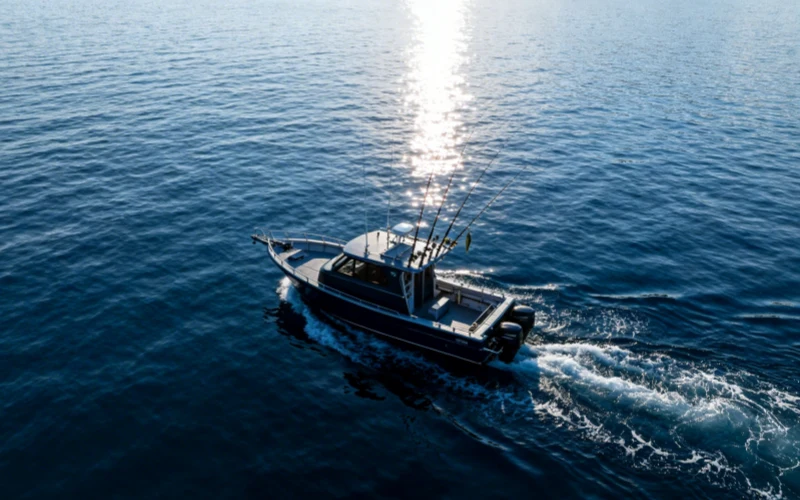
The decision between a new or used fishing yacht affects not only your budget but also your long-term maintenance costs, resale value, and overall user experience.
New Boats
Pros:
- Latest technology
- Warranty
- Customization
Cons:
- 20–40% more expensive
- Depreciation is typically faster in the first 1–3 years
- Longer delivery time
Used Boats
Pros:
- Better value
- Lower depreciation
Cons:
- Potential maintenance issues
- Limited customization
- Requires inspection
Buying Tips
When buying a yacht, you can use the following three criteria to make your decision:
① Does your budget account for depreciation costs?
② Do you plan to hold the yacht for the long term (5 years or more)?
③ Are you comfortable with the inspection process for pre-owned yachts?
If you're on a tight budget but want a higher-spec boat, I usually recommend prioritizing high-quality used fishing yachts over entry-level new boats.
Whether you're considering purchasing a new-build vessel or looking for a high-quality used fishing yacht, our team can provide you with end-to-end support—from market screening and vessel surveys to final delivery—ensuring that every decision is made with transparency and professionalism.
From versatile center consoles to high-end sportfishing yachts, each category has its place. If your goal is offshore fishing with premium comfort, investing in a sportfishing yacht can deliver both performance and long-term value.
About the Author
Luna Rossi is a certified yacht broker (SAMS #SAMS-66562) with over 15 years of experience in yacht sales, valuation, and navigation. She specializes in helping clients make informed decisions across the global yacht market—balancing lifestyle, performance, and investment value.
Disclaimer
This article is for informational purposes only and does not constitute purchase or legal advice. Fishing boat prices and suitability vary by market and condition. It's recommended to conduct a marine survey and consult a certified broker before purchasing.
FAQ
Q1: How much does a fishing boat cost?
A: The price of a fishing boat ranges from approximately $20,000 to over $5 million, depending on its size and specifications.
Q2: Which type of fishing boat is best suited for offshore fishing?
A: Sport fishing yachts and large center-console boats are the best choices, as they offer greater power and safety.
Q3: Which type of fishing boat is the most versatile?
A: Center-console boats are considered the most versatile option due to their flexibility.