



Quick Answer:
In 2026, the price range for new catamarans varies widely, with entry-level small models starting at around $300,000, while large, custom-built luxury catamarans sell for over $8 million;used catamarans can offer substantial savings compared with equivalent new models, but the discount varies considerably according to age, condition, specification, tax status and charter history.In addition to the purchase price, annual maintenance, insurance, berthing, and fuel costs combined account for approximately 6%–12% of the vessel’s price, and can reach around 18% in cases of long-distance voyages or high utilization rates.
An Overview of Overall Costs in the New and Used Markets
Based on market conditions in 2026, catamaran prices vary widely, ranging from entry-level models costing several hundred thousand dollars to high-end custom models priced in the millions. Prices are primarily influenced by construction materials, brand positioning, and intended use.
A common misconception among buyers is to “focus solely on the listed price,” but in reality, delivery specifications, taxes, and shipping costs can add an additional 10%–25% to the total expense.
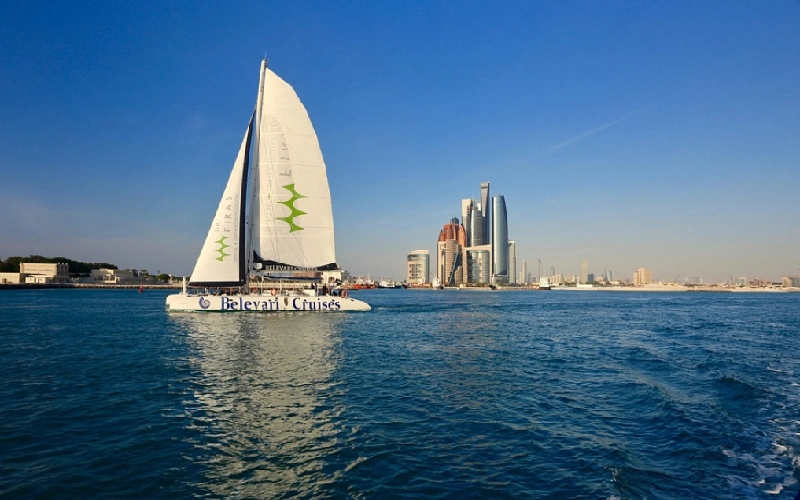
Price Range for New Catamarans
In the global yacht market of 2026, the price distribution of new catamarans exhibits a distinct “step-like structure,” with different sizes and configurations directly determining the final cost of the catamaran. The following are the price ranges for catamarans:
| Class | Length Range | Price Range (USD) | Features |
|---|---|---|---|
| Entry-level Cruiser | 30–40ft | 300,000 – 800,000 | Basic configuration, ideal for novice sailors |
| Mid-range Family Model | 40–50ft | 800,000 – 2,000,000 | Upgraded space layout, suitable for long-term onboard living |
| Premium Long-range Vessel | 50–70ft | 1,500,000 – 6,000,000 | Strong long-distance cruising capability, superior comfort |
| Custom Luxury Class | 80ft+ | Starting from 8,000,000 | Fully customized, superyacht-grade experience |
Price Notes:
The price ranges in this guide are based on publicly listed yacht listings, prevailing market rates among industry brokers, and estimates of standard ownership costs. Actual selling prices may vary depending on the brand, model, year of construction, engine hours, refurbishment history, the vessel’s location, and inspection results.
Factors Affecting Used Catamaran Prices
Price fluctuations in the used catamaran market are more pronounced; prices for the same model may vary by 30% or more depending on maintenance history. Key influencing factors include:
- Age of the vessel (significant differences between vessels under 5 years old and those over 10 years old)
- Whether a major overhaul has been completed (engine, sail system)
- Whether the vessel was used for commercial charter (higher usage intensity)
- The brand’s ability to retain value
For example, high-end Sunreef models still retain strong resale value in the used market, while some entry-level brands rely more heavily on the boat’s maintenance history.
The Impact of Size on Catamaran Costs
Size is one of the key variables affecting costs; it not only influences the purchase price but also directly determines subsequent operating expenses. General guidelines:
- A 10-foot increase in length can result in a substantial rise in purchase and operating costs, but the percentage varies widely by brand, construction method, propulsion type and specification
- Fuel, maintenance and berthing costs generally increase as size and beam increase
- Crew requirements may increase from 0–1 person to 2–3 people
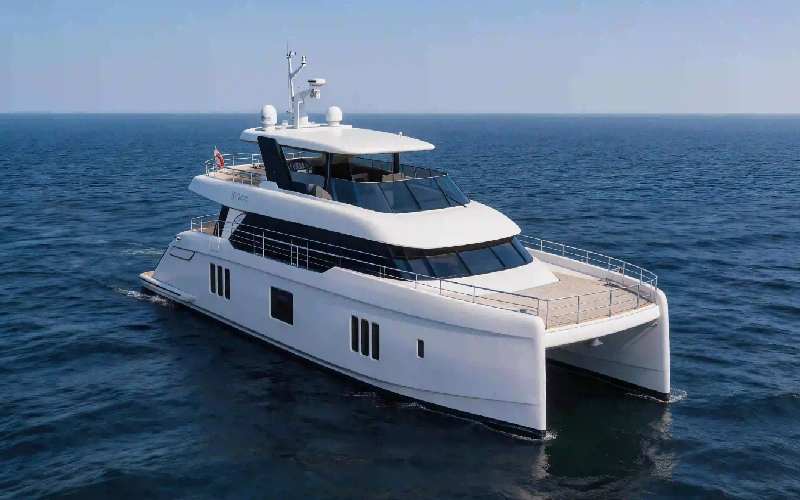
Analysis of the Total Cost of Ownership for Catamarans
When making a decision to purchase a yacht, many buyers tend to focus on the “list price of the hull,” but this is only a portion of the total cost; the real financial burden of owning a catamaran comes from ongoing expenses down the line.
Based on my experience, over a 3- to 5-year ownership period, the ongoing expenses associated with a catamaran can accumulate into a significant amount on top of the initial purchase cost and should be taken into account alongside the purchase cost when evaluating the investment.
Acquisition Cost
The acquisition cost is the first step in investing in a catamaran, but in actual transactions, it is usually not the “final purchase price.” Rather, it serves as a baseline cost to which various configuration and delivery fees must be added. Specifically, it includes the following components:
Hull price: This is the most basic component of the quote, typically determined by the brand, size, and construction materials
Optional Equipment: Includes navigation systems, radar, air conditioning, solar systems, sail upgrades, etc
Taxes and Delivery Fees: Import duties, value-added tax (VAT), and registration fees vary by country and region
International Shipping Costs: For example, logistics costs incurred when shipping a boat manufactured in Europe to ports in the United States or Asia
Many buyers discover during the final delivery phase that optional systems often increase the total cost by approximately 10%–20%. For example, boats configured for long-distance cruising may include additional solar panels, energy storage batteries, and water treatment systems. While these upgrades enhance comfort, they also significantly increase the initial investment.
Therefore, before making a purchase, it is generally recommended to divide the budget into two parts: the base price of the boat plus a 15%–25% contingency budget, to avoid a sudden financial strain later on.
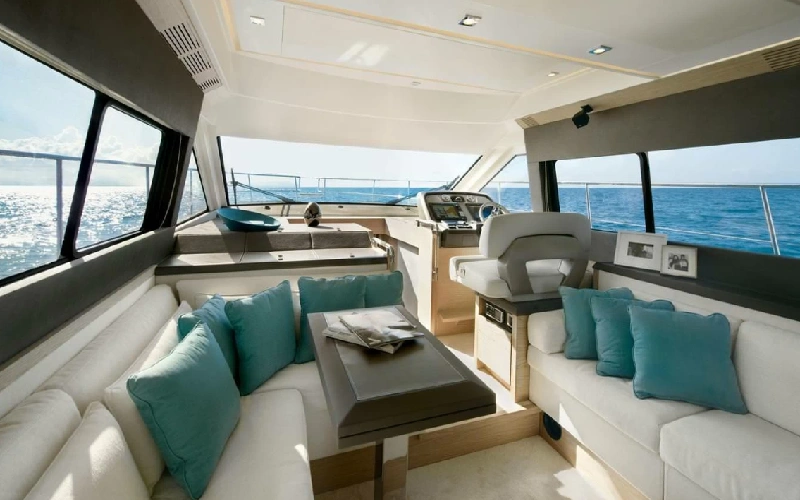
Annual Maintenance Costs
Within the overall cost structure of owning a catamaran, annual maintenance costs are typically the most easily underestimated component, yet in practice they represent the most consistent source of recurring expenses. As a general planning reference, the annual routine ownership and operating costs for a vessel are approximately 6% to 12% of the vessel’s value. This estimate typically excludes financing costs, asset depreciation, major refurbishment projects, and special repair expenses.Maintenance costs typically consist of the following key components:
- Routine Maintenance: Includes engine oil changes, filter replacements, transmission system inspections, etc
- Anti-fouling Coating: Applied to prevent marine organism fouling on the hull, typically every one or two years
- Mooring and Hauling-Out Costs: Includes marina berth fees, dry dock hauling-out and launching fees
- Repairs and Replacement Parts: Such as consumable replacements for pump systems, electrical equipment, and worn sail components
For 40–50-foot family catamarans, overall maintenance costs generally remain within a manageable range provided the boat is used at a normal frequency and maintained regularly. However, if the boat is moored long-term in environments with high salinity or high humidity, additional costs for corrosion prevention and repairs will increase significantly.
Insurance and Other Hidden Costs
In the long-term ownership structure of catamarans, insurance premiums and “hidden operating costs” are often overlooked in budget planning, yet they account for a consistent portion of actual annual expenses. The typical structure of insurance premiums is as follows:
- Small catamarans: Approximately 0.8%–1.5% of the vessel’s value
- Medium to large catamarans: Approximately 1%–2%
- High-end custom or ocean-going vessels: Pricing is typically determined on a case-by-case basis
Insurance costs are influenced by multiple factors, including the sailing region, the vessel’s age, the skipper’s experience, and whether the vessel is used for commercial purposes. In addition to insurance, hidden costs primarily include:
- Port and berthing fees: These vary significantly by region, with premium ports incurring higher costs
- Crew or skipper fees: Some clients opt to hire professional crew members for long voyages or high-end configurations
- Seasonal storage fees: For example, winter hauling, off-season storage, and protective services
- Inspection and registration fees: Some countries require periodic safety inspections and registration renewals
These “hidden costs” are often underestimated in the first year but gradually become apparent during the second year of use. Therefore, during the budget planning phase, it is generally recommended to set aside an additional 10%–15% of the total cost as a buffer.

Catamaran Brand Positioning Examples
In the catamaran market, different brands not only represent different price ranges but also directly impact the user experience, maintenance complexity, and resale value. In my actual conversations with clients, many initially focus on their “budget range,” but after delving deeper, they often discover that “brand selection” is one of the key factors determining long-term satisfaction.
Lagoon Series Pricing and Positioning
Lagoon is currently one of the catamaran brands with the widest global market coverage. Its product line spans from entry-level cruisers to mid-to-high-end ocean-going models, giving it a significant share of the family and recreational sailing markets.
Recommended Models 👉

2026 Lagoon EIGHTY 3
- Length83 ft
- Cabins6
- TypeCatamaran yacht
The 2026 Lagoon EIGHTY 3 is Lagoon's flagship catamaran, positioned in the ultra-luxury sailing and long-term maritime lifestyle market. The yacht is approximately 24.4 meters long, boasts over 300 square meters of external living space, and combines superyacht craftsmanship with the stability of a catamaran structure.Compared to traditional monohull-powered yachts, the EIGHTY 3 emphasizes a spacious living experience, long range, and a customized lifestyle, making it suitable for both private vacations and high-end business receptions.
In terms of product positioning, Lagoon leans toward a “space-priority design,” emphasizing living comfort and maximizing the use of deck and salon areas. This design philosophy offers clear advantages for long-term family use or group travel. Its key features include:
- Significantly optimized space design: Excellent natural light indoors and high utilization of living area space
- Family-friendly: The layout resembles a “floating apartment,” making it ideal for extended stays
- High liquidity in the pre-owned market: Boats resell quickly on the global brokerage market
Value-for-Money Analysis of the Leopard Series
Leopard Catamarans has a strong user base in the North American market. Its design philosophy leans toward “practicality and maneuverability,” emphasizing stability and the ease of self-navigation in the sailing experience.
Compared to brands with more lifestyle-oriented designs, Leopard places greater emphasis on functional logic and sailing efficiency, which has led to high acceptance among self-sailing enthusiasts.
Recommended Models 👉
Leopard 42
- Length41.70 ft
- Cabins3
- Top speed10 kn
- TypeCatamaran sailboat
Leopard 42 is a high-performance cruising catamaran built by Leopard Catamarans, famous for stability, safety, spaciousness and fuel efficiency. It features a modern twin‑hull design, delivering smooth sailing, shallow draft and strong seaworthiness for various cruising areas. The interior is bright, rational and comfortable with independent cabins and complete facilities, combining living and leisure functions.
Its key features include:
- Simple and intuitive handling: Suitable for skippers sailing solo or in small groups
- Relatively stable maintenance costs: Standardized system design facilitates future repairs
- Ideal for self-cruising enthusiasts: Positioned more as a “functional cruiser”
In terms of market performance, Leopard models demonstrate relatively stable liquidity in the mid-range pre-owned market, particularly those around 40 feet in length, which also enjoy a solid demand base in the charter market.
Market Performance of Sunreef Premium Catamarans
Sunreef is one of the leading brands in the high-end catamaran market. Its products are positioned more as “custom-built maritime spaces,” emphasizing personalized design and a luxurious experience rather than simply serving as a means of transportation.
Unlike mass-produced, standardized brands, Sunreef places greater emphasis on client involvement in the design process. Everything from interior layouts to functional configurations can be highly customized, ensuring that each vessel possesses a strong sense of uniqueness in its details.
Recommended Models 👉
Sunreef 100 Power
- Length93.90 ft
- Cabins5
- TypeCatamaran yacht
The 100 Sunreef Power catamaran is a luxurious vessel with transoceanic capabilities, whose design has reached new heights, providing passengers with unparalleled comfort and a unique sailing experience. In the entertainment space on the main deck level, on the port side is a lounge area with a 55 - inch lift TV, and on the starboard side is a custom - designed bar area.
Key features include:
- Highly Customizable Design: Layouts and functional zones can be adjusted according to client needs
- Luxurious Interiors and Extensive Space Expansion Capabilities: Suitable for long-term living or high-end vacations
- Ideal for Long-Distance Voyages and High-End Experiences: Better suited for ocean cruising and as a private vacation platform
In terms of pricing, Sunreef models typically start at over $2 million, and depending on the complexity of the configuration and increase in size, the overall cost may rise further into the superyacht price range.
How to Make a Catamaran Purchase Decision Based on Your Budget
For most catamaran buyers, budget takes precedence over brand when selecting a boat. Different budgets correspond to different boat models, operating costs, and upgrade potential. While many initially prioritize brand, after carefully assessing their needs, they tend to choose a model that fits their budget and intended use, rather than blindly pursuing high-priced, high-spec models.
Therefore, when planning a catamaran purchase, it is advisable to first clarify your annual usage frequency, cruising range, number of family members, and long-term budget. Then, filter brands and models based on different price ranges. This approach makes it easier to make a decision that suits your needs and effectively controls the overall cost of owning a catamaran.
Recommended Options for a Budget of $300,000–$800,000
A budget of $300,000 to $800,000 is within the range of many first-time catamaran buyers and represents the price bracket where the majority of entry-level and some small-to-medium-sized catamarans on the market are concentrated. With this budget, buyers can purchase a relatively new entry-level catamaran or a used catamaran from a mainstream brand in good condition. This budget is typically suitable for the following groups:
- Beginners who wish to learn sailing and boat management
- Those interested in coastal cruising or short weekend trips
- Families of three or four seeking recreational enjoyment
- Buyers looking to keep long-term ownership costs under control
If your budget is limited, we recommend focusing on pre-owned boats that are 3 to 8 years old with complete maintenance records, rather than simply pursuing older vessels at lower prices. A thorough maintenance history is often more valuable than merely saving on the purchase price and can also reduce the risk of future repairs.
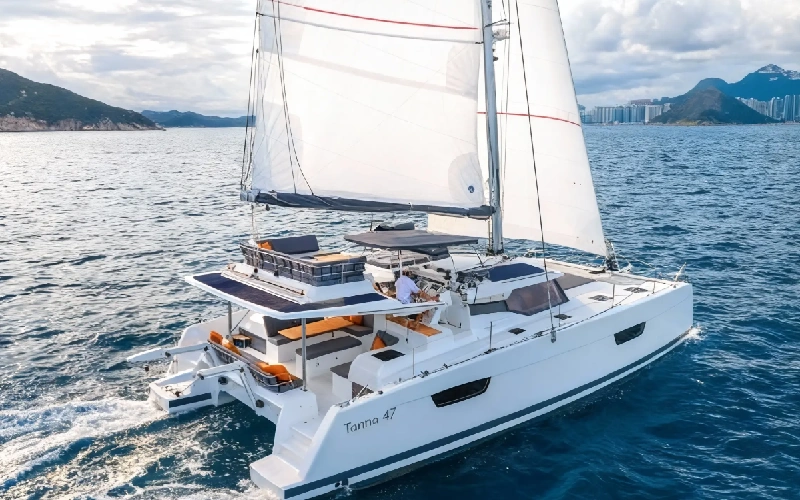
Strategies for the $800,000–$2 Million Price Range
The $800,000 to $2 million range is currently the most active segment of the global catamaran market and the budget range most commonly chosen by family cruisers and long-term sailing enthusiasts. Whether purchasing a brand-new mid- to high-end catamaran or selecting a well-equipped used boat, this range offers a wide variety of options to compare. The main advantages of this budget include:
- The option to choose a well-equipped new boat or a high-quality used boat
- A more spacious layout, significantly enhancing living comfort
- Better suited for long-term family cruising and inter-island voyages
- Equipped with more comprehensive navigation, power generation, and living systems
Selection Criteria for Catamarans Above $2 Million
Once the budget exceeds $2 million, the focus of the yacht-purchasing decision typically shifts from price itself to how to create a sailing platform that better aligns with one’s lifestyle based on personal needs. Buyers of catamarans in this class tend to prioritize comfort, long-range cruising capability, and personalized configurations over simply comparing price differences between brands. This budget range typically emphasizes the following aspects:
- Customized spatial layout: Designing cabins, entertainment areas, and office spaces to suit family members or business needs.
- Long-range cruising capability: Equipping the vessel with larger fuel tanks, water tanks, and energy storage systems to meet the demands of ocean-going cruises.
- Crew accommodations and comfort: Providing separate crew quarters, a professional galley, and additional smart control systems.
- High-end entertainment facilities: Such as a beach club, a hot tub, and storage areas for water toys.
Conclusion
Overall, the total cost of catamarans in 2026 exhibits a distinct tiered structure, with different budgets corresponding to different boat classifications, usage scenarios, and long-term ownership costs. From entry-level family cruisers priced between $300,000 and $800,000 to high-end custom catamarans costing over $8 million, there are products in every price range to suit the needs of different users. For most buyers, what truly impacts the long-term ownership experience is not the initial purchase price, but whether the boat meets their sailing needs, frequency of use, and ability to maintain it over time.
Therefore, when setting a budget for purchasing a boat, it is important to comprehensively consider the boat type, brand, age, ownership costs, and resale value. Beginners may want to rent a boat first to identify their specific needs before choosing a model; this approach not only reduces the risk of making the wrong decision but also aligns with long-term boating plans.If you’re looking for a catamaran that fits your budget, feel free to browse our list of yachts for sale. Compare different sizes, brands, ages, prices, and estimated ownership costs to find the catamaran that’s right for you.
Disclaimer
The content of this article is for reference only. This article has not received sponsorship from any shipyard, financial institution, or brand; the author has not been involved in any brokerage transactions involving the vessels mentioned herein. Yacht specifications are based on publicly available information as of 2026. Actual prices may vary depending on region and market fluctuations. Actual configurations are subject to classification society certificates. Before purchasing, be sure to engage an independent surveyor (unaffiliated with the seller) to conduct a sea trial and verify the certificates. Neither the author nor this platform assumes any liability for losses resulting from reliance on the information provided in this article. Regulations and fees are subject to change; please be sure to check the latest requirements.
About the Author
Andrew Rogers is an experienced yacht broker with knowledge of catamaran pricing, vessel specifications and international brokerage markets. He helps buyers compare new and pre-owned yachts based on budget, intended use, condition and long-term ownership costs.
FAQ
Q1: What are the approximate annual maintenance costs for a catamaran?
A: Typically, the annual maintenance costs for a catamaran account for about 6%–12% of the purchase price, but the actual figure may vary depending on frequency of use, mooring location, and maintenance standards. For example, boats moored in high-cost ports or those that frequently embark on long voyages will incur significantly higher maintenance expenses.
Q2: Is it more cost-effective to buy or rent a catamaran?
A: There is no one-size-fits-all answer to this question; it largely depends on how often you use the boat. If you go out to sea only a few times a year, renting is usually more flexible; however, if you plan to use the boat long-term or go on extended voyages, purchasing is more cost-effective in the long run.
Q3: Do used catamarans depreciate quickly?
A: The rate at which a catamaran depreciates is closely tied to the brand and maintenance history. Generally, depreciation is faster during the first five years and then levels off, but premium brands such as Lagoon or Sunreef retain a certain degree of value in the used market.
Q4: Are fuel costs high for catamarans?
A: Compared to monohull motorboats of the same size, catamarans are generally more fuel-efficient during cruising, but fuel costs still rise with size and engine configuration. The difference in fuel consumption becomes particularly noticeable during high-speed or long-distance voyages.
Q5: Are catamarans suitable for long-term living on board?
A: Catamarans offer spacious horizontal living areas and better living and storage spaces than monohulls of the same size. They also provide greater stability at sea, making them more suitable for short-term living at sea. However, due to space limitations within the hull, storage and water and electricity supplies are limited. Long-term residency still requires access to marina facilities and cannot fully replace a home on land.
Q6: What key areas should you inspect when purchasing a used catamaran?
A: condition of the engines on both sides of the catamaran, the electrical and plumbing systems, and the wear and tear on sails and rigging. Also, request a complete record of annual maintenance and repairs. The hull bottom, antifouling paint, water accumulation in the bilge, and aging electrical wiring are also critical areas that can lead to high repair costs.