



A single-mast sailboat is a sailing vessel equipped with one mast. Common single-mast rig types include the sloop, cutter, and cat rig. Most modern cruising sailboats use a sloop rig, which typically combines a mainsail with one headsail. However, “single-mast” describes the rig arrangement, while “monohull” describes the hull configuration, so the two terms are not interchangeable.
What Is a Single-Mast Sailboat?
A single-mast sailboat is a type of sailboat designed with a single mast, a mainsail, and a headsail; it is also one of the more common sailboat layouts in the modern private sailing market. Compared to multimast sailboats, the single-mast design is structurally simpler and has a relatively easy-to-understand control system, making it widely used for beginner training, family cruising, coastal voyages, and some ocean-going voyages.The following is the sail‑fitting classification table:
| Single‑Mast Rig | Sail Arrangement | Typical Characteristics |
|---|---|---|
| Sloop | One mainsail and one primary headsail | Most common modern cruising configuration |
| Cutter | One mainsail with two forward sail positions | Flexible sail combinations and offshore use |
| Cat rig | One mast and usually one mainsail | Simple sail plan, often used on smaller boats |
| Fractional sloop | Forestay attaches below masthead | Responsive sail control and common on performance boats |
| Masthead sloop | Forestay reaches near the masthead | Larger headsail area and traditional cruising setup |
Many first-time sailboat buyers prioritize single-mast sailboats. Their advantages extend beyond simply being “easy to sail”; more importantly, they strike a good balance between space utilization, maintenance costs, and liquidity in the used yacht market.
How a single-mast Sailboat Works
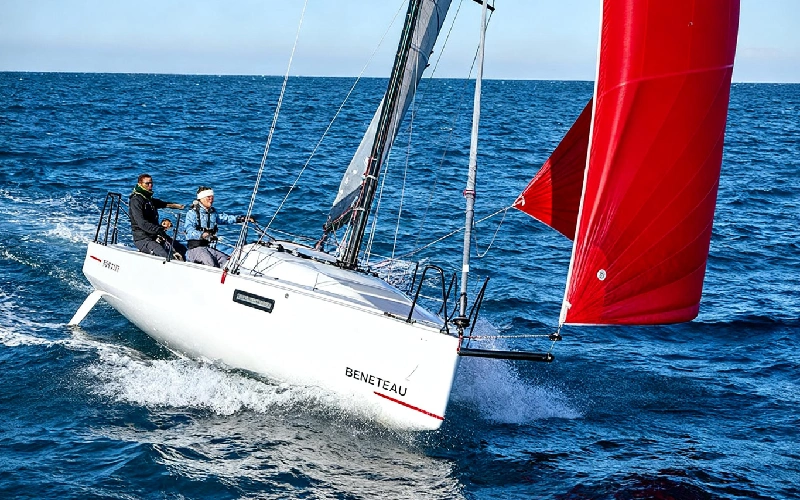
A single-mast sailboat generates lift when wind pushes against its sails, and the heading is adjusted by modifying sail angles. As airflow passes across the sails, aerodynamic forces similar to those of aircraft wings are created to drive the boat forward. Meanwhile, the underwater keel or centerboard counteracts sideways drift and keeps the vessel sailing steadily. Its main components are listed below:
| Component | Main function |
| Mainsail | Provides the primary thrust and controls power output of the vessel |
| Headsail | Boosts power and improves up‑wind sailing performance |
| Mast | Supports the sail system and transfers structural loads |
| Rigging | Adjusts sail angle and maintains overall structural stability |
During actual sailing, crew members regularly adjust the mainsail and headsail according to wind direction. When sailing downwind, sailors ease the sails and may deploy a dedicated downwind sail when conditions allow.
Why Do Most Modern Cruising Sailboats Feature a Single-Mast Design?
The widespread adoption of single-mast designs in modern cruising sailboats is related to their overall performance and operational requirements.
First, the single-mast structure is more in line with trends in private sailing. In the past, large ocean-going sailboats often featured twin-mast or multi-mast designs to distribute sail area and reduce the operational demands on individual sails during long-distance voyages. However, with advancements in modern sailboat materials, automated equipment, and navigation assistance systems, a single mast paired with a modern rigging system is now sufficient to meet the needs of most private cruising.
Second, single-mast sailboats offer higher space utilization. For private cruising sailboats in the 30–50-foot class, eliminating extra masts and related equipment frees up more deck space while reducing design constraints on the interior layout, allowing manufacturers to provide more comfortable living areas.
Furthermore, maintenance costs are a significant factor. Multi-masted sailboats typically involve more masts, more rigging, and more maintenance tasks, whereas a single-mast design reduces the number of mechanical and structural components, making it an attractive option for private boat owners seeking to keep annual maintenance costs under control.
Analysis of single-mast Sailboat Structure: The Role of Each Key Component
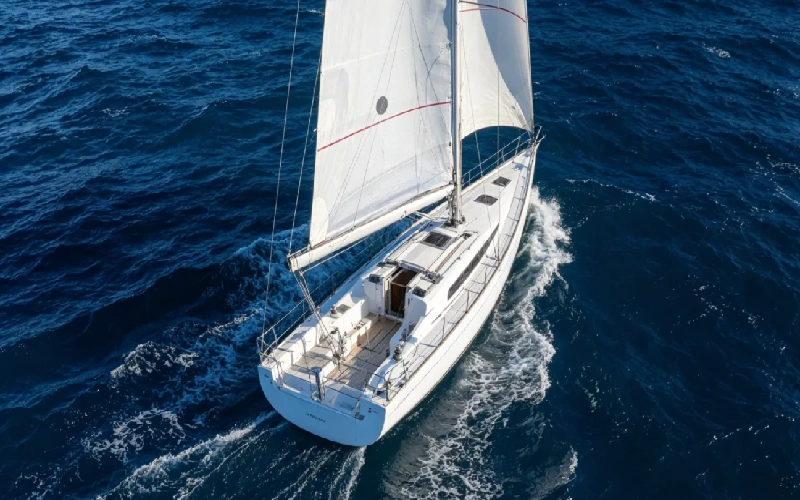
Although single-mast sailboats appear structurally simple, their sailing performance, stability, and comfort all depend on the combined action of multiple systems. From hull design to sail system configuration, every component influences the sailing experience.
When evaluating a used sailboat, buyers should look beyond the brand and exterior appearance and examine the hull, rigging, propulsion system, maintenance records, and interior condition.
Hull: Determines Stability and Seakeeping Performance
The hull is the most fundamental structure of a monohull. It not only supports the crew, equipment, and storage space but also determines the boat’s stability under various sea conditions. Currently, single-masted sailboats on the market primarily feature two types of hull designs:
| Hull Configuration | Main Characteristics | Common Uses |
|---|---|---|
| Monohull | Heels under sail, strong upwind performance, traditional sailing feedback | Training, coastal cruising, offshore sailing |
| Catamaran | Wider platform, reduced heeling, more living space | Family cruising, chartering, long‑term living |
| Trimaran | Lightweight, fast and stable, but often less spacious internally | Performance cruising and racing |
The most distinctive feature of monohull is the sailing feedback generated by the hull’s heel, which allows the sailor to feel changes in wind strength more directly. At the same time, the deep keel design enhances resistance to skidding, enabling the boat to maintain better course control when sailing into the wind.
For family owners, hull width, cabin layout, and storage space are often more important than sheer speed. For example, among 40-foot sailboats, some models prioritize sportiness, while others focus on enhancing living comfort.
Mast and Rigging System: Key Components Affecting Maneuverability
The mast and rigging system are vital structural elements that provide propulsion for a single-masted sailboat. They not only support the sails but also influence the boat’s maneuverability, safety, and sailing efficiency.
single-mast sailboats commonly use a sloop rig, consisting primarily of a mast, boom, mainsail, headsail, standing rigging, and running rigging.
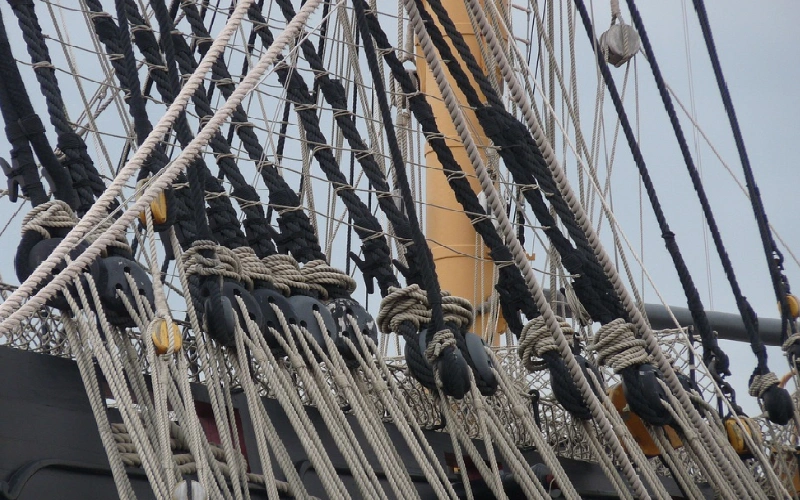
The rigging system is one of the key areas to inspect. Many used sailboats appear to be in good condition, but prolonged exposure to seawater can lead to wire fatigue, corrosion of fittings, or a loss of tension. If you plan to purchase a used single-masted sailboat, inspecting the rigging is often more important than simply checking the boat’s age.
According to BoatUS maintenance recommendations, sailboat rigging is a critical safety component that requires regular inspection. Particular attention should be paid to metal structures that are constantly exposed to the marine environment, checking for corrosion, wear, and the condition of connections.
Sail System Configuration: How the Mainsail and Jib Affect Speed
The sail system is the core component that generates propulsion in a single-mast sailboat, and the coordination between the mainsail and the jib determines the boat’s sailing efficiency.
Mainsail
Mounted behind the mast, the mainsail is one of the primary sources of propulsion for a single-mast sailboat. It can adapt to different
wind directions by adjusting its angle:
- When sailing downwind, the mainsail is eased farther out to capture the wind more effectively. Some boats may also deploy a spinnaker or other downwind sail to increase total sail area;
- When sailing on a beam reach, the sail angle is adjusted to maintain speed;
- When sailing upwind, precise control of the sail shape is required to reduce drag.
Jib
The jib is located in front of the mast and works in conjunction with the mainsail to optimize airflow, thereby improving overall lift efficiency.
Interior Layout: A Key Factor Affecting Living Experience
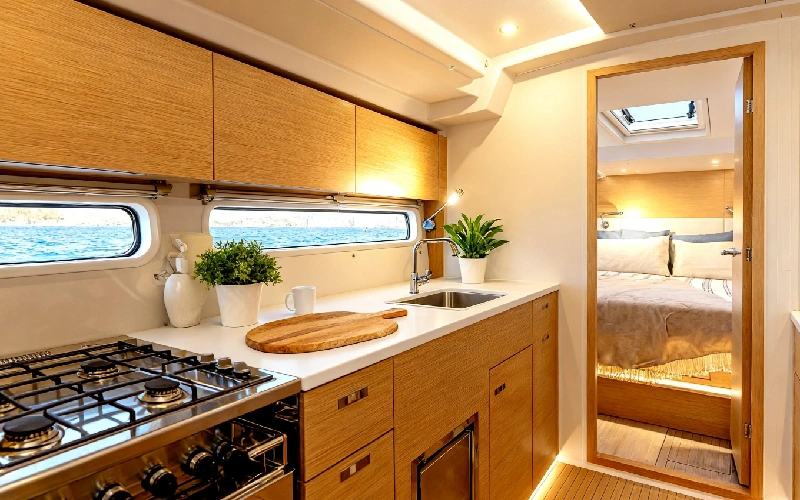
Although single-mast sailboats rely on wind power for propulsion, for modern private owners, the comfort of the interior cabin has become a crucial factor in selecting a vessel.
Currently, 30–50-foot sailboats are typically designed according to specific usage needs:
- Owner’s Cabin
- Guest Cabin
- Galley
- Head
- Saloon
There are significant differences among brands in how they utilize space.
How Much Does a Single-Mast Sailboat Cost? A Comparison of New and Used Boats
“How much does a single-mast sailboat cost?” is one of the top concerns for many prospective buyers. The price of a single-mast sailboat is influenced by several factors, including length, brand, age, specifications, condition, and the regional market. Based on current conditions in the international used sailboat market, These are broad indicative ranges rather than fixed market valuations.prices for standard single-mast sailboats vary widely:
| Boat Category | Typical Size | New‑Boat Price (USD) | Used‑Boat Price (USD) |
|---|---|---|---|
| Entry‑level coastal cruiser | 30–35 ft | $220,000‑$320,000 | $80,000‑$250,000 |
| Family cruising sailboat | 36–45 ft | $380,000‑$800,000 | $150,000‑$600,000 |
| Offshore or bluewater cruiser | 45 ft and above | Above $850,000 | Depends on brand and production year |
Price Notes:
The price ranges in this guide are based on publicly listed information, prevailing market rates among industry brokers, and estimates of typical holding costs. Actual selling prices may vary depending on the brand, model, year of construction, engine hours, refurbishment history, the boat’s location, and inspection results.
Key Factors Affecting the Price of Single-Mast Sailboats
Age of the Boat
The age of the boat is a key factor affecting the price of used single-masted sailboats. Generally speaking:
- Newer models typically feature modern layouts;
- Older classic models may have more proven construction;
- Maintenance condition is more important than age alone.
An older boat that has been regularly maintained and has a well-maintained engine may be a better investment than a newer boat that has been poorly maintained.
Brand
The brand affects not only the purchase price but also:
- Availability of replacement parts;
- Recognition in the used market;
- Ease of future maintenance.
Configuration
Even among sailboats of the same model, different configurations can result in significant price differences. Factors that influence this include:
- Autopilot;
- Power generation system;
- Navigation equipment;
- Condition of the sails;
- Marine electronics.
Maintenance Status
For used single-masted sailboats, maintenance records are very important. Here are the key points to check:
| Inspection Item | Content to Check |
| Hull | Whether there are structural problems |
| Engine | Operating condition and maintenance records |
| Rigging | Corrosion and replacement status |
| Sails and canvas | Age, UV damage, stitching, shape and repair history |
| Electrical System | Operating condition of onboard equipment |
These inspection items serve as core checklist for pre‑purchase evaluation of used single-mast sailboats. Never judge a sailboat merely by its age. Checking these components thoroughly helps you avoid hidden faults and cut long‑term maintenance costs, which is essential before finalizing your purchase decision.
Recommended Single‑Mast Sailboat Series
There is no one-size-fits-all answer when choosing a single-masted sailboat; it requires a comprehensive evaluation of your budget, intended use, and sailing plans. With a wide variety of single-masted sailboats on the market, the ideal boat type varies significantly depending on whether you’re looking for racing practice, coastal family cruising, or transoceanic voyages. If you’re simply looking to practice sailing skills in coastal waters on a daily basis, you might want to prioritize lightweight racing models; for weekend family outings, focus on cabin space and living comfort.
Performance-Oriented Option: Beneteau First Series
The Beneteau First Series is designed for sailors seeking a stronger balance of performance, responsive handling, and practical cruising capability.
👉

2026 Beneteau First 14
- Length14 ft
- Top speed8 kn
- TypeSailboat
The 2026 Beneteau First 14 is a small, high-performance monohull sailboat designed for both beginners and advanced sailors, continuing the First series' lightweight and speed-oriented design philosophy. Its efficient gliding structure allows for quick starts even in light winds, while maintaining excellent stability and handling feedback.
Ideal for:
- Those who want to learn to sail;
- Those who occasionally participate in sailing activities;
- Those seeking the joy of sailing.
Features:
- Flexible hull design;
- Clear handling feedback;
- Active secondhand market.
For young boat owners or first-time buyers, this type of boat typically offers an easy entry into the world of sailing.
Family Cruising Options: The Jeanneau Sun Odyssey Series
The Jeanneau Sun Odyssey series is one of the most popular family cruising single-mast sailboat on the international market, designed to strike a balance between sailing performance, spacious comfort, and ease of handling.
👉
2026 Jeanneau Sun Odyssey 455
- Length46.85 ft
- Cabins3
- Top speed9 kn
- TypeSailboat
The 2026 Jeanneau Sun Odyssey 455 is a 45-foot sailing yacht designed for long-distance voyages and family cruising, prioritising comfort, ease of handling and a modern living experience. The new-generation design emphasises a more spacious deck layout and a cabin with greater natural light, bringing the vessel closer to the concept of a ‘floating apartment’, whilst maintaining excellent sailing stability and responsiveness. It represents a significant upgrade in the mid-to-large cruising yacht market.
Ideal for:
- Families looking to purchase their first private sailboat;
- Weekend leisure sailing and family outings;
- Short trips and seasonal cruising.
Features:
- Hull design emphasizes space utilization;
- Comfortable interior layout suitable for multiple occupants;
- Relatively easy to handle, with manageable maintenance costs.
For families looking to embrace the sailing lifestyle, the Sun Odyssey series typically better meets their practical needs. Compared to sailboats geared toward competitive performance, these models prioritize the long-term living experience, featuring more practical cabin layouts, larger saloon areas, and more ample storage space.
How to Choose the Right Single‑Masted Sailboat?
Buying a single-masted sailboat is a long-term investment. In addition to the purchase price, you need to consider how often you’ll use it, mooring conditions, maintenance costs, and your personal sailing skills. many purchasing decisions go wrong not because of a lack of budget, but because people fail to clearly define their actual needs in advance. The following five factors can help you narrow down your options.
1.Define Your Primary Use
Before purchasing a boat, determine your sailing scenarios—different uses call for different boat sizes. For weekend coastal cruising, choose a 30–40-foot cruiser; for family trips with multiple passengers, prioritize a 38–45-foot comfort-class boat; if planning transoceanic voyages, select an ocean-going vessel of 45 feet or more; and for beginners, opt for a compact, easy-to-handle sailboat. If you’re only planning short coastal trips, there’s no need to purchase a large, feature-packed ocean-going vessel—it would be impractical and cost-inefficient.
2.Set a Reasonable Budget
Your budget shouldn’t just cover the purchase price; you must also set aside funds for long-term ownership expenses, including insurance, berth fees, engine maintenance, sail repair, electronic equipment upgrades, and annual inspections. Many beginners focus solely on the purchase price and overlook ongoing maintenance costs; it is recommended to set aside a maintenance reserve fund in advance. The industry organization BoatUS also emphasizes that regular maintenance and inspections are essential for long-term boat ownership.
3.Assess Your Sailing Experience
Different sailboat sizes correspond to varying levels of sailing proficiency. Beginners should prioritize models that are easy to operate, equipped with automated systems, and do not require a crew. Large ocean-going sailboats require owners to have comprehensive sailing knowledge, the ability to interpret weather conditions, and emergency response skills. Those with limited sailing experience should first participate in sailing training or rent a boat for hands-on practice before purchasing one.
4.Assess Maintenance Costs
Fuel costs for sailboats are significantly lower than those for motor yachts, but various components still require regular maintenance. Routine tasks include hull cleaning, inspecting rigging for rust, repairing sails, engine maintenance, and testing electrical systems. When purchasing a used boat, be sure to verify a complete history of annual maintenance records; boats with missing records carry a higher risk of mechanical failure. Include close-up photos of a technician inspecting the engine and checking the rigging.
5.Inspect the Condition of the Used Boat
When purchasing a used single-masted sailboat, a professional marine survey must be arranged. Pay close attention to whether the hull has cracks or signs of water leakage; record the engine’s total operating hours and all maintenance records; verify the age of the rigging and the extent of rust and wear; test whether the navigation and electrical equipment are functioning properly; and check whether the cabin interior shows signs of moisture damage or aging. In practice, it is not recommended to skip the survey process; a professional inspection report can identify hidden defects and serve as a basis for price negotiation and calculating the overall cost of ownership.
Conclusion
Thanks to their proven and stable designs, simple handling, and wide range of market options, single-masted sailboats have become a common choice among recreational sailors and families seeking cruising vessels. Their simple and reliable structure, combined with a low learning curve, makes them ideal for beginners to gradually gain sailing experience. At the same time, the market for single-masted sailboats is well-established, with an abundance of new boats and high-quality used options available. Mainstream brands enjoy high recognition, ensuring good resale value.
When selecting a single-masted sailboat, one should not focus solely on size and price but must also comprehensively consider usage needs, sailing areas, budget, and long-term plans. For most families, a well-equipped and well-maintained single-masted cruising sailboat can meet a variety of needs—including coastal recreation, family outings, and light sailing exploration—while providing a stable and comfortable sailing experience. If you are looking for a single-masted sailboat that suits your needs, a professional yacht consultant can help you narrow down suitable models based on your intended use, budget, and sailing plans, and provide advice on purchasing both new and used sailboats.
Disclaimer
The content of this article is intended solely as an educational resource and purchasing guide for single-masted sailboats and does not constitute advice regarding purchase, investment, or transactions. This article is not commercially sponsored by any shipyard, yacht brand, or financial institution, and the author is not involved in the sale of any of the featured boat models. The sailboat specifications, configurations, and market information in this article are compiled from publicly available data as of 2026; actual prices and configurations may vary depending on region, age of the boat, condition, and market conditions. Before purchasing a boat, it is recommended to consult a professional yacht advisor and hire an independent surveyor to inspect the hull, engine, rigging, and vessel documentation. Nautical regulations and related fees are subject to change; please comply with current local policies. Neither this platform nor the author assumes any liability for losses incurred by readers as a result of relying on the content of this article.
About the Author
Andrew Rogers writes about sailing yachts, yacht ownership, cruising configurations, and used-boat evaluation. His articles focus on helping buyers compare vessel types, ownership costs, and practical purchasing considerations.
FAQ
Q1: How many people does it take to operate a single-mast sailboat?
A: The number of people needed to operate a single-masted sailboat depends on the boat’s size and configuration. Small sailboats can typically be operated by 1–2 people, while on medium- to large-sized cruising sailboats, having a crew makes long-distance voyages more comfortable. Modern autopilot and electric equipment have also made sailing easier.
Q2: What is the difference between a single‑mast sailboat and a catamaran?
A: single‑masted sailboats typically feature a monohull design, offering distinct sailing feedback and a more traditional sailing experience; catamarans provide more space and better lateral stability. The choice between the two depends largely on your needs—for example, families seeking leisurely cruising may prioritize space, while those seeking a pure sailing experience might prefer a single‑masted sailboat.
Q3: Is it worth buying a used single‑mast sailboat?
A: Used single‑masted sailboats offer a price advantage, and some classic models have good market liquidity. When purchasing, it’s recommended to thoroughly inspect the hull, engine, rigging, and maintenance records. Choosing a used sailboat in good condition can lower the initial cost of ownership.
Q4: Are single‑masted sailboat sailboats suitable for beginners?
A: Mastsailboats have a relatively simple structure, and their sail systems and handling logic are easy to understand, which is why many sailing schools and beginners choose this type of boat. However, beginners are still advised to undergo professional training first and start practicing on a boat of moderate size.
Q5: How much does a mastsailboat typically cost?
A: The price of a mastsailboat is influenced by the brand, size, age, specifications, and condition. Entry-level used sailboats may start at a few ten thousand dollars, while mid- to high-end cruising or blue-water models can cost several hundred thousand dollars or more.
Q6: Can single-masted sailboats be used for blue-water cruising?
A: Some single-masted sailboats are capable of blue-water cruising, particularly those specifically designed for blue-water cruising. However, blue-water cruising depends not only on the boat type but also on the boat’s condition, equipment configuration, route planning, and the crew’s experience.