Safety is always a top priority when sailing at sea, and ensuring safety on board is something that every professional crew member needs to keep in mind. In order to ensure maximum safety on board, basic safety equipment is generally required on board. In this article, we will introduce you to the safety equipment that should be on board when sailing at sea.
Life jackets
Life jackets are a basic leftover piece of equipment that must be on board to provide buoyancy to those who have fallen overboard at a critical time. All recreational boats should be equipped with enough life jackets for the people on board to wear while at sea, and make sure they are not torn and have sufficient buoyancy. Everyone on board should wear a lifejacket correctly when the boat is underway to avoid life-threatening situations.
Life rafts
Life rafts are an essential piece of safety equipment for larger boats or boats traveling long distances. Life rafts are generally collapsible devices made of rubber or other buoyant materials that can be inflated and deployed automatically or manually in an emergency. Life rafts have good stability and resistance to wind and waves, and can protect the safety of people on board in harsh environments.
Lifebuoy
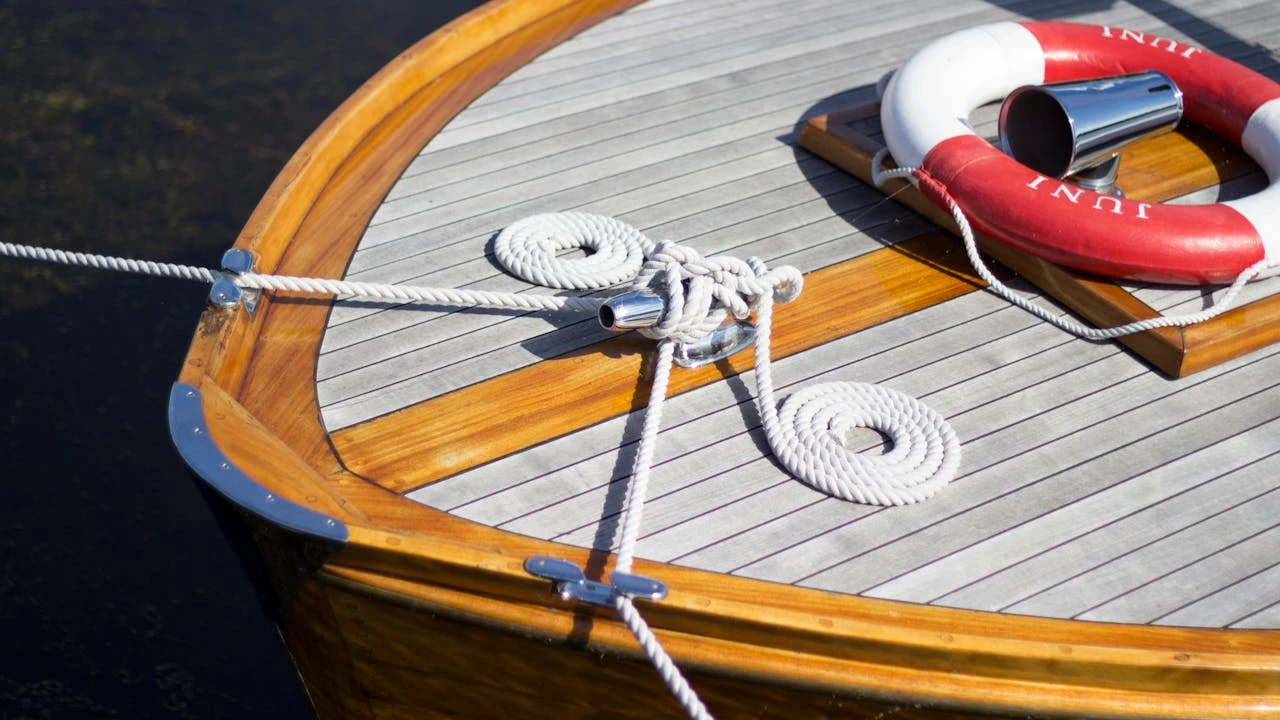
Lifebuoys are circular devices that are buoyant like life jackets and life rafts. Lifebuoys should be evenly distributed in every corner of the boat, especially along the side of the boat, the edge of the deck and other locations, so that when someone falls into the water, they can be found and thrown out in time, further improving the possibility of rescue.
Immersion Suit
Immersion suits are generally suitable for commercial vessels to prevent hypothermia when in cold water. Immersion suits are usually fitted with waterproof zippers, waterproof caps, whistles, reflective tape, neoprene pockets and gloves.
Fire extinguishers
Depending on the type, size and purpose of the vessel, different types and numbers of fire extinguishers are required to extinguish many types of fires on vessels where there may be a fire hazard in the engine or fuel system. Common types of fire extinguishers are dry powder extinguishers, carbon dioxide extinguishers and foam extinguishers. Fire extinguishers should be inspected regularly to check their pressure, expiration date and parts are in good condition to ensure that they can be used properly when needed.
Emergency Lights
Emergency lights should be kept on board to provide the necessary illumination in the event of a malfunction of the ship's lighting equipment. These lights should be evenly distributed in every location on the ship, including passages, exits, life-saving equipment and fire-fighting equipment storage locations, to ensure that the ship's personnel can see the road and equipment instructions during the evacuation process.
Visual distress signals
When the ship is sailing at sea, it must be equipped with some visual distress signals, these visual distress signals include:
1. pyrotechnic red flare
2. pyrotechnic orange smoke
3. waterproof flashlight
Communication equipment
When sailing at sea, the boat needs to be equipped with reliable communication equipment in order to communicate with the outside world in case of an emergency radio walkie-talkie is a common communication tool on board, which can be used to communicate with other boats, coastal radio stations or rescue organizations at sea within a short distance. In addition to this, satellite communication equipment can also be equipped on board to ensure that distress signals can be sent while away from land.
Navigation equipment
Navigation equipment is primarily used for the proper navigation of a vessel and is essential for safe navigation at sea. For example, a Global Positioning System (GPS) device can accurately display the vessel's position, heading and speed, helping the crew to determine their position and plan a correct and safe course.