



If a company primarily uses a yacht for client hospitality, business meetings, short trips and small-scale corporate events, a business yacht is usually the more practical choice. It offers sufficient social space and comfort whilst avoiding the high crew, maintenance and management costs associated with larger yachts.
If a company requires large-scale VIP hospitality, brand events, multi-day sea voyages or long-distance cruising, a superyacht offers greater advantages. It provides more guest cabins, larger communal areas and more comprehensive entertainment facilities, but the purchase and operating costs are also significantly higher.
In short:
| Corporate Needs | Best Choice |
| Frequent client hospitality | Business yacht |
| Small business meetings | Business yacht |
| Short regional trips | Business yacht |
| Large-scale corporate events | Superyacht |
| Multi-day VIP hospitality | Superyacht |
| Ocean-going business travel | Superyacht |
| Emphasis on high-end brand image | Select based on budget and client profile |
Definitions of Business Yachts and Superyachts
What is a business yacht?
A business yacht is more a matter of intended use than a strictly size-based classification. It primarily serves scenarios such as corporate client hospitality, business negotiations, team-building activities, brand promotion and high-end social events.
Such yachts typically prioritise the efficiency of public areas, such as spacious aft decks, open-plan saloons, outdoor dining areas and leisure spaces suitable for group interaction. For businesses, the most important consideration is not having the greatest number of entertainment facilities, but rather ensuring clients can engage in discussions and activities within a comfortable environment.
Consequently, medium-sized yachts can equally fulfil business purposes. There is no need for a company to purchase a large yacht simply because it is labelled ‘business’; the key lies in whether the layout on board meets actual operational requirements.
What is a superyacht?
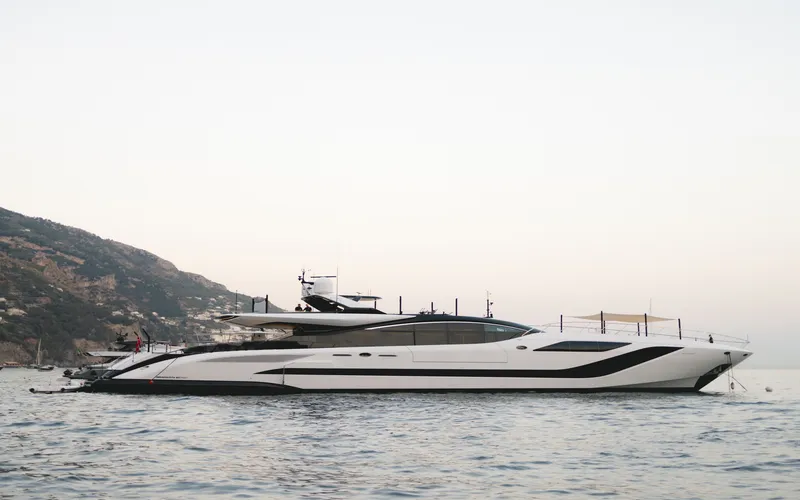
A superyacht generally refers to a large yacht that achieves a high standard in terms of size, engineering systems, comfort and luxury fittings. The industry generally regards a length of around 24 metres as a key benchmark for the large yacht market, although the specific definition of ‘superyacht’ varies slightly across different markets.
The greatest advantage of a superyacht is its space. As the size increases, it can accommodate more guest cabins, a larger main saloon, dining areas, entertainment zones, outdoor decks and dedicated crew quarters, making it better suited to multi-day cruises and hosting large gatherings.
For businesses, a superyacht is more akin to a high-end, mobile hospitality venue than merely a vessel for short trips.
Business Yachts versus Superyachts: A Comparison of Key Specifications
The most fundamental distinction between the two lies not in the ‘level of luxury’, but in the amount of space and functionality a business actually requires. A detailed comparison is provided in the table below:
| Comparison Criteria | Business Yachts | Superyachts |
| Core Purpose | Business hospitality, corporate events | High-end hospitality, ocean-going voyages and large-scale events |
| Space | Emphasis on efficiency | Emphasis on floor area and functional zoning |
| Passenger Capacity | Medium | Higher |
| Accommodation Capacity | Suitable for short-term use | Suitable for multi-day voyages |
| Business Meetings | Suitable | More suitable for large teams |
| Entertainment Facilities | Configured to requirements | Typically more extensive |
| Range | Depends on specific model | Typically better suited to long-distance voyages |
| Crew Requirements | Relatively low | Higher |
| Annual Costs | Relatively manageable | Higher |
| Management Complexity | Relatively simple | More complex |
If an event involves only a few clients, an overly large main saloon and multiple guest cabins will not offer significant value. Conversely, if a company frequently organises events for dozens of people, or needs to accommodate clients for several consecutive days, the spatial advantages of a superyacht become very apparent.
Comparison of Purchase Costs (2026 Market)
Price Range for New Yachts
In the 2026 yacht market, there is no uniform pricing standard applicable to all brands and sizes. Yacht prices are influenced by factors such as size, brand, engine, interior, equipment and the extent of customisation.
Generally speaking, medium-sized business yachts can range from several hundred thousand to several million US dollars; in the large yacht market (70–80 feet and above), prices typically reach several million US dollars or more. Newly built superyachts over 30 metres generally fall into the tens of millions of US dollars bracket, and the higher the level of customisation, the more likely the final price is to increase significantly.
Consequently, companies should not simply set a single budget for the purchase of a yacht; they must also factor in the costs of delivery, insurance, mooring, crew, maintenance and future refit expenses.
As a reference for vessels intended for both corporate hospitality and private use, the 2027 Absolute NAVETTA 75 features a length of 22.82 metres and a spacious multi-level layout, with a maximum passenger capacity of 18. It is well-suited to owners requiring a balance between business hospitality, family cruising and comfortable living quarters.
👉 See 2027 Absolute NAVETTA 75

2027 Absolute NAVETTA 75
- Length75 ft
- Cabins4
- TypeSuper yacht
The Absolute NAVETTA 75 offers a perfect blend of luxury, innovation, and performance, making it an exceptional choice for those seeking the ultimate yachting experience.
Differences in the Used Market
The greatest advantage of second-hand yachts is typically the reduction in initial capital outlay. Companies can purchase larger vessels with more extensive specifications within the same budget.
However, a lower second-hand price does not necessarily mean lower total costs. The yacht’s age, engine operating hours, maintenance records, refurbishment history and future overhaul requirements may all significantly impact the actual cost of ownership.
When selecting a used business yacht, companies should prioritise inspections of the hull, engine, generator, navigation equipment, air-conditioning system, electrical system and maintenance records. Conducting a professional survey and sea trial prior to purchase is generally more important than simply comparing listed prices.
Customisation vs Standardisation
Standardised production yachts typically feature well-established design and manufacturing processes, making them more suitable for companies wishing to put the vessel into service quickly. Their advantages include relatively clear specifications and easier post-purchase management.
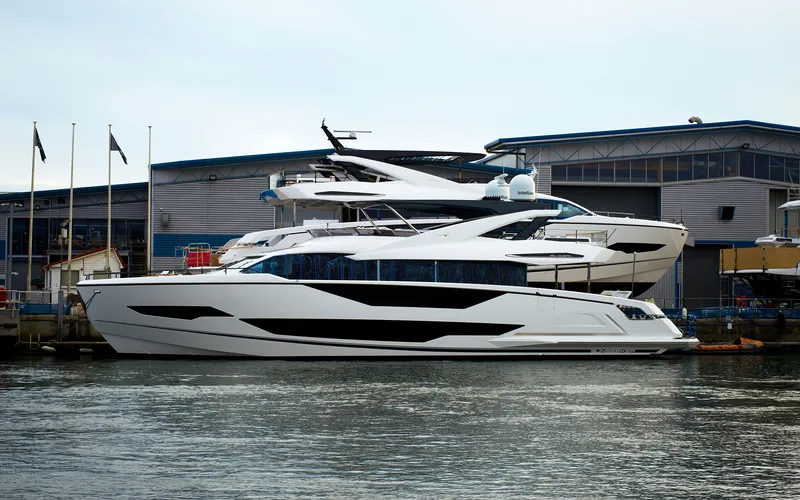
Superyachts, on the other hand, generally offer greater scope for customisation. Companies can design meeting areas, VIP suites, dining rooms, entertainment spaces and even the overall interior style to align with their brand image and client requirements. However, the greater the level of customisation, the longer the construction period, the higher the design costs and the greater the complexity of subsequent maintenance.
Therefore, if a company’s primary objective is operational efficiency, standardised products are generally the more sensible choice; if the yacht itself forms part of the brand’s image and the client experience, customisation offers greater value.
Comparison of Annual Ownership Costs
The purchase price represents only a portion of a company’s yacht acquisition costs; annual ownership costs also include crew, fuel, insurance, mooring, maintenance and management. The industry generally uses 10–15 per cent of the yacht’s value per annum as a preliminary budget for the operating costs of large yachts, though actual expenses are influenced by the vessel’s age, frequency of use and cruising area.
Taking typical corporate usage scenarios as an example, let us consider a 20–25-metre business yacht costing approximately US$3 million and a 35–40-metre superyacht costing approximately US$10 million:
| Annual Costs | Business Yacht | Superyacht |
| Crew | $150K–250K | $450K–700K |
| Fuel | $50K–100K | $120K–250K |
| Maintenance and repairs | $100K–180K | $250K–450K |
| Insurance, mooring and management | $60K–130K | $220K–350K |
| Annual total | Approx.$360K–660K | Approx. $1.04M–1.75M |
For example, a US$3 million business yacht, calculated at 10 per cent–15 per cent, would have an annual base budget of approximately US$300,000–450,000; a US$10 million superyacht would be approximately US$1 million–1.5 million. Therefore, companies must not only consider whether they can ‘afford to buy’ but also assess whether they can sustain the operating costs in the long term.
It should be noted that these figures are budgetary guidelines rather than fixed costs. Annual costs may be significantly higher than normal when older yachts require major engine overhauls, equipment upgrades or refurbishment.
Differences in User Experience and Lifestyle
Business yachts are better suited to frequent, short-duration and flexible corporate events.
For example, a company might entertain clients in the morning, host a business lunch at midday, complete a maritime activity in the afternoon, and then return to port. This type of usage does not require a large number of cabins, nor does it necessitate a highly complex crew structure; it is therefore particularly well-suited to regional businesses.
Some mid-sized vessels also offer excellent spaces for business networking. For instance, the Pardo 43, with a length of approximately 14 metres, a spacious walkaround deck and an aft area suitable for large groups, is ideal for companies whose primary requirements are daytime hospitality, short cruises and outdoor socialising.
👉 View Pardo 43 for sale
Pardo Yachts 43
- Length45 ft
- Cabins2
- Top speed36 kn
- TypeBusiness yacht
The Pardo Yachts 43 is a high-performance commercial yacht combining speed, luxury, and comfort. Its spacious deck and comfortable cabins are ideal for sightseeing, corporate hospitality, or rental operations. Powered by twin IPS engines, it offers a range of 300–360 nautical miles and accommodates 12–16 passengers, with a flexible layout to suit various commercial needs.
Superyachts, on the other hand, place greater emphasis on a comprehensive lifestyle experience at sea.
Large communal spaces, multiple guest cabins, dining areas, entertainment facilities and a professional crew enable clients to stay on board for several days at a time. Consequently, if a company needs to organise high-end client trips, brand events or cross-regional business activities, the advantages of a superyacht become even more apparent.
However, this also entails a more complex operational structure. Companies must take into account the captain, engineer, deck crew, service staff and day-to-day management, rather than simply treating the yacht as an ordinary corporate asset.
Which is more suitable for you?
If a company primarily engages in client hospitality and business meetings, a business yacht should be the priority. The focus should be on the saloon, aft deck, outdoor dining areas and client flow, rather than blindly increasing the vessel’s size.
If a company requires large-scale events and VIP hospitality, a superyacht is worth considering. Larger decks and communal areas can accommodate more guests and provide a more comprehensive event experience.
If a company places emphasis on brand image, this must be assessed in conjunction with its target clientele. Superyachts certainly possess greater visual appeal, but where client numbers are limited, business yachts can equally deliver high-end hospitality through design, service and bespoke branding.
If a company requires ocean-going capabilities, the focus should be on comparing range, fuel capacity, stability, engineering redundancy and hull design, rather than merely the level of interior luxury.
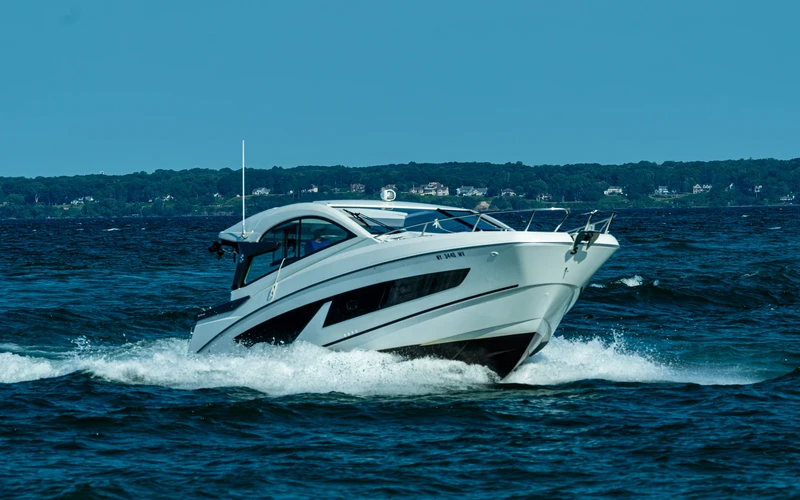
Put simply, who should use a business yacht? Typically, these are companies that need to entertain clients frequently, host small corporate events, and wish to keep the complexity of long-term operations under control.
For companies drawing up a procurement plan, a comprehensive business yacht buying guide should cover factors such as size, intended use, passenger capacity, range, budget, crew, maintenance, insurance and berthing.
If a company requires a more high-end product with greater space, it may wish to consider large yachts. For example, the Versilcraft HS is a more suitable option for companies requiring ample space, multi-day cruises and high-end hospitality capabilities.
👉 Browse Versilcraft HS yacht
Versilcraft HS
- Length147 ft
- Cabins5
- Top speed15 kn
- TypeBusiness yacht
The Versilcraft HS is a 147.6 ft luxury business yacht featuring a three-deck layout with spacious meeting, salon, and dining areas. Powered by high-performance twin engines with a 4,000–6,000 nautical mile range, it is ideal for corporate hospitality, client entertainment, and long-range voyages, combining comfort with premium business functionality.
Conclusion
There is no absolute superiority or inferiority between business yachts and superyachts; the key lies in the company’s specific usage scenarios and long-term budget.
Business yachts are better suited to client hospitality, business negotiations, short-distance events and frequent use. Their advantages lie in their flexibility, practicality and relatively straightforward operational management.
Superyachts, on the other hand, are suitable for large-scale VIP hospitality, multi-day corporate events, ocean-going voyages and high-end brand promotion. They offer more space and a wider range of facilities, but require the company to bear higher purchase and annual operating costs.
Therefore, companies can follow a simple principle:
Frequent, flexible, regional business activities → business yachts; large-scale VIP receptions, multi-day events and ocean-going voyages → superyachts.
A truly sensible corporate yacht acquisition plan is not about choosing the largest yacht, but about selecting one that can be fully utilised, operated over the long term and continue to generate business value.
FAQ
Q1: Which businesses are business yachts suitable for?
A: Business yachts are suitable for companies requiring client hospitality, business negotiations, corporate events and VIP receptions. The property, finance, automotive, luxury goods, technology and high-end service sectors may all be suitable candidates. The final choice should be based on the number of clients, frequency of use, sailing area and annual budget.
Q2: Is it more cost-effective for a company to purchase a business yacht or a superyacht?
A: If a company primarily engages in short-distance client entertainment and small-scale events, a business yacht is usually more cost-effective. If a company requires large-scale events, multi-day accommodation and long-distance voyages, a superyacht—though more expensive—can offer greater functionality and space. Companies should compare actual utilisation rates rather than focusing solely on the purchase price.
Q3: Is it worthwhile for a company to purchase a pre-owned yacht?
A: It is worthwhile, but a professional inspection is required. A pre-owned yacht can reduce the initial investment, but engine service hours, the condition of the hull, maintenance history and future refurbishment costs will all affect the actual costs. A professional survey, sea trial and review of maintenance records should be carried out before finalising the purchase.
Q4: What are the annual running costs of a superyacht?
A: The industry generally uses 10–15 per cent of the yacht’s purchase value as a reference for annual operating costs, which include crew, fuel, insurance, mooring and maintenance. However, actual expenditure is influenced by the vessel’s age, size, frequency of use and cruising area; therefore, companies should draw up a budget based on the specific yacht model.
Q5: What should companies prioritise when purchasing a yacht?
A: The most important consideration is to clarify the intended use. Companies should first determine the number of times it will be used annually, the number of guests per trip, the primary cruising area, and whether accommodation and ocean-going capabilities are required, before finalising the size and budget. They should then compare new yachts, pre-owned vessels, standardised products and bespoke solutions, and carry out professional vessel inspections and sea trials.
Q6: Should a company purchase a superyacht outright?
A: Not necessarily. If a company has not yet determined the actual frequency of use for the yacht, purchasing a large superyacht outright may result in significant long-term operational pressures. It may be advisable to first assess client hospitality and corporate event requirements through chartering, hiring or using a smaller business yacht, before deciding whether to upgrade to a larger vessel.