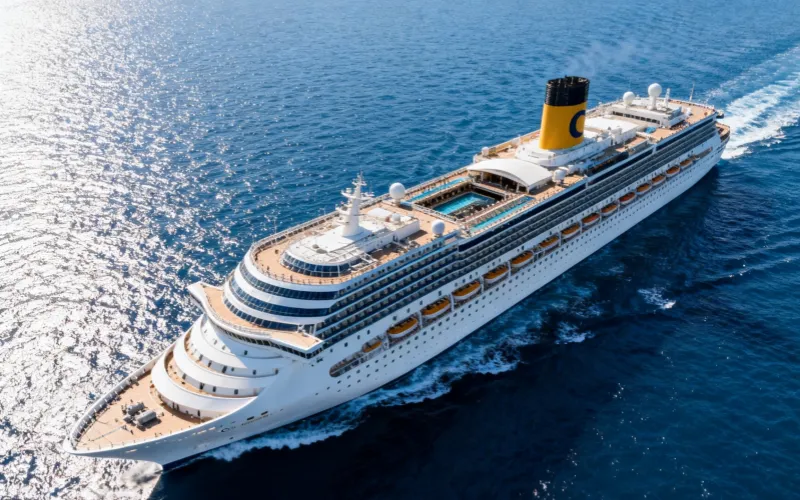
No traditional athletes' village will be built for the 2026 Aichi-Nagoya Asian Games. Some athletes and team officials will stay aboard the Costa Serena cruise ship docked at Nagoya Port, while others will stay in hotels and temporary accommodations.
Early plans projected that approximately 4,600 Games participants would use the cruise ship during the event. However, the final number and guest allocation may still change.
Quick Answer: The 2026 Asian Games cruise ship is Costa Serena, a large passenger ship built by Fincantieri. It is scheduled to arrive at Kinjo Pier in Nagoya Port on September 15, 2026, four days before the Asian Games opening ceremony on September 19. The Games will run through October 4. Costa Serena will serve primarily as a hotel ship, rather than operating as a sightseeing cruise for athletes. It is intended to accommodate selected athletes and accompanying officials according to their sports, not entire national delegations.
Why Is Nagoya Using a Cruise Ship?
The decision to use a cruise ship instead of building a traditional athletes' village was largely driven by cost and practicality. The approach also helps reduce construction timelines before the Games.AINAGOC, the Aichi-Nagoya Asian Games Organising Committee, cited construction costs as a key consideration. Instead of building a large permanent village for the Games, organisers are using a combination of existing hotels, temporary accommodation and a cruise ship.
This approach also reduces the need to create permanent facilities that could become underused after the Games. Costa Serena already has accommodation and shared facilities, allowing organisers to add substantial capacity without constructing a new residential complex.
Inside Costa Serena: Cabins, Capacity and Facilities
Costa Serena is a large passenger ship designed to accommodate thousands of people and operate with the infrastructure required for commercial passenger service.Costa Serena Specifications and Capacity
The Fincantieri-built Costa Serena was delivered in 2007. Fincantieri lists the following principal specifications:| Costa Serena Specification | Details |
|---|---|
| Builder | Fincantieri |
| Delivered | 2007 |
| Length Overall (LOA) | 290.2 m |
| Gross Tonnage | 114,500 GT |
| Passenger Cabins | 1,502 |
| Maximum Persons on Board | 4,890 |
| Maximum Speed | 23 knots |
The 4,890 maximum persons on board figure should not be interpreted as 4,890 available athlete beds. It represents the ship's total onboard capacity, including passengers and crew.
This distinction is important when comparing cruise ships with private yachts, because passenger ships follow different capacity and safety rules from private yachts.
Onboard Facilities
The accommodation inventory includes interior, outside and balcony cabins, as well as suites. The ship also has the types of large-scale facilities that make a cruise ship potentially useful as temporary accommodation for a sporting event: dining areas, public spaces, fitness facilities and service areas.Costa Serena also underwent a major refurbishment in late 2025, updating several cabins, dining venues and public areas before returning to service in Asia.
Who Will Stay on the Ship?
Costa Serena is not intended to house every athlete attending the Aichi-Nagoya Games.The Costa Serena Asian Games accommodation plan is based partly on the location of competition venues. Rather than housing entire national delegations together, organisers are assigning selected athletes and officials according to their sports and travel needs.
In an earlier accommodation plan, organisers identified athletes from 20 sports whose venues were considered close to Nagoya Port for accommodation on the cruise ship. These included gymnastics, judo, rowing, rugby, tennis, weightlifting, wrestling and wushu, alongside sports such as archery, basketball 3x3, canoe/kayak sprint, mountain biking and BMX racing.
How Will the Floating Village Work?
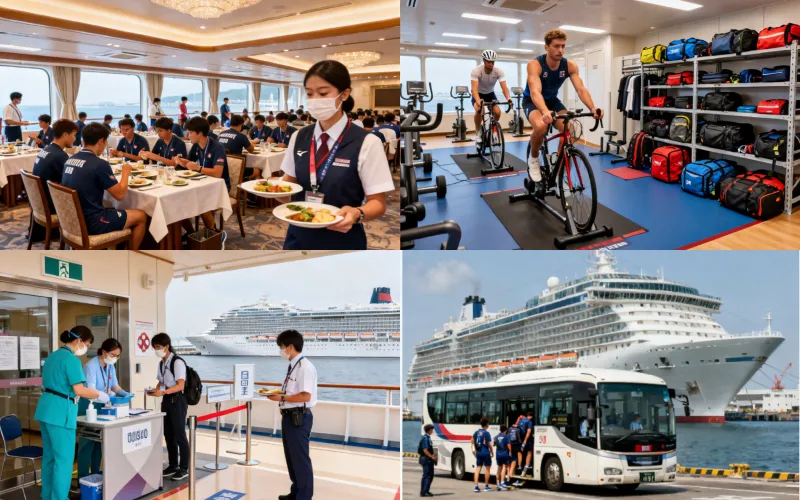
The Asian Games floating village concept requires Costa Serena to operate more like a stationary hotel than a traditional cruise ship. The vessel is expected to remain docked at Kinjo Pier and operate as a hotel ship during the Games.
Operational considerations for the floating village include:
Catering and Daily Services
Thousands of people living in one vessel require a consistent food-service operation. Meals need to fit athletes' training and competition schedules, while dietary requirements and different team arrangements also have to be managed.Fitness and Equipment
A conventional hotel may provide a gym, but a sporting delegation can also require storage for bicycles, boats, martial arts equipment or other specialised gear. Olympic Council of Asia (OCA) technical delegates specifically highlighted gym facilities and equipment storage as important considerations for athletes staying aboard the ship.Medical and Security Operations
The ship will also need to function within the wider Games' medical, security and accreditation systems. A floating accommodation facility concentrates a large number of accredited people in one controlled location, but that also means access control, emergency response and medical arrangements need to be carefully coordinated.Transportation
The ship's location is only useful if athletes can reliably reach their training and competition venues.The cruise ship and the temporary Asian Games Villas at Garden Pier are part of the wider accommodation concept known as the Athletes' Plaza. The two locations are approximately 6.5 kilometres apart, with organisers planning shuttle transfers that could take around 15 minutes under normal conditions. Travel to individual competition venues will depend on each sport's location and daily schedule.
The Latest Accommodation Pressure
The main challenge for the original Nagoya Asian Games accommodation plan is the higher-than-expected number of registered participants.As of August 26, 2026, registrations for the Asian Games had reached around 17,000 participants, exceeding the original projection of 15,000. The Olympic Council of Asia said the figure included approximately 11,000 athletes and 6,000 officials. The higher-than-expected registration total has put additional pressure on the Games' accommodation plans, and organisers are discussing the situation with the OCA.
The estimate of approximately 4,600 people should therefore be treated as an early planning figure, rather than the final confirmed number of people staying on the ship. The allocation may still change as organisers respond to the higher registration numbers.
Benefits and Challenges of Using a Cruise Ship as a Floating Village
Using Costa Serena as temporary accommodation offers a practical alternative to building a traditional athletes' village, but the approach also creates operational challenges.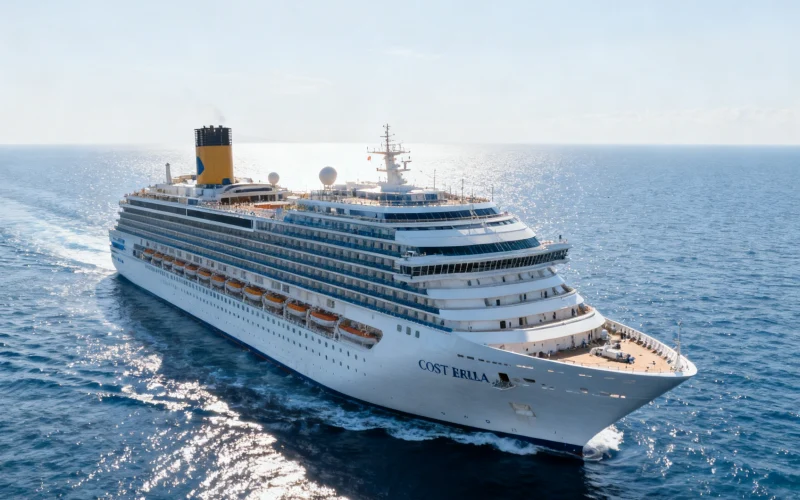
Advantages of Using Costa Serena as Temporary Accommodation
Ready-Made Accommodation and FacilitiesCosta Serena provides cabins, dining areas, public spaces and onboard services designed for thousands of passengers. This allows organisers to add accommodation capacity without creating a new temporary residential complex.
Flexible Capacity for Major Events
A hotel ship can provide additional accommodation when cities face limited hotel supply or tight construction timelines. This model may be particularly useful for port cities hosting large international events.
A Different Experience for Athletes
Living aboard a cruise ship offers a different environment from a conventional hotel. Athletes from different sports may have more opportunities for informal interaction while sharing the same accommodation space.
Challenges of Using a Cruise Ship as Athlete Accommodation
Cabin Space and Equipment StorageCruise ship cabins are designed for passengers rather than athletes travelling with sports equipment and recovery gear. Additional planning is required for storing bicycles, rowing equipment, martial arts equipment and other specialised items.
Ship Movement and Seasickness
Although Costa Serena is expected to remain docked during the Games, vessels can still experience minor movement caused by wind, tides or harbour conditions. This may be uncomfortable for some athletes who are sensitive to motion.
Severe-Weather and Emergency Planning
The Games will take place from September 19 to October 4, a period when Japan can experience typhoons and other severe weather events. Because Costa Serena will operate as a docked hotel ship, organisers and port authorities will need contingency procedures covering typhoon warnings, emergency evacuation and possible changes to port operations.
Transportation and Daily Logistics
Moving athletes between the ship, Garden Pier and competition venues requires careful scheduling. Shuttle services must coordinate with training sessions, competition times, security checks and accreditation procedures.
Large-Scale Guest Management
Managing thousands of athletes and officials on one vessel requires efficient systems for catering, medical support, security and daily operations. A hotel ship functions differently from a land-based accommodation facility and requires close coordination between maritime and event management teams.
Could Floating Hotels Be Used for Future Major Events?
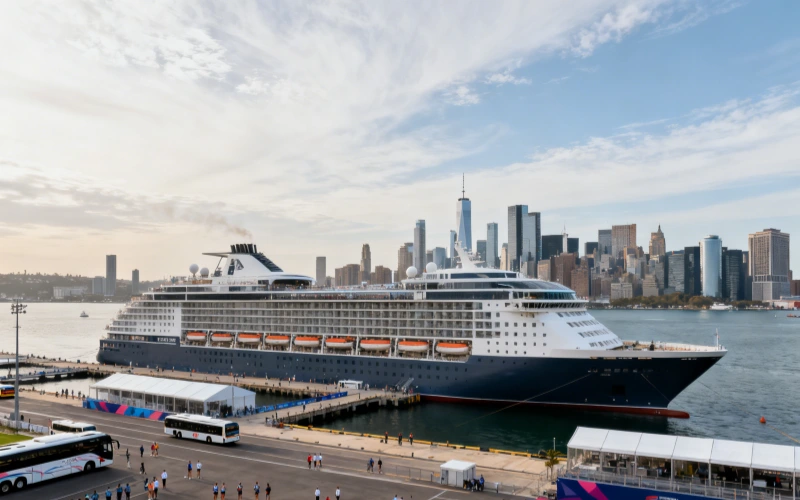
The Aichi-Nagoya arrangement shows how an existing passenger ship can be used as temporary accommodation infrastructure for a major international event.
Cruise ships were also used to accommodate delegates during the 2019 Summer Universiade in Naples, providing an earlier example of passenger vessels being used as temporary event accommodation.
The Costa Serena Asian Games arrangement may offer a reference for future host cities that need additional accommodation without building a permanent athletes' village. This approach may be suitable for port cities with limited hotel capacity, high construction costs or tight event timelines.
However, a floating athletes' village concept is not a universal solution. The model works best when the port is reasonably close to competition or event venues and has suitable transport, security, medical and passenger-handling infrastructure.
For future events, the value of a cruise ship as temporary accommodation will depend not only on cabin capacity, but also on whether the wider operating environment can support large-scale guest management.
For a closer look at the types of vessels designed specifically for large-scale passenger operations, explore purpose-built passenger vessels.
About This Guide
This guide was prepared by the YachtTrading editorial team using publicly available information from the Olympic Council of Asia, Aichi-Nagoya Asian Games organisers, Reuters and Fincantieri. Information about the Costa Serena Asian Games accommodation plan, including the number of athletes and officials expected to stay aboard, may change as registration numbers, accommodation arrangements and operational plans are updated.
Disclaimer
This article is for informational purposes only. Descriptions of potential benefits, challenges, safety considerations and future uses of floating accommodation reflect general analysis and should not be taken as guarantees about the operation or safety of Costa Serena during the Games.
FAQ
Q1: Which cruise ship will house athletes at the 2026 Asian Games?
A: The Costa Serena, a Fincantieri-built vessel delivered in 2007, will serve as the primary floating accommodation.
Q2: How many athletes and officials will stay on Costa Serena?
A: Early accommodation plans estimated that approximately 4,600 athletes and officials would stay aboard Costa Serena, but the final number may change as organisers adjust the accommodation plan.
Q3: Where will Costa Serena dock in Nagoya?
A: Costa Serena is scheduled to dock at Kinjo Pier in Nagoya Port on September 15, 2026.
Q4: Will Costa Serena sail during the Asian Games?
A: Costa Serena is expected to remain docked at Kinjo Pier throughout the Games and operate as a stationary hotel ship. It is not planned to operate as a sightseeing cruise or transport athletes between ports during the event.
Q5: Why is there no traditional athletes' village?
A: The 2026 Asian Games are using a distributed accommodation model that combines the cruise ship, temporary accommodation and hotels rather than a single purpose-built village. The exact allocation of athletes and officials may still change as organisers respond to the higher-than-expected registration numbers.
Q6: Is the cruise ship safe during typhoon season?
A: Costa Serena is built under maritime safety standards, but its operation as a hotel ship during typhoon season depends on weather conditions, port operations and emergency planning. The ship is planned to remain docked during the Games, with severe-weather procedures forming part of the overall accommodation arrangements.
Q7: Can the public visit Costa Serena during the Asian Games?
A: No. Costa Serena will be used as accommodation for athletes, officials and accredited personnel during the Asian Games, so members of the public will not be able to board the ship. Any public access arrangements related to the ship's arrival or events at Nagoya Port will depend on official announcements from the organisers and port authorities.