



Business yachts are primarily suited to business owners, senior executives, sales teams and companies that need to cultivate relationships with high-value clients. The property, finance, luxury goods, automotive, technology and high-end services sectors are particularly well-suited to using them for client entertainment, business negotiations, brand events and VIP hospitality.
If a company uses them frequently and has clear hospitality requirements, business yachts can serve as a practical tool for business operations and client relationship management; if events are held only occasionally, chartering is usually a more flexible option.
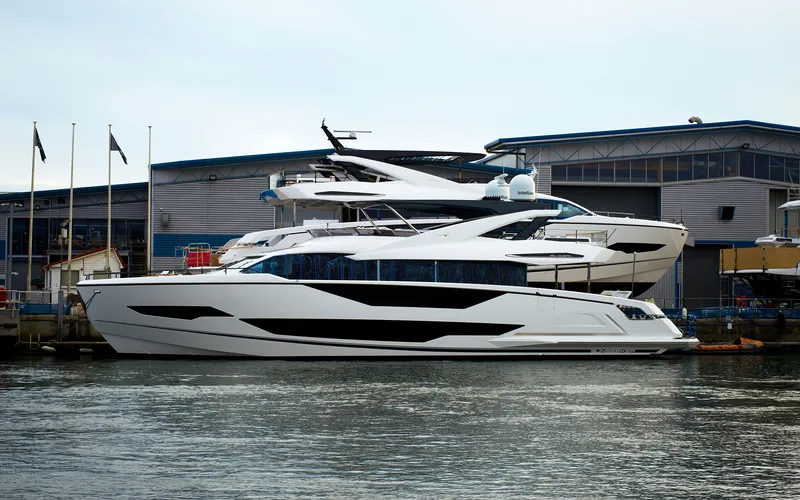
In Which Business Scenarios Can Business Yachts Be Used?
The value of a business yacht lies primarily in its practical applications. Compared to traditional office or hotel meeting rooms, a yacht can combine business discussions, dining, entertainment and leisure, making it particularly suitable for companies seeking to build long-term client relationships or create unique brand experiences.
Client Hospitality and Business Entertainment
Client hospitality is one of the most common uses for business yachts. Companies can invite key clients, prospective clients or long-term partners on board to engage in discussions in a relaxed setting.
This approach is particularly appealing to companies in the property, finance, automotive and luxury goods sectors. Rather than being confined to traditional restaurants or hotels, businesses can organise private dining, short cruises or full-day events tailored to the client’s importance.
However, client hospitality does not necessarily require elaborate entertainment. For high-value business relationships, a quiet, comfortable and private setting is sometimes more important than lavish facilities.
Business Meetings and High-Level Discussions
Business yachts can also serve as unconventional meeting spaces. Company executives can invite investors, partners or key clients for small-scale meetings, strategic discussions or project briefings.
If the meeting involves trade secrets, privacy becomes a crucial factor when selecting a yacht. In such cases, attention should be paid to separate salons, enclosed meeting spaces, private cabins and appropriate separation between crew and guest areas.
For small-scale high-level meetings, a medium-sized yacht is often sufficient to meet requirements; there is no need to select an overly large vessel solely for meeting purposes.
Corporate Team-Building and Staff Incentives
Companies can also utilise business yachts for team-building activities. Short cruises, dining at sea, water-based entertainment and team-building exercises can form part of staff incentive schemes or annual events.
Compared to standard hotel banquets, yacht events offer a more immersive experience. However, companies must select an appropriate yacht based on the number of participants, whilst taking into account deck space for activities, catering facilities, safety equipment and the crew’s service capacity.
For larger events, the primary considerations should be actual passenger capacity and available event space, rather than simply judging suitability based on the yacht’s length.
Brand Promotion and Corporate Events
For luxury, automotive, fashion, technology and high-end consumer brands, yachts can serve as a key platform for brand events.
Companies can host client appreciation events, media events, brand experiences, product showcases and private launches on board yachts. The yacht’s design, sailing environment and service experience can all form part of the brand narrative.
If a company intends to use the yacht primarily for marketing activities, then open decks, spacious social areas, excellent visual appeal and flexible event layouts are generally more important than simply increasing the number of guest cabins.
VIP Client and Partner Events
For companies needing to maintain long-term relationships with high-value clients, business yachts can also be utilised for VIP client events.
For example, companies can organise private sea cruises, business dinners or small-scale client gatherings. Compared to large-scale public events, small-scale VIP events make it easier to manage attendees and provide a more intimate setting for interaction.
Consequently, if a company has a limited number of core clients but each client represents high value, the commercial value of the yacht may lie primarily in client relationship management rather than in the number of event attendees.
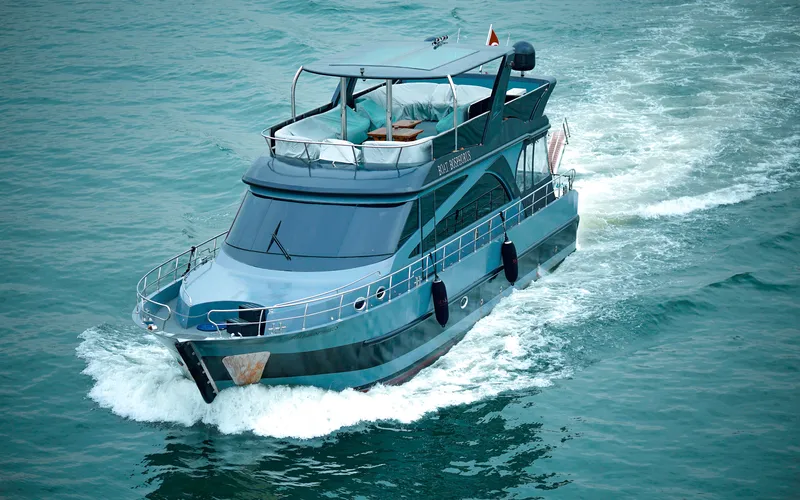
How to Choose the Right Type of Business Yacht?
When selecting a business yacht, one should not focus primarily on the brand or appearance, but rather begin by considering the intended use, passenger capacity, mode of navigation and spatial layout.
Different yacht types offer distinct advantages in business contexts. Companies need first to answer one question: is the yacht primarily intended for ‘transport’ or for ‘hosting and events’?
Motor Yacht: Suitable for Versatile Business Use
Motor yachts are typically the most flexible option amongst business yachts. They can cater to client hospitality, short cruises, business meetings, dining and private holidays.
If a company does not have a very specific single use case and wishes a single yacht to fulfil multiple functions, then a motor yacht is generally the most suitable choice.
Flybridge Yacht: Suitable for Client Hospitality and Social Events
Flybridge yachts feature additional upper deck space, providing enhanced areas for sightseeing, socialising and outdoor activities.
For companies that frequently invite clients on short cruises, business lunches or social events, the flybridge layout offers distinct advantages. Particularly in warmer climates, the upper deck can serve as a vital space for business networking.
Sport Yacht: Suitable for Companies Emphasising Performance and Brand Image
Sport Yachts typically place greater emphasis on sporty design, handling performance and a dynamic appearance.
If a company operates in the automotive, sports, technology or luxury consumer goods sectors and wishes its business yacht to reflect a youthful, sporty and modern brand image, then a Sport Yacht may be the more suitable choice.
Catamaran: Suitable for large-scale social gatherings and events
Catamarans typically feature generous beam width and spacious living areas, making them ideal for corporate clients requiring ample social space.
If a company wishes to organise large-scale events, family client functions, team-building incentives or extended sea-based activities, a catamaran is worth considering. However, before making a selection, it is essential to take into account marina facilities, mooring space and the company’s primary cruising areas.
Superyacht: Suitable for large-scale VIP hospitality
For large enterprises, ultra-high-net-worth clients or users requiring high-profile private events, a large superyacht can provide more comprehensive accommodation, catering, entertainment and service facilities.
However, the costs associated with purchasing, crewing, insuring, mooring, fuelling and maintaining a large superyacht are also significantly higher. Consequently, this type of vessel is only worth considering if a business has a sustained and clearly defined need for high-end usage.
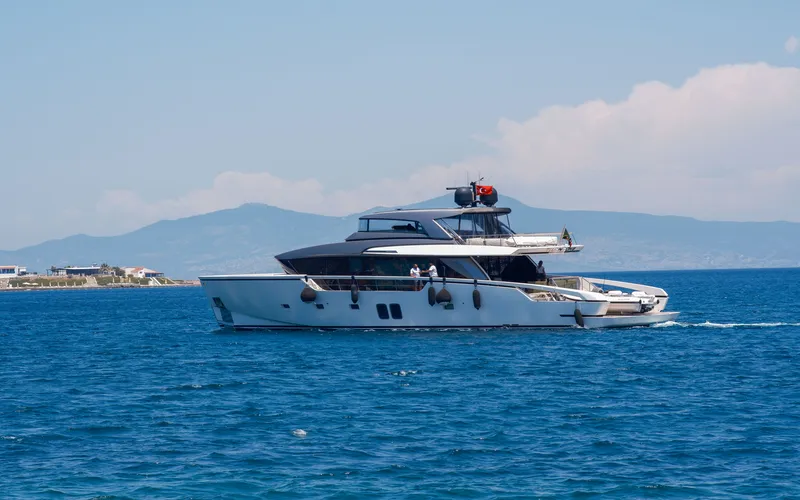
Popular Business Yacht Brands and Recommendations
When selecting a business yacht, companies should focus not merely on size and luxury, but on client hospitality capacity, business facilities, comfort, brand image and practical operational requirements. The following three yachts are each designed to meet the business needs of different types of enterprises.
2026 Absolute 70 Navetta: Suitable for Comprehensive Business Hospitality
The 2026 Absolute 70 Navetta is ideal for enterprises requiring a balance between client hospitality, business networking and private use. Its 70-foot-class space provides comfortable indoor and outdoor areas, making it suitable for hosting business lunches, client meetings, short cruises and VIP receptions.
For businesses in sectors such as property, finance and high-end services—where long-term client relationship management is essential—this well-designed motor yacht effectively balances business and leisure requirements. If a company is seeking a yacht capable of serving multiple purposes, the Absolute 70 Navetta is a choice well worth considering.
👉 See 2026 Absolute 70 Navetta

2026 Absolute 70 Navetta
- Length70 ft
- Cabins4
- Top speed27 kn
- TypeSuper yacht
The 2026 Absolute 70' Navetta combines contemporary style with performance, offering a luxurious sea experience. Its spacious design and modern features make it a standout choice.
Versilcraft HS: Ideal for hosting high-end clients
The Versilcraft HS is best suited to users requiring ample space for client hospitality and corporate events. Its spacious indoor and outdoor areas can be utilised for business meetings, dining and leisure activities, whilst also providing accommodation for multi-day business events.
For companies that frequently host key clients, partners or high-net-worth individuals, a large motor yacht can provide a more comprehensive hospitality environment. However, if a company primarily organises short-haul, small-scale events, there is no need to opt for an overly large vessel simply to gain extra space.
👉 View Versilcraft HS for sale
Versilcraft HS
- Length147 ft
- Cabins5
- Top speed15 kn
- TypeBusiness yacht
The Versilcraft HS is a 147.6 ft luxury business yacht featuring a three-deck layout with spacious meeting, salon, and dining areas. Powered by high-performance twin engines with a 4,000–6,000 nautical mile range, it is ideal for corporate hospitality, client entertainment, and long-range voyages, combining comfort with premium business functionality.
VisionF E-Cat 80: Ideal for Brand Events and Large-Scale Hospitality
The VisionF E-Cat 80 features a catamaran layout with generous lateral space, making it suitable for companies requiring larger social areas. Companies can utilise it for client events, brand exhibitions, team-building activities and private business gatherings.
For technology, environmental and innovative enterprises, this type of business yacht—which emphasises new energy technologies and modern design—can also resonate with the company’s brand image. If a company is seeking a used business yacht, it may also wish to explore options such as catamaran business yachts entering the second-hand market.
👉 Browse the VisionF E-Cat 80
VisionF E-Cat 80
- Length79 ft
- Cabins6
- Top speed12 kn
- TypeBusiness yacht
The VisionF E‑Cat 80 is a brand-new 2025 80-foot electric catamaran, equipped with dual motors and a backup diesel engine, offering a 1,000-nautical-mile range. Its three-deck layout features 4 guest cabins, 8 bathrooms, and a spacious salon, perfectly balancing business entertaining and family leisure. With a home theater, mechanical davit, and space for a jet ski and inflatable boat, it delivers quiet, eco-friendly, and luxurious cruising ideal for long-distance and sustainable voyages.
Before beginning the search for a specific model, companies may wish to consult a business yacht buying guide to determine the most suitable vessel based on guest numbers, intended use and cruising area. Once the size and configuration have been established, comparing business yacht prices across different brands and vessel ages will help keep the overall purchase budget under control.
Size Selection Guide
The choice of business yacht size should be based on the average number of guests, the type of event, the cruising distance and accommodation requirements, rather than simply pursuing a larger vessel.
The table below can serve as a reference for companies during the initial screening process:
| Yacht Length | Typical Business Uses | Recommended Number of Guests | Key Advantages | Most Suitable Companies |
| 30–40 feet | Small-scale client hospitality, short cruises | 4–8 people | Flexible handling, relatively simple operation | Small businesses, business owners |
| 40–50 feet | Business hospitality, lunches, short events | 6–10 people | Good balance between comfort and cost | SMEs, sales teams |
| 50–60 feet | VIP hospitality, business meetings, team-building events | 8–14 people | More comprehensive space | Property, finance, high-end service companies |
| 60–80 feet | Corporate events, large-group hospitality, overnight stays Approximately | 10–20 people | Ample cabin and social spaces | Large enterprises, brand events |
| 80 feet and above | Large-scale VIP events, long-term business and private use | Depends on the yacht model | Luxury, spacious and high service capacity | Large enterprises, ultra-high-net-worth individuals |
The above figures are provided solely as a reference for initial selection; actual capacity must be determined by the specific yacht’s certified passenger capacity, layout and operational requirements.
If a company primarily hosts one-to-one client meetings or small business meetings, a 30–50-foot yacht will usually provide sufficient space. If the main purpose is to host high-value clients and organise private events, models of 50–60 feet or more should be considered.
If a company needs to arrange meetings, catering, entertainment and accommodation simultaneously, yachts of 60 feet or more should be considered. For large-scale brand events, it is necessary to take a comprehensive view of deck area, passenger capacity and crew service capabilities, rather than focusing solely on length.
Another issue that is easily overlooked is marina conditions. Larger yachts entail higher berthing requirements and may face more complex mooring arrangements in some popular ports. Therefore, before finalising the size, a company should first confirm whether the primary port of use can meet the requirements for beam, draught and length on a long-term basis.
Budget Recommendations
The price of a business yacht is primarily influenced by its size, brand, age, propulsion system and standard of interior fit-out. Using the market conditions in 2026 as a budgetary reference, companies may draw up preliminary plans based on the following ranges:
| Yacht size | Reference price range | Main business uses |
| 30–40 feet | US$300,000–$1 million | Small-scale client hospitality, short-distance events |
| 40–50 feet | US$700,000–$2 million | Client hospitality, business lunches, VIP networking |
| 50–60 feet | US$1.2–$3 million | Business meetings, VIP hospitality, corporate events |
| 60–80 feet | US$3–$10 million | Large-scale client events, hospitality for large groups |
| 80 feet and above | US$8–$30 million+ | High-end VIP hospitality, brand events |
For most companies, the US$1–3 million budget range is worth prioritising, as it covers a wide selection of 40–60-foot business yachts. If the primary focus is on small-scale client hospitality, a yacht in the US$500,000–$1 million range may be suitable; however, for large-scale events and high-profile VIP hospitality, a budget of US$3 million or more is typically required.
It is important to note that the purchase price does not equate to the actual cost of ownership. Companies must also set aside funds for annual operating costs, including crew, insurance, mooring, fuel, maintenance and repairs. Whilst purchasing a pre-owned yacht may reduce the initial outlay, additional checks should be carried out on the vessel’s condition, engine hours and maintenance records.
Therefore, when drawing up a budget for a business yacht, one should consider the purchase price plus delivery and refit costs plus long-term operating costs, rather than focusing solely on the listed price of the yacht.
What features should one look for when selecting a business yacht?
Guest spaces and layout
For business purposes, the layout is the primary consideration. The rationality of the layout between the saloon, dining area, helm station, outdoor decks and guest cabins directly impacts the guest experience.
If a company frequently hosts business meetings, it should prioritise a layout featuring separate, private spaces; if the focus is primarily on social events, greater emphasis should be placed on open-plan decks and a spacious saloon.
Privacy
For business hospitality, privacy is often more important than entertainment facilities.
Separate meeting areas, private cabins, well-organised crew access routes and effective separation between different zones can all enhance the comfort of business interactions.
Comfort
Comfort on a yacht encompasses not only luxurious interiors but also sailing stability, noise control, air-conditioning systems, seating arrangements and the cabin environment.
If a company plans to organise extended cruises, greater attention must be paid to comfort at sea, rather than focusing solely on the visual appeal of the vessel when stationary.
Range and Propulsion System
If a business yacht is primarily used for short trips in coastal waters, an extremely long range may not be necessary. However, if the company requires cross-regional voyages, it is essential to carefully assess fuel capacity, engine configuration, cruising speed and actual range.
It should also be noted that the performance data published by manufacturers does not necessarily correspond to figures under actual operating conditions. Load, sea conditions, speed and weather will all affect actual fuel consumption and range.
Catering and Entertainment Facilities
If the yacht is frequently used for entertaining clients, the galley, dining areas, refrigerators, storage space and outdoor dining areas are all of great importance.
If it is primarily used for corporate team-building events, water toys, swimming platforms, audio-visual systems and other entertainment facilities may also be considered. However, for organisations focusing purely on business meetings, the priority given to these features may be appropriately reduced.
Crew Accommodation and Service Areas
Large business yachts typically require a professional crew to handle navigation, maintenance and guest services. Consequently, crew quarters, galleys, storage space and service circulation routes should also be taken into consideration.
An excellent business yacht layout should enable the crew to provide services efficiently whilst minimising disruption to business activities as much as possible.
Safety and Reliability
Whether a company opts for a new or second-hand yacht, safety should take precedence over luxury features.
Prior to purchase, it is advisable to conduct a professional survey and sea trial, focusing on the engines, transmission system, electrical system, navigation equipment, air conditioning, generator, hydraulic system and hull structure. For second-hand yachts, maintenance records, engine operating hours and equipment replacement history should also be examined.
Summary
Business yachts are best suited to users who can truly integrate them into their corporate business processes. Business owners, senior executives, sales teams, marketing and public relations departments, as well as those in the property, finance, luxury goods, automotive, technology and high-end services sectors, may all utilise business yachts for client entertainment, business meetings, brand events, VIP hospitality and staff incentives.
However, selecting a business yacht should not be simplistically viewed as ‘the higher the budget, the larger the yacht, the better’. A truly sensible choice should be based on the number of users, business scenarios, cruising areas, frequency of use, spatial layout and long-term operating costs.
If a company primarily engages in small-scale client hospitality, it may prioritise yachts in the 30–50-foot range; if the need is to accommodate meetings, VIP hospitality and overnight stays, it should focus on medium-sized yachts of 50–60 feet or more; if the company requires large-scale events, hospitality for large groups and long-term operation, it may further consider large yachts of 60 feet or more.
Ultimately, a company should first determine ‘why it needs a business yacht’ before deciding ‘which business yacht to purchase’. If usage is infrequent, chartering may offer greater flexibility than purchasing; if the company has a steady demand for client hospitality and can bear the long-term operating costs, then purchasing a business yacht is more likely to become a long-term business asset.
FAQ
Q1: Who are business yachts primarily suited to?
A: Business yachts are primarily suited to business owners, senior executives, sales teams, marketing and PR teams, and companies requiring high-end client hospitality. The property, finance, luxury goods, automotive, technology and high-end service sectors are particularly likely to utilise business yachts. Whether a business is suitable depends on its client base, frequency of events, number of guests and primary business scenarios, rather than being determined solely by the size of the organisation.
Q2: Can business yachts be used for client hospitality?
A: Yes, client hospitality is one of the most common commercial uses for business yachts. Companies can utilise yachts to organise business lunches, short cruises, VIP events and private gatherings. Compared to traditional hotels or restaurants, yachts offer a more private setting. However, when hosting clients, it is still necessary to select a suitable vessel based on the number of guests and to plan catering, service, safety and navigation arrangements in advance.
Q3: Are business yachts suitable for corporate team-building events?
A: Yes, they are, but the yacht type should be selected based on the number of participants and the nature of the event. Smaller teams may opt for small to medium-sized yachts for short cruises and dining events; for larger groups, a yacht with a larger deck and more social space is required. Companies must also verify the actual passenger capacity, crew configuration, safety requirements and whether there is sufficient space for activities; the suitability of a yacht for team-building events cannot be determined solely by its length.
Q4: What size business yacht should be chosen?
A: There is no one-size-fits-all solution for all businesses. Generally, an initial selection can be made based on the number of guests: for small-scale client receptions, consider 30–40 feet; for medium-sized business events, look at 40–60 feet; whilst large-scale VIP events or corporate gatherings with many attendees may require a yacht of 60 feet or more. The final decision must also take into account the layout, cruising area, marina facilities and budget.
Q5: Should a company purchase or charter a business yacht?
A: If a company holds only a small number of business events each year, chartering is usually more flexible, as it allows for the selection of different sizes and yacht types depending on the event. If a company has a steady demand for client hospitality and uses the yacht frequently each year, purchasing is worth further consideration. Companies should also compare long-term costs such as crew, insurance, mooring, maintenance and fuel, rather than simply comparing the price of chartering versus purchasing.