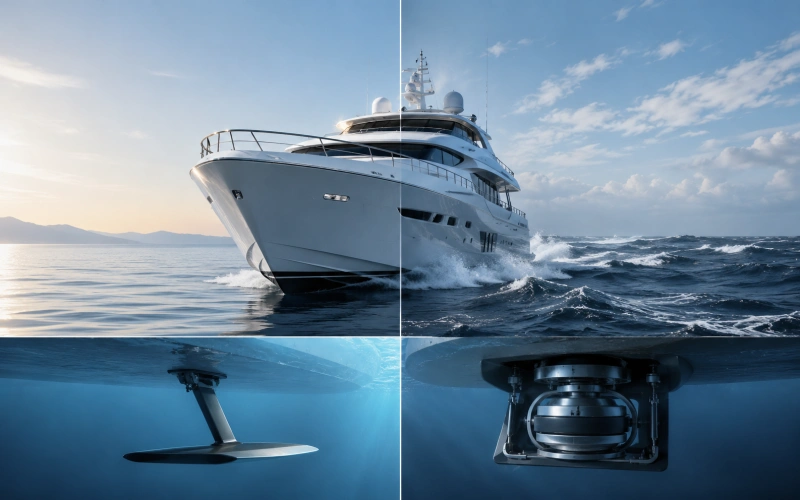
Yacht stabilizers can be worth the investment when they match the yacht's intended use, cruising area, and comfort expectations. They are particularly valuable for owners who spend significant time onboard, cruise offshore, anchor frequently, or want improved guest comfort. However, there is no universal yacht size threshold where stabilizers become necessary. The value depends on factors such as hull design, displacement, cruising speed, sea conditions, and how the yacht is used.
Are Yacht Stabilizers Worth the Investment?
For many yacht buyers, stabilizers are worth considering, but the value depends largely on how the yacht will be used.The decision should not be based only on yacht length. Although larger yachts often benefit more from stabilization due to higher comfort expectations and longer cruising capability, smaller yachts can also benefit depending on their hull design, operating conditions, and intended use.
A stabilization system is usually most valuable for owners who:
- Spend extended periods cruising offshore
- Frequently stay overnight onboard
- Entertain guests who expect higher comfort levels
When Stabilizers Usually Provide More Value
| Usage Situation | Typical Value of Stabilization |
|---|---|
| Short Daytime Cruising in Calm Conditions | May be less important |
| Regular Overnight Stays Onboard | Often valuable |
| Offshore Cruising | Often highly beneficial |
| Frequent Anchoring | Can significantly improve comfort |
| Long-range Cruising | Usually an important consideration |
For example, a 55ft flybridge yacht used for family coastal cruising may feel comfortable during short daytime trips, but overnight stays and longer coastal journeys can make roll motion more noticeable. In this situation, many owners consider stabilization to improve comfort during extended use.
Which Yacht Types Benefit Most from Stabilizers?
Not every yacht requires stabilization to the same degree. The value of stabilization is influenced by vessel design and operating profile rather than yacht size alone.Weekend Sport Yachts
Yacht stabilization can still be valuable for owners who frequently:- Stay overnight onboard
- Entertain guests
- Cruise in variable sea conditions
50–70 ft Flybridge Yachts
This is one of the categories where stabilization provides significant value.These flybridge yachts often have:
- Larger living spaces
- Higher profiles
- Longer cruising capability
Long-Range and Explorer Yachts
For yachts designed for extended passages, stabilization is often considered an important comfort and usability feature.These vessels usually prioritize:
- Offshore comfort
- Long-distance cruising
- Reduced crew and guest fatigue
Displacement Yachts
Displacement yachts often benefit significantly from fin stabilizers because they spend more time cruising at displacement speeds and offshore conditions.Fin vs Gyro Stabilizer: Which Is Better for Your Yacht?
Gyro and fin stabilizers both reduce yacht roll, but they are designed for different cruising needs. The better choice depends on the specific system, yacht design, installation requirements, and intended operating conditions.Key Differences Between Gyro and Fin Stabilizers
| Feature | Gyro Stabilizer | Fin Stabilizer |
|---|---|---|
| Main Operating Principle | Uses a spinning flywheel to generate resistance against roll | Uses underwater fins to create stabilizing force |
| Zero-Speed Capability | Available on many systems | Available on some modern systems |
| Underway performance | Depends on system size and yacht conditions | Traditionally strong during cruising |
| Installation location | Installed inside the yacht | Mounted through the hull with external fins |
| Hull Modifications | Avoids underwater external appendages | May require underwater installation work |
| Space Requirements | Requires suitable internal installation area | Requires access to hull structure and machinery areas |
| Power Requirements | Depends on model and configuration | Depends on hydraulic/electric system design |
| Maintenance | Model-specific electrical, mechanical, and cooling requirements | Model-specific checks of fins, actuators, seals, and control systems |
| Retrofit Complexity | Can sometimes be simpler, but depends on yacht layout | Often requires more extensive engineering work |
Stabilizers Do Not Eliminate All Yacht Motion
Most yacht stabilizers are designed primarily to reduce roll motion. They do not completely eliminate:- Pitching motion
- Vertical movement
- Wave impact
- All uncomfortable movement in severe sea conditions
For a deeper comparison of stabilizers at anchor vs underway, buyers can review how each system performs in different operating conditions.
How Gyro Stabilizers Work: Advantages and Limitations
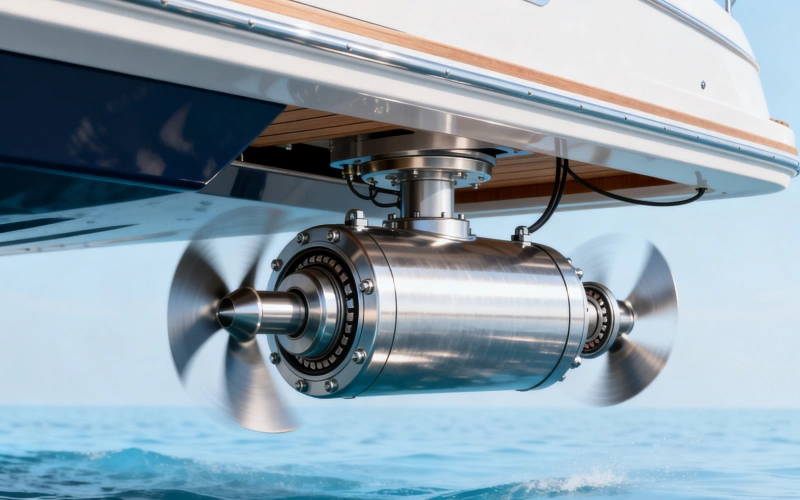
Gyro stabilizers use an internal flywheel spinning at high speed to generate resistance against yacht roll. Because they are installed inside the yacht rather than using external underwater fins, they are often considered by owners who want to avoid underwater hull modifications. However, gyro installation still requires careful assessment of available space, structural support, electrical capacity, cooling requirements, and access for future maintenance.
Advantages
- Can provide significant comfort benefits when the yacht is stationary or at anchor, depending on the system model and installation
- May avoid some underwater installation requirements compared with certain fin retrofit projects
- No external underwater components
- Suitable for owners prioritizing comfort during overnight stays and anchoring
- Requires suitable internal installation space
- May require structural assessment and reinforcement
- Electrical, cooling, and ventilation requirements vary by model
- Performance depends on correct sizing and installation quality
- Future servicing access should be considered during installation planning
How Fin Stabilizers Work: Advantages and Limitations
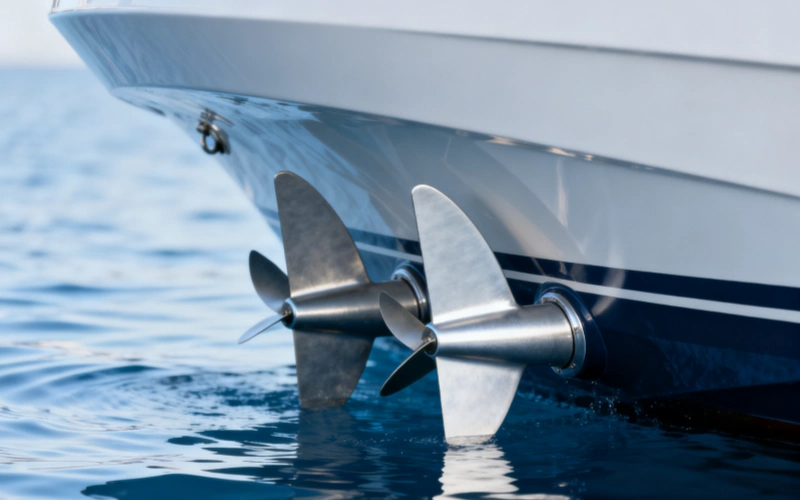
Fin stabilizers use underwater control surfaces to generate stabilizing force as water flows across the fins. Traditionally, fin systems have been widely used on larger yachts because they provide strong roll reduction during cruising and offshore operation. However, modern systems have developed beyond traditional underway-only designs, with some manufacturers offering zero-speed or at-rest stabilization capabilities.
Advantages
- Excellent stabilization while underway, particularly when properly matched to the yacht's size, speed range, and cruising profile
- Strong performance for offshore and long-distance cruising
- Commonly used on larger yachts and vessels designed for extended cruising, although suitability depends on the individual yacht
- Available with advanced zero-speed capabilities on some systems
- More complex installation compared with internal gyro systems
- Requires inspection and maintenance of model-specific components such as fins, actuators, seals, control systems, and related underwater or mechanical components
How Much Do Yacht Stabilizers Cost?
The cost of yacht stabilizers depends on the yacht size, stabilization type, and whether the system is installed during new build or added as a retrofit.As a general guide, yacht stabilization systems typically range from tens of thousands to several hundred thousand dollars.
Approximate Yacht Stabilizer Investment
| Yacht Type / Installation | Typical Investment |
|---|---|
| Gyro stabilizer retrofit for small to mid-size yachts | Quote required |
| Gyro stabilizer installation for larger yachts | Quote required |
| Fin stabilizer installation for larger yachts or complex retrofits | Quote required |
Actual project costs depend on the selected manufacturer, model, yacht design, shipyard location, installation complexity, and required modifications.
Manufacturer-published pricing, such as Seakeeper's cost guidance, generally refers to equipment pricing and may not include installation, engineering, commissioning, or shipyard labor. Buyers should compare complete project quotations rather than equipment prices alone.
Higher-cost fin stabilization projects are typically associated with larger yachts, multiple-fin configurations, extensive structural work, or complex retrofit installations rather than standard installations on smaller vessels.
Total Ownership Cost
Stabilizer ownership should also be evaluated as part of the wider cost of yacht ownership.Long-term ownership considerations include:
- Regular servicing
- Replacement parts
- Future major maintenance
- Shipyard downtime
- Availability of technical support
- Impact on operating convenience
Maintenance Considerations
Like any yacht system, stabilizers require regular servicing.Gyro stabilizers require model-specific inspections that may include mechanical components, electrical systems, cooling or ventilation systems, control systems, and mounting structures.
Fin stabilizers require model-specific checks of components such as fins, actuators, seals, control systems, hydraulic systems where applicable, and hull installation areas.
When buying a used yacht, review the stabilizer service history as carefully as the system's age.
Buying a Yacht With Stabilizers vs Retrofitting a Yacht
When evaluating stabilizers, buyers usually face two different decisions:
- Buying a yacht that already has a stabilization system
- Adding stabilization to an existing yacht
These two situations involve different considerations.
Buying a Yacht With Stabilizers
A yacht already equipped with stabilizers can offer convenience, but buyers should evaluate the system carefully.
Important checks include:
Confirm System Details
Review:
- Manufacturer
- Model
- Installation date
- Factory-installed or retrofit system
- Operating hours
- Service records
A newer system is not automatically better than an older one. Condition and maintenance history are often more important.
Evaluate Installation Quality
Buyers should inspect:
- Installation workmanship
- Structural mounting
- System integration
- Accessibility for maintenance
A properly engineered retrofit may perform well, while a poorly installed system can create future problems.
Verify Real-World Performance
During sea trial, test:
- Stabilizer operation enabled versus disabled
- Applicable cruising conditions
- Control response
- Noise and vibration levels
- Warning alarms
The goal is not only to confirm that the system operates, but whether it provides the expected comfort improvement.
Retrofitting Stabilizers to an Existing Yacht
Adding stabilizers to an existing yacht can be possible, but feasibility depends heavily on the vessel.
A retrofit assessment should consider:
Available Space
The yacht must have sufficient room for:
- Equipment installation
- Service access
- Future maintenance
- Structural Requirements
The installation may require evaluation of:
- Mounting points
- Hull structure
- Weight distribution
- Reinforcement requirements
- Electrical and Mechanical Capacity
The yacht may need upgrades or modifications related to:
- Power supply
- Cooling
- Hydraulic systems
- Control integration
- Shipyard Capability and Downtime
A retrofit project requires experienced engineering and may involve:
- Detailed planning
- Shipyard scheduling
- Testing and commissioning
- Time out of service
The best approach is to obtain a yacht-specific assessment before assuming a retrofit is practical.
Yacht Stabilizer Inspection Checklist
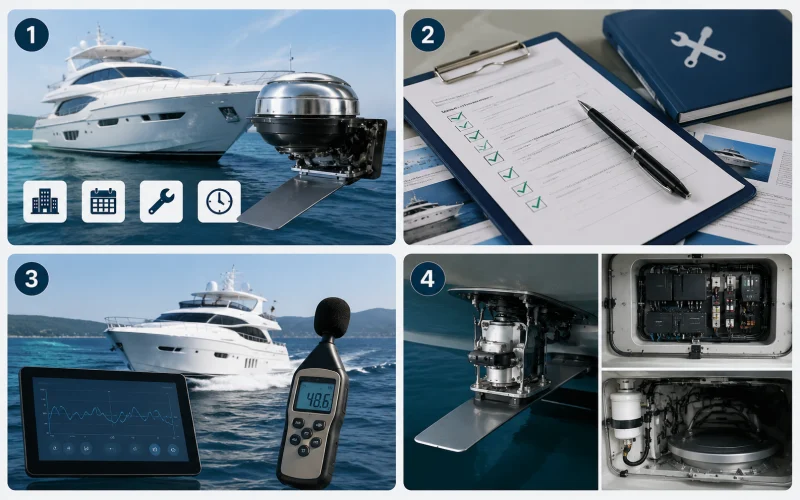
Whether purchasing a new yacht or a pre-owned vessel, the stabilization system should be reviewed as part of the overall technical inspection. A stabilizer is only valuable when it is correctly sized, properly installed, and maintained.
Confirm the Stabilizer System Details
Buyers should verify:- Manufacturer and model
- Installation year
- Factory-installed or retrofit system
- Operating hours
- Previous upgrades or modifications
- Seakeeper
- Quick Gyro
- Naiad Dynamics
- Humphree
Review Maintenance History
For yachts with existing stabilizers, check:- Service records
- Repair history
- Replacement parts information
- Previous technical issues
- Outstanding service requirements
- Next scheduled service
- Expected major maintenance items
- Estimated future costs
Test Performance During Sea Trial
A proper sea trial should evaluate performance under relevant conditions.Buyers should check:
With Stabilization Off
Evaluate:
- Natural yacht motion
- Roll characteristics
- Comfort level
- With Stabilization Activated
- Reduction in roll movement
- System response
- Operating noise
- Warning alarms
- At anchor / zero-speed operation
- Normal cruising conditions
Inspect Technical Installation
A qualified surveyor or technician should review relevant components, including:For gyro systems:
- Mounting structure
- Electrical connections
- Cooling/ventilation systems
- Control equipment
- Fin assemblies
- Actuators
- Seals
- Hull installation areas
- Hydraulic components where applicable
Check Parts Availability and Technical Support
Before purchase, buyers should consider:- Is the system still supported?
- Are replacement parts available?
- Are qualified technicians available in cruising areas?
- Does the local service network support this brand?
For a complete pre-purchase evaluation, buyers should also review a broader used yacht inspection checklist covering mechanical systems, structural condition, and onboard equipment.
Do Stabilizers Affect Yacht Resale Value?
Yacht stabilizers may improve buyer interest, but they do not automatically increase resale value by a fixed amount.
The impact depends on:
- Yacht category
- Market expectations
- System condition
- Installation quality
- Maintenance history
- Technical support availability
However, buyers typically evaluate the overall condition and suitability of the system rather than simply whether a yacht has stabilization equipment.
Why Stabilizer Condition Matters in Resale Decisions
When comparing similar yachts, a properly sized and well-maintained stabilization system may improve market appeal.However, the value depends on factors such as installation quality, service records, system age, parts availability, and whether the equipment matches the yacht’s intended use.
Final Verdict: Should You Buy a Yacht With Stabilizers?
For many yacht buyers, stabilizers are a valuable feature rather than an essential requirement. Gyro and fin systems serve different yacht usage scenarios. The best choice depends on yacht size, cruising plans, installation feasibility, and the level of comfort expected by the owner.A well-chosen stabilization system can significantly improve the overall ownership experience, but the best solution is the one that matches the yacht's intended use.
Ready to Find Your Ideal Yacht?
Explore yachts for sale and compare vessels with the features, equipment, and stabilization systems that match your cruising lifestyle.
👉 View Yachts for Sale
About This Guide
This guide was prepared by the YachtTrading editorial team based on industry information and publicly available specifications from leading yacht stabilization manufacturers, including Seakeeper, Quick Gyro, Naiad Dynamics, and Humphree.
Stabilizer selection depends on yacht size, design, cruising style, and intended use. Buyers should consult qualified marine surveyors and yacht professionals before making a purchase decision.
Last Reviewed: September 2026.
Disclaimer
The information in this guide is for general reference only. Stabilizer costs, installation requirements, and maintenance needs vary by yacht model, manufacturer, and project complexity. Buyers should seek professional advice and complete a proper technical inspection before making a purchase decision.
FAQ
Q1: Are yacht stabilizers worth the money?
A: Stabilizers are especially valuable for yachts where owners spend significant time onboard, cruise offshore, anchor frequently, or prioritize comfort. Larger yachts often benefit because of their cruising profile and comfort expectations, but yacht size alone does not determine whether stabilization is worthwhile.
Q2: Are gyro stabilizers better than fin stabilizers?
A: Neither gyro nor fin stabilizers are universally better. Both technologies can provide effective roll reduction, and the best choice depends on yacht design, intended use, installation requirements, and specific system capabilities.
Q3: Do all yachts need stabilizers?
A: No. Smaller yachts used mainly for short daytime trips may not require stabilization. However, stabilizers become increasingly valuable on larger yachts, flybridge yachts, explorer yachts, and displacement vessels designed for extended cruising.
Q4: What size yacht needs stabilizers?
A: There is no fixed size requirement for yacht stabilizers. However, they become increasingly valuable on yachts around 50ft and above, especially flybridge yachts, long-range cruisers, and explorer yachts. Some 40–50ft yachts may also benefit, particularly when owners cruise offshore, stay overnight onboard, or prioritize comfort.
Q5: How much does it cost to retrofit stabilizers on a yacht?
A: Retrofit costs vary depending on yacht size, stabilizer type, manufacturer, installation complexity, and any required structural or mechanical modifications. A complete quotation should cover equipment, engineering, installation, commissioning, and necessary upgrades.
Q6: Can you add stabilizers to an existing yacht?
A: Yes. Many yachts can be retrofitted with stabilization systems. Gyro stabilizers are often easier to install because they do not require underwater components, while fin systems usually involve more extensive structural work.
Q7: Do yacht stabilizers increase resale value?
A: Stabilizers do not always recover their full installation cost, but they can improve a yacht's market appeal. Many buyers consider stabilization a valuable feature, especially on larger cruising yachts.
Q8: What should I check before buying a yacht with stabilizers?
A: Buyers should review the stabilizer type, installation quality, maintenance records, service history, and performance during a sea trial. A properly maintained system can add significant value and comfort to yacht ownership.