Quick conclusion:How do I sell my yacht?(3–12 Months, 8–10% Cost)
If you're wondering "how do I sell my yacht", the process typically takes 3–12 months, costs 8–10% in commission, and success depends 60–70% on pre-listing preparation. This guide breaks down exactly what you need to do—from pricing strategy to paperwork—to close in 60 days instead of 6 months.
For sellers asking "how do I sell my yacht" , the key isn't where you list—it's how to sell your yacht without bleeding value. Nail the prep, and you'll close faster with fewer headaches. Here's what actually moves the needle: market timing, hidden costs, and pre-listing risks most owners miss.
How Do I Sell My Yacht Step by Step
Step-by-Step Quick Guide:
- Gather Documentation – Collect maintenance logs, registration, insurance, and past survey reports. Buyers prioritize complete documentation over cosmetic upgrades. (Keyword: how to sell your yacht)
- Get a Market Valuation – Compare similar vessels by size, brand, year, and engine hours. Set a realistic asking price within the market range. (Keyword: price my yacht)
- Prepare the Yacht – Clean, make minor repairs, and ensure engines, electronics, and navigation systems work properly. High-quality photos and virtual tours help attract buyers. (Keyword: sell my yacht)
- Choose Sales Channel – Decide between private sale or broker-assisted sale. Medium to large cruising yachts usually benefit from broker expertise. (Keywords: sell a yacht privately, yacht broker commission)
- Negotiate & Close – Respond promptly to serious buyers, negotiate based on market data, and finalize legal documents including bill of sale and registration transfer. (Keyword: how do I sell my yacht)
Detailed Insights & Example:
From an industry perspective, yacht sales don't follow a linear path. The same vessel may sell in three months through one channel yet remain unsold for a year through another.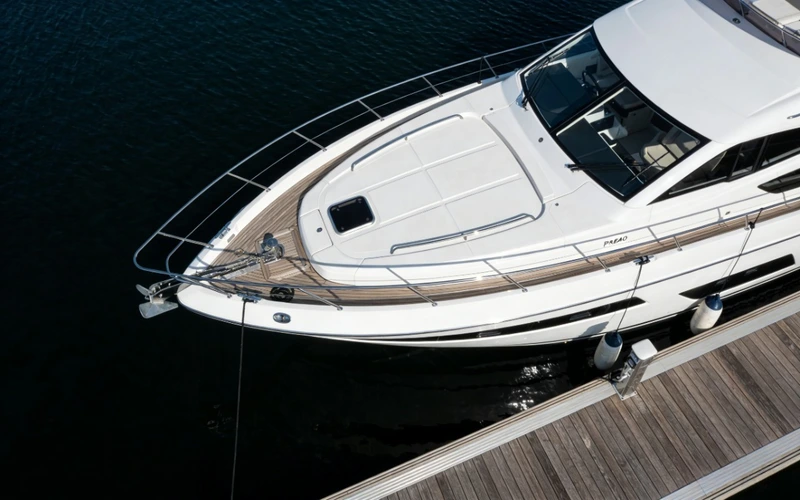
In early 2024, I appraised a Princess 60 that had been listed for 11 months without selling. The owner insisted on a price 15% above market value, citing recently replaced carpeting. However, buyers were more concerned about the engine overhaul history—and this yacht lacked a complete maintenance log. This is extremely common among mass-produced yachts between 55 and 70 feet: sellers overestimate cosmetic upgrades while underestimating the importance of documentation.
By reorganizing the documentation and adjusting the price to 95% of market value, the Princess 60 sold within three weeks—a clear example that preparation matters more than replacing equipment.
Efficient sales start before you list . Align with market realities rather than relying on personal investment or sentimental value. Buyers focus on: size being mainstream, configuration matching intended use, and price within an acceptable range.
This explains why pre-owned yacht transactions cluster around certain sizes and price points. Overlooking this fact is a common reason many yacht listings fail.
Should I Sell My Yacht Privately or Through a Broker?
When yacht owners search for “how to sell a yacht privately,” their underlying motivation is usually quite clear: they want to reduce costs and avoid paying brokerage commissions. However, in the yacht market, the difference between a private sale and a brokered sale goes far beyond simply “paying a little extra.” Understanding the pros and cons of each approach is crucial for grasping the market logic behind “ how do I sell my yacht.”
The table below summarizes the key differences between private sales and brokered sales, helping boat owners quickly determine which approach is more suitable for their vessel:
| Dimension | Private Sale | Broker Sale |
| Pricing Basis | Based on listed price reference | Based on market transaction data |
| Buyer Quality | Unstable | vetted buyers |
| Documentation & Compliance | Seller bears full responsibility | Broker assists with completion |
| Transaction Risk | High | Low |
| Suitable Vessel Type | Small, structurally simple vessels | 30-foot-plus cruisers |
As shown in the table, private sales offer flexibility but carry higher risks of information asymmetry; broker-assisted sales, particularly for cruisers over 30 feet, enhance transaction efficiency and market matching.
In contrast, the core value of broker-assisted sales lies not only in providing exposure but also in replacing subjective pricing with actual transaction data. Particularly for cruising yachts over 30 feet, a broker's understanding of buyer demographics, budgets, and regional demand determines whether a vessel reaches qualified buyers.
Therefore, from a practical standpoint, there is no single best way to sell a used yacht. For smaller vessels with simpler structures, private sales remain a viable option; however, for medium to large cruising yachts, broker-assisted sales typically offer greater certainty of closing and operational efficiency.
What Documents Do I Need to Sell My Yacht?
Buyers decide in the first walkthrough. They're scanning for red flags in the engine room and paperwork gaps—not admiring your new upholstery. I've seen $50,000 electronics packages ignored because the maintenance log was missing. Documentation beats upgrades every time. While many owners consider replacing electronics or adding decorative touches, the market places greater emphasis on the vessel's technical integrity and the completeness of its documentation.
Preparation Checklist Table
| Inspection Item | Importance | Recommended Action |
| Hull Condition | High | Inspect the hull bottom and sides for cracks or water seepage; conduct structural repairs if necessary. |
| Engine | High | Check oil, filters, and the cooling system to ensure normal operation; provide maintenance records. |
| Electronic Equipment | Medium | Verify the functionality of navigation, radar, and communication equipment; update software or calibrate instruments. |
| Photos & Presentation | Medium | Take clean, authentic, full-angle photos; create videos or virtual tours for display. |
Documentation Checklist
To enhance transaction efficiency and ensure your documentation is systematically prepared, create a comprehensive "Yacht Resume." The following are key documents:
- Maintenance Logs: Reverse chronological timeline + key elements (date, labor hours, components, service provider) to demonstrate meticulous vessel care.
- Bill of Sale Template: Includes price, delivery terms, As-Is declaration, and party information.
- Title / Registration: Clearly distinguishes between Certificate of Documentation and State Registration, explaining their legal and transactional roles.
- Insurance and Compliance Documents: Insurance policies, registration transfer records, maritime compliance certificates.
- Sea Trial and Survey Records: Historical survey reports and sea trial results, enabling buyers to quickly verify vessel condition.
The Survey & Sea Trial Phase
- Osmosis / Blistering: When tested with a moisture meter, if the hull's fiberglass absorbs over 15% moisture (per ABYC H-24 Standard for Moisture Measurement) or exhibits blistering protrusions exceeding 2cm in diameter, it is deemed a structural risk. This results in an immediate 10-15% price reduction or requires major repairs.
- Engine Compression: Engine compression must meet standards. A compression ratio variance exceeding 10% (above ABYC P-14 engine inspection guidelines) between cylinders, or a single cylinder compression value 20% below manufacturer specifications, indicates the engine requires major overhaul. This is the primary reason buyers withdraw from transactions.
- Electrical / Conductivity: Failure in hull-to-circuit ground resistance testing, or evidence of electrolysis corrosion, is considered a serious safety hazard in high-salinity waters like Dubai.
Seller Self-Checklist (48-Hour Preparation):
- Clean the engine compartment and replenish fluids to standard levels.
- Prepare all keys and access credentials for compartments and doors.
- Ensure the battery is fully charged and electronic systems are fully functional.
- Organize and provide complete documentation (maintenance logs, registration certificates, insurance policies, survey reports).
How Much Does It Cost to Sell a Yacht?
Pricing is the most error-prone and costly stage in the sales process. First-time sellers often base pricing on “historical investment,” yet the market disregards these costs. According to 2025–2026 Dubai pre-owned yacht market data, 40–50-foot cruisers are most active, with transaction prices averaging 3–5% below asking price. European brands typically command a 5–8% premium. This demonstrates the market's far greater sensitivity to vessel age, size, and brand than sellers' subjective investments.
The core of setting a reasonable price lies in identifying the actual transaction range: referencing actual sale prices (such as those on SoldBoats.com or YachtWorld Sold Listings) and comparable cases of the same model, year, and engine hours, while incorporating regional adjustment factors.
Boat International market reports indicate that pre-owned yachts typically depreciate at a rate of 8–12% annually during the first five years, followed by 3–5% per annum thereafter. Overpricing (exceeding the market average by 10–15%) often results in prolonged periods without inquiries, potentially extending the sales cycle to over six months.
Therefore, owners should base their strategies on actual transaction ranges while considering vessel condition, brand, age, and market demand. This approach attracts potential buyers while avoiding prolonged listing periods. Refer to the table below for pricing strategy guidance based on these factors:
| Pricing Strategy | Market Feedback | Typical Outcome | Average Time to Close |
| 10–20% Above Market | No initial inquiries | Forced to lower price later | 6–12 months |
| Near Transaction Range | Concentrated inquiries | Sold within 3 months | 2–4 months |
| Significantly Below Market | Rapid inquiries | Sacrifices partial value | 1–2 months |
A common misconception is to “list at a high price first, then gradually lower it.” In reality, the initial listing period represents the window when listing algorithms and buyer attention are at their peak. Once this opportunity is missed, even adjusting the price makes it difficult to regain visibility.
To give you a practical view of selling costs, here’s a simple Selling Cost Calculator based on typical yacht expenses:
| Cost Item | Percentage / Estimate | Notes |
| Yacht Broker Commission | 8–10% | Applies if using a broker; private sale may reduce this to 0% |
| Marina Fees | $500–$2,000/month | Depends on duration of listing and location |
| Insurance | $1,000–$5,000 | Temporary coverage adjustments during listing |
| Maintenance / Repairs | $1,000–$10,000 | Small repairs and preparation before sale |
| Documentation & Legal | $500–$2,000 | Survey, title, registration, compliance |
Total estimated cost range: $5,000–$25,000 (depending on broker use, yacht size, and prep level)
Reasonable pricing should be determined by the vessel's condition, market demand, and regional buyer demographics. For instance, in Dubai, buyers are highly sensitive to vessel age and brand reputation, with maintenance records and compliance documentation serving as near-mandatory prerequisites. Vessels that close deals within the first three months are typically not the lowest-priced options, but rather those that most closely align with market expectations. This signals fair pricing, seller professionalism, and manageable risk.

How Long Does It Take to Sell a Yacht?
During the yacht sales process, many owners instinctively believe that “more exposure is always better,” but the actual market doesn't entirely follow this logic. Different platforms attract vastly different types of buyers, budget ranges, and decision-making speeds. Choosing the wrong platform often leaves vessels stuck in a state where they are viewed but never contacted.
Global Platforms & Comparison Table
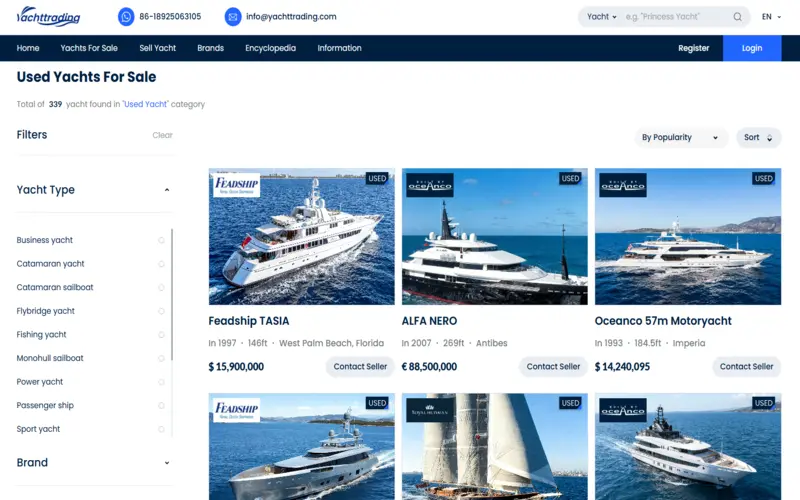
Selecting the right platform to sell your yacht hinges on understanding each platform's buyer demographics and transaction efficiency. YachtWorld targets international high-end buyers, Boat Trader focuses on the North American market, YATCO caters to mid-to-high-end cruisers, Yacht Trading serves global buyers seeking both new and used yachts, while self-listing platforms suit smaller or lower-cost vessels.
The table below compares the core features and suitability of these platforms, helping boat owners quickly determine the most suitable sales channel for their vessel:
| Platform Type | Target Buyers | Transaction Efficiency | Regional Applicability | Notes |
| YachtWorld | International high-end buyers | Medium-High | Global | Best for mainstream-sized and popular brand vessels |
| Boat Trader | U.S. and North American market | Medium | North America | High exposure, but need to screen for valid inquiries |
| YATCO | European and global market | Medium-High | Europe & Global | Higher transaction rate for mid-to-high-end cruisers |
| Yacht Trading | Global buyers (new & used yachts) | Medium | Global | Focuses on both new and used yacht sales; strong presence in international markets |
| Self-listing Platforms | Small/low-cost vessels | Low-Medium | Global | Obtain market feedback, but transactions are slow |
Through analysis and comparison, shipowners can quickly understand the characteristics and suitability of each platform, thereby formulating listing strategies to achieve higher transaction efficiency.
Dubai Specifics: Local Registration Requirements
Beyond the globally applicable platform, specific regional markets (such as Dubai) impose additional compliance thresholds requiring advance preparation, with particular attention needed for ADNOC vessel registration transfers and VAT compliance. Dubai buyers are typically active from November to March, with budgets concentrated on cruisers priced between $500k to $2M.
Unlike in Europe and the United States, Dubai transactions require obtaining a Clearance Certificate in advance to prove no liens exist. This is particularly critical because Dubai imposes a 5% VAT on vessels under 3 years old, making the certificate essential for tax-efficient purchases. Without this document, buyers often back out at the final stage due to concerns about hidden liabilities.
Common Mistakes That Cost You Money
Documentation and survey errors cause more failed sales than pricing disputes. Here are the five costliest mistakes:
- Hidden Costs: Overlooking parking, insurance, and maintenance expenses can subtly erode your final profit.
- Emotional Pricing: Starting with an inflated price and gradually lowering it risks losing early buyer interest, reducing transaction efficiency.
- Misreading Serious Buyers: Incomplete documentation or concealing repair history undermines buyer trust, leading to price reductions or deal breakdowns.
- Documentation and Disclosure Risks: Incomplete paperwork or hiding maintenance history (e.g., fiberglass repairs, engine water ingress) erodes buyer confidence, increases transaction risks, and may trigger price cuts or deal cancellations. Transparent, upfront disclosure of repair records and technical details builds trust and facilitates smoother transactions.
Summary
Selling a yacht is a specialized process that relies heavily on market judgment. If you're wondering "how do I sell my yacht" efficiently, ensure all documentation is organized and market research is completed before listing. Set an initial price based on actual market transaction ranges—not your investment history. Understanding market demand and buyer demographics, and placing the vessel on the right platform at the right time, is how you sell a yacht in 60 days instead of 6 months.
About the Author
Brian G. Steler
Yacht Broker
Qualifications: SAMS Certified Surveyor, No. AMS #1249
Last Updated: January 2026
Disclaimer
This content is for reference only and does not constitute investment advice. This article has not received sponsorship from any shipyard, financing institution, or brand; the author has not participated in brokerage transactions involving the vessels cited herein. Yacht specifications are based on publicly available information as of 2026; actual prices may vary due to regional and market fluctuations. Actual configurations shall be subject to classification society certificates. Prior to purchase, it is imperative to hire an independent surveyor (not affiliated with the seller) to conduct sea trials and verify certificates. Neither the author nor this platform is responsible for any losses incurred as a result of reliance on the information provided herein. Regulations and fees are subject to change; always check current requirements.
FAQ
Q1: What is the quickest way to sell a yacht?
A: Price it at 90-95% of market value from day one with complete documentation ready. In my experience, yachts prepared this way sell in 30-60 days, while overpriced listings take 6-12 months regardless of upgrades.
Q2: What is the best time of year to sell a boat?
A: Spring (March–May) is strongest in the US/Europe, but winter brings serious buyers with less competition. In Dubai, peak season is October–March due to climate.
Q3: How do I sell my yacht safely without getting scammed?
A: Always use an escrow service for deposits—never direct wire transfers. Insist the buyer use an independent surveyor (not one they recommend) and verify ADNOC registration clearance in Dubai before handing over keys.
Q4: How do I spot a fake buyer?
A: Fake buyers offer full price without viewing, refuse sea trials, or pressure quick decisions. Real buyers ask technical questions and schedule surveys. Always verify funds before removing your listing.