Yacht brokers typically charge around 8%–10% of the final sale price, with 10% commonly used as a benchmark in many yacht transactions. The commission is usually paid by the seller, although rates and payment structures vary according to the yacht's value, location, transaction complexity and brokerage agreement.
Understanding how yacht broker commission works can help buyers and sellers make better decisions before entering a yacht transaction.
What Is Yacht Broker Commission?
Yacht broker commission is the fee paid to a yacht broker for successfully assisting with the purchase or sale of a yacht.Unlike a simple referral fee, yacht broker commission typically covers the professional support required to complete a yacht transaction, from connecting buyers and sellers to helping manage the sales process.
The commission is compensation for the broker's expertise, market knowledge, negotiation support, and transaction management throughout the yacht buying or selling process.
Yacht Broker Commission Rates Explained
In many yacht sales, yacht broker commissions are structured as a percentage of the final sale price. In many traditional brokerage transactions, a commonly referenced commission range is approximately 8%–10%, although larger yacht transactions and superyacht deals may involve individually negotiated terms.Typical commission ranges include:
- Standard Yacht Transactions: Around 8%–10%
- Large Yachts and Superyachts: Commission terms may be negotiated depending on transaction size, complexity, and services involved
- Custom Yacht Projects: May involve individually structured agreements based on the scope of the project
The commission rate is normally agreed before the yacht enters the sales process and is included in the brokerage agreement.
Who Pays Yacht Broker Commission: Buyers or Sellers?
In most yacht sales, the commission is usually paid by the seller.
Before selling a yacht, sellers typically sign a brokerage or listing agreement, which may be structured as a Central Agency Agreement in some markets, which specifies the commission rate and payment terms.
After the yacht is successfully sold, the commission is deducted from the seller's proceeds.
In the traditional yacht sales model, buyers typically do not pay the seller's broker commission directly.
However, buyers may choose to appoint their own buyer's broker through a Buyer Representation Agreement. In this case, the fee structure depends on the agreement between the buyer and broker.
Before signing an agreement, buyers should confirm:
- Who pays the commission
- Whether additional fees apply
- What services are included
How Is Yacht Broker Commission Calculated?
Yacht broker commission is generally calculated based on the final agreed selling price, not the original asking price.In most yacht sales, the asking price is set by the seller and the brokerage commission is handled separately according to the brokerage agreement. The commission is not simply added on top of the listed yacht price. Instead, it is typically paid from the sale proceeds after the transaction is completed.
Yacht Broker Commission Calculation Examples
The following examples show how yacht broker commission may be calculated using a 10% example commission rate. The actual commission may vary depending on the brokerage agreement, yacht value, market conditions, transaction complexity, and other terms agreed between the broker and client.| Yacht Sale Price | Example Commission at 10% | Seller Proceeds Before Other Costs |
|---|---|---|
| $500,000 | $50,000 | $450,000 |
| $1,000,000 | $100,000 | $900,000 |
| $5,000,000 | $500,000 | $4,500,000 |
Note: Before taxes, outstanding finance, legal fees, registration costs and other transaction expenses.
For larger yachts and superyachts, commission structures may be negotiated differently because these transactions often involve more complex inspections, international coordination, legal arrangements, and professional services.
Example: Commission Based on Final Selling Price
For example, if a luxury yacht is originally listed at $5 million but sells for $4.5 million after negotiation, the commission is generally calculated based on the final agreed selling price:- Original Asking Price: $5,000,000
- Final Negotiated Selling Price: $4,500,000
- Agreed Commission Rate: 10%
- Broker Commission: $4,500,000 × 10% = $450,000
What Factors Affect Yacht Broker Fees?

Yacht broker commission is not determined by a fixed percentage alone. Several factors can influence the final commission structure.
Yacht Value
The yacht's value can affect the overall commission amount, as a higher sale price results in a larger commission value even when the percentage remains unchanged.Yacht Type and Size
Larger yachts usually require more complex transaction management, including:- More technical inspections
- International legal coordination
- Flag registration assistance
- Multiple professional advisors
Transaction Complexity
International transactions may involve additional coordination, such as:- Ownership transfers
- Import and export procedures
- Tax planning coordination
- Commercial registration changes
- Multiple buyer negotiations
How Is Commission Split Between Brokers?
Many yacht transactions involve two brokers:- Listing Broker (Seller's Broker) – Represents the yacht owner and manages the sale process
- Buyer's Broker – Represents the buyer and helps find, negotiate, and purchase the yacht
Common arrangements include:
- 50/50 split between seller's broker and buyer's broker
- Other negotiated splits depending on the brokerage agreement
A 70-foot luxury motor yacht listed at $1,000,000 is successfully sold through two yacht brokers.
With a 10% commission structure, the total commission would be $100,000. The listing broker and buyer's broker typically share this commission according to their brokerage agreement, often on a 50/50 basis.
What Services Are Included in Yacht Broker Commission?
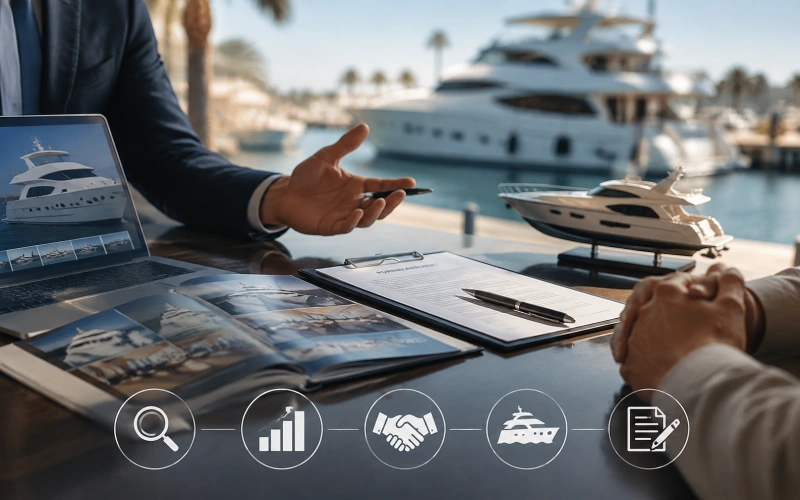
Yacht broker fees usually cover the full transaction process. The exact scope of services should be confirmed in the brokerage agreement, as legal advice, tax advice, surveys, repairs, registration and specialist inspections may be charged separately.
For Buyers
A yacht broker can help with:- Finding suitable yachts based on budget and usage
- Comparing yacht brands, models, specifications and market prices
- Negotiating purchase terms
- Arranging marine surveys and sea trials
- Coordinating paperwork and closing
For Sellers
A yacht broker can assist with:- Yacht valuation
- Marketing strategy
- Professional listings and buyer outreach
- Negotiation management
- Sale documentation
Can Yacht Broker Commission Be Negotiated?
Commission rates may sometimes be negotiated, especially for high-value yachts, superyachts, or transactions requiring customized brokerage services.The flexibility of commission arrangements depends on factors such as the scope of services provided, the complexity of the transaction, and the agreement between the broker and client.
Factors Affecting Commission Negotiations
High-Value Yacht TransactionFor multi-million-dollar yacht sales, buyers and sellers may discuss customized commission structures based on the size of the transaction and the level of service required.
For example:
- $1 million yacht × 10% = $100,000 commission
- $10 million yacht × 10% = $1 million commission
Complex Yacht Transactions
International yacht sales, custom-built yachts, and superyacht projects may require additional coordination, including technical inspections, legal support, registration assistance, and cross-border communication. In these cases, commission terms may be structured differently.
Different Brokerage Agreements
The commission structure may also depend on the type of brokerage agreement, including:
- Central Agency Agreement: Under a central agency agreement, the owner appoints one brokerage company to manage the sale
- Open Listing Agreement: Multiple brokers may market the yacht under different arrangements
- Buyer Representation Agreement: A buyer may choose to appoint a yacht broker to represent their interests exclusively
Common Yacht Broker Commission Structures
Depending on the transaction, possible commission arrangements include:- Standard Percentage Commission – The broker receives an agreed percentage of the final sale price
- Reduced Commission for High – Value Transactions: For larger yacht transactions, some brokers may agree to a different percentage due to the overall transaction value
- Tiered Commission Structure – Some agreements may use different commission rates depending on the final selling price
Is Hiring a Yacht Broker Worth It?
Yacht broker commission is not only a transaction cost. A professional yacht broker can help buyers reduce purchase risks, negotiate better terms, and manage complex yacht transactions.A typical example is a buyer who wants to purchase a motor yacht worth $5 million. During the marine survey, unexpected mechanical issues are identified, which may affect the yacht's value and future maintenance costs.
In this situation, the broker can help review the survey results, negotiate possible price adjustments, and coordinate communication between the buyer, seller, surveyor, and technical specialists.
However, clients should compare commission rates, market reach, relevant yacht experience, contractual terms and potential conflicts of interest before appointing a broker.
Do You Pay Broker Commission When Buying a New Yacht?
While most discussions about yacht commission focus on used yacht sales, new yacht purchases follow a different structure.Whether commission applies depends on:
- Shipyard policies
- Broker agreements
- Brand relationships
- Buyer representation arrangements
Some buyers assume that brokers are only useful for used yachts. However, many experienced yacht buyers also work with brokers when ordering a new yacht.
A professional yacht broker can help with:
- Comparing shipyards and models
- Reviewing specifications
- Negotiating contracts
- Managing construction progress
- Preparing for delivery
Final Thoughts: Understanding Yacht Broker Fees Before You Sign
Before appointing a yacht broker, confirm the commission percentage, the price on which it will be calculated, who is responsible for payment, how co-brokerage is handled, which services are included and when the commission becomes payable.If you are planning to buy or sell a yacht, our brokerage team can help evaluate market prices, review available yachts, and guide you through the transaction process.
About This Guide
This guide was reviewed by the Yacht Trading brokerage team based on practical experience with international yacht listings, buyer enquiries and yacht transaction coordination.
Disclaimer
This article provides general information about yacht broker commission and should not be considered legal, financial, tax, or brokerage advice. Commission structures vary depending on jurisdiction, yacht type, brokerage agreement, transaction complexity, and local market practices. Additional costs, including VAT, taxes, registration fees, and professional services, may apply depending on the yacht's location and ownership structure. Buyers and sellers should review all contractual terms carefully with qualified professionals before completing a yacht transaction.
FAQ
Q1: How much commission do yacht brokers usually charge?
A: Most yacht brokers charge around 10% of the final yacht sale price, although the actual rate may vary depending on yacht value, location, transaction complexity, and agreement terms.
Q2: Do yacht buyers have to pay yacht broker fees?
A: In many yacht sales, buyers do not directly pay the broker commission because it is usually paid by the seller according to the brokerage agreement. However, buyers may have separate fee arrangements if they sign a buyer representation agreement.
Q3: Can yacht broker commission be negotiated?
A: Yes. Commission rates may be negotiable, especially for high-value yachts, superyachts, or complex international transactions. The commission structure should be agreed before signing the brokerage agreement.
Q4: Is using a yacht broker worth it?
A: For many buyers and sellers, a yacht broker provides value through market knowledge, negotiation support, inspection coordination, and transaction management.
Q5: What is the difference between a yacht broker and a yacht dealer?
A: A yacht broker usually represents buyers or sellers in a transaction. A yacht dealer often represents specific yacht brands or shipyards and focuses on selling new yachts.
Q6: Does yacht broker commission increase the yacht price?
A: Yacht broker commission does not usually mean the buyer pays an additional 10% on top of the asking price. In most yacht transactions, the commission arrangement is agreed between the seller and broker and paid according to the brokerage agreement.
Q7: Can I buy a yacht without a broker?
A: Yes, it is possible to purchase a yacht without a broker. However, professional yacht brokers help buyers evaluate market value, negotiate terms, coordinate inspections, and manage transaction risks.
Q8: Are Yacht Broker Fees Refundable?
A: Yacht broker fees are generally not refundable once a transaction has been completed and the broker has earned the agreed commission. However, if a yacht purchase does not proceed, whether any fees are payable depends on the brokerage agreement and the services provided.