When you are new to sailing, you may be confused by the terms ‘mooring’, “berthed” and ‘docking’, as if they were some kind of code. In fact, these words all describe the state of a vessel being ‘parked’, but the specific operations and scenarios they refer to are different. As a platform focusing on yacht pricing consulting, trading, transport and maintenance services, Yachttrading will clarify the difference between these 3 common terms for you today to help you better understand and apply them.
What is mooring?
Simply put, a mooring is the fixing of a vessel to a set point in the water, such as a buoy, a ring on a dock piling or to the seabed via an anchor. Such a fix allows the vessel the freedom to swing slightly around the fixed point with the wind and tide, remaining in the centre of the intended bay or anchorage. Mooring areas are usually indicated on nautical charts and many popular excursion waters have moorings that offer a safer and more reliable alternative to just anchoring.
In other words, a mooring is where you tie the boat's cable to a fixture on the water, where the hull is not rigidly tied down but remains somewhat flexible. This ensures safety and makes it easier for the boat to adjust its attitude slightly to the natural conditions. Imagine you tie the bow cable to an eye-catching buoy and the boat is free to bob around this point, suitable for short stays and temporary shelter from the wind.
What is Berthing?
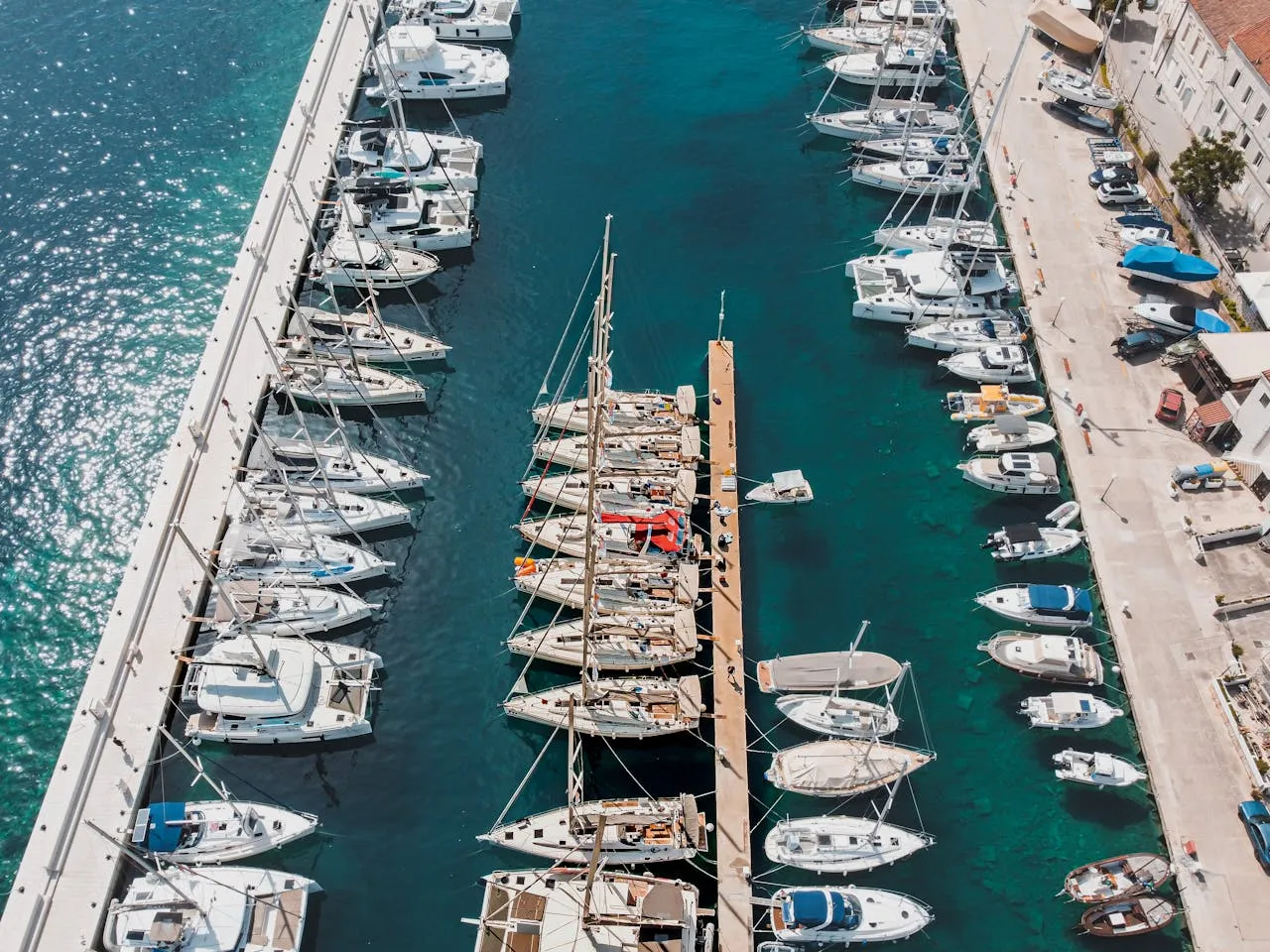
A berth is different in that it involves bringing the boat close to a fixed jetty, floating dock or concrete quay wall for a short period of time. Multiple cables are often needed to secure the boat, from bow, stern or even diagonally, to keep the boat close to the dock and prevent movement due to currents or wind. When berthing, the operator will slowly approach the dock at an angle to the wind or current, while using fender pads to protect the vessel from impact.
In short, berthing is the ‘temporary stopping’ of a vessel at a dock for loading and unloading, supplying or resting. With the emphasis on direct contact with the marina and being secured by a cable, berthing is the most common way of stopping a boat in a harbour or yacht club on a daily basis.
What is a Docking?
Mooring is more like finding a ‘home base’ for your boat. When you rent or own a specific berth in a marina, it becomes your exclusive long-term residence. Moorings are clearly defined slots within a marina, where the boat's sides are tied to piles or floats by cables, and surrounded by shore power and water sources for routine maintenance and supplies.
Different from the free swing of mooring and the temporary stop of berthing, mooring emphasises the exclusivity and long-term nature of berths. You can plug in shore power for your boat, enjoy a stable supply of water and electricity, and easily prepare for your next voyage. For example, if you sail into a clearly numbered berth, the boat is like parked into your own garage, safe and convenient.
What is Anchoring?
Anchoring is the most traditional way of stopping a boat at sea, especially in areas where there are no mooring buoys or berths. Anchoring allows a boat to come to rest in natural bays, quiet waters or near sandy beaches for swimming, picnics or exploring. However, anchoring requires special attention to siting and manoeuvring:
Choose a sheltered leeward shore with moderate depths (generally 2 to 5 metres) and a sandy and muddy seabed texture is best, avoiding rocky and algae-rich areas.
When anchoring, release at least 3 to 5 times the depth of the anchor line to ensure that the anchor has a firm grip on the seabed.
After anchoring, gently pull on the anchor line to make sure the claw is secure, and attach a retarder rope to reduce the load on your equipment.
When anchoring overnight, check the anchor line regularly for signs of slippage and monitor with a GPS or shore reference.
Strictly adhere to local regulations and anchorages are prohibited in some areas to protect the marine ecology.
Although anchoring is flexible, safety awareness should not be slackened, especially paying attention to weather changes and tidal influences to prevent the vessel from dragging anchor and drifting.
Mooring, berthing, mooring and anchoring are all common ways of docking a vessel, but they are adapted to different environments and needs:
Moorings are suitable for safe and flexible docking in the water by means of fixed buoys or anchor points.
Docking is the temporary fixing of a vessel alongside a quay to facilitate boarding, alighting and provisioning.
Berthing, on the other hand, is the hiring of an exclusive berth within a marina as a permanent home for the vessel.
Anchoring is the free choice of a spot to dock when there is no fixed mooring, and should be handled with care.
Understanding these basic concepts can help you become more comfortable in yacht operation and planning. As a one-stop yacht service platform, Yachttrading is committed to providing you with comprehensive and accurate yacht knowledge and practical advice to help you enjoy every moment of your life at sea.