Quick conclusion: How Much Does a Sailboat Cost in 2026?
- Small sailboats (20–25 ft): $15,000–40,000
- 30–40 ft cruising sailboats: $120,000–350,000 (new), $60,000+ (used)
- Average annual ownership cost: $8,000–30,000+
- Purchase price usually represents only 55–65% of first-year total cost
When deciding whether to purchase a sailboat, consulting tips for buying a new yacht is an essential first step for beginners—not just to find the right vessel, but to accurately forecast the hidden costs that follow. Such practical tips not only help you better set your budget but also plan for future expenses and avoid common pitfalls.
Buying a sailboat isn’t just a financial investment. It’s a long-term lifestyle commitment. Here's the math nobody showed my clients when they bought their first boats: the real price of a sailboat in 2026, and the hidden costs that come after.
Average Sailboat Prices in 2026 by Size
Market data on average sailboat prices is abundant, yet most overlook a crucial fact: sailboat prices are not uniformly distributed. According to the 2024 report by the National Marine Manufacturers Association (NMMA), the average price of a sailboat has increased by 5% year-on-year, particularly in the 30–40 ft range, driven by rising demand and material costs.
In actual transaction samples over the past few years, the vast majority of deals have concentrated within a few specific size and configuration ranges, rather than following a “linear growth from small to large.” The table below displays typical transaction price ranges for sailboats across different size segments, helping you quickly grasp market price distribution trends and popular size choices.
| Boat Size Range | Typical Transaction Price Range | Market Characteristics |
| 22–25 ft | $15,000 – $35,000 | Entry-level, high liquidity |
| 26–30 ft | $35,000 – $80,000 | The threshold for new owners transitioning to long-term ownership |
| 31–40 ft | $90,000 – $180,000 (Used) | The world’s most popular cruising size |
| 40 ft and above | $200,000+ | Clear shift to long-term capital holding |
Transaction sample source: U.S. Bureau of Economic Analysis (BEA), “Outdoor Recreation Satellite Account, Boat & Marine 2024,” Table 3, and industry public reports.
As seen, sailboat prices are unevenly distributed across different size segments. Most transactions cluster around 30 feet, making this the most common choice on the market. For first-time buyers, the 25–30-foot range represents a significant “tipping point”: it retains the manageability of an entry-level boat while beginning to offer long-term ownership viability. Opting for this size range allows you to maintain relatively manageable costs for mooring, maintenance, and insurance while enjoying a more comfortable sailing experience.
Sailboat Prices by Size: 25ft vs 30ft vs 40ft
Many first-time buyers naturally assume that larger boats come with higher prices and greater risks. However, in the sailing market, the true cost divide isn't determined solely by length, but rather by the shift in cost structure that occurs when crossing key size thresholds.
- Under 25 feet: Falls within the “affordable usage cost zone,” where small vessels are easy to moor and maintain, making them suitable for novice sailors who venture out occasionally.
- 26–30 feet: Reaches the minimum threshold for “long-term ownership,” where costs begin to emerge but remain manageable.
- Over 31 feet: All associated costs for larger sailboats (berthing, insurance, maintenance) increase systematically, resulting in significantly higher long-term ownership expenses.
The table below compares key differences between new and used vessels in terms of price, depreciation, risk, and subsequent costs, helping you evaluate the economic and risk factors associated with long-term ownership.
| Category | Under 30 ft | 30 ft and Above |
| Moorage Fees | By the slip or trailerable | Continuous fee based on length |
| Insurance | Basic coverage | Comprehensive coverage is standard |
| Rigging & Sail Maintenance | Single-person manageable | Systematic maintenance required |
| Resale Liquidity | High liquidity | Low liquidity |
As can be seen, an increase in size not only affects the purchase price but also leads to a systematic rise in costs. This is why many beginners tend to overestimate or underestimate the total expenses when calculating the cost of a small sailboat or the cost of a sailboat for beginners.
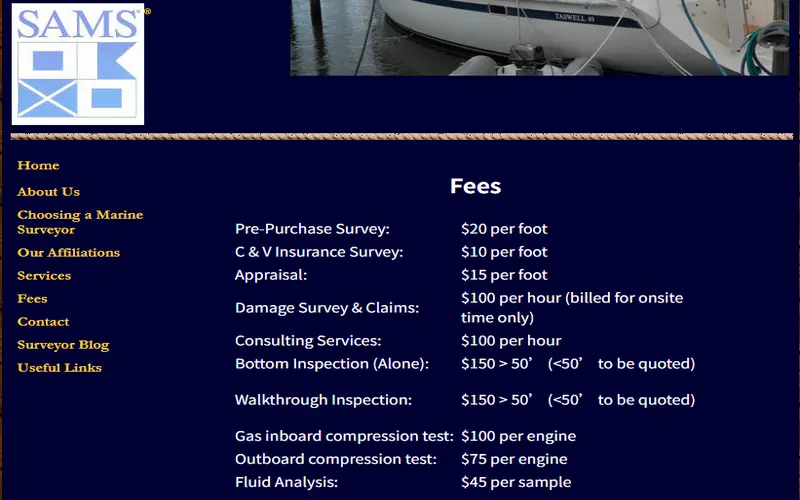
Taking the 2025 pricing from the Florida Registered Marine Surveyor website as an example, the 30-36 ft Bottom Inspection (including keel/ballast inspection) is clearly priced at $150 USD—more than double the cost for vessels under 25 ft. This represents the lowest quantifiable unit forming the cost discontinuity at 30 ft.
New vs Used Sailboat Costs: Price, Risk & Depreciation
In the sailboat market, the gap between new and used boats extends beyond price alone. While used boats typically sell for 30–50% less than new ones, potential maintenance and operational expenses may increase long-term costs. According to the Sailboat Market Size & Trends Report 2025, this disparity primarily stems from the rapid depreciation of new boats during their first three years and differences in market price levels for used boats.
The primary advantage of newbuilds lies in their manageable risk profile, as all equipment and systems are brand new and typically come with a 1–2 year manufacturer warranty—a crucial factor for first-time buyers. In contrast, while secondhand vessels offer lower initial acquisition costs, they may require additional time and funds to inspect the hull, engines, and other potential issues to avoid costly repairs.
Let’s consider a 30-foot cruising sailboat. A new vessel may cost around $200,000, but after three years, it could depreciate by 15%, bringing its value to approximately $170,000. A similar used boat might be priced at $150,000, but could incur additional maintenance costs early on, like $3,000–$5,000 for engine repairs or sail replacement. In practical terms, the real cost difference between new and used sailboats often emerges after several years.
When making a yacht purchase decision, yacht running costs per year are a critical factor to focus on: while the acquisition cost of a used yacht may be lower, its annual operating expenses can rise significantly due to maintenance, insurance, and repair needs. The table below compares key differences between new and used yachts:
| Category | New Boats | Used Boats |
| Price Difference | Typically higher upfront cost with full payment required at purchase | 30–50% cheaper, but price varies significantly based on vessel condition |
| Depreciation | Higher depreciation in the first 3 years (approx. 10–15%) | Major depreciation phase has passed, with smaller subsequent declines |
| Risk | Minimal risk, backed by manufacturer warranties and support | Higher risk, may require additional investment in repairs and maintenance |
| Hull & Equipment Condition | Brand new, with systems and equipment in optimal condition | Requires inspection of hull, engine, and rigging for wear and tear |
| Configuration | Fully customizable to meet your requirements | May have existing upgrades, configuration varies per vessel |
| Purchase Process | Straightforward, with few additional decisions needed | Complex, requiring thorough review of vessel condition and history |
| Ongoing Costs | Lower, with minimal need for additional repairs | Potentially higher repair costs |
Choosing between a new vessel or a used one depends on your requirements and risk tolerance. If you prioritize manageable risks and long-term security, a new vessel is clearly the better option; however, if you can accept a certain level of risk and bear the subsequent maintenance costs, a used vessel may offer better value for money.

Additional Costs of Owning a Sailboat Per Year
For first-time boat buyers, the primary financial burden of sailing does not stem from the purchase price, but rather from subsequent annual expenditures. While the acquisition cost of new or used boats accounts for 50% to 70% of total expenses, the remaining maintenance fees and operating costs gradually accumulate over several years.
In addition to routine maintenance, ongoing expenses such as berthing fees, insurance premiums, and crew salaries are unavoidable. Notably, yacht insurance cost per year is often one of the largest annual expenditures.
Insurance premiums generally range from $1,000 to $5,000, depending on the vessel's value, frequency of use, and the risk level of its location. Many first-time boat buyers overlook the ongoing costs associated with long-term ownership after making their purchase decision, particularly expenses tied to the vessel's size and usage frequency.
According to industry analysis by BoatUS, insurance and mooring-related expenses typically constitute a significant portion of annual sailing vessel ownership costs. In practice, many buyers reassess their budgets within 12 months of delivery and realize at least one expense was underestimated. The table below lists common annual sailing vessel expenditures and their approximate cost ranges to help you estimate your annual budget.
| Cost Item | Description | Estimated Annual Cost |
| Moorage Fees | Fees for dockage at marinas or trailer storage. Costs vary based on vessel length and location. | $1,500 – $15,000 |
| Insurance | Based on vessel value and usage; premiums are typically higher for larger boats. | $1,000 – $5,000 |
| Maintenance & Upkeep | Includes regular inspections, engine servicing, rigging and sail replacements, etc. | $3,000 – $10,000 |
| Crew Costs | Applies if you hire professional crew; costs vary with vessel size and usage frequency. | $5,000 – $20,000 |
| Fuel Costs | Fuel Costs Fuel expenses based on usage frequency and cruising distance. | $1,500 – $5,000 |
The cost of owning a sailboat extends far beyond the initial purchase price, with numerous additional expenses increasing as the vessel ages. Particularly for larger sailboats, annual maintenance, mooring fees, and insurance premiums rise year after year, making it easy for first-time buyers to underestimate the actual annual expenditures.
Is Buying a Sailboat Worth It?
Purchasing a sailboat is not merely an asset investment but a long-term maritime lifestyle. The true dividing line lies not in the price itself, but in whether you are willing to integrate sailing into your life and shoulder the resulting time and financial commitments. For those who genuinely love the sea, a sailboat signifies embracing a unique rhythm of life: voyage planning, maintenance, and weather forecasting all become part of daily existence.
However, if you sail infrequently, the long-term ownership costs of a sailboat accumulate year after year. Even if the initial purchase price is relatively manageable, mooring fees, insurance, annual maintenance, and unavoidable repair expenses persist and may ultimately detract from your enjoyment of sailing itself. Many occasional users end up sailing less not because they “don't enjoy sailing,” but because of the pressure from maintenance and ongoing expenses.
Therefore, the decision to purchase a sailboat hinges on usage frequency and lifestyle: if you cannot guarantee at least 15–20 active outings per year, long-term ownership is often not the optimal choice. For frequent users, however, a sailboat offers endless enjoyment. Occasional sailors may consider chartering or shared ownership to balance costs and experience. Specific arrangements can be tailored to individual circumstances—this is merely a reference based on experience, as each owner's usage habits differ.
Summary
Purchasing a sailboat is not merely a financial decision but a commitment to a maritime lifestyle. Its value hinges on how frequently you use it and your passion for sailing: frequent users can enjoy boundless pleasure, while occasional sailors may find chartering or boat-sharing more suitable. Only by thoroughly evaluating your personal needs and financial situation can you truly embrace the freedom of the sea.
About the Author
Brian G. Steller
Yacht Broker
Qualifications: SAMS Certified Surveyor, No. AMS #1249
Last Updated: January 2026
Disclaimer:
This content is for reference only and does not constitute investment advice. This article has not received sponsorship from any shipyard, financing institution, or brand; the author has not participated in brokerage transactions involving the vessels cited herein. Yacht specifications are based on publicly available information as of 2026; actual prices may vary due to regional and market fluctuations. Actual configurations shall be subject to classification society certificates. Prior to purchase, it is imperative to engage an independent surveyor (not designated by the seller) to conduct sea trials and verify certificates. Neither the author nor the publishing platform shall be liable for any losses incurred as a result of reliance on the information provided herein. Should regulations or fees be updated, prevailing regulatory notices shall prevail.
FAQ
Q1: How much should I budget annually for a sailboat?
A: On average, a 22–25 ft used sailboat will cost around $6,000 per year for berthing, insurance, and basic maintenance. For boats in the 30–40 ft range, expect $12,000 to $25,000 per year for comprehensive upkeep, including docking fees, full insurance, and necessary system maintenance.
Q2: Are sailboats prone to capsizing?
A: No. Modern recreational sailboats feature self-righting keels and are highly unlikely to capsize under normal conditions. Only small, lightweight dinghies (such as the Optimist class) may overturn in strong winds or sharp turns, but they can be easily righted by hand. True risk depends on weather severity and crew experience, not vessel design alone.
Q3: Why does the average sailboat price suddenly jump when purchasing boats over 30 feet?
A: It's a structural gear shift. At 30 feet, boats transform from light day-sailers to heavy cruising vessels with 2–4 ton keels and inboard engines. This triggers specialized hauling equipment, higher insurance tiers, and complex maintenance—doubling both purchase price and annual costs.