



In 2026, a $2 million yacht budget can typically buy a new yacht around 50–60 feet, depending on the brand, specification and options, or a substantially larger used yacht of roughly 60–80+ feet. New yachts offer warranty coverage, newer technology and lower early-life maintenance risk, while used yachts provide more length, higher-end brands and greater onboard space for the same budget. For first-time owners or buyers planning long-term private use, a new or nearly new yacht may be the better fit. Buyers focused on maximum size, luxury and value may find a well-surveyed used yacht more attractive.
Best Yachts Under $2 Million at a Glance
| Yacht | New / Used | Typical Price | Length | Best For | Main Advantage | Watch Out For |
|---|---|---|---|---|---|---|
| Sunseeker Manhattan 55 | New | Around $1.5M–$2M | 55 ft | First-time owners, families | Premium flybridge layout and balanced comfort | Options can push the final price higher |
| Leeuwin 55 | New | Around $1.2M | 55 ft | Family cruising, island hopping | Spacious catamaran layout and shallow-water capability | Outboard configuration and cruising range |
| ILIAD 53S | New | Around $1.5M–$2M | 53 ft | Families, long stays | Large living areas and catamaran stability | Wider beam and two propulsion systems |
| Fountaine Pajot Aura 51 | New | Around $1.5M–$2M | 51 ft | Family cruising, extended stays | Exceptional space for its length | Sailing-catamaran characteristics differ from motor yachts |
| Beneteau Gran Turismo 50 | New | Around $1M–$1.5M | 50 ft | Performance-focused owners | Speed, styling and accessible ownership | Less interior volume than larger yachts |
| Sunseeker 80 Flybridge | Used | Around $1.5M–$2M | 80+ ft | Large families, entertaining | Maximum size and luxury for the budget | Higher maintenance and refit risk |
| Sunseeker 73 Flybridge | Used | Around $1.2M–$2M | 73 ft | Luxury family cruising | Large-yacht space at a lower acquisition cost | Age-related systems and maintenance |
| Serenity 64 | Used | Around $1M–$2M | 64 ft | Private leisure, coastal cruising | Balance between size and ownership complexity | Condition varies significantly by vessel |
| Itama 62 | Used | Around $1M–$2M | 62 ft | Performance and lifestyle | Distinctive Italian sports-yacht character | Fuel consumption and specialist servicing |
| Outremer 5X | Used | Around $1.8M | 60 ft | Long-distance cruising | High-performance offshore catamaran | Sailing systems and maintenance requirements |
Typical prices are indicative market guidance rather than guaranteed asking prices. Actual yacht prices vary according to year, specification, condition, engine hours, location, taxes, delivery costs and market demand.
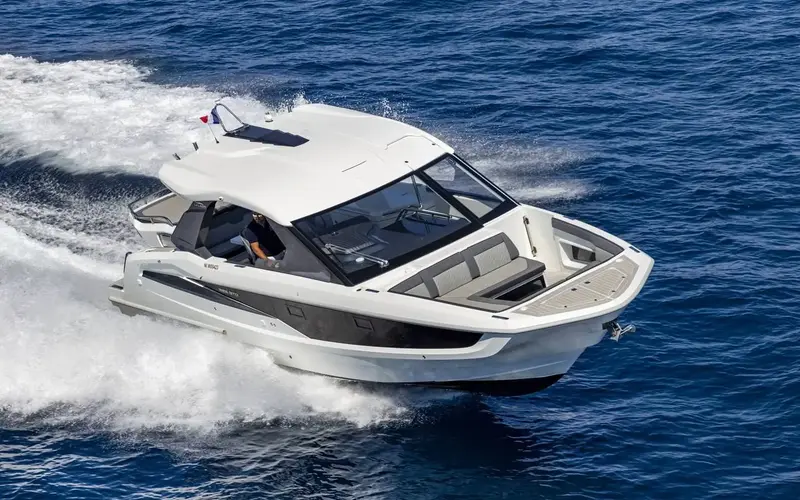
What Does a $2 Million Yacht Look Like in 2026?
A $2 million yacht budget in 2026 gives buyers very different options depending on whether they choose a new or used yacht. For a broader overview of what a $2 million yacht budget can buy, buyers should also consider how yacht type, size, age and specification affect pricing.A new yacht at this budget will generally be around 50–60 feet, although certain brands, configurations and promotional pricing can move that range higher or lower.
A $2 million budget can move buyers into 60–80+ ft used yachts, particularly when considering vessels that are several years old. The trade-off is that the buyer may inherit older engines, electronics, generators, HVAC systems and interior components.
New vs Used Yacht Options Under $2 Million
| Factor | New Yacht | Used Yacht |
|---|---|---|
| Typical Size | About 50–60 ft | About 60–80+ ft |
| Typical Age | New / current model | Often 5–15+ years |
| Warranty | Manufacturer warranty may apply | Usually limited or expired |
| Technology | Latest systems | Depends on refits and upgrades |
| Depreciation | Higher during early ownership | Usually lower after initial depreciation |
| Maintenance Risk | Generally lower initially | More dependent on condition |
| Brand Level | Mid-to-upper luxury segment | Potentially higher-end brands |
| Interior Space | Smaller for same budget | Significantly more space possible |
| Survey Requirement | Still recommended | Essential |
| Refit Risk | Relatively low initially | Can be substantial on older yachts |
The important point is that $2 million does not represent one fixed yacht size. It represents a purchasing position in the market. A buyer choosing new prioritises condition, warranty and control over specification; a buyer choosing used prioritises size, brand and value.
Best New Yachts Under $2 Million
The new-yacht side of the $2 million market is strongest around the 50–60 ft range. Buyers at this level can find sophisticated flybridge yachts, power catamarans and performance-oriented yachts, although some premium models may exceed the budget once options, taxes and delivery costs are included.The following five yachts are new yachts for sale, each featuring a different style, all within a $2 million budget. Prices and availability are subject to change, so buyers should confirm the latest pricing and specifications before making a purchase.
Sunseeker Manhattan 55
The Sunseeker Manhattan 55 is approximately 56.5 feet (about 17 meters) long and features a three-cabin layout.Best for: Family cruising, entertaining and long-term private ownership.
Why Consider It: It combines a premium European brand with a practical flybridge layout, generous outdoor areas and comfortable accommodation for extended family use.
Watch Out For: The final purchase price can increase with optional equipment, delivery, taxes and specification upgrades.
Best Fit: Buyers who want a traditional luxury motor-yacht experience with a strong balance between comfort, space and performance.

Sunseeker Manhattan 55
- Length56.50 ft
- Cabins3
- Top speed32 kn
- TypeFlybridge yacht
The Sunseeker Manhattan 55 represents the pinnacle of Sunseeker's design excellence, crafted for owners seeking comfortable cruising and refined social experiences.
Leeuwin 55
The Leeuwin 55 is a new 55-foot catamaran flybridge yacht that offers spacious living areas.Best for: Family cruising, island hopping and shallow-water exploration.
Why Consider It: Its catamaran platform, shallow draft and four outboard engines make it particularly suited to coastal and shallow-water cruising.
Watch Out For: Buyers should consider whether the outboard configuration, cruising range and shallow-water focus match their intended cruising area.
Best Fit: Buyers who want a spacious new catamaran with a strong focus on flexible coastal and island cruising.
Leeuwin 55
- Length55 ft
- Cabins5
- Top speed27 kn
- TypeCatamaran flybridge yacht
The Leeuwin 55 catamaran flybridge yacht features four 300-horsepower outboard engines and a shallow draft design, making it ideal for island living and exploring shallow-water cruising areas.
ILIAD Catamarans 53S
At approximately 53 feet, the 53S focuses on the advantages of a power-catamaran platform, including a wide beam, spacious living areas and a stable cruising platform. This makes it particularly attractive to buyers who prioritise usable onboard space rather than simply choosing the longest monohull available.Best for: Family cruising, entertaining and extended stays aboard.
Why Consider It: The catamaran layout provides substantial interior and exterior living space, while the twin-hull configuration offers a stable platform for family use.
Watch Out For: A power catamaran requires buyers to consider berth availability, beam-related marina costs and the maintenance of two propulsion systems.
Best Fit: Buyers who want more living space and stability from a new yacht and are less concerned with the traditional monohull experience.
2026 ILIAD CATAMARANS 53S
- Length53.58 ft
- Cabins3
- Top speed21 kn
- TypeCatamaran yacht
The 2026 ILIAD 53S is a sporty, eco-friendly catamaran with a top speed of 21 knots and a range over 2,500 nautical miles. Its three-cabin layout, luxurious master suite, and spacious outdoor cockpit make it ideal for cruising families. As a non-flybridge version of the award-winning 53F, it offers a sleek silhouette and efficient performance.
Fountaine Pajot Aura 51
At around 51 feet, the Aura 51 demonstrates why catamarans can be particularly competitive within a $2 million yacht budget. Its wide platform creates large indoor and outdoor living areas, making the yacht feel substantially larger than its length suggests.Best for: Family cruising, liveaboard use and long-distance leisure cruising.
Why Consider It: The Aura 51 offers a spacious multi-cabin layout, large social areas and the stability associated with a catamaran platform.
Watch Out For: Buyers should distinguish between a sailing catamaran and a motor yacht when comparing performance, cruising speed, fuel consumption and operating style.
Best Fit: Buyers who want a new catamaran primarily for comfortable cruising, extended holidays and spending significant time aboard.
Beneteau Gran Turismo 50
The 50-foot yacht features three guest cabins and three bathrooms, with a cruising speed of around 26 knots and a top speed of up to 34 knots.Best for: Fast coastal cruising, family weekends and owners who prioritise performance and styling.
Why Consider It: The Gran Turismo 50 combines a sleek, sports-oriented design with a flybridge, three-cabin accommodation and generous outdoor areas. Its 50-foot size also makes it considerably more accessible to operate and berth than a larger 60–70 ft yacht.
Watch Out For: It provides less overall living space than a larger 55–60 ft yacht, while buyers who frequently cruise at higher speeds should also budget carefully for fuel and ongoing engine maintenance.
Best Fit: Buyers who want a new, fast and stylish yacht in the $1M–$1.5M range, while keeping a substantial portion of their $2 million budget available for options, ownership costs and future upgrades.
Looking for a new yacht under $2 million?
Browse current new yacht listings and compare prices, layouts and specifications.
👉 Browse New Yachts for Sale
Best Used Yachts Under $2 Million
Instead of buying a new 50–60 ft yacht, buyers may be able to move into a significantly larger pre-owned yacht, often in the 60–80+ ft range. Buyers comparing used yachts under $2 million can often find more space and higher-end models, although condition and ongoing maintenance should be evaluated carefully.Sunseeker 80 Flybridge
At just over 80 feet, it offers four guest cabins, four bathrooms, twin MAN 1,550 hp diesel engines and approximately 800 engine hours. The yacht has a cruising speed of around 15 knots and a top speed of up to 30 knots.Best for: Large-family cruising, entertaining, private events and buyers who want an 80-foot luxury yacht experience.
Why Consider It: Its size provides significantly more accommodation and social space than most new yachts available around the $2 million budget. The large flybridge, four-cabin layout and spacious salon make it suitable for extended cruising and entertaining larger groups.
Watch Out For: As a 2011 yacht, buyers should pay particular attention to engine and generator condition, maintenance records, hydraulic systems, electronics, HVAC and interior wear. A professional survey and sea trial are essential before purchase.
Best Fit: Buyers who prioritise maximum yacht size and luxury for the budget and are prepared to accept the additional maintenance and ownership requirements associated with an older 80-foot yacht.

Sunseeker 80 Flybridge
- Build Year2011
- Length80.05 ft
- Cabins4
- Top speed30 kn
- TypeFlybridge yacht
Sunseeker 80-foot hardtop flybridge luxury yacht. Imported after completion in 2011. This yacht is extremely luxurious. Equipped with two German MAN 1550HP engines, it can easily reach a maximum speed of 30 knots and has only been used for 800 hours. In terms of layout, it has 4 bedrooms and 4 bathrooms, an independent kitchen and a spacious salon area.
Sunseeker 73 Flybridge
At around 73 feet, it provides substantially more accommodation and outdoor living space than most new yachts available around the same budget. Its large flybridge and spacious interior make it particularly suitable for owners who want a genuine large-yacht experience without paying the price of a new build.Best for: Luxury family cruising, entertaining and extended stays aboard.
Why Consider It: The larger hull provides significantly more usable living space, while the flybridge creates an additional outdoor area for socialising and cruising.
Watch Out For: Buyers should pay particular attention to engine hours, generator condition, electronics, HVAC systems and any previous refit work.
Best Fit: Buyers who prioritise size, luxury and onboard space and are prepared to accept the additional maintenance requirements associated with a larger used yacht.
Sunseeker 73 Flybridge
- Build Year2013
- Length68.30 ft
- Cabins4
- Top speed34 kn
- TypeFlybridge yacht
Sunseeker, headquartered in the UK, is one of the few yacht brands that can confidently claim to be among the top in the world and possess great global influence. It is known as the "Rolls-Royce on the sea".
Serenity 64
The Serenity 64 offers a more balanced alternative for buyers who want a larger used yacht without moving too far into the 70-foot class.This type of yacht can provide a useful middle ground between the compact new yachts available around $2 million and the much larger pre-owned motor yachts that can carry significantly higher running costs.
Best for: Family cruising, private leisure and coastal cruising.
Why Consider It: Its 60-plus-foot platform provides more accommodation and outdoor space than a typical 50–55 ft new yacht while remaining relatively manageable compared with a 70–80 ft vessel.
Watch Out For: The condition of the engines, generators, navigation electronics, air-conditioning systems and onboard equipment should be verified through a professional survey.
Best Fit: Buyers looking for a balance between yacht size, comfort and ownership complexity rather than simply maximising length.
Itama 62
The Itama 62 is particularly interesting for buyers whose priorities are different from those of a traditional flybridge-yacht owner.Rather than maximising interior volume, the Itama 62 focuses more heavily on performance, styling and the driving experience. This makes it a strong option for buyers who want a used yacht with a distinctive Mediterranean sports-yacht character.
Best for: Performance-oriented owners, coastal cruising and entertaining.
Why Consider It: The open sports-yacht configuration offers a more direct connection with the water, combined with the distinctive Italian styling associated with the Itama brand.
Watch Out For: Buyers should consider fuel consumption, engine condition and the availability and cost of replacement parts and specialist servicing.
Best Fit: Owners who value speed, design and driving experience more than maximum cabin volume.
Outremer 5X
The Outremer 5X is approximately 60 ft long and was built in 2020, with four cabins and two Volvo D2-75 engines.Best for: Long-distance cruising, offshore sailing and extended family voyages.
Why Consider It: Its high-performance catamaran design, efficient sailing characteristics and onboard capacity make it particularly attractive for buyers planning longer passages.
Watch Out For: Buyers should carefully inspect the sails, rigging, engines, hull and onboard systems before purchase.
Best Fit: Experienced buyers who prioritise offshore capability and sailing performance over the speed and interior layout of a conventional motor yacht.
Prices and availability checked in August 2026 and may change. Before making a purchase decision, please be sure to check the current price, specifications, and availability.
Want more yacht for your $2 million budget?
Explore used yachts and compare current listings by price, size and condition.
👉 Browse Used Yachts for Sale
Best Yachts Under $2 Million by Cruising Style
The best yacht also depends on where and how you plan to cruise, from family and coastal cruising to the Great Lakes and longer offshore passages.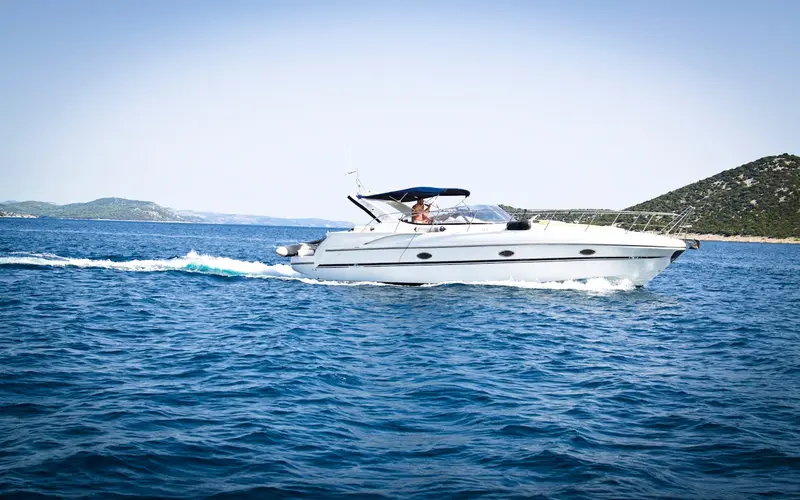
Best for Family Cruising
For family cruising, comfort, stability, cabin layout and usable outdoor space are usually more important than maximum speed.Top Choices:
- Sunseeker Manhattan 55 — Best overall new flybridge option for family use
- ILIAD 53S — Excellent for families prioritising space and stability
- Fountaine Pajot Aura 51 — Particularly attractive for families planning extended stays aboard
Best Yachts for Great Lakes Cruising
Great Lakes cruising requires more than simply choosing the largest yacht within budget. Buyers should prioritise rough-water seakeeping, a protected helm, reliable diesel propulsion, effective heating and HVAC, family-friendly accommodation and proper winterization.Top Choices:
- Sunseeker Manhattan 55 — A balanced option for family cruising, with manageable size and comfortable accommodation
- Serenity 64 — A good middle ground for buyers who want more space without moving into the 70–80 ft range
- Sunseeker 73 Flybridge — An option for buyers who prioritise larger accommodation and entertaining space
Best for Long-Distance Cruising
For long-distance cruising, range, fuel capacity, seakeeping, reliability, storage and onboard systems become critical. The focus is on how far and safely the yacht can travel between ports.Top Choices:
- ILIAD 53S — Wide catamaran platform with substantial living space
- Fountaine Pajot Aura 51 — Strong option for extended leisure cruising
- Sunseeker 73 Flybridge — Better suited to buyers who want a larger traditional motor-yacht platform
Best for Liveaboard Use
For liveaboard use, interior volume, cabin layout, storage, privacy and everyday comfort should take priority over speed. The focus is on how comfortably the yacht can function as a home for extended periods.Top Choices:
- Fountaine Pajot Aura 51 — Efficient use of living space and multiple cabins
- ILIAD 53S — Spacious catamaran layout for extended stays aboard
- Sunseeker 80 Flybridge — Maximum accommodation and living space for buyers willing to accept higher ownership costs
Best Performance Yacht
For buyers who prioritise speed, handling and styling, a sports yacht can be more attractive than a larger flybridge yacht.Top Choices:
- Itama 62 — Best for buyers prioritising performance and Mediterranean styling
- Beneteau Gran Turismo 50 — A newer and more accessible option for fast coastal cruising
New vs Used Yacht Under $2 Million: Which Is Better?
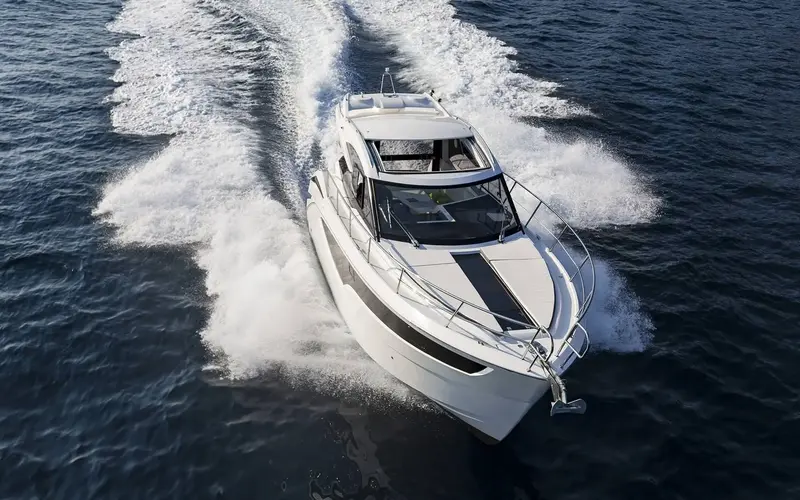
Buyers comparing yachts around the $2 million price range are essentially choosing between lower early ownership risk and greater size or luxury for the same budget. New yachts generally offer warranty coverage, newer technology and more predictable early maintenance, while used yachts can provide significantly more length, higher-end brands and onboard space.
Yacht depreciation is typically higher during the early years of ownership, although actual rates vary by brand, model and market conditions.
| Factor | New Yacht Under $2M | Used Yacht Under $2M |
|---|---|---|
| Size | Typically about 50–60 ft | Often about 60–80+ ft |
| Warranty | Manufacturer warranty may apply | Usually limited or expired |
| Depreciation | Usually higher during the early years | Often lower after the initial depreciation period |
| Maintenance | Generally lower initially | More dependent on age and condition |
| Technology | Latest electronics and onboard systems | Depends on refits and upgrades |
| Brand Level | Mostly mid-to-upper luxury segment | Potential access to higher-end brands |
| Refit Risk | Relatively low initially | Can be significant on older yachts |
| Crew Requirement | Often manageable with a smaller crew or owner operation | Larger yachts may require more crew |
| Resale | Higher exposure to early depreciation | Potentially more stable after initial depreciation |
- Buy new if you prioritise condition, warranty, technology and predictable early ownership
- Buy used if you prioritise size, luxury, brand level and value for money
Comparison of True Ownership Costs Between New and Used Yachts
Yacht ownership cost goes beyond the initial purchase price. As a general planning guide, a new 50–60 ft yacht around the $2 million price range may cost approximately $100,000–$380,000+ per year to operate, while a larger used 70–80 ft yacht may cost around $255,000–$720,000+ annually. Actual costs can vary significantly depending on the yacht's location, usage, fuel consumption, crew requirements, condition and maintenance needs.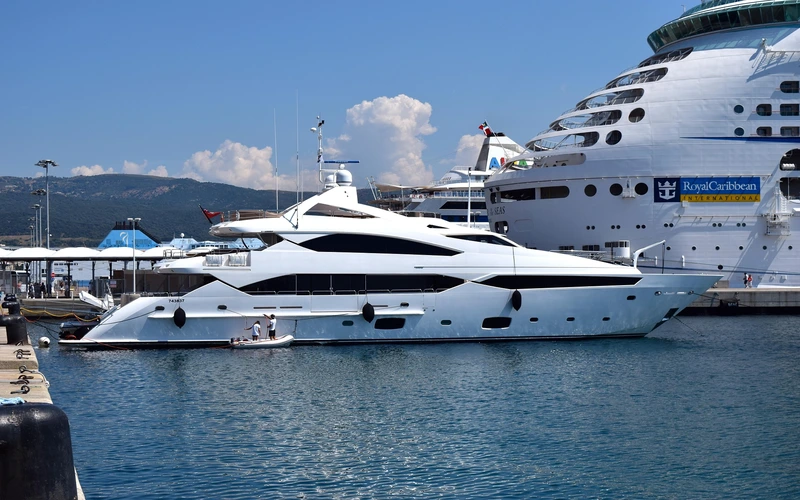
Below is a realistic guide to annual costs based on a "yacht with a budget of approximately $2 million":
| Cost Item | New Yacht (50–60 ft) | Used yacht (70–80ft) |
| Annual mooring fees | $25,000–60,000 | $40,000–90,000 |
| Annual insurance | $15,000–30,000 | $20,000–45,000 |
| Engine and systems maintenance | $20,000–50,000 | $50,000–120,000 |
| Fuel costs | $30,000–100,000 | $50,000–180,000 |
| Hull anti-fouling and cleaning | $8,000–20,000 | $15,000–35,000 |
| Crew costs (if required) | $0–120,000+ | $80,000–250,000+ |
| Approximate annual total costs | Approx. $100,000–300,000 | Approx. $250,000–700,000 |
These are indicative planning ranges, not fixed costs. The actual annual cost of ownership depends on the yacht's location, usage, crew requirements, condition, fuel consumption and maintenance needs. Crew costs can vary substantially and may not apply to owner-operated yachts.
Before choosing between these options, compare five-year yacht ownership costs using the purchase price, annual operating budget and expected resale value for each vessel.
Expert Advice: Which type of buyer is better suited to purchasing a new or used yacht?
For many first-time buyers, a new or nearly new yacht can be easier to manage because of warranty coverage, newer systems and a clearer maintenance history. However, a well-surveyed used yacht can also be an excellent choice if size and value are higher priorities.For owners planning to hold a yacht for 10 years or more, buying new can offer advantages because the owner controls the vessel's maintenance history from the beginning.
As for family holidaymakers, the most balanced choice on the market remains flybridge yachts and motor catamarans between 50 and 60 feet. Particularly for families with children, greater stability and more spacious living quarters are usually more important than top speed.
About the Editorial Review
This guide was prepared by the YachtTrading editorial team and reviewed against publicly available brokerage listings, yacht valuation references, brand model information and common ownership-cost benchmarks. Because yacht prices vary by condition, location, engine hours, specification and market demand, all price ranges should be treated as general guidance rather than fixed offers.
Disclaimer
The content herein is for informational purposes only and is intended to share the author's personal experiences and perspectives. It does not constitute legal, tax, or investment advice. Yacht transactions involve complex legal, financial, and technical matters. Actual purchasing processes may vary due to regional regulations, vessel type differences, or individual circumstances.
Before making any yacht purchase decisions, readers are advised to consult licensed professionals (such as attorneys, tax advisors, licensed yacht brokers, or surveyors) for personalized guidance tailored to their specific situation. Neither the author nor the publisher shall be liable for any direct or indirect losses arising from reliance on the information provided herein.
FAQ
Q1: What is the best yacht under $2 million?
A: The best yacht under $2 million depends on your intended use. New 50–60 ft yachts suit buyers prioritising warranty and lower initial maintenance, while used 60–80+ ft yachts offer more space and luxury for the same budget.
Q2: What size yacht can $2 million buy?
A: A $2 million budget can typically buy a new yacht of around 50–60 ft or a used yacht of approximately 60–80+ ft. Actual size depends on the brand, age, condition, specification and market.
Q3: Can you buy a new yacht for under $2 million?
A: Yes. New yachts under $2 million are available, particularly in the 50–60 ft range. Final prices vary depending on options, taxes, delivery and specification.
Q4: What are the best used yachts under $2 million?
A: The best used yachts under $2 million are typically 60–80+ ft motor yachts offering more space and luxury than similarly priced new yachts. Buyers should compare condition, maintenance history, engine hours and survey results.
Q5: Are there yachts for sale under $2 million?
A: Yes. New and used yachts are regularly available under or around $2 million. Prices and availability change frequently, so buyers should check current listings before purchasing.
Q6: Is it better to buy a new or used yacht with a $2M budget?
A: Buy new if you prioritise warranty, newer technology and lower initial maintenance risk. Buy used if you prioritise yacht size, luxury, brand level and value for money.
Q7: What is the best yacht under $2 million for Great Lakes cruising?
A: The best yacht for Great Lakes cruising should have good rough-water seakeeping, a protected helm, reliable diesel engines, effective heating and HVAC, and a practical family layout. Suitable models depend on the vessel's configuration and condition.
Q8: How much does a $2 million yacht cost to operate each year?
A: A $2 million yacht can cost roughly $100,000–$300,000 per year to operate if it is a 50–60 ft new yacht. A larger 70–80 ft used yacht may cost approximately $250,000–$700,000+ annually, depending on usage, crew, location and condition.